
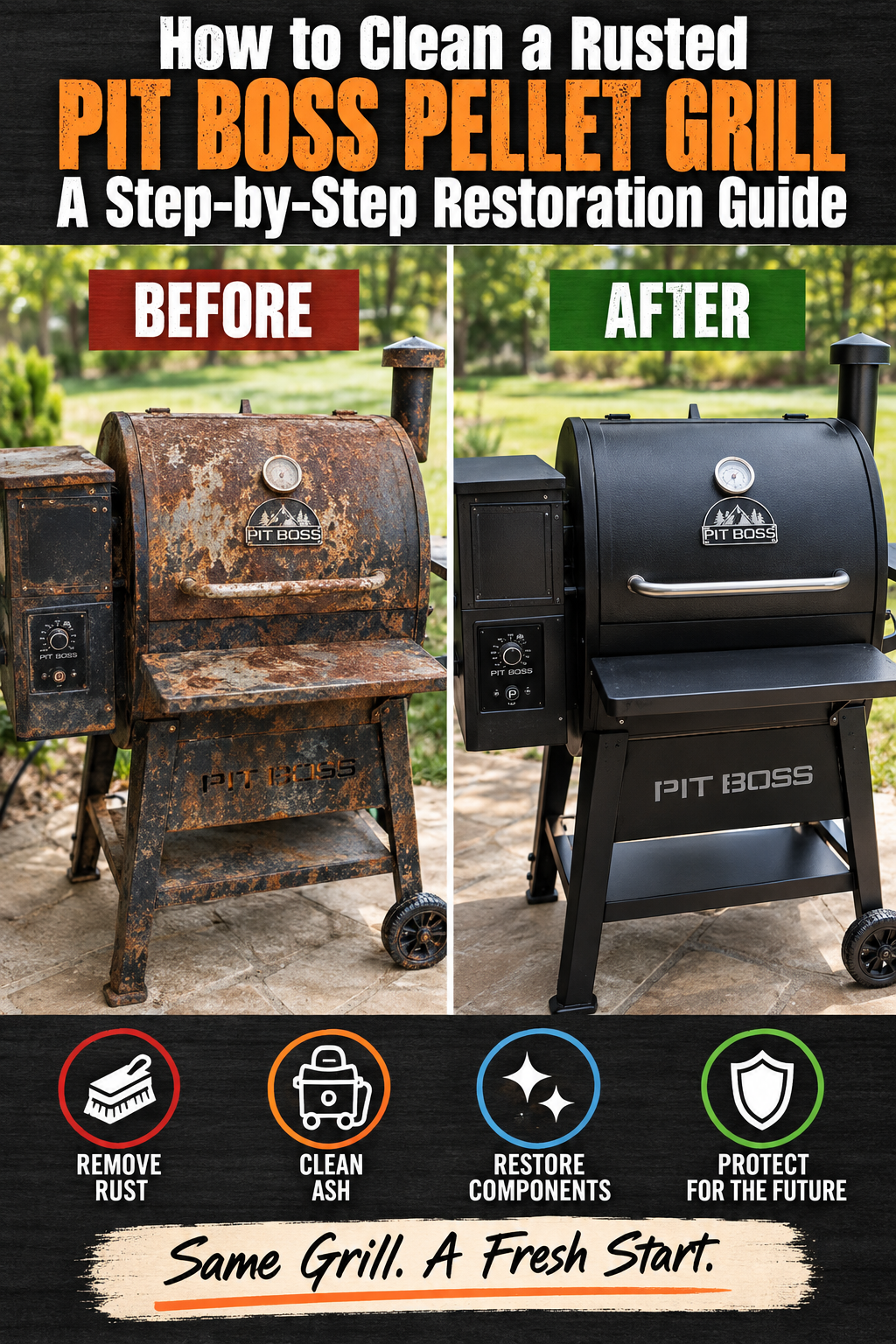
Updated: September 13, 2026
If your Pit Boss pellet grill has developed rust, do not assume it is ruined. Many rusty pellet grills can be restored if the corrosion is still mostly on the surface. The key is knowing which parts can be cleaned, which parts should only be scraped, and which badly corroded components should be replaced before you cook again.
Updated and fact-checked September 2026.
If you need to know how to clean a rusted Pit Boss pellet grill, most surface rust can be removed without replacing the entire grill. The key is cleaning each component correctly and replacing any metal that has rusted through or become structurally weak.
Quick Answer
To clean a rusted Pit Boss pellet grill, unplug it and let it cool completely. Remove the grates and flame broiler, vacuum out ash, scrape away loose rust and grease, dry every part thoroughly, and lightly oil bare cast iron or steel. Replace any burn pot, broiler plate, grease component, or structural part that has rusted through.
Key Points
- Surface rust usually does not mean the entire Pit Boss needs replacing.
- Scrape the flame broiler instead of soaking it with water.
- Clean and lightly oil rusted cast-iron or bare-steel grates.
- Replace a burn pot or grease component that has rusted through.
- Keep ash, grease, and moisture under control to prevent rust from returning.
Can a Rusted Pit Boss Pellet Grill Be Restored?
Yes, a Pit Boss pellet grill with surface rust can often be restored and put back into service. Light orange rust, discoloration, and even some flaking corrosion do not automatically mean the grill is finished. The important question is how deeply the corrosion has penetrated the metal. Surface rust can usually be cleaned away. Metal that has become thin, weak, cracked, or rusted completely through should be treated much more seriously. Pay particular attention to the burn pot, flame broiler, grease-drain system, barrel, legs, and other parts that either contain heat or support the grill.
What You Need to Clean a Rusted Pit Boss
You do not need an expensive restoration kit. A few basic tools are enough for most pellet-grill rust jobs.
- Work gloves
- Plastic or metal scraper
- Stiff nylon grill brush or grill-safe cleaning pad
- Shop vacuum or ash vacuum
- Warm water and mild dish soap for washable removable parts
- Clean rags or paper towels
- Fine or medium sandpaper for stubborn exterior surface rust
- Grill-safe degreaser when needed
- High-smoke-point cooking oil
- Replacement parts if corrosion has gone through the metal
The goal is not to make every interior piece look brand new. A used pellet grill will naturally have smoke stains, seasoning, grease discoloration, and darkened steel. You are trying to remove loose rust, harmful corrosion, ash, and excessive grease without damaging good metal.
Step 1: Unplug the Pit Boss and Let It Cool Completely
Disconnect the pellet grill from electricity before beginning a deep cleaning or rust restoration. Make sure the grill is completely cold. This is especially important before vacuuming ash because hot embers can remain hidden longer than you might expect. Remove food, the grease bucket, loose accessories, and anything stored on or inside the grill. If the hopper contains pellets that are damp, swollen, soft, or crumbling into sawdust, remove them instead of trying to burn them.
Step 2: Inspect the Rust Before You Start Scrubbing
Determine whether you are dealing with surface rust or structural corrosion before deciding how aggressive the cleaning should be.
| Rust Condition | Recommended Action |
|---|---|
| Light orange surface rust | Clean the surface, dry it thoroughly, and protect the metal. |
| Flaking rust with solid metal underneath | Scrape away loose material and inspect the metal again. |
| Rust on cast-iron grates | Scrub, dry thoroughly, and apply a thin coat of cooking oil. |
| Rust on the flame broiler | Scrape away loose rust and buildup instead of soaking the plate. |
| Small pinholes or rust-through | Replace the affected part if heat containment or grease drainage could be affected. |
| Weak burn pot or structural metal | Replace the damaged component before cooking again. |
Step 3: Remove the Cooking Grates and Flame Broiler
Remove the cooking grates, upper racks, flame-broiler plates, and other removable pieces so you can reach the bottom of the cooking chamber. Do not be surprised if the Pit Boss flame broiler looks rusty. It lives in an extremely hot environment and is repeatedly exposed to heat, grease, smoke, and oxygen. Some discoloration and surface corrosion can occur during normal use. What matters most is whether the metal is still solid and whether grease can continue flowing safely toward the grease bucket.
Step 4: Vacuum Ash From the Cooking Chamber and Burn Pot
Remove dry ash before introducing water or cleaning chemicals into the grill. Use a shop vacuum or ash vacuum only after you are completely certain there are no warm embers. Vacuum these areas:
- The bottom of the cooking chamber
- Around the burn pot
- Loose ash inside the burn pot
- Corners and seams where ash collects
- Areas underneath the flame broiler
Ash can attract and hold moisture. When ash sits against steel for long periods, especially in a grill stored outdoors, it can encourage corrosion.
Step 5: Scrape Rust From the Flame Broiler
Scrape loose rust, grease, and carbon from the flame broiler instead of trying to make the metal shiny. Use a scraper to remove anything that is loose or heavily built up. Pay special attention to the route grease follows toward the drain and bucket. Do not grind away solid metal simply because the plate looks dark or discolored. A seasoned, heat-darkened piece of steel does not need to look new to work properly.
Should You Wash a Rusty Pit Boss Flame Broiler With Water?
It is generally better to scrape a Pit Boss flame broiler than to soak it with water. Water left on bare steel can speed up corrosion, especially when the plate is put back into the grill before it dries completely. If you must use moisture to remove stubborn residue, use as little as practical and dry the component completely before reinstalling it.
When Should a Pit Boss Flame Broiler Be Replaced?
Replace the flame broiler when corrosion creates serious holes, weakens the metal, or prevents grease from draining safely. A little surface rust is one thing. A plate that is collapsing, badly perforated, or directing grease toward the fire instead of the grease drain is another.
Step 6: Remove Rust From the Cooking Grates
Surface rust on solid cooking grates can usually be cleaned off and the grates reused. Scrub the grates with a grill-safe cleaning pad, scraper, or stiff nylon brush. Work until the loose rust and debris are gone. If you wash removable grates with warm soapy water, rinse them and dry them immediately.
Should You Oil Pit Boss Grates After Removing Rust?
Yes, bare cast iron or uncoated steel should receive a very thin coat of cooking oil after it has been cleaned and dried. The oil helps create a protective barrier between the metal and moisture. Use only a thin film. Thick layers of oil can become sticky, collect debris, and create unnecessary smoke during the next cook.
Step 7: Clean Rust From the Exterior Barrel and Lid
Start gently when cleaning rust from painted or coated exterior surfaces. Do not immediately attack every rusty spot with coarse sandpaper. You may remove healthy paint surrounding a small damaged area and make the repair larger than necessary. Remove loose rust and flaking paint first. If bare metal is exposed, lightly sand the corroded area until loose material is gone.
Can You Repaint a Rusted Pit Boss Pellet Grill?
Small exterior areas can often be refinished with a coating designed for high-temperature grill surfaces. Follow the paint manufacturer’s preparation and curing instructions. Do not use ordinary household paint where grill temperatures can become high. Do not paint the cooking grates, burn pot, inside of the cooking chamber, or surfaces where paint could contact food or direct flame.
Step 8: Remove Grease Buildup From the Bottom of the Grill
A restoration is a good time to clean more than rust. Older pellet grills can develop thick grease deposits underneath the flame broiler and along the grease channel. Scrape heavy grease first. Wipe away the remaining grime with a grill-safe cleaner where appropriate. Make sure the grease channel and opening leading to the grease bucket are clear. A blocked grease path can create a more serious safety problem than light surface rust because grease may collect where it can ignite.
Step 9: Inspect the Burn Pot Carefully
A burn pot that has rusted through should be replaced rather than patched or ignored. The burn pot experiences intense heat every time the Pit Boss operates. Heat discoloration is expected, but corrosion damage deserves close inspection. Look for:
- Cracks
- Unexpected holes
- Thin or weakened metal
- Heavy scaling
- Distortion
- Damage around the igniter opening
If you are unsure whether the pot is still structurally sound, replacement is the safer option.
Step 10: Check the Hopper and Pellets for Moisture
Rust elsewhere on the grill can be a sign that the pellet system has also been exposed to moisture. Check the hopper before putting the grill back into service. Healthy wood pellets should be hard, dry, and firm. Moisture-damaged pellets may become:
- Swollen
- Soft
- Crumbly
- Powdery
- Clumped together
Remove bad pellets instead of trying to force them through the auger.
What Should You Do If Wet Pellets Jam the Auger?
Do not repeatedly run the auger motor against a serious pellet jam. Disconnect the grill from electricity and follow the correct auger-cleaning instructions for your Pit Boss model. Swollen pellets can harden inside the auger tube and sometimes require manual removal.
Step 11: Clean the Temperature Sensor
A dirty internal temperature sensor can contribute to inaccurate temperature readings. Gently wipe grease and heavy smoke residue from the sensor. Do not aggressively sand the probe, soak electrical parts, or spray liquid into wiring connections.
Step 12: Inspect the Grease Bucket and Drain
Check the grease bucket, drain tube, and surrounding metal for rust. A little surface rust on the outside of the bucket may be cosmetic. A grease container or drain that has corroded through should be replaced. Grease needs a predictable and safe path away from the fire.
Step 13: Dry Everything Completely
Do not reassemble the grill while cleaned steel or cast iron is still wet. Use clean towels to remove as much moisture as possible and allow washed parts to air-dry completely. This step matters because a freshly cleaned bare-metal surface can begin developing flash rust surprisingly quickly.
Step 14: Reassemble the Pit Boss
Once everything is clean and dry, reinstall the components. Before closing the lid, check that:
- The burn pot is clean and correctly positioned
- The flame broiler is installed properly
- The grease channel is unobstructed
- The cooking grates are secure
- The grease bucket is in place
- No cleaning tools or rags remain inside
- Only dry pellets are in the hopper
Step 15: Run a Test Burn Before Cooking
Run the restored pellet grill without food before using it for your next meal. Watch the startup cycle carefully. Make sure the:
- Auger feeds normally
- Fan runs correctly
- Pellets ignite
- Temperature begins rising normally
- Grill does not display error messages
- Smoke is leaving through the normal exhaust openings
- Grease is not leaking into an unsafe area
Allow the grill to heat long enough to burn away any harmless cleaning residue before putting food on the grates.
What Should You Not Do When Removing Rust From a Pit Boss?
Do not treat every rusty component the same way. Some restoration methods can cause more damage than the rust itself.
- Do not pressure-wash the pellet grill.
- Do not spray water into the hopper or controller.
- Do not soak electrical components.
- Do not flood the auger tube with water.
- Do not soak the flame broiler unnecessarily.
- Do not use ordinary paint inside the cooking chamber.
- Do not continue using a burn pot that has rusted through.
- Do not remove healthy metal just to make an old part look shiny.
- Do not reinstall wet cast-iron or bare-steel parts.
When Is a Rusty Pit Boss Too Far Gone?
A Pit Boss may be beyond a simple cleaning when corrosion has weakened parts responsible for fire containment, grease control, or structural support. Serious warning signs include:
- Holes through the burn pot
- Large corrosion holes in the flame broiler
- A grease tray that can no longer drain safely
- Weak or badly corroded legs
- Holes through the cooking barrel
- Severe hopper corrosion
- Water-damaged electronics
- A weakened frame
This does not always mean you need a completely new grill. Many Pit Boss components can be replaced individually. The question is whether replacing the damaged parts still makes financial sense compared with replacing the grill.
How Do You Keep a Pit Boss Pellet Grill From Rusting Again?
Keep the grill dry, remove ash regularly, control grease buildup, and protect exposed metal.
Use a Proper Grill Cover
A properly fitting cover is one of the easiest ways to protect a pellet grill stored outdoors. It helps keep rain, leaves, dust, and debris away from the cooking chamber and hopper.
Do Not Trap Moisture Under the Cover
A grill cover works best when the grill underneath it is dry. If rain gets underneath the cover or condensation develops, allow the grill to dry before covering it tightly again.
Remove Ash Regularly
Do not let ash accumulate indefinitely around the burn pot and bottom of the cooking chamber. Ash can hold moisture against steel surfaces.
Keep the Grease System Clean
Excess grease can hide corrosion and trap debris. Regularly inspect the grease channel, drain, bucket, and surfaces under the flame broiler.
Protect Bare Cast Iron and Steel
After cleaning bare cast iron or uncoated steel, wipe it with a very light film of cooking oil.
Keep Pellets Dry
Store spare pellets in a dry sealed container rather than depending on the grill hopper for long-term outdoor storage.
Is Rust on a Pit Boss Flame Broiler Normal?
Yes, some surface rust on a Pit Boss flame broiler can occur because the component is repeatedly exposed to high heat and oxidation. Do not judge the flame broiler only by appearance. A rusty-looking plate may still function normally if the metal is solid and the grease path remains intact. A plate that has rusted through or weakened enough to interfere with safe grease drainage should be replaced.
Can You Cook on Rusty Pit Boss Grates?
Remove loose surface rust before cooking on the grates. Clean the grates, remove loose corrosion, dry them completely, and apply a thin film of cooking oil to bare cast iron or uncoated steel. If the grate is badly pitted, broken, flaking apart, or structurally weak, replacing it is the better choice.
Is It Worth Restoring an Older Pit Boss Pellet Grill?
Yes, restoring an older Pit Boss can make sense when the barrel, frame, burn system, controller, and major components are still sound. A pellet grill lives a hard life. Heat, smoke, grease, rain, humidity, ash, and temperature swings all take their toll. A grill should not automatically be thrown away because its grates or flame broiler look rusty. On the other hand, I would not try to save a badly corroded fire-containing component just to avoid buying a replacement part. Anything involving flame, grease drainage, or structural strength deserves extra attention.
Frequently Asked Questions About Rusted Pit Boss Pellet Grills
Can you restore a rusted Pit Boss pellet grill?
Yes. A Pit Boss pellet grill with surface rust can often be restored by removing loose corrosion, cleaning the grates and flame broiler, vacuuming ash, drying all parts thoroughly, and protecting exposed cast iron or steel. Parts that have rusted through should be replaced.
How do you remove rust from Pit Boss grill grates?
Scrub loose rust from the grates with a grill-safe cleaning pad, scraper, or stiff nylon brush. Clean away the residue, dry the grates completely, and lightly oil cast iron or uncoated steel to help prevent new rust.
Is rust on a Pit Boss flame broiler normal?
Some surface rust can be normal. The flame broiler is repeatedly exposed to high heat and oxidation. Replace it if corrosion has created serious holes, weakened the metal, or stopped grease from draining safely.
Should I wash a rusty Pit Boss flame broiler with water?
It is generally better to scrape loose rust, carbon, and grease from the flame broiler rather than soaking it. Excess moisture on bare steel can encourage additional corrosion.
When should a rusted Pit Boss part be replaced?
Replace the part when corrosion creates holes, severely thins the metal, weakens structural support, damages the burn pot, or interferes with safe grease drainage.
How do I keep my Pit Boss pellet grill from rusting again?
Keep the grill covered and dry, remove ash regularly, clean grease buildup, avoid trapping moisture under the cover, keep pellets dry, and lightly oil bare cast iron or uncoated steel after cleaning.
Final Thoughts
A rusted Pit Boss pellet grill may look much worse than it actually is. Surface rust on grates, the flame broiler, shelves, and other steel parts can often be cleaned and protected. The parts that deserve the closest inspection are the ones responsible for containing fire, supporting the grill, and controlling grease. Clean the grill one section at a time, remove ash and loose corrosion, keep moisture away from electrical components, dry bare steel thoroughly, and replace any part that has lost structural strength. A little maintenance after the restoration can also prevent you from having to do the same job again next season.
Official Pit Boss Maintenance Information
For model-specific cleaning and maintenance information, see the Pit Boss pellet grill cleaning and maintenance guide.
Related Guides
Internal link suggestion: Add a link to your Pellet Grill Keeps Shutting Off? 9 Causes and Safe Fixes article near the burn-pot or auger section. Internal link suggestion: Add a link to your How to Winterize a Grill article in the rust-prevention section. Internal link suggestion: Add a link to your Using a Cold Smoke Tube to Add Smoke Flavor to Pellet Cooked Food article near the end of the guide.
About the Author: Frank has been grilling and smoking meat since around 1970. Everything Grill Reviews is built to help grill owners solve real cooking, maintenance, and equipment problems with practical information they can actually use.