
Updated: October 2, 2026
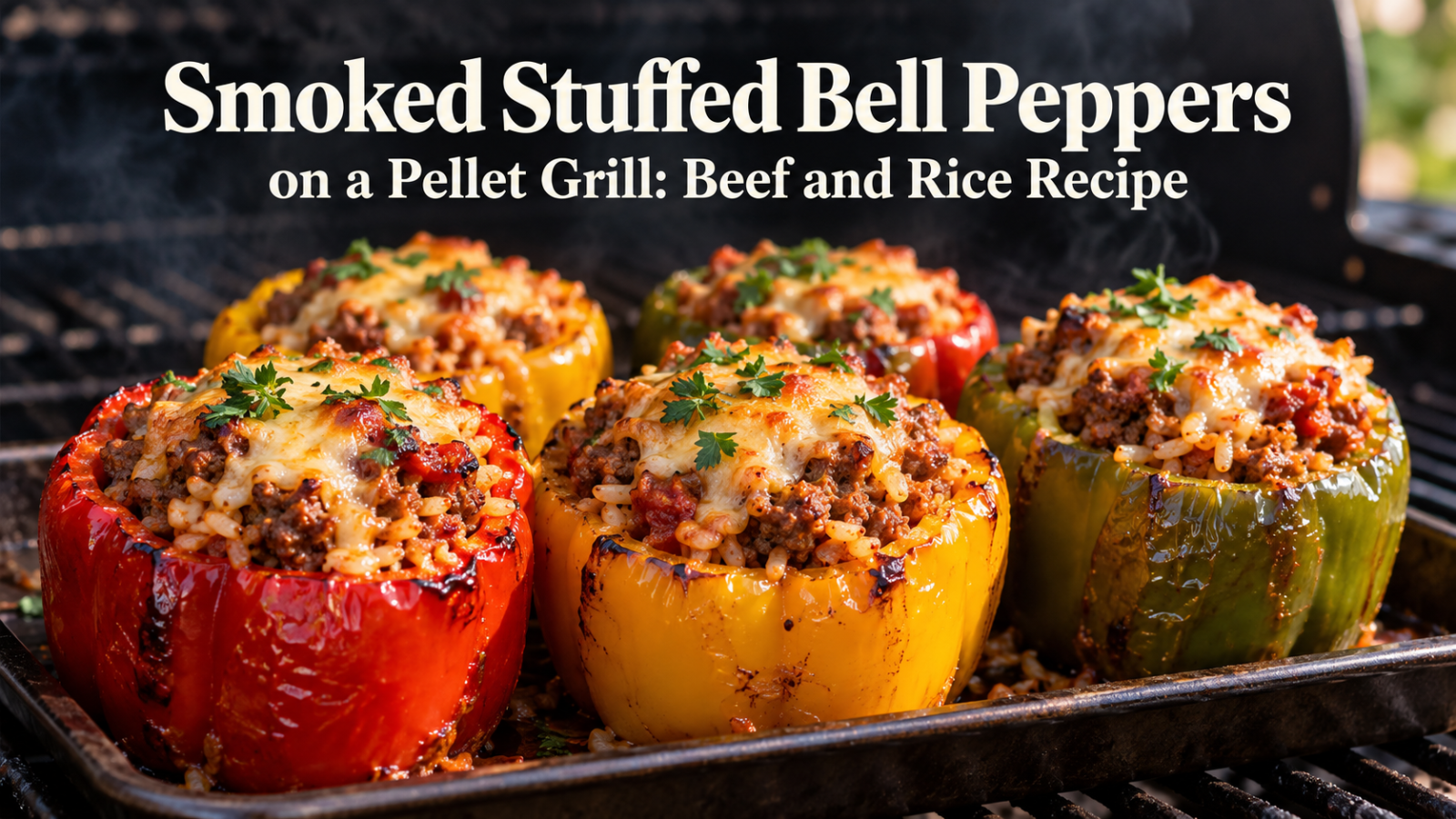
Smoked stuffed bell peppers on a pellet grill turn ground beef, rice, tomatoes, and melted cheese into a complete meal with gentle wood-fired flavor. This version uses pepper halves instead of upright whole peppers, so they sit securely on the grate, cook more evenly, and are easier to serve.
Quick Answer: Brown 1 pound of ground beef with onion and garlic, then mix it with 1½ cups cooked rice, drained tomatoes, sauce, and seasonings. Fill 8 bell-pepper halves and cook at 350°F for 40 to 50 minutes. Add cheese for the final 5 to 8 minutes and serve when the center of the filling reaches 165°F.
This is a practical weeknight pellet-grill recipe rather than an all-day smoke. Most of the preparation can be done before the grill is hot, and the filling can be made a day ahead. Oak, pecan, cherry, or a mild hardwood blend all work without overpowering the peppers.
Table of Contents
Smoked Stuffed Peppers at a Glance
Plan on about 30 minutes of preparation and 45 to 55 minutes on a fully preheated pellet grill. Use temperature and pepper tenderness as the final tests because pepper size, filling temperature, weather, and the grill’s actual grate temperature can change the clock.
| Recipe detail | Target |
|---|---|
| Yield | 8 stuffed pepper halves |
| Servings | 4 generous main-dish servings |
| Preparation time | About 30 minutes |
| Pellet-grill temperature | 350°F |
| Estimated cooking time | 45 to 55 minutes |
| Finished filling temperature | 165°F in the center |
| Best pellets | Oak, pecan, cherry, or a mild hardwood blend |
| Refrigerated leftovers | 3 to 4 days at 40°F or below |
If you want another one-grill meal with fewer preparation steps, the site’s pellet grill sausage and vegetables cooks at 375°F and uses many of the same vegetables. These stuffed peppers take longer, but the beef-and-rice filling makes them more substantial.
Ingredients and Equipment
The recipe uses four large peppers, one pound of ground beef, cooked rice, tomatoes, and cheese. Cook the rice before measuring it. Dry, uncooked rice will not reliably soften inside these peppers because there is not enough liquid or covered cooking time.
Ingredients
- 4 large bell peppers, any color
- 1 tablespoon olive oil or neutral cooking oil
- 1 pound 85/15 or 90/10 ground beef
- 1 small yellow onion, finely diced, about ¾ cup
- 2 garlic cloves, minced
- 1½ cups cooked long-grain white rice, cooled or warm
- 1 can fire-roasted diced tomatoes, 14.5 ounces, well drained
- ¾ cup plain tomato sauce
- 1 tablespoon Worcestershire sauce
- 1 teaspoon Italian seasoning
- 1 teaspoon smoked paprika
- ½ teaspoon kosher salt, plus more only after tasting
- ½ teaspoon coarse black pepper
- ¼ teaspoon crushed red pepper flakes, optional
- 1¼ cups shredded low-moisture mozzarella, Monterey Jack, or mild cheddar, divided
- 2 tablespoons chopped fresh parsley, optional for serving
Equipment
- Pellet grill capable of holding 350°F
- Large skillet
- Sharp knife and cutting board
- Mixing bowl
- Instant-read thermometer
- Tongs or a wide spatula
- Rimmed grill-safe pan, optional for easier transport
Choose peppers that are broad, firm, and similar in size. Red, yellow, and orange peppers are usually sweeter. Green peppers have a sharper flavor and stay slightly firmer. A mixture makes the platter colorful without changing the method.
What Pellets Work Best for Stuffed Bell Peppers?
Oak is the safest all-purpose choice, while pecan and cherry add a mild sweetness that works well with peppers and tomato sauce. Hickory can work if you want stronger smoke, but mesquite can dominate a short vegetable-and-beef recipe.
Use dry food-grade barbecue pellets and begin with a clean firepot. This cook is long enough to pick up smoke at 350°F, but the flavor will be lighter than low-and-slow barbecue. Do not stretch the cook at 225°F just to make more smoke; the filling is already cooked, and a long low-temperature hold can leave the peppers limp before the center is properly hot.
If you prefer a heavier smoke profile, read how to get more smoke flavor from a pellet grill before adding a smoke tube or changing the cooker’s normal airflow.
How Do You Prepare the Peppers and Filling?
Cut the peppers into stable halves, cook the beef completely, and mix the filling before it goes into the grill. Precooking the meat removes guesswork and lets excess fat drain away instead of collecting inside the peppers.
Step 1: Cook the rice
Prepare the rice according to the package directions, then measure 1½ cups cooked. Leftover plain rice is fine if it has been refrigerated promptly and is still within its safe storage window. Break up cold clumps before mixing.
Do not use 1½ cups dry rice. That would produce far too much cooked rice and change the moisture balance of the filling.
Step 2: Cut and clean the peppers
Wash and dry the peppers. Slice each one lengthwise through the stem to make two long halves. Remove the seeds and pale interior ribs. Leaving the stem attached is optional, but it helps some halves hold their shape.
Check the bottom of each half. If a pepper rocks, trim only a paper-thin slice from the outside to steady it without cutting a hole into the cavity. A hole lets sauce and meat juices run onto the drip tray.
Step 3: Brown the ground beef
Heat 1 tablespoon oil in a large skillet over medium-high heat. Add the ground beef and diced onion. Break the beef into small crumbles and cook until no raw areas remain and the center of the meat reaches 160°F. Add the garlic during the final minute so it becomes fragrant without burning.
Drain excess fat if more than a tablespoon has collected. A little moisture keeps the filling tender, but a greasy skillet makes the finished peppers watery.
Food-safety note: FoodSafety.gov lists 160°F for ground beef and 165°F for casseroles and leftovers. This recipe cooks the beef to 160°F before stuffing, then heats the assembled peppers to 165°F in the center. Use a thermometer rather than relying on meat color.
Step 4: Mix the filling
Move the cooked beef and onion to a large bowl. Add the cooked rice, drained tomatoes, tomato sauce, Worcestershire sauce, Italian seasoning, smoked paprika, salt, black pepper, optional red pepper flakes, and ½ cup of the shredded cheese.
Fold until the mixture is evenly combined. Taste a small spoonful because every component is already cooked. Add more salt only if needed; Worcestershire, tomato sauce, canned tomatoes, and cheese all contribute sodium.
The filling should hold together on a spoon but should not be soupy. If liquid pools at the bottom, stir in another ¼ cup cooked rice. If it looks dry and crumbly, add tomato sauce one tablespoon at a time.
Step 5: Fill the pepper halves
Divide the mixture evenly among the 8 pepper halves. Press it in lightly to remove large air pockets, but do not pack it into a dense block. Mound the filling just above the edges.
Reserve the remaining ¾ cup cheese. Adding all the cheese now can make the top greasy or overly brown before the peppers soften.
How Do You Cook Stuffed Peppers on a Pellet Grill?
Preheat the pellet grill to 350°F, cook the filled peppers for 40 to 50 minutes, and add cheese only for the final 5 to 8 minutes. The peppers are ready when the filling reaches 165°F and the walls are tender enough to cut with a fork without collapsing.
Step 1: Preheat the grill
Load the hopper with dry pellets and follow the startup procedure in the manual. Preheat to 350°F with the lid closed. Wait until the grill has settled near the set temperature rather than putting the peppers on during the heavy startup-smoke phase.
Start with clean grates, a clean firepot, and an unobstructed grease path. The peppers contain cooked beef and cheese, so a dirty drip tray can produce off-flavors during the bake.
Step 2: Arrange the peppers
Place the halves filling-side up on the grates with space between them. Set each pepper across the grate bars rather than parallel with them so the curved shell has better support. If moving eight individual halves is difficult, arrange them on a lightly oiled grill-safe rimmed pan.
A pan makes transport easier and catches drips, but it slightly shields the bottom from heat and airflow. Direct-grate peppers may develop more roasted edges. Either method works.
Step 3: Cook with the lid closed
Cook at 350°F for 35 minutes before the first full check. Avoid opening the lid repeatedly. Check the center peppers and any halves sitting near a known cool area of the grill.
If your pellet grill cooks unevenly, rotate the pan or exchange the outer and inner peppers after about 25 minutes. Do not flip them.
Step 4: Add the cheese
When the pepper walls are beginning to soften and the filling is hot, divide the remaining ¾ cup cheese over the tops. Close the lid and cook another 5 to 8 minutes, until the cheese is melted and the filling reaches 165°F.
For more browning, raise the grill to 400°F only after the center is nearly hot enough. Watch closely because cheese can go from spotted to burned quickly, especially near a hot exhaust side.
Step 5: Rest and serve
Move the peppers to a clean platter and rest them for 5 minutes. The brief rest lets the cheese settle and makes each half easier to lift. Sprinkle with parsley if using.
Serve two halves per person as a main course. One half works as a side beside a salad, grilled corn, or a simple vegetable. The filling already includes rice, so another heavy starch is optional.
What Temperature Are Stuffed Peppers Done?
The center of the assembled filling should reach 165°F. Insert an instant-read thermometer from the top into the middle of the deepest mound without pushing the tip through the pepper shell or against the hot grate.
Check at least two peppers. The one closest to the exhaust or firepot may heat faster than a pepper near the front edge. If the cheese is melted but the middle is below 165°F, keep cooking and shield the top loosely with foil if it is becoming too dark.
Temperature confirms the filling is hot, but texture decides whether the pepper is enjoyable. The wall should pierce easily with a fork while retaining enough structure to lift. A pepper that is safe but still very firm can cook another 5 to 10 minutes.
The official FoodSafety.gov temperature chart lists 160°F for ground meat and 165°F for casseroles. Because the beef-and-rice mixture is cooked, combined, and reheated inside the pepper, 165°F is the clear finished-dish target.
How Long Do Stuffed Peppers Take at 350°F?
Most halved stuffed peppers take 45 to 55 minutes after the pellet grill is fully preheated. Large thick-walled peppers, refrigerated filling, a grill running below its display temperature, cold weather, and frequent lid opening can extend that time.
Traeger’s published Southwestern stuffed-pepper recipe also uses 350°F and cooks pepper halves for about 40 minutes before a short cheese-melting finish. Treat that as a useful method reference, not a guarantee for every grill or pepper. The clock tells you when to start checking; 165°F and fork-tender pepper walls tell you when to stop.
Substitutions and Recipe Variations
Keep the same pepper-halves method, but adjust the seasoning and safe temperature for the protein you choose. Do not swap raw meat into the filling without cooking it first.
Ground turkey or chicken
Use 1 pound of ground turkey or chicken and cook it to 165°F before mixing. Poultry is leaner, so add 1 extra tablespoon tomato sauce or a teaspoon of oil if the filling looks dry. Monterey Jack works especially well with poultry.
Ground pork or Italian sausage
Ground pork or raw pork sausage should reach 160°F in the skillet. Reduce the added salt when using seasoned sausage. Drain excess fat before combining the filling. If sausage is what you have on hand, compare the temperature rules in the site’s sausage-and-vegetables recipe.
Tex-Mex stuffed peppers
Replace the Italian seasoning with 2 teaspoons chili powder and ½ teaspoon ground cumin. Swap the tomato sauce for mild salsa, add ½ cup drained black beans, and reduce the cooked rice to 1 cup. Use Monterey Jack or a Mexican-style cheese blend.
Meatless stuffed peppers
Replace the beef with 1½ cups drained black beans or cooked brown lentils. Add ½ cup corn if desired. The assembled filling should still reach 165°F, and the peppers should be fork-tender. Check that the Worcestershire sauce is vegetarian or replace it with soy sauce.
Lower-carbohydrate option
Replace the cooked rice with 1½ cups cauliflower rice that has been sautéed until its excess moisture evaporates. Do not add frozen cauliflower rice directly to the filling or it can make the peppers watery.
Brown rice or quinoa
Use the same 1½-cup cooked measurement. Brown rice gives a firmer texture and quinoa makes the filling lighter. Both must be fully cooked before mixing.
Common Mistakes and How to Fix Them
Watery filling, undercooked rice, raw meat, and peppers that tip over cause most failures. Each problem is easier to prevent than repair after the grill is hot.
| Problem | Likely cause | Fix | ||||||||||||||||||||||||||||||||||||||||||
|---|---|---|---|---|---|---|---|---|---|---|---|---|---|---|---|---|---|---|---|---|---|---|---|---|---|---|---|---|---|---|---|---|---|---|---|---|---|---|---|---|---|---|---|---|
| Watery filling | Tomatoes not drained or beef too fatty | Drain both; add ¼ cup cooked rice if needed | ||||||||||||||||||||||||||||||||||||||||||
| Crunchy rice | Dry rice used instead of cooked rice | Use fully cooked rice; do not rely on pepper moisture | ||||||||||||||||||||||||||||||||||||||||||
| Peppers tip over | Halves cut unevenly or aligned with grate bars | Set them across the bars or use a rimmed pan | ||||||||||||||||||||||||||||||||||||||||||
| Cheese burns early | Added at the beginning or pepper sits in a hot spot | Add cheese for only the final 5 to 8 minutes | ||||||||||||||||||||||||||||||||||||||||||
| Filling below 165°F | Quick Answer: Brown 1 pound of ground beef with onion and garlic, then mix it with 1½ cups cooked rice, drained tomatoes, sauce, and seasonings. Fill 8 bell-pepper halves and cook at 350°F for 40 to 50 minutes. Add cheese for the final 5 to 8 minutes and serve when the center of the filling reaches 165°F. This is a practical weeknight pellet-grill recipe rather than an all-day smoke. Most of the preparation can be done before the grill is hot, and the filling can be made a day ahead. Oak, pecan, cherry, or a mild hardwood blend all work without overpowering the peppers. Table of Contents Smoked Stuffed Peppers at a GlancePlan on about 30 minutes of preparation and 45 to 55 minutes on a fully preheated pellet grill. Use temperature and pepper tenderness as the final tests because pepper size, filling temperature, weather, and the grill’s actual grate temperature can change the clock.
If you want another one-grill meal with fewer preparation steps, the site’s pellet grill sausage and vegetables cooks at 375°F and uses many of the same vegetables. These stuffed peppers take longer, but the beef-and-rice filling makes them more substantial. Ingredients and EquipmentThe recipe uses four large peppers, one pound of ground beef, cooked rice, tomatoes, and cheese. Cook the rice before measuring it. Dry, uncooked rice will not reliably soften inside these peppers because there is not enough liquid or covered cooking time. Ingredients
Equipment
Choose peppers that are broad, firm, and similar in size. Red, yellow, and orange peppers are usually sweeter. Green peppers have a sharper flavor and stay slightly firmer. A mixture makes the platter colorful without changing the method. What Pellets Work Best for Stuffed Bell Peppers?Oak is the safest all-purpose choice, while pecan and cherry add a mild sweetness that works well with peppers and tomato sauce. Hickory can work if you want stronger smoke, but mesquite can dominate a short vegetable-and-beef recipe. Use dry food-grade barbecue pellets and begin with a clean firepot. This cook is long enough to pick up smoke at 350°F, but the flavor will be lighter than low-and-slow barbecue. Do not stretch the cook at 225°F just to make more smoke; the filling is already cooked, and a long low-temperature hold can leave the peppers limp before the center is properly hot. If you prefer a heavier smoke profile, read how to get more smoke flavor from a pellet grill before adding a smoke tube or changing the cooker’s normal airflow. How Do You Prepare the Peppers and Filling?Cut the peppers into stable halves, cook the beef completely, and mix the filling before it goes into the grill. Precooking the meat removes guesswork and lets excess fat drain away instead of collecting inside the peppers. Step 1: Cook the ricePrepare the rice according to the package directions, then measure 1½ cups cooked. Leftover plain rice is fine if it has been refrigerated promptly and is still within its safe storage window. Break up cold clumps before mixing. Do not use 1½ cups dry rice. That would produce far too much cooked rice and change the moisture balance of the filling. Step 2: Cut and clean the peppersWash and dry the peppers. Slice each one lengthwise through the stem to make two long halves. Remove the seeds and pale interior ribs. Leaving the stem attached is optional, but it helps some halves hold their shape. Check the bottom of each half. If a pepper rocks, trim only a paper-thin slice from the outside to steady it without cutting a hole into the cavity. A hole lets sauce and meat juices run onto the drip tray. Step 3: Brown the ground beefHeat 1 tablespoon oil in a large skillet over medium-high heat. Add the ground beef and diced onion. Break the beef into small crumbles and cook until no raw areas remain and the center of the meat reaches 160°F. Add the garlic during the final minute so it becomes fragrant without burning. Drain excess fat if more than a tablespoon has collected. A little moisture keeps the filling tender, but a greasy skillet makes the finished peppers watery. Food-safety note: FoodSafety.gov lists 160°F for ground beef and 165°F for casseroles and leftovers. This recipe cooks the beef to 160°F before stuffing, then heats the assembled peppers to 165°F in the center. Use a thermometer rather than relying on meat color. Step 4: Mix the fillingMove the cooked beef and onion to a large bowl. Add the cooked rice, drained tomatoes, tomato sauce, Worcestershire sauce, Italian seasoning, smoked paprika, salt, black pepper, optional red pepper flakes, and ½ cup of the shredded cheese. Fold until the mixture is evenly combined. Taste a small spoonful because every component is already cooked. Add more salt only if needed; Worcestershire, tomato sauce, canned tomatoes, and cheese all contribute sodium. The filling should hold together on a spoon but should not be soupy. If liquid pools at the bottom, stir in another ¼ cup cooked rice. If it looks dry and crumbly, add tomato sauce one tablespoon at a time. Step 5: Fill the pepper halvesDivide the mixture evenly among the 8 pepper halves. Press it in lightly to remove large air pockets, but do not pack it into a dense block. Mound the filling just above the edges. Reserve the remaining ¾ cup cheese. Adding all the cheese now can make the top greasy or overly brown before the peppers soften. How Do You Cook Stuffed Peppers on a Pellet Grill?Preheat the pellet grill to 350°F, cook the filled peppers for 40 to 50 minutes, and add cheese only for the final 5 to 8 minutes. The peppers are ready when the filling reaches 165°F and the walls are tender enough to cut with a fork without collapsing. Step 1: Preheat the grillLoad the hopper with dry pellets and follow the startup procedure in the manual. Preheat to 350°F with the lid closed. Wait until the grill has settled near the set temperature rather than putting the peppers on during the heavy startup-smoke phase. Start with clean grates, a clean firepot, and an unobstructed grease path. The peppers contain cooked beef and cheese, so a dirty drip tray can produce off-flavors during the bake. Step 2: Arrange the peppersPlace the halves filling-side up on the grates with space between them. Set each pepper across the grate bars rather than parallel with them so the curved shell has better support. If moving eight individual halves is difficult, arrange them on a lightly oiled grill-safe rimmed pan. A pan makes transport easier and catches drips, but it slightly shields the bottom from heat and airflow. Direct-grate peppers may develop more roasted edges. Either method works. Step 3: Cook with the lid closedCook at 350°F for 35 minutes before the first full check. Avoid opening the lid repeatedly. Check the center peppers and any halves sitting near a known cool area of the grill. If your pellet grill cooks unevenly, rotate the pan or exchange the outer and inner peppers after about 25 minutes. Do not flip them. Step 4: Add the cheeseWhen the pepper walls are beginning to soften and the filling is hot, divide the remaining ¾ cup cheese over the tops. Close the lid and cook another 5 to 8 minutes, until the cheese is melted and the filling reaches 165°F. For more browning, raise the grill to 400°F only after the center is nearly hot enough. Watch closely because cheese can go from spotted to burned quickly, especially near a hot exhaust side. Step 5: Rest and serveMove the peppers to a clean platter and rest them for 5 minutes. The brief rest lets the cheese settle and makes each half easier to lift. Sprinkle with parsley if using. Serve two halves per person as a main course. One half works as a side beside a salad, grilled corn, or a simple vegetable. The filling already includes rice, so another heavy starch is optional. What Temperature Are Stuffed Peppers Done?The center of the assembled filling should reach 165°F. Insert an instant-read thermometer from the top into the middle of the deepest mound without pushing the tip through the pepper shell or against the hot grate. Check at least two peppers. The one closest to the exhaust or firepot may heat faster than a pepper near the front edge. If the cheese is melted but the middle is below 165°F, keep cooking and shield the top loosely with foil if it is becoming too dark. Temperature confirms the filling is hot, but texture decides whether the pepper is enjoyable. The wall should pierce easily with a fork while retaining enough structure to lift. A pepper that is safe but still very firm can cook another 5 to 10 minutes. The official FoodSafety.gov temperature chart lists 160°F for ground meat and 165°F for casseroles. Because the beef-and-rice mixture is cooked, combined, and reheated inside the pepper, 165°F is the clear finished-dish target. How Long Do Stuffed Peppers Take at 350°F?Most halved stuffed peppers take 45 to 55 minutes after the pellet grill is fully preheated. Large thick-walled peppers, refrigerated filling, a grill running below its display temperature, cold weather, and frequent lid opening can extend that time. Traeger’s published Southwestern stuffed-pepper recipe also uses 350°F and cooks pepper halves for about 40 minutes before a short cheese-melting finish. Treat that as a useful method reference, not a guarantee for every grill or pepper. The clock tells you when to start checking; 165°F and fork-tender pepper walls tell you when to stop. Substitutions and Recipe VariationsKeep the same pepper-halves method, but adjust the seasoning and safe temperature for the protein you choose. Do not swap raw meat into the filling without cooking it first. Ground turkey or chickenUse 1 pound of ground turkey or chicken and cook it to 165°F before mixing. Poultry is leaner, so add 1 extra tablespoon tomato sauce or a teaspoon of oil if the filling looks dry. Monterey Jack works especially well with poultry. Ground pork or Italian sausageGround pork or raw pork sausage should reach 160°F in the skillet. Reduce the added salt when using seasoned sausage. Drain excess fat before combining the filling. If sausage is what you have on hand, compare the temperature rules in the site’s sausage-and-vegetables recipe. Tex-Mex stuffed peppersReplace the Italian seasoning with 2 teaspoons chili powder and ½ teaspoon ground cumin. Swap the tomato sauce for mild salsa, add ½ cup drained black beans, and reduce the cooked rice to 1 cup. Use Monterey Jack or a Mexican-style cheese blend. Meatless stuffed peppersReplace the beef with 1½ cups drained black beans or cooked brown lentils. Add ½ cup corn if desired. The assembled filling should still reach 165°F, and the peppers should be fork-tender. Check that the Worcestershire sauce is vegetarian or replace it with soy sauce. Lower-carbohydrate optionReplace the cooked rice with 1½ cups cauliflower rice that has been sautéed until its excess moisture evaporates. Do not add frozen cauliflower rice directly to the filling or it can make the peppers watery. Brown rice or quinoaUse the same 1½-cup cooked measurement. Brown rice gives a firmer texture and quinoa makes the filling lighter. Both must be fully cooked before mixing. Common Mistakes and How to Fix ThemWatery filling, undercooked rice, raw meat, and peppers that tip over cause most failures. Each problem is easier to prevent than repair after the grill is hot.
Do not stuff the peppers with raw beefSome oven recipes use raw meat, but that is not this method. Precooking the beef makes timing predictable, removes excess fat, and ensures every crumble has reached 160°F before the final grill stage. Do not overpack the fillingA compressed mound heats slowly in the center and becomes dense. Spoon the mixture in firmly enough to stay put but do not press it like a meatloaf. Do not chase smoke with a very low temperatureThe peppers need roasting heat. A clean pellet fire at 350°F adds background smoke while softening the walls. If you want a stronger smoked-beef meal, the site’s smoked meatloaf recipe gives ground beef more time at a lower temperature. How Do You Store and Reheat Stuffed Peppers?Refrigerate the peppers within 2 hours and use them within 3 to 4 days. If the outdoor temperature is above 90°F, refrigerate them within 1 hour. Store them in a shallow covered container so they cool promptly. To reheat, place the peppers in a covered baking dish at 350°F until the center reaches 165°F, usually 20 to 30 minutes depending on size and refrigerator temperature. Uncover for the final few minutes if you want the cheese drier. A microwave also works; cover loosely, rotate the peppers, and check the center in more than one place. For freezing, cool the peppers promptly, wrap each half, and freeze in an airtight container for up to 2 to 3 months for best quality. Thaw overnight in the refrigerator before reheating. The pepper walls will be softer after freezing, but the flavor remains good. Do not leave cooked peppers on the counter through an afternoon gathering. FoodSafety.gov advises keeping hot food at 140°F or above when it is not served immediately and limiting time in the 40–140°F danger zone. Can You Make Stuffed Peppers Ahead?Yes. Prepare the cooked filling up to one day ahead, refrigerate it promptly, and stuff the fresh pepper halves shortly before grilling. You can also assemble the peppers and refrigerate them covered for several hours. Cold filling extends the grill time. Plan on an extra 10 to 15 minutes and rely on the 165°F center temperature. Do not leave assembled peppers at room temperature to “warm up” for a long period. Frequently Asked QuestionsDo you have to boil peppers before stuffing them?No. At 350°F, halved peppers usually become tender during the 45- to 55-minute cook. Parboiling is optional if you prefer very soft peppers, but it can make them collapse or release extra water. Can you put stuffed peppers directly on pellet-grill grates?Yes. Place the halves across the grate bars, filling-side up, with space between them. A rimmed grill-safe pan is easier to carry and catches drips, but the direct grate gives the pepper edges slightly more roasted character. What temperature should a pellet grill be for stuffed peppers?Set the pellet grill to 350°F. That is hot enough to soften and roast the pepper walls while giving the filling time to heat through without scorching the cheese. How do you keep stuffed peppers from getting watery?Drain the canned tomatoes well, drain excess fat from the beef, and use cooked rice rather than raw rice. If the mixed filling still looks loose, add another ¼ cup cooked rice before stuffing. Can you use raw ground beef in smoked stuffed peppers?Not with this recipe. Cook the beef to 160°F before mixing it with the rice and tomatoes. Then cook the assembled peppers until the filling reaches 165°F. Can you use ground turkey instead of beef?Yes. Cook ground turkey to 165°F before mixing. Because turkey is lean, add a little extra sauce if the filling seems dry. What color bell pepper is best for stuffing?Red, yellow, and orange peppers are sweeter, while green peppers taste sharper and stay firmer. Any color works. Choose large peppers with thick walls and similar sizes so they finish together. Can you freeze smoked stuffed peppers?Yes. Cool them promptly, wrap individual halves, and freeze airtight for up to 2 to 3 months for best quality. Thaw in the refrigerator and reheat to 165°F. Why are my peppers still hard when the filling is hot?Large or thick-walled peppers may need another 5 to 10 minutes. Keep cooking at 350°F and loosely shield the cheese with foil if it is already browned. Can you make this recipe without rice?Yes. Use sautéed cauliflower rice, cooked quinoa, brown rice, beans, or lentils. Keep the filling moist but not wet, and heat the assembled peppers to 165°F. Final Recipe TakeawaySmoked stuffed bell peppers on a pellet grill work best when you keep the method simple: use stable pepper halves, cook the beef and rice first, drain excess liquid, hold the grill at 350°F, and add cheese near the end. Check the deepest part of the filling for 165°F and let pepper tenderness—not only the clock—decide when dinner is ready. About the AuthorFrank W. Roberts has grilled since 1970 and brings more than 50 years of backyard cooking and cookoff experience to Everything Grill Reviews. This recipe is based on established stuffed-pepper technique, current FoodSafety.gov guidance, and published pellet-grill cooking methods; it is not presented as a documented test on one named grill model. id #bbb”>Cold filling, large mound, or cool grill | Continue cooking; shield dark cheese loosely with foil | ||||||||||||||||||||||||||||||||||||||||||
| Peppers too soft | Overcooked or very thin walls | Begin checking at 35 minutes and choose thick peppers | ||||||||||||||||||||||||||||||||||||||||||
| Filling falls apart | Too dry or too little cheese | Mix in sauce one tablespoon at a time |
Do not stuff the peppers with raw beef
Some oven recipes use raw meat, but that is not this method. Precooking the beef makes timing predictable, removes excess fat, and ensures every crumble has reached 160°F before the final grill stage.
Do not overpack the filling
A compressed mound heats slowly in the center and becomes dense. Spoon the mixture in firmly enough to stay put but do not press it like a meatloaf.
Do not chase smoke with a very low temperature
The peppers need roasting heat. A clean pellet fire at 350°F adds background smoke while softening the walls. If you want a stronger smoked-beef meal, the site’s smoked meatloaf recipe gives ground beef more time at a lower temperature.
How Do You Store and Reheat Stuffed Peppers?
Refrigerate the peppers within 2 hours and use them within 3 to 4 days. If the outdoor temperature is above 90°F, refrigerate them within 1 hour. Store them in a shallow covered container so they cool promptly.
To reheat, place the peppers in a covered baking dish at 350°F until the center reaches 165°F, usually 20 to 30 minutes depending on size and refrigerator temperature. Uncover for the final few minutes if you want the cheese drier. A microwave also works; cover loosely, rotate the peppers, and check the center in more than one place.
For freezing, cool the peppers promptly, wrap each half, and freeze in an airtight container for up to 2 to 3 months for best quality. Thaw overnight in the refrigerator before reheating. The pepper walls will be softer after freezing, but the flavor remains good.
Do not leave cooked peppers on the counter through an afternoon gathering. FoodSafety.gov advises keeping hot food at 140°F or above when it is not served immediately and limiting time in the 40–140°F danger zone.
Can You Make Stuffed Peppers Ahead?
Yes. Prepare the cooked filling up to one day ahead, refrigerate it promptly, and stuff the fresh pepper halves shortly before grilling. You can also assemble the peppers and refrigerate them covered for several hours.
Cold filling extends the grill time. Plan on an extra 10 to 15 minutes and rely on the 165°F center temperature. Do not leave assembled peppers at room temperature to “warm up” for a long period.
Frequently Asked Questions
Do you have to boil peppers before stuffing them?
No. At 350°F, halved peppers usually become tender during the 45- to 55-minute cook. Parboiling is optional if you prefer very soft peppers, but it can make them collapse or release extra water.
Can you put stuffed peppers directly on pellet-grill grates?
Yes. Place the halves across the grate bars, filling-side up, with space between them. A rimmed grill-safe pan is easier to carry and catches drips, but the direct grate gives the pepper edges slightly more roasted character.
What temperature should a pellet grill be for stuffed peppers?
Set the pellet grill to 350°F. That is hot enough to soften and roast the pepper walls while giving the filling time to heat through without scorching the cheese.
How do you keep stuffed peppers from getting watery?
Drain the canned tomatoes well, drain excess fat from the beef, and use cooked rice rather than raw rice. If the mixed filling still looks loose, add another ¼ cup cooked rice before stuffing.
Can you use raw ground beef in smoked stuffed peppers?
Not with this recipe. Cook the beef to 160°F before mixing it with the rice and tomatoes. Then cook the assembled peppers until the filling reaches 165°F.
Can you use ground turkey instead of beef?
Yes. Cook ground turkey to 165°F before mixing. Because turkey is lean, add a little extra sauce if the filling seems dry.
What color bell pepper is best for stuffing?
Red, yellow, and orange peppers are sweeter, while green peppers taste sharper and stay firmer. Any color works. Choose large peppers with thick walls and similar sizes so they finish together.
Can you freeze smoked stuffed peppers?
Yes. Cool them promptly, wrap individual halves, and freeze airtight for up to 2 to 3 months for best quality. Thaw in the refrigerator and reheat to 165°F.
Why are my peppers still hard when the filling is hot?
Large or thick-walled peppers may need another 5 to 10 minutes. Keep cooking at 350°F and loosely shield the cheese with foil if it is already browned.
Can you make this recipe without rice?
Yes. Use sautéed cauliflower rice, cooked quinoa, brown rice, beans, or lentils. Keep the filling moist but not wet, and heat the assembled peppers to 165°F.
Final Recipe Takeaway
Smoked stuffed bell peppers on a pellet grill work best when you keep the method simple: use stable pepper halves, cook the beef and rice first, drain excess liquid, hold the grill at 350°F, and add cheese near the end. Check the deepest part of the filling for 165°F and let pepper tenderness—not only the clock—decide when dinner is ready.
About the Author
Frank W. Roberts has grilled since 1970 and brings more than 50 years of backyard cooking and cookoff experience to Everything Grill Reviews. This recipe is based on established stuffed-pepper technique, current FoodSafety.gov guidance, and published pellet-grill cooking methods; it is not presented as a documented test on one named grill model.