
Updated: September 17, 2026
Updated and fact-checked: September 17, 2026
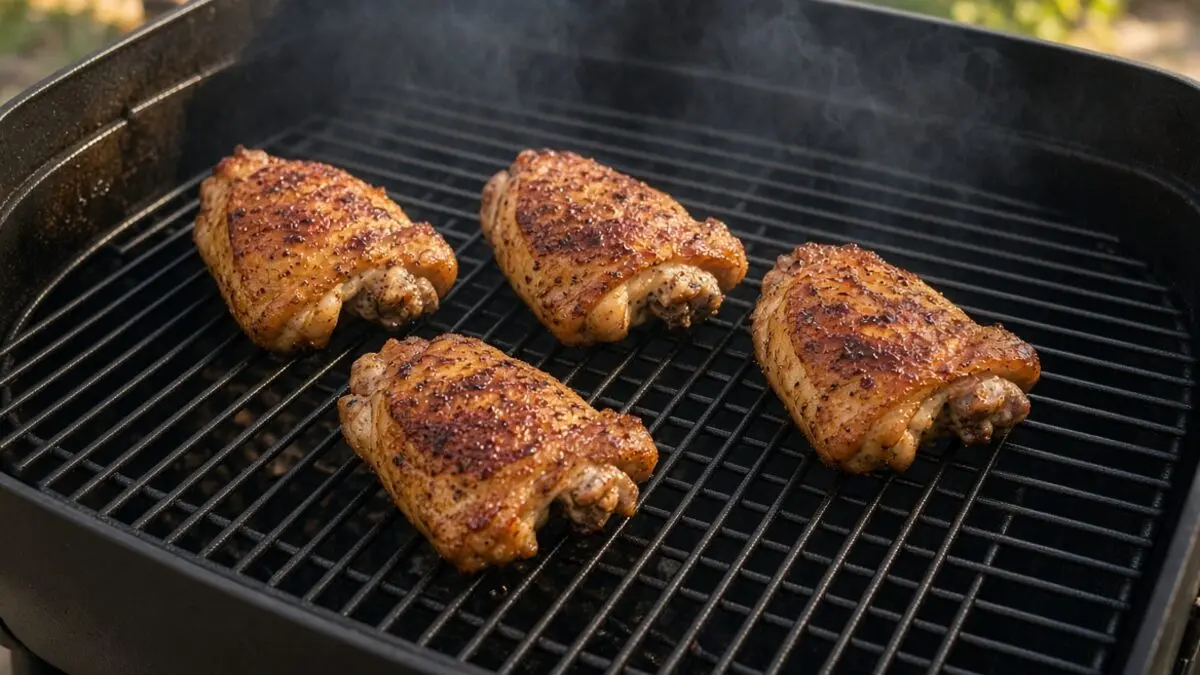
How to get crispy chicken skin on a pellet grill comes down to two jobs: dry the surface and cook hot enough for the fat under the skin to render before the meat is done. A pellet grill is an indirect cooker. It will not automatically blister skin the way a charcoal bed or a gas burner can. Dry the chicken well, leave space between the pieces, roast most of the way at 350–375°F, and use a short 400–425°F finish only if the skin still needs color.
Quick Answer: How Do You Get Crispy Chicken Skin on a Pellet Grill?
Pat the chicken skin completely dry, season it lightly, preheat the pellet grill to 350–375°F, and cook with space between the pieces. If you begin with a short 225°F smoke stage, raise the grill to 375–425°F so the skin can render and brown. Cook every piece to at least 165°F internally, measured away from the bone. Do not tent finished chicken tightly in foil or the skin will soften.
Key Points
- Wet skin, crowded grates, early sauce, and a long 225°F cook are the usual reasons pellet-grill chicken skin stays rubbery.
- 350–375°F is a dependable starting range for most skin-on cuts; 400–425°F is a short finishing range, not the whole cook.
- The USDA safe minimum for all poultry is 165°F. Dark-meat texture at 175–180°F is a preference, not a different safety rule.
- Do not rinse raw chicken. Pat it dry. An optional overnight fridge rest on a rack dries the skin further.
- Barbecue sauce belongs in the last 5 to 10 minutes, after the skin has already browned.
- A pellet grill produces milder smoke at roasting heat. A short low stage can add flavor, but it cannot replace the hotter finish.
Why Does Chicken Skin Get Rubbery on a Pellet Grill?
Chicken skin stays rubbery when surface moisture never leaves and the cooker never gets hot enough to render the fat under the skin before the meat reaches 165°F. A pellet grill heats the chamber with a firepot and a fan. The food sits over a diffuser, not over live coals. That design is excellent for even roasting. It is a weaker tool for blistering wet skin at low smoke settings.
Low heat is useful for smoke flavor. Chicken is not brisket. Holding skin-on pieces at 180–250°F for most of the cook often leaves the skin pale, soft, or chewy while the meat is already done. The fat under the skin needs enough heat to melt and drip. The outside needs enough dry, moving air to evaporate moisture so browning can start.
Five causes show up again and again:
- Wet skin. Package liquid, a wet brine, marinade, or fridge condensation slow browning.
- Low heat for too long. The meat hits 165°F before the skin has time to crisp.
- Crowded grates. Pieces packed together trap steam.
- Sauce added too early. A wet glaze softens the surface, and its sugar can burn before the skin is ready.
- Weak airflow or a dirty grill. Grease and ash interfere with steady heat and clean exhaust.
How Do You Make Chicken Skin Crispy on a Pellet Grill?
Start with dry skin, roast at a moderately high temperature, and finish hotter only when the surface still looks soft. The steps below work with most pellet grills. Stay inside the temperature range and operating instructions in your owner’s manual. A hot finish over a dirty grease tray raises flare-up risk, so scrape the drip path before you cook.
1. Trim Loose Skin and Excess Fat
Remove long flaps of skin and heavy lumps of fat that hang beyond the meat. Leave the skin that covers the top of each thigh, drumstick, or breast. An even layer renders at a more even rate. Bare patches dry out while neighboring flaps stay rubbery.
For wings, separate the drumette and flat if they are still attached. Discard or save the tips for stock. Evenly sized pieces finish closer together.
2. Pat the Skin Completely Dry
Blot every side with clean paper towels. Pay attention to folds and the underside of loose skin. Do not rinse raw chicken. The USDA advises against washing raw poultry because splashing spreads germs onto nearby surfaces. Cooking to a safe internal temperature is what makes the chicken safe, not a rinse.
For a drier surface, set the chicken on a wire rack over a rimmed sheet pan and refrigerate it uncovered for 4 to 24 hours. Keep it on a low shelf where it cannot drip onto ready-to-eat food. Keep the refrigerator at 40°F or colder. This air-dry step is optional. It simply gives moisture more time to leave the skin.
3. Season Without Creating a Wet Coating
Apply a thin, even layer of dry seasoning. If the rub is already salty, do not add another heavy layer of salt. Too much seasoning turns into a paste instead of a dry crust.
A very light dusting of cornstarch can help wings and small pieces dry on the surface. Traeger’s published wing method dries the wings, coats them with cornstarch and seasoning, and cooks them at 375°F. Avoid a heavy white coating, which can taste chalky. Baking powder is another option some cooks use lightly; it is easy to overdo and leave a bitter or metallic note. Neither powder replaces dry skin and adequate heat.
If you use oil, use only enough to make the surface barely glossy. Thick butter, oil, mustard, or marinade on the outside adds moisture and works against crisping. Flavorful butter can go under the skin, not on top of it.
4. Preheat the Pellet Grill Fully
Set the grill to 350–375°F, close the lid, and let it preheat fully. Give the grates and heat diffuser time to warm, not just the air around the temperature sensor. Traeger’s current published methods use 350°F for bone-in thighs and 375°F for wings, which supports this range as a practical starting point. Last verified September 17, 2026.
If your pellet grill has a hotter rear edge or a hot spot over the firepot, plan to rotate pieces. A clean firepot, open exhaust, and clear grease path help the controller hold heat. The site’s pellet grill cleaning guide covers those checks.
5. Arrange the Chicken With Room for Airflow
Place pieces directly on clean grates with at least an inch between them. For thighs, breasts, and a spatchcocked bird, begin skin-side up so circulating air can dry the surface while rendered fat moves away from the meat. Wings and drumsticks benefit from turning because more than one side carries skin.
Do not put a water pan beside the chicken when crisp skin is the goal. Extra humidity works against a dry surface.
6. Choose a Short Smoke Stage or Skip It
If smoke flavor matters more than the fastest cook, begin at 225°F for only 20 to 30 minutes, then raise the grill to 375°F. That short first stage puts the food in a smokier operating range without spending the whole cook at skin-softening heat.
For the crispest result, skip the low stage and cook at 350–375°F from the start. Pellet grills generally produce lighter smoke at higher heat. That is a real tradeoff: more time at low temperature can deepen smoke flavor, while more time at roasting temperature improves the skin. Ways to add smoke without sacrificing the finish are covered in how to get more smoke flavor from a pellet grill.
7. Finish at 400–425°F Only If the Skin Needs Color
When the chicken is approaching a safe internal temperature but the skin is still soft, raise the grill to 400–425°F. Let the cooker actually reach the new setting before you judge the result. Watch closely. Skin can go from golden to scorched quickly where a sweet rub or sauce is present.
If your pellet grill cannot reach or hold that temperature, transfer the chicken to a preheated gas grill, charcoal grill, or oven for the final few minutes. That is a practical workaround, not a failed cook. Avoid moving dripping chicken directly over an open flame unless you can control flare-ups.
8. Add Sauce Near the End
Brush on barbecue sauce only after the skin has browned and the chicken is nearly done. Give the sauce about 5 to 10 minutes to set with the lid closed. Several thin coats set better than one thick layer.
Sugary sauce can burn at high heat. If you plan to finish above 400°F, crisp the skin first, lower the heat if needed, then glaze. Serve extra sauce at the table instead of soaking the finished skin.
9. Check Internal Temperature, Then Rest Briefly
Cook all chicken to at least 165°F internally. Insert an instant-read thermometer into the thickest edible part without touching bone. Check more than one piece. Size, grate position, and hot spots change finishing time.
Dark meat such as thighs and drumsticks is safe at 165°F. Many cooks prefer the texture after it reaches 175–180°F. Traeger’s current thigh recipe notes that thighs are cooked through at 165°F and takes them to 180°F for texture. That higher number is a texture choice, not a different USDA safety minimum.
Rest pieces about 5 minutes before serving. Do not tent them tightly with foil. Trapped steam softens the skin you just crisped. The USDA chart does not require a rest for poultry. A short pause is for cleaner serving, not for finishing undercooked meat. See how to rest meat after grilling for the difference between a safety rest and a serving pause.
What Pellet Grill Temperature Works Best for Each Chicken Cut?
Most skin-on chicken cooks well between 350°F and 400°F; shape and thickness decide how you arrange and turn it. Use internal temperature, not the clock, as the final doneness test. Times vary with piece size, starting temperature of the meat, outdoor weather, and how often the lid opens.
| Chicken cut | Starting grill temperature | Best arrangement | Crisping move |
|---|---|---|---|
| Wings | 375–400°F | Directly on grates with space between pieces | Turn halfway; sauce only after the skin is crisp |
| Bone-in thighs | 350–375°F | Skin-side up | Finish at 400–425°F if needed; 165°F is safe, 175–180°F is a texture choice |
| Drumsticks | 350–375°F | Across the grates, not touching | Rotate two or three times for even color |
| Skin-on breasts | 350–375°F | Skin-side up; watch the lean meat closely | Use only a short hot finish so the breast does not dry |
| Whole or spatchcocked chicken | 350–375°F | Breast and skin facing up | Rotate if one side browns faster; check breast and innermost thigh separately |
A spatchcocked chicken usually crisps more evenly than a whole bird because it lies flatter and exposes more skin to circulating heat. It also makes the breast and leg temperatures easier to check separately.
Why Is My Chicken Skin Still Soft After Cooking?
Soft skin after a full cook usually means the surface started wet, the chamber never became as hot as the controller indicated, or the chicken spent too long at smoking temperature. Fix one cause at a time instead of changing the whole method.
| What you see | Likely cause | First fix |
|---|---|---|
| Pale, rubbery skin | Low heat for most of the cook, or wet skin at the start | Finish at 400–425°F and watch closely. Next time, dry better and start at 350–375°F. |
| Brown but still soft | Sauce, marinade, crowding, or a tight foil tent | Crisp before glazing. Leave space. Rest uncovered. |
| Bottom burns before the top crisps | Hot spot over the firepot or a missing/mis-seated diffuser | Move the pieces, rotate the grate position, and confirm the heat diffuser and drip tray are installed correctly. |
| Rub turns bitter and black | High sugar in the rub or sauce at high heat | Use a lower-sugar dry rub for the main cook. Glaze late. |
| Grill will not reach roasting heat | Damp pellets, ash in the firepot, dirty sensor, blocked exhaust, or cold wind | Clean the firepot and sensor. Use dry pellets. Do not block the exhaust to “hold heat.” |
What Mistakes Keep Pellet-Grill Chicken Skin From Getting Crisp?
The method fails most often when chicken is treated like a long low-and-slow cut. Avoid these habits:
- Cooking at 225°F from start to finish.
- Putting wet chicken on the grate.
- Using a thick binder of oil, butter, or mustard on the skin.
- Adding barbecue sauce at the beginning.
- Crowding the cooker so steam collects between pieces.
- Trusting time alone instead of a thermometer.
- Touching bone with the probe and reading a false high number.
- Tightly covering finished chicken with foil.
- Running a hot finish over a dirty grease tray.
If grease ignites during a hot finish, close the lid if it is safe to do so, follow the shutdown directions for your grill, and never throw water onto a grease fire. The site’s guide to preventing grill flare-ups covers the setup that lowers that risk before the food goes on.
Can You Get Both Strong Smoke Flavor and Crispy Skin?
Yes, if the cook uses two temperature stages. Use a short smoke stage around 225°F, then raise the grill to 375°F or higher so the skin can dry, render, and brown. Trying to maximize smoke for the entire cook usually sacrifices skin texture.
Another option is to cook at 350–375°F from the start and choose a somewhat stronger poultry-friendly pellet, such as hickory or a hickory-and-fruitwood blend. Wood choice changes flavor. It cannot correct wet skin or low cooking heat. A smoke tube may add smoke, yet it also does not replace the higher-temperature finish needed for crisping.
How Do You Check Chicken Safely on a Pellet Grill?
Use a food thermometer in the thickest part of each cut, away from bone, and cook all poultry to at least 165°F. FoodSafety.gov says food is safely cooked when the internal temperature is high enough to kill harmful germs. The USDA safe minimum for all poultry—breasts, whole birds, legs, thighs, wings, ground poultry, giblets, and stuffing—is 165°F. For a whole bird, check the thickest part of the breast and the innermost thigh and wing areas.
Keep raw chicken and its utensils separate from cooked food. Wash hands, cutting boards, tongs, and counters with hot, soapy water after contact with raw poultry. Never put cooked chicken back on the plate that held it raw. Probe placement is covered in how to use a meat thermometer correctly on a grill or smoker.
Refrigerate cooked chicken within two hours, or within one hour when the outdoor temperature is above 90°F. Store leftovers in shallow covered containers. Keep the refrigerator at 40°F or colder. USDA guidance is to use cooked chicken within three to four days and to reheat leftovers to 165°F.
Safety references: FoodSafety.gov’s four food-safety steps, the USDA safe minimum internal temperature chart, and USDA guidance on why washing raw poultry is not recommended.
Final Verdict: Can a Pellet Grill Make Crispy Chicken Skin Without Drying the Meat?
Yes. Dry the skin, roast at 350–375°F with space around each piece, and save any 400–425°F blast for a short finish after the meat is close to 165°F. The meat dries out when lean cuts sit too long at high heat, when breasts are cooked like thighs, or when a cook chases color instead of reading a thermometer. The skin stays rubbery when the opposite happens: wet surface, crowded grate, early sauce, and a long stay at 225°F. Use roasting heat for poultry skin. Use a short low stage only when you want extra smoke and still have time left to finish hot.
Frequently Asked Questions
What temperature makes chicken skin crispy on a pellet grill?
A grill temperature of 350–375°F is a dependable starting range, with a short finish at 400–425°F when more browning is needed. Staying near 225°F for the entire cook is more likely to leave the skin rubbery. The meat still has to reach at least 165°F internally, measured away from bone.
Should I put oil on chicken skin before smoking?
A tiny amount is optional, but the skin should not look wet. Drying matters more than oil. A heavy coating of oil, butter, mustard, or marinade delays crisping because the cooker has to evaporate that moisture before browning can start.
Does baking powder make smoked chicken skin crispy?
It can help dry and brown the surface when used very lightly, but it is easy to overuse and leave an unpleasant taste. Cornstarch is another option used in Traeger’s published wing method. Neither one replaces dry skin and adequate roasting heat.
Should chicken be skin-side up or down on a pellet grill?
Start thighs, breasts, and whole or spatchcocked chicken skin-side up for even indirect cooking. Turn wings and drumsticks during the cook. If your grill allows a direct-flame finish, follow its manual and watch constantly because rendered fat can flare.
When should barbecue sauce go on chicken?
Add sauce during roughly the final 5 to 10 minutes, after the skin has browned. Thin coats set more evenly and are less likely to soften the skin or burn than one heavy coat. Keep extra sauce at the table.
Is chicken safe when it is still a little pink?
Color is not a reliable safety test. Chicken is safe when every checked area reaches at least 165°F on a food thermometer. Smoke, bone-marrow pigment, and the age of the bird can all affect color. Do not serve poultry that is short of 165°F because it “looks done.”
Why did the skin turn soft while the chicken rested?
Steam was probably trapped around it. Rest the chicken briefly on an open rack or platter and avoid a tight foil cover. Sauce applied too early, or extra sauce during the rest, can also soften skin that was crisp on the grate.
Will a long low-and-slow cook dry the meat if I finish hot?
The meat usually dries when lean pieces overshoot 165°F, not because a short hot finish is used after a brief smoke stage. Bone-in thighs and drumsticks have more fat and tolerate a higher finish temperature. Skin-on breasts need a shorter hot finish and closer thermometer checks. Pull each piece when it is done rather than waiting for the whole grate to match.
Related Reading
- How to Get More Smoke Flavor From a Pellet Grill
- How to Use a Meat Thermometer Correctly on a Grill or Smoker
- How to Rest Meat After Grilling (and When Not To)
- How to Prevent Grill Flare-Ups
- Smoked Meatloaf on a Pellet Grill: A Juicy 2-Pound Recipe
About Frank W. Roberts
Frank W. Roberts is the author of Everything Grill Reviews. He has grilled since 1970 and brings more than 50 years of backyard cooking and cookoff experience to fire management, fuel behavior, smoke, and practical cooker use. This article explains a cooking method using established poultry technique, current manufacturer recipe ranges, and USDA/FoodSafety.gov guidance. It does not claim that a specific pellet grill or chicken product was personally tested for this draft. Last verified September 17, 2026.