

As an Amazon Associate, I earn from qualifying purchases
Traeger Pro Series Pro vs Elite. You’re standing at an important decision point in your outdoor cooking adventure. Choosing between two excellent pellet grills can feel overwhelming, but we’re here to help you navigate this choice with confidence.
This comparison focuses on understanding which features matter most for your specific needs. The right decision depends on how much cooking space you’ll regularly use and what technology upgrades are worth the investment for your grilling style.
Both of these wood-fired cooking machines deliver incredible flavor and versatility. However, the premium model brings enhancements that might align perfectly with your outdoor cooking ambitions. We’ll explore real-world performance from slow smoking to high-temperature searing.
Whether you grill occasionally on weekends or cook outdoors multiple times weekly, this guide provides the insights you need. You’ll discover how to balance factors like capacity, advanced features, construction quality, and budget considerations.
Key Takeaways
- Understanding your regular cooking capacity needs is crucial for choosing the right model
- Premium features can significantly enhance your grilling experience if you use them frequently
- Wood-fired flavor remains consistent across both pellet grill options
- Budget considerations should align with how often you’ll actually use advanced features
- Construction quality impacts long-term durability and cooking performance
- Your typical cooking style (low-and-slow vs high-heat) should guide your decision
- Technology upgrades can simplify the cooking process for frequent users
Overview of Traeger Pellet Grills
Pellet grilling as we know it today owes its existence to one pioneering inventor. Understanding this brand’s journey helps you appreciate why their products stand out in the crowded outdoor cooking market.
Brand History and Evolution
Joe Traeger revolutionized outdoor cooking in 1985 by inventing the first pellet grill. He patented this innovative technology the following year, giving his company a twenty-year head start in the market.
When the patent expired in 2006, competition flooded the market. By 2014, twenty-seven different companies were manufacturing pellet grills. This forced the brand to innovate significantly.
Jeremy Andrus acquired the business in 2014 with private equity firm Trilantic Capital Partners. The company relocated to Salt Lake City and now sells over $300 million in products annually.
Traeger Pro Series Pro vs Elite
Traeger’s Product Lineup Explained
Today’s lineup includes five main models catering to different needs and budgets. Each series targets specific cooking styles from casual weekend use to professional-level performance.
All Traeger grills operate on the same fundamental principle. They use electricity to burn 100% natural, food-grade wood pellets. This creates authentic wood-fired flavor without propane, natural gas, or charcoal.
The company manufactures their products in China and Vietnam while maintaining strict quality control standards. This global manufacturing approach helps keep their grills accessible to various budgets.
| Model Series | Primary Use | Key Features | Target User |
|---|---|---|---|
| Woodridge | Versatile cooking | Multiple configurations available | Entry-level enthusiasts |
| Ironwood | Mid-range performance | Balanced features and price | Regular outdoor cooks |
| Timberline | Premium cooking | Advanced technology included | Serious pitmasters |
| Tailgater | Portable cooking | Compact and transportable | Mobile enthusiasts |
| Ranger | Ultra-portable | Smallest footprint | Camping and tailgating |
Key Features & Differences Across Models
Understanding the physical dimensions and smart features of your future grill helps you make the right choice. The cooking area and technological upgrades create meaningful distinctions between these options.
Cooking Area and Grill Design
You get the same generous 970 square inches of cooking space in both models. This breaks down to 585 square inches on the main grate and 385 on the warming rack.
The significant weight difference tells an important story. The Elite weighs 221 pounds compared to 174 pounds for the Pro. This extra heft comes from upgraded construction materials and additional features.
Your cooking capacity needs should guide this decision. Both models offer substantial space for family meals or entertaining guests.
Innovative Technology and Controls
These models share several advanced features that enhance your cooking experience. Both include Super Smoke mode for richer flavor and a pellet sensor that alerts you before running low.
The Elite model adds an exclusive side sear burner for high-heat cooking. This gives you impressive versatility when you want to quickly sear meats after slow smoking.
All Woodridge models operate within the same 180-500°F temperature range. They also share a 24-pound hopper capacity for extended cooking sessions without refills.
traeger pro series pro vs elite: Feature Comparison
The real distinction between these premium options lies in their smart features and connectivity capabilities. Understanding these technological differences helps you choose the right model for your cooking needs.
Super Smoke™ Mode and WiFIRE® Connectivity
The Woodridge Pro brings significant upgrades over basic models. You get Super Smoke mode that enhances flavor at lower temperatures. This feature operates between 165°F and 225°F for perfect barbecue results.
Both models include WiFIRE connectivity for remote control. You can monitor your grill from anywhere using the Traeger app. The pellet sensor alerts you before running low on fuel.
The Elite model adds a game-changing side sear burner. This gives you restaurant-quality char marks on steaks and burgers. It’s the main differentiator between these two premium options.
| Feature | Woodridge Pro | Woodridge Elite |
|---|---|---|
| Super Smoke Mode | Yes | Yes |
| WiFIRE Connectivity | Yes | Yes |
| Side Sear Burner | No | Yes |
| Pellet Sensor | Yes | Yes |
| Folding Side Shelf | Yes | Yes |
Your decision depends on how often you need high-heat searing capabilities. The side burner makes the Elite ideal for versatile cooking styles.
Cooking Performance & Temperature Control
The true test of any pellet grill comes down to temperature performance. You need consistent heat for perfect results whether you’re smoking for hours or grilling quickly.
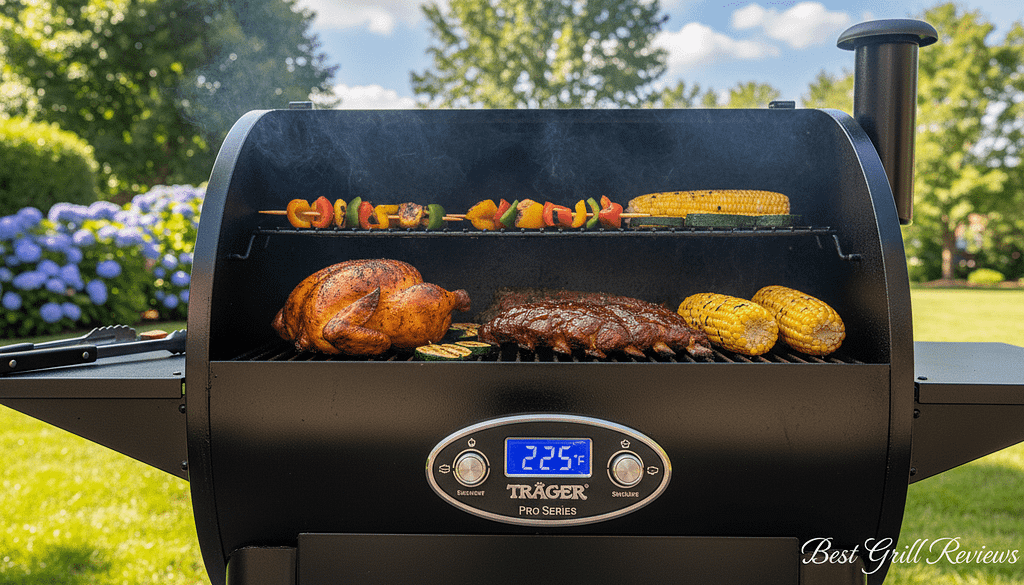
Your low and slow smoking sessions will shine with this equipment. The advanced controller measures temperature every second to maintain precise heat levels.
Low and Slow Smoking Capabilities
You’ll achieve tender, juicy brisket and ribs with impressive ease. The mild smoke profile enhances your food without overpowering the natural meat flavor.
When smoking between 165°F and 225°F, Super Smoke mode delivers richer flavor. This feature significantly boosts smoke output for authentic barbecue taste.
The temperature stability remains consistent during marathon cooking sessions. You can trust your grill to maintain heat within 15 degrees of your target setting.
High Heat Searing and Temperature Stability
Your versatility extends from delicate fish at 180°F to high-heat grilling at 500°F. This range accommodates diverse cooking techniques and food types.
However, achieving a proper sear on steaks requires additional equipment. The base model struggles with high-heat searing even with accessory grates.
A fantastic technique involves starting chicken at 165°F with Super Smoke. After building flavor for an hour, crank the heat to 425°F for crispy skin.
The temperature control system gives you freedom from constant monitoring. You can focus on enjoying time with family while your food cooks perfectly.
Pricing, Value, and Upgrade Considerations
Your investment in a pellet grill involves both the initial purchase price and ongoing operational costs. Understanding this balance helps you make smart financial decisions for your outdoor cooking setup.
Assessing Affordability and Investment Value
The entry-level model starts around $800, offering solid basic features. As you move up in price, you gain significant upgrades like Super Smoke mode and pellet sensors.
Consider how often you’ll use advanced capabilities. Frequent grillers find premium features deliver excellent long-term value.
Premium Upgrades Versus Entry-Level Benefits
Higher-priced models include better insulation and enhanced smoke systems. These improvements justify the additional cost for serious cooking enthusiasts.
Your budget should align with actual usage patterns. Occasional users might prefer saving money on the base model.
| Price Range | Key Features | Best For | Annual Pellet Cost |
|---|---|---|---|
| $800-$1,000 | Basic smoking, digital controls | Weekend grillers | $150-$200 |
| $1,000-$1,500 | WiFi connectivity, pellet sensors | Regular users | $200-$300 |
| $1,500+ | Premium insulation, side burners | Serious enthusiasts | $300-$400 |
Remember that larger grills consume more pellets. Choose a size that matches your typical cooking needs to maximize efficiency.
User Experience & WiFIRE Technology
The convenience of controlling your grill from anywhere transforms your outdoor cooking experience. Modern technology brings smart features that make cooking simpler and more enjoyable.
App-Based Control and Remote Monitoring
Your smartphone becomes the ultimate cooking companion with WiFIRE connectivity. The Traeger app gives you complete command over your grill’s temperature and settings.
You can monitor your food’s progress from inside your home. Check internal temperatures and adjust heat without stepping outside. The system measures temperature every second for precise control.
Notifications alert you when your grill reaches the desired temperature. You’ll also get warnings when your pellet supply runs low. This technology ensures your cooking stays on track.
Ease-of-Use in Everyday Cooking
Both the digital control panel and app work seamlessly together. Features like keep warm mode automatically hold food at perfect serving temperature.
The physical controls are straightforward and intuitive. You can create custom cook settings for your favorite recipes. This makes everyday cooking truly effortless.
Whether you prefer app control or hands-on operation, the system accommodates your style. The technology enhances your cooking without complicating the process.
Build Quality & Design Considerations
When evaluating build quality, you’ll discover meaningful differences in materials and craftsmanship. These distinctions affect both durability and your daily cooking experience.
Material Durability and Cart Design
The weight difference between models tells an important story about construction. One option weighs 174 pounds while the premium version reaches 221 pounds.
This extra heft comes from upgraded materials and additional components. The cart design provides practical storage underneath for accessories.
| Feature | Standard Model | Premium Model |
|---|---|---|
| Overall Weight | 174 lbs | 221 lbs |
| Hopper Capacity | 24 lbs | 24 lbs |
| Side Shelf | Standard | Enhanced |
| Cart Storage | Adequate | Generous |
Space, Portability, and Overall Setup
The 24-pound hopper capacity handles extended cooking sessions beautifully. You won’t need frequent refills during all-day smoking.
The convenient side shelf offers valuable prep space near your cooking area. This thoughtful design element enhances workflow efficiency.
While these grills aren’t lightweight, they feature wheels for reasonable mobility. The overall setup feels solid and well-engineered for outdoor use.
Competitor Comparison: Beyond Traeger Options
The pellet grill market offers diverse choices beyond the Traeger brand you’re considering. Several manufacturers have developed impressive alternatives with unique strengths.
Exploring these options helps you make an informed decision. Each competitor brings something different to the table.
Insights on Pit Boss and Camp Chef Models
Pit Boss grills provide excellent value at a lower price point. Their slide and sear system gives you direct flame access for high-heat cooking.
Camp Chef’s Woodwind series earns consistent praise for build quality. You can add a dedicated sear box attachment for serious grilling.
Camp Chef also offers superior pellet management. Their easy dump-and-switch system simplifies fuel changes.

How Traeger Stands Out in the Market
Despite strong competition, Traeger maintains distinct advantages. Their app experience remains the most refined in the industry.
You benefit from an extensive dealer network for support. Decades of proven reliability give you peace of mind.
While competitors often win on specific features or price, Traeger’s complete ecosystem creates a superior cooking experience. Their pellet varieties and accessories integrate seamlessly.
Conclusion
The final verdict on which grill best suits your needs depends on understanding your cooking priorities. The Woodridge Pro delivers outstanding value with its enhanced smoke system and generous 970 square inches of cooking space.
If you frequently sear steaks and want restaurant-quality char marks, the Elite’s side burner justifies the premium investment. Both models share the same impressive temperature range and hopper capacity.
Your decision ultimately comes down to how often you’ll use high-heat searing capabilities. For most backyard enthusiasts, the Pro model hits the perfect balance of features and price.
No matter which option you choose, you’re getting a premium cooking machine that delivers incredible wood-fired flavor. Welcome to the world of effortless outdoor cooking where every meal becomes a celebration.