
Updated: September 3, 2026
Updated and fact-checked: September 2, 2026 Two-zone grilling means one side of the grill is hot and the other side is not. Food sears over the fire, then moves to the cool side to finish without burning. That single setup is how a kettle or gas grill cooks steak, chicken, and a whole meal without turning everything into charcoal.
Quick Answer: What Is Two-Zone Grilling?
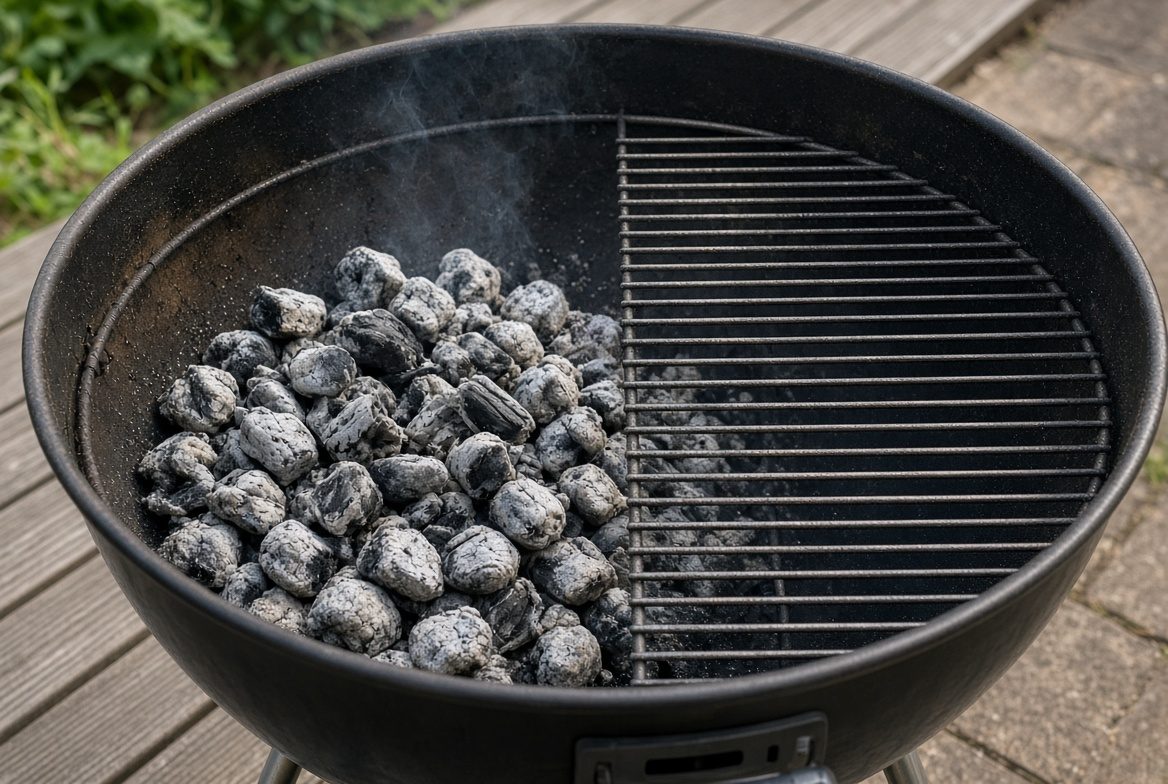
Two-zone grilling splits the grate into a direct-heat side over the fire and an indirect-heat side with no fire under the food. Sear on the hot side. Finish, hold, or roast on the cool side with the lid closed. On charcoal, bank lit coals on half the grate. On gas, leave at least one burner off.
Key Points
- Direct heat cooks what sits over the fire. Indirect heat cooks with hot air, like a small oven.
- A two-zone fire gives you a safe place to move food during flare-ups.
- On charcoal, dump a chimney of ashed coals onto one half to two-thirds of the charcoal grate and leave the rest empty.
- On gas, light one side and keep the other side off. Preheat with the lid closed.
- Lid on turns the cool side into a roasting chamber. Lid off keeps the cool side cooler and burns fuel faster.
- A snake or Minion fire is a two-zone idea stretched for hours. Everyday two-zone grilling is the shorter banked-coal version.
Why Does Two-Zone Grilling Matter?
GRILLRANK SEO DATA — REMOVE THIS SECTION BEFORE PUBLISHING WordPress Title: How to Set Up Two-Zone Grilling on Charcoal or Gas Published Slug: two-zone-grilling Focus Keyword: two-zone grilling Secondary Keywords: two zone fire, indirect heat grill, how to set up two-zone charcoal, gas grill two zone SEO Title: How to Set Up Two-Zone Grilling on Charcoal or Gas Meta Description: Two-zone grilling puts fire under half the grate and leaves the other half empty. Sear on the hot side, finish on the cool side. Charcoal and gas setups included. Category/Silo: Grill How-To Search Intent: Informational how-to. Reader wants to understand and build a direct-plus-indirect fire. Last Verified: September 2, 2026 Suggested Schema: Article, HowTo, FAQPage Notes: How-to article. Do not add Product, Review, or AggregateRating schema. No Amazon CTA. A full grate of fire gives you only one temperature: hot. That works for thin burgers and hot dogs. It fails on chicken pieces, thick steaks, bone-in pork chops, and anything with fat that can drip and flare. Two-zone grilling is the escape hatch. You brown food where you want color, then slide it off the fire before the outside burns. Weber describes the same split as the basic charcoal arrangement for a wide range of foods: direct heat for smaller, tender pieces that cook fast, and indirect heat for larger or longer cooks. You do not need a special cooker. You need an empty half of the grate.
What Is the Difference Between Direct Heat and Indirect Heat?
GRILLRANK SEO DATA — REMOVE THIS SECTION BEFORE PUBLISHING WordPress Title: How to Set Up Two-Zone Grilling on Charcoal or Gas Published Slug: two-zone-grilling Focus Keyword: two-zone grilling Secondary Keywords: two zone fire, indirect heat grill, how to set up two-zone charcoal, gas grill two zone SEO Title: How to Set Up Two-Zone Grilling on Charcoal or Gas Meta Description: Two-zone grilling puts fire under half the grate and leaves the other half empty. Sear on the hot side, finish on the cool side. Charcoal and gas setups included. Category/Silo: Grill How-To Search Intent: Informational how-to. Reader wants to understand and build a direct-plus-indirect fire. Last Verified: September 2, 2026 Suggested Schema: Article, HowTo, FAQPage Notes: How-to article. Do not add Product, Review, or AggregateRating schema. No Amazon CTA. Direct heat is fire under the food. Indirect heat is fire beside the food.
| Zone | Where the fire is | What it does | Typical foods |
|---|---|---|---|
| Direct | Under the food | Sears, chars, cooks thin food through | Burgers, hot dogs, thin steaks, shrimp, sliced vegetables |
| Indirect | Beside the food | Roasts more evenly, finishes thick cuts, holds food | Chicken pieces, thick steaks, whole chicken, ribs, roast vegetables |
With the lid closed, the indirect side is still hot air. It is not refrigerator-cold. With the lid off, that side is a true holding zone and a place to park food during a flare-up. Both uses are two-zone grilling. The lid is the difference. GRILLRANK SEO DATA — REMOVE THIS SECTION BEFORE PUBLISHING WordPress Title: How to Set Up Two-Zone Grilling on Charcoal or Gas Published Slug: two-zone-grilling Focus Keyword: two-zone grilling Secondary Keywords: two zone fire, indirect heat grill, how to set up two-zone charcoal, gas grill two zone SEO Title: How to Set Up Two-Zone Grilling on Charcoal or Gas Meta Description: Two-zone grilling puts fire under half the grate and leaves the other half empty. Sear on the hot side, finish on the cool side. Charcoal and gas setups included. Category/Silo: Grill How-To Search Intent: Informational how-to. Reader wants to understand and build a direct-plus-indirect fire. Last Verified: September 2, 2026 Suggested Schema: Article, HowTo, FAQPage Notes: How-to article. Do not add Product, Review, or AggregateRating schema. No Amazon CTA.
How Do You Set Up Two-Zone Grilling on a Charcoal Kettle?
Light a chimney of charcoal, dump the ashed coals on one half of the charcoal grate, and leave the other half empty. That is the whole method. Baskets and a Slow ’n Sear only help the pile stay put.
- Open the bottom vent. Clean ash out of the bowl so air can reach the fire.
- Light charcoal in a chimney, not in a puddle of lighter fluid. Wait until the top coals are covered with gray ash, usually 15 to 20 minutes. See how to light a charcoal grill without lighter fluid.
- Wear gloves. Pour the coals onto one half to two-thirds of the charcoal grate. Pack them in a tight layer. Leave a clear empty zone.
- Set the cooking grate in place. Open the top vent. Close the lid for about 10 minutes so the grate heats.
- Put a grate-level thermometer on the cool side if you are roasting, not only trusting the lid gauge.
- Sear over the coals. Move food to the empty side to finish. On a kettle, point the top vent over the cool side so heat and smoke pull across the food.
A three-quarter chimney is enough for most weeknight cooks on a 22-inch kettle. A full chimney gives a hotter sear side and a shorter burn. Lump charcoal lights faster and burns hotter. Briquettes hold a steadier bed, which is why they are the usual choice for a long two-zone roast. The site’s briquettes for kettle grilling piece covers fuel that holds a two-zone fire.
How Do You Set Up Two-Zone Grilling on a Gas Grill?
Light the burner or burners on one side and leave the other side off. Preheat with the lid closed until the hot side is ready to sear. Cook on the lit side, then finish over the unlit burners.
- Two-burner grill: one burner on, one off.
- Three-burner grill: one or two burners on, at least one off. Two off gives a larger indirect zone for chicken or a small roast.
- Four-burner grill: light one end. Do not light every other burner if you want a real cool side.
The temperature gap has to be obvious. If both sides read 400°F, you only turned a knob halfway. Give the grill 10 to 15 minutes of lid-down preheat. Keep the lid closed on the indirect stretch so the box acts like an oven. If the cool side will not stay warm enough to finish a thick cut, crack the nearest burner to low instead of turning the whole grill into direct heat.
Does Two-Zone Grilling Work on a Pellet Grill?
Not in the same way. A pellet grill heats the chamber with a firepot and a fan. The grate is more even than a banked charcoal fire. You can park food toward the cooler edge on some models, or use a sear grate if the cooker has one. You cannot rake the fire to one side like a kettle. For true sear-then-finish control, charcoal or gas is the cleaner lesson.
When Should the Lid Be On or Off?
Close the lid for indirect roasting. Leave it off when you want a cooler holding zone or you are watching a fast sear.
| Lid | Cool-side behavior | GRILLRANK SEO DATA — REMOVE THIS SECTION BEFORE PUBLISHING WordPress Title: How to Set Up Two-Zone Grilling on Charcoal or Gas Published Slug: two-zone-grilling Focus Keyword: two-zone grilling Secondary Keywords: two zone fire, indirect heat grill, how to set up two-zone charcoal, gas grill two zone SEO Title: How to Set Up Two-Zone Grilling on Charcoal or Gas Meta Description: Two-zone grilling puts fire under half the grate and leaves the other half empty. Sear on the hot side, finish on the cool side. Charcoal and gas setups included. Category/Silo: Grill How-To Search Intent: Informational how-to. Reader wants to understand and build a direct-plus-indirect fire. Last Verified: September 2, 2026 Suggested Schema: Article, HowTo, FAQPage Notes: How-to article. Do not add Product, Review, or AggregateRating schema. No Amazon CTA. Use it for |
|---|---|---|
| Closed | Hot-air roast. Still well above room temperature. | Chicken pieces, thick steaks after the sear, whole chicken, ribs at moderate heat |
| Open | Genuinely cooler. Coals burn faster. | Parking food during a flare-up, holding a finished steak, watching thin food |
Opening the lid to “check” every two minutes is how two-zone grilling fails. Heat leaves. The cool side stops acting like an oven. Look when you have a reason: turning meat, moving it off a flare, or reading a thermometer.
What Should You Cook on Each Side?
Sear first when the food needs a crust. Start indirect when the food needs time before color.
- Thick steak or chop: Sear over the coals, then finish on the cool side with the lid down until the thermometer says you are there. That is a simple reverse of the usual panic flip.
- Chicken pieces: Skin-side down on the hot side only long enough to color, then finish indirect. Chicken over a full fire burns the skin and leaves the bone side underdone.
- Burgers and hot dogs: Direct heat is enough. Keep the cool side empty so a flare-up has somewhere to go. See how to prevent flare-ups.
- Whole chicken or a small roast: Indirect the whole way, lid closed. Rotate once if one side runs hotter.
- Vegetables and bread: Direct for char, then the cool side so they do not go from browned to black.
Poultry still needs 165°F in the thickest part. Steaks and chops follow the USDA 145°F plus rest rule for whole cuts. Color on the grate is not a safety test.
How Is Two-Zone Grilling Different From the Snake or Minion Method?
Everyday two-zone grilling is a pile of already-lit coals on one side. The snake and Minion methods light only a small starter charge and let that fire crawl through unlit fuel for hours. Use the banked two-zone fire for steaks, chicken, and weeknight cooks. Use the snake or Minion when you need GRILLRANK SEO DATA — REMOVE THIS SECTION BEFORE PUBLISHING WordPress Title: How to Set Up Two-Zone Grilling on Charcoal or Gas Published Slug: two-zone-grilling Focus Keyword: two-zone grilling Secondary Keywords: two zone fire, indirect heat grill, how to set up two-zone charcoal, gas grill two zone SEO Title: How to Set Up Two-Zone Grilling on Charcoal or Gas Meta Description: Two-zone grilling puts fire under half the grate and leaves the other half empty. Sear on the hot side, finish on the cool side. Charcoal and gas setups included. Category/Silo: Grill How-To Search Intent: Informational how-to. Reader wants to understand and build a direct-plus-indirect fire. Last Verified: September 2, 2026 Suggested Schema: Article, HowTo, FAQPage Notes: How-to article. Do not add Product, Review, or AggregateRating schema. No Amazon CTA. a kettle to hold 225–275°F for a long time. That longer fire is covered in how to keep a charcoal grill at 225°F. A charcoal basket or a Slow ’n Sear-style trough is optional hardware. It keeps the hot pile from sliding into the cool zone. It is not required for the method to work. A 22-inch kettle is still the cooker most people should learn on; the site’s kettle under $300 guide starts there.
What Mistakes Break a Two-Zone Fire?
The usual failures are a full grate of coals, a lid that never closes, and food left over fat-soaked fire.
- Lighting the whole load under the entire grate. That is one-zone grilling. You have no place to go when fat flares.
- A sloppy bank that creeps under the food. Rake a clean gap. Baskets help if the pile keeps sliding.
- Trusting only the lid thermometer. Dome gauges often read air at the top, not the grate on the cool side.
- Soaked wood chips dumped on the coals. Wet wood makes dirty smoke. Add a dry chunk if you want smoke, and wait for the fire to burn clean.
- Closing both vents to “save” the fire. That smothers the coals and can push thick white smoke onto the food.
- Walking away from a grease fire. Move the food to the cool side, keep the lid closed on a kettle to starve the flame of air, and do not spray water on burning grease.
Final Verdict: Should You Grill Two-Zone Every Time?
Yes, for almost every cook that is thicker than a hot dog. Bank the fire on one side, leave the other side empty, and you can sear, roast, and rescue food on the same grate. Learn it on charcoal or gas first. Treat pellet grills as even-heat cookers unless the model has a real sear zone. Two-zone grilling is not a gadget. It is the difference between managing a fire and hoping the food finishes before it burns.
Frequently Asked Questions
How hot should the direct side be?
Hot enough to sear, which on charcoal usually means ashed coals in a tight bed and vents open. Many weeknight two-zone cooks run the hot side well above 400°F at the grate. The cool side is the control. If the hot side is timid, the coals were not fully lit or the bed is too thin.
Can I use a water pan in the cool zone?
Yes, when you want a steadier roast and fewer grease fires. A pan on the charcoal grate, under the food, catches drips and can take the edge off heat spikes. Skip the water if you want a drier skin or a harder sear later. A dry drip pan still helps on gas.
Do I need charcoal baskets?
No. They are a convenience, not a requirement. Baskets and a Slow ’n Sear-style insert keep the hot pile in a neat wall. Tongs and a clean gap work on a kettle if you check the bank once during the cook.
Where do I put the top vent on a kettle?
Over the cool side so the draft pulls heat and smoke across the food. The bottom vent feeds the fire. The top vent is the exhaust. Closing both vents is how you get dirty smoke and a dying fire.
Is a three-zone fire worth the extra work?
Sometimes. A deep pile on one edge, a single layer in the middle, and an empty side gives hot, medium, and cool. It is useful when you are cooking several foods at once. For one steak and two chicken thighs, a simple two-zone bank is enough.
Related Reading
- How to Keep a Charcoal Grill at 225°F
- How to Light a Charcoal Grill Without Lighter Fluid
- How to Prevent Flare-Ups on a Gas or Charcoal Grill
- Best Charcoal Briquettes for Kettle Grills
- Best Charcoal Kettle Grill Under $300
- Weber: Direct, Indirect, and 2-Zone Grilling
About Frank W. Roberts
Frank W. Roberts is the author of Everything Grill Reviews. He has grilled since 1970 and brings more than 50 years of backyard cooking and cookoff experience to fire management, fuel behavior, smoke, and practical cooker use. This article explains two-zone fire layout on charcoal and gas. It is not a timed test of one kettle, one basket, or one gas-burner layout. Last verified September 2, 2026.