
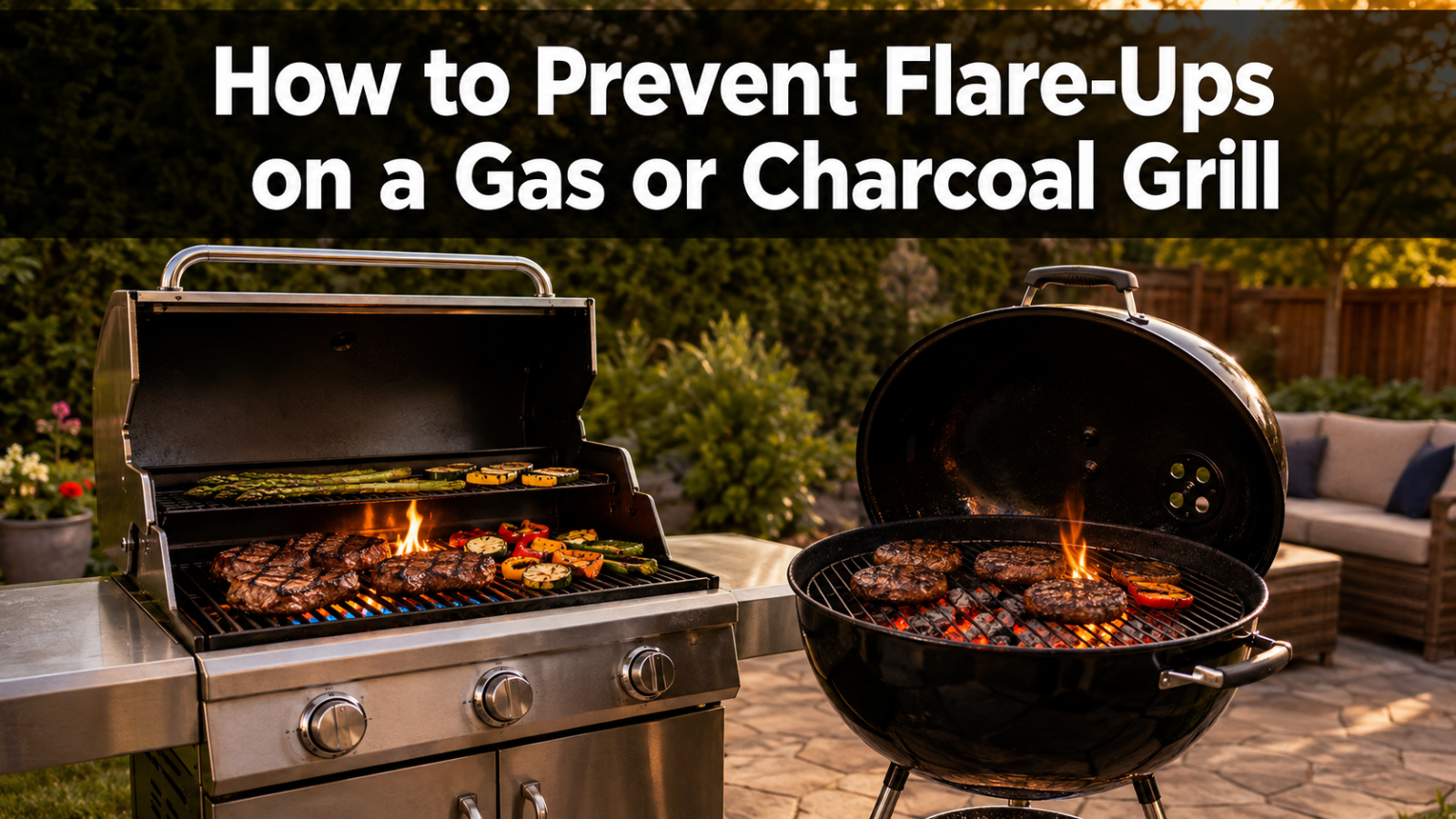
Learning how to prevent flare-ups on a gas or charcoal grill starts with controlling two things: dripping fat and direct flame. A few brief flames are common when grease hits a hot surface, but repeated or sustained flames can scorch food, create bitter soot, and turn accumulated grease into a dangerous fire.
Quick Answer: To prevent grill flare-ups, remove grease buildup, trim excess fat, drain oily marinades, cook fatty foods over moderate or indirect heat, and keep a cool zone ready. If flames rise, move the food away from the fire and close the lid. Never pour water on burning grease.
Flare-up control is not about eliminating every flicker of flame. It is about keeping a small burst from becoming a fire that you cannot control. The same basic principles apply to gas and charcoal grills, but the safest response differs slightly because one grill uses burner controls while the other depends on charcoal placement and airflow.
Important safety warning
If flames continue after the food has been moved, fire is burning in the grease tray or cookbox, flames reach the hose, cylinder, controls, or nearby structure, or you smell leaking gas, move everyone away and call emergency services. Shut off the fuel only if you can do so without approaching the fire. Never move a burning grill and never use water on a grease fire.
In This Guide
- What causes grill flare-ups?
- Flare-up or grease fire?
- How to stop a flare-up safely
- What to do before lighting the grill
- How to prevent flare-ups on a gas grill
- How to prevent flare-ups on a charcoal grill
- How to grill fatty foods without constant flames
- A practical cleaning schedule
- Frequently asked questions
What Causes Flare-Ups on a Grill?
Grill flare-ups happen when fat, oil, sauce, or marinade drips onto hot charcoal, a gas burner shield, or another very hot surface and ignites. The more fuel that reaches the heat source, the larger and longer the flames can last.
The most common causes are:
- Grease and food debris accumulated in the cookbox, grease tray, or catch pan
- Thick fat caps or loose pieces of fat hanging from meat
- Oily marinades dripping directly onto the heat source
- Too much oil applied to the food or grate
- Fatty food packed tightly across the entire cooking surface
- Cooking over more heat than the food needs
- A clogged grease drain or incorrectly installed drip tray
- Missing, damaged, or incorrectly positioned burner shields on a gas grill
Flare-ups are especially common with burgers, skin-on chicken, sausage, bacon, heavily marbled steaks, and meat covered in oil-based marinade. The problem is not always excessive heat. Even a moderate fire can flare when enough grease reaches it.
Is It a Normal Flare-Up or a Grease Fire?
A normal flare-up is brief, stays directly beneath the food, and fades after the dripping stops. A grease fire continues burning after the food is moved and may spread through the bottom of the grill.
| What You See | Likely Situation | First Safe Response |
|---|---|---|
| A quick flame beneath one burger or steak | Brief flare-up | Move the food to indirect heat and close the lid |
| Flames return every time fatty food is placed over the same spot | Food drippings or a dirty hot spot | Keep food off that spot, reduce heat, and clean the grill after it cools |
| Fire continues after all food is moved | Possible grease fire | Turn off burners and fuel if safe, keep the lid closed as your manual directs, and do not use water |
| Flame near the hose, propane cylinder, control panel, or outside the cookbox | Gas or equipment emergency | Move away immediately and call emergency services |
Do not lean over the grill to investigate. Flames can rise suddenly when a lid is opened and fresh oxygen reaches the fire.
What Is the Fastest Safe Way to Stop a Grill Flare-Up?
Move the food away from the flame, remove the heat beneath it when possible, and close the lid to limit oxygen. Do not squirt the flame with water.
For a Small Flare-Up on a Gas Grill
- Use long-handled tongs to move the food to an unlit or lower-heat section.
- Turn down or turn off the burner directly beneath the flare-up.
- Close the lid and watch the grill from a safe position.
- When the flames stop, continue cooking over indirect or moderate heat.
For a Small Flare-Up on a Charcoal Grill
- Move the food to the coal-free side of a two-zone fire.
- Close the lid to reduce the oxygen reaching the flame.
- If necessary, partially reduce the intake airflow in small steps. Do not make a sudden vent change that completely smothers the fire while food is still cooking.
- Return the food to direct heat only when the flames have stopped.
Never press burgers with a spatula to “cook them faster.” Pressing forces hot fat onto the fire, causing a flare-up while also drying the burger.
What If the Fire Does Not Stop?
If a gas grill has a sustained grease fire, turn all burners off. If you can reach the fuel valve without approaching flames or intense heat, turn off the gas supply. Many gas-grill manuals instruct owners to keep the lid closed until the fire is out; follow the directions for your exact model. Do not reopen the lid to check every few seconds.
If the fire is growing, reaches any fuel component, spreads beyond the grill, or makes you unsure of your safety, leave the area and call 911. A grill and a meal can be replaced.
What Should You Do Before Lighting the Grill?
A two-minute inspection before cooking prevents many flare-ups. Check the grease system, cooking chamber, fuel area, and planned heat zones before the grill becomes hot.
- Check the grease tray and catch pan. Empty them before they are full. A disposable liner does not make old grease safe to leave in place.
- Clear the grease drain. Make sure liquid can travel from the cookbox into the tray instead of pooling near the burners.
- Inspect the burner shields. Heat tents, flame tamers, or flavorizer bars must be clean enough to shed grease and installed in their correct positions.
- Remove loose grease deposits. With the grill cold, scrape heavy buildup from the cookbox in the manner described by the manufacturer.
- Plan a cool zone. On gas, leave one burner off or low. On charcoal, bank the coals to one side.
- Set out long-handled tongs and heat-resistant gloves. You should be able to move food without searching for a tool.
- Keep the grill attended. A flare-up can become a grease fire quickly when no one is watching.
The National Fire Protection Association advises keeping grills clean by removing grease or fat buildup from the grill and trays below it. It also recommends using the grill outdoors, well away from siding, deck railings, eaves, and other combustible material.
How Do You Prevent Flare-Ups on a Gas Grill?
On a gas grill, prevent flare-ups by keeping the grease-management system clear, using moderate burner settings, and maintaining an unlit indirect zone. Gas gives you immediate heat control, so use that advantage.
1. Clean More Than the Cooking Grates
A shiny grate does not mean the grill is clean. Grease can accumulate below the burners, on heat shields, along the cookbox walls, and inside the grease tray. When the grill is cold and the gas is off, remove accessible parts and clean them according to the owner’s manual.
For a complete procedure, see this step-by-step gas grill cleaning guide.
2. Do Not Line the Cookbox With Foil
Foil can block designed grease paths, hold grease where it can ignite, and interfere with airflow. Only line or cover a component when the owner’s manual specifically permits it, and never cover burner openings or ventilation passages.
3. Create an Indirect Safety Zone
On a grill with three or more burners, light the outer burners and leave the center burner off for indirect cooking. On a two-burner grill, use one burner for direct heat and leave the other off. Sear over the lit side, then move fatty or thick food to the unlit side to finish.
4. Match the Heat to the Food
High heat is useful for a short sear, but it is not the best setting for an entire cook. Burgers, sausage, chicken thighs, and heavily marbled steaks often do better over medium heat or with a direct-then-indirect method.
5. Watch for Abnormal Flames
Repeated flames behind the control panel, fire near a burner inlet, heavy soot, or an unusual mostly yellow flame can signal a blocked burner or venturi rather than an ordinary food flare-up. Turn the grill off and let it cool. Do not continue using it until it has been inspected and cleaned according to the manual.
If your grill also has weak heat, ignition trouble, or unusual flames, use this gas grill problems guide to identify when a simple cleaning is reasonable and when it is time to stop.
How Do You Prevent Flare-Ups on a Charcoal Grill?
On a charcoal grill, the best defense is a two-zone fire with charcoal on one side and a coal-free area on the other. The empty side gives you somewhere to move food immediately without removing it from the grill.
1. Do Not Cover the Entire Charcoal Grate
Unless you need a broad, short-lived searing fire, bank the coals to one side or arrange them in charcoal baskets. Place a drip pan on the empty side when cooking fatty meat indirectly. The pan helps keep drippings away from the coals and simplifies cleanup.
2. Use Only the Charcoal You Need
A grill packed with fully lit charcoal can be difficult to control. Match the amount of fuel to the food and cooking time. The guide to how long charcoal lasts in a grill explains how fuel quantity, airflow, and grill design affect usable heat.
3. Control Airflow Gradually
More oxygen makes charcoal burn hotter. Use the vents and lid to control the fire, but make small adjustments and allow time for the temperature to respond. When a brief flare-up occurs, move the food to the cool side and close the lid.
4. Remove Old Ash Before the Next Cook
Ash does not usually cause a grease flare-up by itself, but it can block intake vents and make fire control unpredictable. Wait until all coals and ash are completely cold, then empty them into a metal container with a tight-fitting lid. The U.S. Fire Administration also advises cleaning grills after use and placing cooled coals in a covered metal can.
For more upkeep advice, read these charcoal grill maintenance tips.
How Can You Grill Fatty Foods Without Constant Flames?
Trim loose fat, remove excess surface oil, start fatty foods over moderate or indirect heat, and reserve direct heat for controlled browning. The goal is not to remove all fat; it is to stop large amounts from dripping onto the fire at once.
| Food | Why It Flares | Better Method |
|---|---|---|
| Burgers | Rendered fat drips quickly | Use moderate heat, leave space between patties, and never press them |
| Skin-on chicken | Skin releases fat during a longer cook | Cook mostly over indirect heat and crisp over direct heat near the end |
| Marbled steak | Edge fat and intramuscular fat render over high heat | Trim dangling fat, sear briefly, then finish on the cooler side |
| Sausage | A split casing can release fat suddenly | Cook gently over indirect heat, then brown briefly over direct heat |
| Oily marinated food | Excess marinade falls directly into the fire | Drain and lightly blot the food before it goes on the grate |
Should You Oil the Grates or the Food?
Use only a thin film of high-heat cooking oil when oil is needed. Do not pour oil onto a hot grate, and never spray aerosol cooking oil toward a lit grill. Applying a light coating to the food while it is away from the grill is usually easier to control. If the food or marinade already contains plenty of oil, adding more may only increase dripping.
When Should You Add Barbecue Sauce?
Thick, sugary sauces can burn before the meat is done. Brush them on during the final part of the cook and move the food away from intense direct heat if the sauce begins to darken too quickly.
How Often Should You Clean a Grill to Prevent Flare-Ups?
Inspect the grease system before every cook, clean obvious drippings after the grill cools, and deep-clean as often as your cooking habits and owner’s manual require. There is no single safe number of cooks because six lean chicken breasts create far less grease than a full load of burgers.
| When | What to Check |
|---|---|
| Before every cook | Catch pan, grease tray, drain opening, abnormal residue, and correct placement of removable parts |
| After a fatty cook | Once completely cool, remove pooled grease and heavy deposits |
| Periodically | Deep-clean the cookbox, removable shields, grease system, burners, and vents as the manual directs |
| After any grease fire | Do not reuse the grill until it is cold and inspected for warped, burned, melted, or damaged parts |
Do not scrape a hot grease tray or reach below hot grates. Let the grill cool, close the fuel supply on a gas grill, and follow the disassembly and cleaning steps in the owner’s manual.
Do Flare-Ups Make Grilled Food Taste Better?
A brief flare-up may add surface browning, but sustained flames usually burn rather than improve food. The pleasant grilled flavor comes from browning, smoke, seasoning, and controlled vaporization of drippings—not from letting meat sit in tall flames.
Black soot, bitter flavor, burned sauce, and a raw center are signs that direct flame has taken over the cook. Use the hot zone to sear and the cooler zone to finish. Verify doneness with a food thermometer rather than judging only by surface color. The USDA safe minimum internal temperature chart lists current guidance for meat, poultry, fish, and ground foods.
Why Does a Clean Grill Still Flare Up?
A clean grill can still flare when fatty food, excess oil, or an overly hot direct zone sends fresh drippings onto the heat source. Cleaning removes stored fuel, but it cannot stop new fat from rendering.
If a clean grill repeatedly produces large flames, check these possibilities:
- The food is too fatty for continuous direct-heat cooking
- The marinade was not drained before grilling
- The burner setting or charcoal load is unnecessarily high
- The cool zone is too small or has been filled with food
- The grease tray, drain, or heat shield is installed incorrectly
- A gas burner or venturi is blocked, damaged, or producing abnormal flame
- Strong wind is disturbing the burner flame or feeding the charcoal fire
If the fire appears somewhere other than directly beneath dripping food, stop using the grill until you know why.
Simple Flare-Up Prevention Checklist
- Use the grill outdoors and follow the manufacturer’s clearance requirements.
- Inspect the grease tray and catch pan before lighting.
- Keep burner shields, drains, vents, and the cookbox free of heavy buildup.
- Trim loose or excessive exterior fat without removing all marbling.
- Drain oily marinades and use cooking oil sparingly.
- Create a direct zone and an indirect escape zone.
- Cook fatty food over moderate or indirect heat for most of the cook.
- Do not overcrowd the grate.
- Keep long-handled tongs and heat-resistant gloves nearby.
- Stay with the grill while it is lit.
- Move food away from a flare-up instead of spraying it with water.
- Stop and get help when flames continue, spread, or reach fuel components.
Final Verdict
The simplest way to prevent grill flare-ups is to combine a clean grill with a two-zone fire. Keep excess fat and oil from reaching the heat source, give every piece of food room, and always leave yourself a cooler place to move it.
Gas-grill owners should pay close attention to the grease tray, burner shields, and unlit burner zone. Charcoal-grill owners should bank the coals and use the lid and vents deliberately. On either grill, a brief flame is a cue to move the food—not a reason to panic. A flame that continues after the food is moved is a warning to shut down the cook and treat the situation as a possible grease fire.
Frequently Asked Questions
Are small flare-ups normal when grilling?
Yes. A brief flame can occur when a small amount of fat reaches a hot surface. Move the food to a cooler area if the flame lasts more than a moment or begins to scorch the food. Continuous flames are not normal and may indicate grease buildup or excessive dripping.
Should I close the grill lid during a flare-up?
For a small cooking flare-up, move the food away from the flame and close the lid to reduce oxygen. For a sustained gas-grill grease fire, turn off the burners and follow the emergency instructions in your grill’s owner’s manual; many manufacturers instruct users to keep the lid closed until the fire is out.
Can I spray water on a grill flare-up?
No. Water can spread burning grease and cause hot fat and steam to splash. Move the food, reduce or remove the heat, and close the lid. If the fire continues or spreads, move away and call emergency services.
Does closing charcoal grill vents stop flare-ups?
Reducing airflow and closing the lid can help a brief flare-up die down, but the first step is to move the food to a coal-free zone. Make gradual vent changes during normal cooking. When the cook is finished, close the lid and vents completely to extinguish charcoal only if that is the approved shutdown method for your grill.
How often should I empty a gas grill grease tray?
Check it before every cook and empty it whenever grease is present in an amount that could spill, overflow, or ignite. Clean it after especially fatty cooks. Follow the grill manufacturer’s instructions because tray sizes and grease-management designs differ.
Do flare-ups mean the grill is too hot?
Not always. High heat can make flare-ups more intense, but the direct cause is usually fat or oil reaching the heat source. A moderate grill can still flare when burgers, sausage, chicken skin, or oily marinade release enough grease.
Can a drip pan prevent charcoal grill flare-ups?
Yes. Place a heat-safe drip pan beneath food on the coal-free side during indirect cooking. It catches much of the rendered fat before it reaches the charcoal. Make sure the pan does not block required airflow.
Related Grill Guides
- How to Deep Clean a Gas Grill
- Gas Grill Problems: Diagnose 10 Common Issues
- Essential Charcoal Grill Maintenance Tips
- How Long Does Charcoal Last in a Grill?
About the Author
Frank W. Roberts is the voice behind Everything Grill Reviews. He has been grilling since 1970, has participated in competitive cookoffs, and uses more than five decades of outdoor-cooking experience to explain how grills perform in practical, real-world use.