
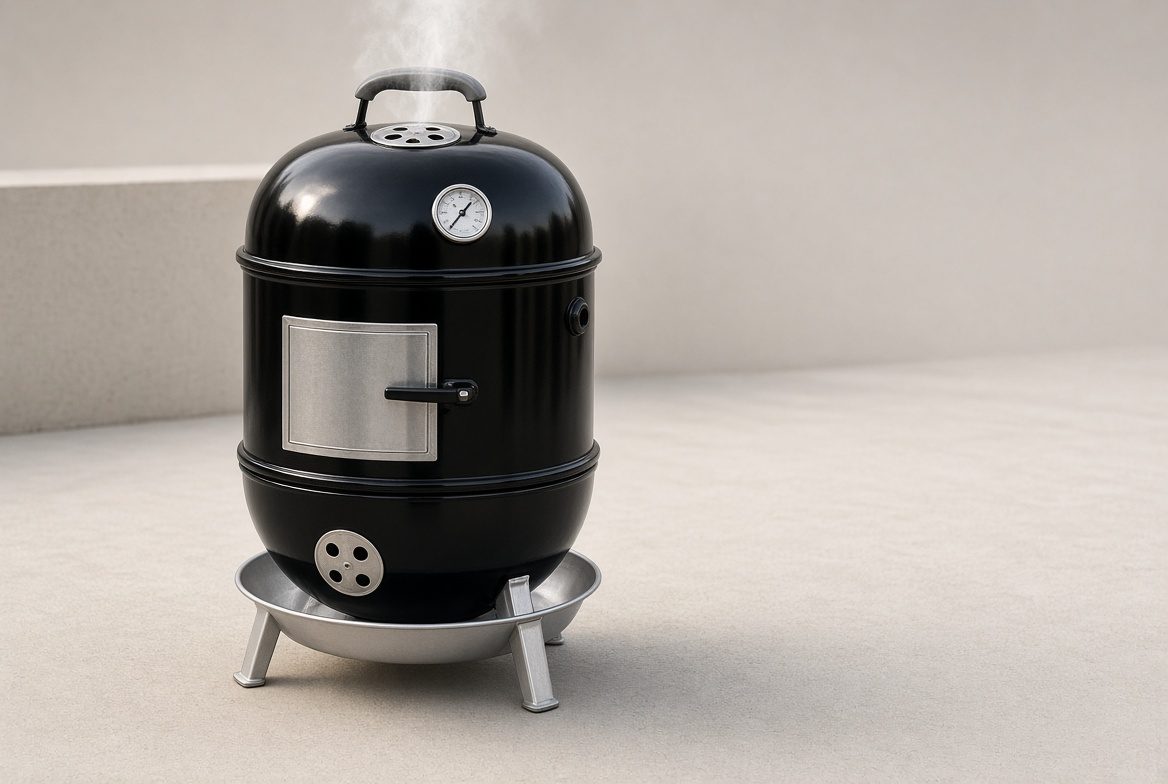
Weber Smokey Mountain Smoker Review (2026)
Best for: Backyard grill buyers
A solid option worth comparing before you buy.
Check Price on AmazonAs an Amazon Associate I earn from qualifying purchases.
Updated: September 13, 2026
Updated and fact-checked: September 13, 2026 Weber Smokey Mountain smoker buyers should start with the 18-inch model unless they cook for two people or routinely feed a crowd. Weber still sells three current sizes—14, 18, and 22 inches—and the design has stayed a charcoal water smoker: a porcelain-enameled bowl, a midsection with a water pan and two grates, and a kettle lid with one top damper. It is not a set-and-forget pellet grill, and it is a poor everyday steak grill. For pork shoulder, ribs, poultry, and brisket, it remains one of the most proven backyard smokers you can buy without spending custom-offset money.
Quick Answer: Is the Weber Smokey Mountain Worth Buying?
Yes—buy the 18-inch Weber Smokey Mountain if you want charcoal barbecue flavor and will manage vents instead of an app. Weber still lists the 14-inch at $289, the 18-inch at $419, and the 22-inch at $549 as of September 13, 2026. The 18-inch offers 481 square inches on two grates. Skip it if you want push-button heat or a daily steak grill.
Key Points
- All three current U.S. models—711001 (14″), 721001 (18″), and 731001 (22″)—are still sold by Weber with a cover included.
- Weber lists 286, 481, and 726 square inches of cooking area. Those figures are the official totals for two stacked grates, not one large grill surface.
- Temperature control is manual: three bottom dampers, one lid damper, a water pan, and a charcoal ring. There is no fan or controller.
- Owners and independent testers repeatedly praise long, steady burns and criticize the stock door fit and the lid thermometer.
- The 18-inch model is the best default purchase. The 14-inch is for small cooks and tight spaces. The 22-inch is for batch cooking.
- A grate-level digital thermometer is not optional. The built-in lid gauge is a rough guide, not a cooking instrument.
Who Should Buy a Weber Smokey Mountain, and Who Should Skip It?
Buy one if you want a dedicated charcoal smoker and will cook low and slow often enough to learn the vents. Skip it if your main meals are burgers and steaks, if you need overnight cooks with no fire skill, or if lifting three stacked steel sections is a problem.
Buy the Weber Smokey Mountain if
- You want charcoal-and-wood flavor rather than pellet-grill smoke.
- You already own a kettle or gas grill for weeknight cooking and need a second cooker for barbecue.
- You prefer a simple machine with replaceable Weber parts over a digital charcoal or pellet system.
- You cook for a family or a small party and can live with two stacked circular grates.
Skip the Weber Smokey Mountain if
- You want one cooker that sears steaks and smokes brisket equally well. This is a water smoker, not a kettle.
- You need wheels, a side table, or a hinged lid. The stock unit has three legs and a lift-off lid.
- Bending, lifting the midsection, or emptying a greasy water pan is a dealbreaker.
- You want set-and-forget temperature control. A pellet grill or a gravity-fed charcoal smoker is the easier path.
What Are the Current Weber Smokey Mountain Specs?
Weber currently sells three black porcelain-enameled models in the United States: the 14-inch 711001, the 18-inch 721001, and the 22-inch 731001. Prices below are Weber’s listed U.S. prices on September 13, 2026. They change. Do not treat them as a promise.
| Spec | 14″ (711001) | 18″ (721001) | 22″ (731001) |
|---|---|---|---|
| Weber U.S. list price | $289 | $419 | $549 |
| Lid-closed dimensions | 31.4″ H x 14.7″ W x 14.7″ D | 41″ H x 19″ W x 21″ D | 48.5″ H x 23″ W x 24″ D |
| Official cooking area | 286 sq in | 481 sq in | 726 sq in |
| Fuel | Charcoal | Charcoal | Charcoal |
| Cooking grates | Two plated-steel grates | Two plated-steel grates | Two plated-steel grates |
| Dampers | 4 aluminum | 4 aluminum | 4 aluminum |
| Handles | 1 nylon lid handle | 1 nylon lid handle | 2 nylon handles |
| Status | Current on Weber U.S. | Current; Weber marks it a top seller | Current on Weber U.S. |
Weber’s published cooking area is the official spec. Independent measurements on The Virtual Weber Bullet have long put the two grate surfaces a little lower—about 276, 468, and 701 square inches—because the bottom grate is slightly smaller than the top. Use Weber’s numbers for shopping. Use the independent numbers if you are trying to picture how much meat actually fits. Weber’s current U.S. product pages do not list assembled weight. Serious Eats lists the 18-inch at 39.1 pounds. The Virtual Weber Bullet has long published assembled weights of about 22, 37, and 52 pounds for the three sizes. Treat weight as approximate until you check the carton in front of you. A Weber owner’s guide circulated with the three sizes lists approximate charcoal-chamber capacities of 110, 220, and 330 briquettes. That is a fill figure, not a required load for every cook.
How Is the Weber Smokey Mountain Built, and What Does That Change in the Backyard?
The WSM is three stacked sections, not one rigid cabinet, and that shape is why it holds heat and why it is awkward to move. The bowl holds a charcoal grate, a charcoal ring, three legs, three bottom dampers, and an aluminum heat shield. The midsection holds the water pan, two grate supports, two plated grates, and the aluminum fuel door. The lid is a Weber dome with one damper, a bi-metal thermometer, and a silicone grommet for a probe. Porcelain enamel on the bowl, lid, midsection, and water pan is the durability story. Weber warrants those three body pieces for 10 years against rust-through and burn-through. Plastic parts are 5 years, excluding fading. Everything else is 2 years. That matches Weber’s current U.S. warranty page for the Smokey Mountain Cooker Smoker. The water pan sits between the fire and the food. Weber says it helps regulate temperature and adds moisture. In practice, the pan is a heat sink. Water absorbs a surge of heat when you first light the cooker and when you open the lid. That is useful on a long pork-shoulder cook. It is also why poultry skin often finishes softer than on a dry cooker, a tradeoff The Virtual Weber Bullet has documented for years. The fuel door is the weak point in the design. Weber calls it rust-resistant aluminum and notes that it comes off so you can add charcoal or wood. Owners, AmazingRibs, and The Virtual Weber Bullet all report the same pattern: some smoke leakage around the door is normal, and a large gap makes temperature control harder because air bypasses the bottom vents. A door that does not sit flush can often be reshaped by hand. Aftermarket gasket kits and thicker replacement doors exist because this complaint is old and widespread, not because every unit is unusable stock. There are no wheels. The 14-inch is light enough to carry in sections. The 18-inch is movable if you separate the three pieces after they cool. The 22-inch is a two-person lift for many owners. If you plan to roll a smoker to the driveway every weekend, this is the wrong shape.
How Well Does the Weber Smokey Mountain Cook?
Professional testers and a large owner base treat the WSM as a reliable low-and-slow charcoal smoker, not as a grill that also smokes. Serious Eats still listed the 18-inch as its Weber smoker pick in a July 13, 2026 update, calling it extremely reliable and easy to hold steady temperatures, with the caveat that large cuts may need to be portioned. Cook’s Illustrated praised the design more than a decade ago, and the current hardware is the same basic bullet. This is not Frank’s personal logbook on a numbered WSM. The cooking claims below come from the manufacturer, the manual, published testing, and repeated owner patterns.
Low-and-slow barbecue
The cooker is built for 225°F to 275°F air next to the food. USDA and FSIS smoking guidance tells cooks to keep smoker air between 225°F and 300°F and to finish meat to a safe internal temperature with a food thermometer. USDA’s current chart still lists 145°F plus a 3-minute rest for whole beef, pork, veal, and lamb steaks, chops, and roasts, 160°F for ground meat, and 165°F for poultry. Barbecue texture on brisket and pork shoulder is a separate target. Those cuts are usually taken well past the safety minimum so collagen breaks down. Safety and tenderness are not the same number. The usual fire is a Minion-style pile: unlit briquettes in the charcoal ring, a smaller charge of lit coals on top, wood chunks in the fuel, water in the pan if you want the buffer, top vent left open, bottom vents pinched as the cooker climbs. That method is described in detail on The Virtual Weber Bullet and matches the fire-management advice already on this site for deep charcoal fireboxes. Lighting every briquette at once is how a WSM overshoots 350°F.
Smoke flavor
Smoke comes from charcoal plus a few dry hardwood chunks, not from a pellet firepot. That usually tastes deeper than pellet smoke and cleaner than a dirty offset fire. The cooker will put out thick white smoke at lighting. Food should go on after the fire settles. Persistent white smoke is a fire problem, not a flavor strategy. See the site’s notes on thin blue smoke versus white smoke and pellet grill smoke versus charcoal smoke.
Ribs, chicken, and fish
Two grates give you room to stagger racks of ribs and to keep a water pan between the fire and the food. Chicken and fish cook well if you watch internal temperature instead of the lid dial. Water in the pan keeps the chamber humid, which helps lean meat stay moist and makes skin less crisp. If you want tighter poultry skin, many experienced WSM owners run the pan dry or fill it with sand or foil-wrapped bricks. That is an owner technique, not a Weber instruction.
Searing and everyday grilling
You can remove the water pan and cook over the coals, but the cooking surface sits high and the access is poor. Serious Eats noted that you can technically grill on it if you are willing to kneel. That is a fair description. If steak night matters, keep a kettle.
How Do You Control Temperature on a Weber Smokey Mountain?
You control temperature with fuel quantity, vent area, and the water pan—not with a keypad. Weber’s own copy says closing the dampers cuts oxygen and helps extinguish coals. The useful backyard sequence is simpler than the marketing:
- Open the top vent and the bottom vents while the fire is establishing.
- Add food as the cooker climbs through about 200°F rather than after it has already overshot.
- Pinch the bottom vents as grate-level air approaches your target.
- Leave the top vent at least partly open so exhaust can leave. A fully closed top vent is for shutting the cooker down, not for fine control.
- If the door leaks a lot of air, the bottom vents stop being the only intake. That is when owners add a gasket or reshape the door.
AmazingRibs has long warned that the stock lid thermometer can be off by a wide margin and that dome air is hotter than grate air. Owners report the same thing. Use the silicone grommet for a leave-in grate probe and confirm meat with an instant-read thermometer. Placement details are in how to use a meat thermometer on a grill or smoker. Weather matters. Wind across the bottom vents, a cold wet bowl, and a stuffed cooker all change the climb. Expect a longer wait in winter. Do not chase every 5°F swing. A WSM that holds a 20-degree band for eight hours is doing its job. For the fire itself, start with a chimney and dry briquettes. Do not use lighter fluid in a closed water smoker if you can avoid it. The site’s charcoal lighting guide and 225°F charcoal guide cover the same airflow rules.
Is the Weber Smokey Mountain Easy to Own?
Assembly is simple. Daily use is simple once the fire is dialed in. Cleanup and moving the cooker are the real ownership costs. Assembly is three legs on the bowl and four grate brackets in the midsection. Weber includes a cover. The cover helps with sun and light rain. The Virtual Weber Bullet notes that the lid sits inside a lip rather than overlapping the midsection, so rain can still enter at the joint and the stock cover is not a waterproof roof. Cleaning means waiting until every coal is cold, dumping ash from the bowl, wiping the midsection, and dealing with the water pan. The pan collects drippings. Owners who line the outside of the pan with foil have an easier wash day. Foiling the inside while the pan holds water can trap liquid under the foil and make a mess. After a cook, do not dump hot ash into a plastic bin or onto a deck. Replacement parts are a quiet advantage. Cooking grates match Weber kettle sizes. Thermometers, doors, water pans, charcoal rings, and covers are widely sold. That matters more at year eight than on day one. Senior usability is mixed. There is no cart. The lid is a separate hot piece with nowhere official to hang it unless you add an aftermarket hinge. The fuel door sits low. The 18-inch midsection is manageable for many people and awkward for some. If arthritis, balance, or lifting is the constraint, a pellet grill on a cart or a drum smoker with a hinged lid will be kinder. Ownership extras you should budget for: a chimney starter, a dual-probe thermometer, a cover if the included one wears out, dry charcoal storage, and eventually a water pan or door. Those are normal charcoal-smoker costs, not a hidden WSM tax. Keep fuel dry; damp briquettes make temperature control guesswork. See how to store charcoal so it stays dry.
What Are the Real Strengths and Weaknesses?
The strength is a durable, parts-supported water smoker that can hold barbecue temperatures for a long cook without electricity. The weakness is that Weber left several 1980s inconveniences in the current product.
Strengths
- Proven two-grate water-smoker layout with a long owner record.
- Porcelain-enameled body and a 10-year rust-through warranty on the bowl, lid, and center ring.
- No electricity. It works in a backyard with no outlet.
- Fuel door and probe grommet are useful, even if the door fit is imperfect.
- Cover included. Common Weber parts are easy to find.
Weaknesses
- The aluminum door often leaks air. That is the most repeated hardware complaint.
- The lid thermometer is a dome gauge. It is not a substitute for a grate probe.
- Plated-steel grates rust and wear faster than the porcelain body.
- No wheels, no side table, no hinged lid.
- The lid-to-body joint can let rain in.
- It is a poor primary grill.
Those weaknesses are not invented for balance. They show up across AmazingRibs, The Virtual Weber Bullet, retailer reviews, and aftermarket parts pages. Plenty of owners run the stock door for years and still cook good food. The point is that the cooker rewards a little setup work, not that it is fragile.
Can the Weber Smokey Mountain Pass the $100 Brisket Test?
Yes, confidently on the 18-inch and 22-inch models. Yes, with adjustments on the 14-inch. The test is simple: if you spend about $100 on a packer brisket, will this cooker finish it safely and tender without turning the day into a firefight? A WSM is one of the cookers that job was designed around. The water pan and charcoal ring give you a long Minion burn. Two grates give you a place to put the brisket and, on the larger sizes, a second item. Conditions that keep the “yes” honest:
- Use a grate-level thermometer. Do not trust the lid dial alone.
- Keep smoker air in the 225°F to 300°F band that FSIS describes for smoking.
- Cook the brisket to a safe internal temperature and then to probe tenderness. USDA’s 145°F-plus-rest figure is the safety floor for whole beef roasts, not the usual barbecue finish.
- On the 14-inch, plan on a flat, a small packer, or separating the point and flat. Owners repeatedly say a full uncut packer is a squeeze.
- In cold wind, use more fuel and a better door seal. Do not assume a midsummer fire plan will hold overnight in January.
I would not trust a cheap box smoker with paper-thin walls and a single unreadable thermometer for that same $100 piece of meat. I would trust a correctly fired WSM.
How Does the Weber Smokey Mountain Compare With the Alternatives?
The WSM wins on traditional low-and-slow control and parts support. A hanging drum is easier. A pellet grill is more convenient. A kettle is cheaper if you already smoke with a snake fire.
| Cooker | Best use | Advantage over the WSM | Tradeoff |
|---|---|---|---|
| Weber Smokey Mountain 18″ | Classic low-and-slow on two grates | Water-pan stability and long Minion burns | Manual vents, leaky door, no wheels |
| Pit Barrel Cooker-style drum | Hanging ribs, shoulder, chicken | Simpler fire, often faster cooks | Less precise 225°F control; different texture |
| Oklahoma Joe’s Bronco-style drum | Hanging plus grilling on a grate | Hinged lid and more everyday features on many units | Not the same two-grate water-smoker layout |
| 22-inch Weber kettle | Grilling first, smoking second | Cheaper, sears well, one cooker | Less unattended capacity on a long brisket |
| Pellet grill | Overnight cooks with a set point | App or controller, less fire work | Needs power; milder smoke |
If the decision is charcoal flavor versus convenience, read pellet grill versus charcoal grill. A WSM is the charcoal answer when you want a dedicated smoker. A kettle is the charcoal answer when you want one cooker for Saturday steaks and Sunday ribs.
Which Size Should You Buy?
Buy the 18-inch unless your patio or your guest list says otherwise.
- 14-inch: Couples, small pork butts, split rib racks, camping, and a second smoker for midweek cooks. Men’s Journal still used this size as a 2026 budget-smoker pick. Do not expect a full packer and a pan of beans at the same time.
- 18-inch: The default family cooker. Weber lists 481 square inches. The Virtual Weber Bullet has long said this size can handle two large briskets, several pork butts, or a serious rib load depending on how you cut and stack. Serious Eats also centered its Weber-smoker pick here.
- 22-inch: Batch cooks and competition-style volume. More fuel, more height, two lid handles, and a cooker that is harder to shuffle across a patio. Buy it because you need the grate, not because bigger sounds more serious.
Is the Weber Smokey Mountain Good Value?
Yes, if you count years of charcoal barbecue rather than the first-weekend convenience of a pellet grill. Weber’s September 13, 2026 U.S. list prices put the line between $289 and $549, and Amazon listings for the same models were active at those same list figures during this check. Sale prices come and go. Parts, covers, and a used market still exist because the design has been in backyards since the early 1980s. Value drops if you never learn the vents and then blame the cooker. Value also drops if you buy the 22-inch for two people and burn a full ring of briquettes every time. The 18-inch is the size that most often earns its keep. Expected extra costs: charcoal, a few wood chunks per cook, a real thermometer, and eventual grate or water-pan replacement. That is ordinary charcoal-smoker math.
Should You Buy This or Something Else?
Buy the 18-inch Weber Smokey Mountain if charcoal barbecue is the point and you will use it. Choose the alternative when the job is different.
- Buy the WSM if you want two-grate water-smoker cooking, no power cord, and a cooker with a long parts life.
- Buy a hanging drum if you want simpler charcoal cooks and will hang ribs and shoulders more than you will run a 225°F overnight brisket.
- Buy a kettle if you need one charcoal cooker for grilling and occasional smoking.
- Buy a pellet grill if unattended temperature control matters more than charcoal-and-dripping flavor.
Final Verdict: Is the Weber Smokey Mountain the Right Smoker?
The Weber Smokey Mountain is still the charcoal water smoker I would send most backyard cooks to buy, and the 18-inch is the size that makes the most sense. It is current, widely sold, and built around a method that has cooked a lot of good barbecue. It is also a manual cooker with a leaky door, a mediocre lid thermometer, no wheels, and almost no talent as a steak grill. That is an honest trade, not a reason to skip it. If you want smoke that comes from a coal bed and wood chunks, and you are willing to watch vents instead of a screen, this is the tool.
Frequently Asked Questions
Is the Weber Smokey Mountain good for beginners?
Yes, if the beginner will use a grate thermometer and accept a few practice cooks. The Minion fire is easier than running an offset stick-burner. It is harder than pressing a button on a pellet grill. Read the manual, start with pork shoulder instead of an expensive packer, and do not chase the lid dial.
Do you have to use water in the Weber Smokey Mountain?
No. Weber includes the pan because water buffers heat and adds humidity, but the cooker will run without water in it. Water makes temperature spikes milder and can soften poultry skin. Some owners run the pan empty, foiled, or filled with a dry heat sink. Follow the manual for safe handling. Do not lift a midsection that still holds a sloshing pan of hot liquid.
How long will a Weber Smokey Mountain hold temperature?
A correctly built Minion fire commonly lasts through a long pork or brisket cook without a reload, but time depends on size, fuel, weather, and how tight the door fits. Weber does not publish a guaranteed hour figure. Owners of the 18-inch and 22-inch models routinely report all-day burns when the ring is filled and the vents are set. Plan fuel for the weather you have, not for a forum average.
Can you grill on a Weber Smokey Mountain?
You can, but it is the wrong tool for regular grilling. Remove the water pan and you have hot coals under a high grate. Access is poor, and the cooker is tall. Keep a kettle or gas grill for steaks and burgers.
Which Weber Smokey Mountain size is best?
The 18-inch is best for most households. Choose the 14-inch for small cooks and tight storage. Choose the 22-inch when you regularly smoke for a crowd and can store a taller, heavier cooker.
Does the Weber Smokey Mountain need a gasket kit?
Not on day one if the door sits reasonably flush and the cooker holds a stable temperature. Add a high-temperature gasket or a tighter aftermarket door when you can see a large gap, when the fire will not die with the vents closed, or when you are pairing the cooker with a fan controller that needs a tighter chamber. The Virtual Weber Bullet treats light smoke at the door as normal.
Is the Weber Smokey Mountain still made?
Yes. Weber’s U.S. site listed all three sizes as current on September 13, 2026, with add-to-cart pricing of $289, $419, and $549. Confirm stock on the day you buy. Do not use those figures as a locked price.
Related Reading
- How to Keep a Charcoal Grill at 225°F
- How to Light a Charcoal Grill Without Lighter Fluid
- Pellet Grill Smoke vs Charcoal Smoke
- Pellet Grill vs Charcoal Grill
- How to Use a Meat Thermometer on a Grill or Smoker
About Frank W. Roberts
Frank W. Roberts is the author of Everything Grill Reviews. He has grilled since 1970 and brings more than 50 years of backyard cooking and cookoff experience to fire management, fuel behavior, smoke, and practical cooker use. This review is based on current Weber specifications, the published warranty, the owner’s-guide design, professional write-ups, and long-running owner patterns. It is not a claim that Frank personally assembled or cooked on the current 711001, 721001, or 731001 units. Last verified September 13, 2026.
Weber Smokey Mountain Smoker Review (2026)
Best for: Backyard grill buyers
A solid option worth comparing before you buy.
Check Price on Amazon