
Updated: September 24, 2026
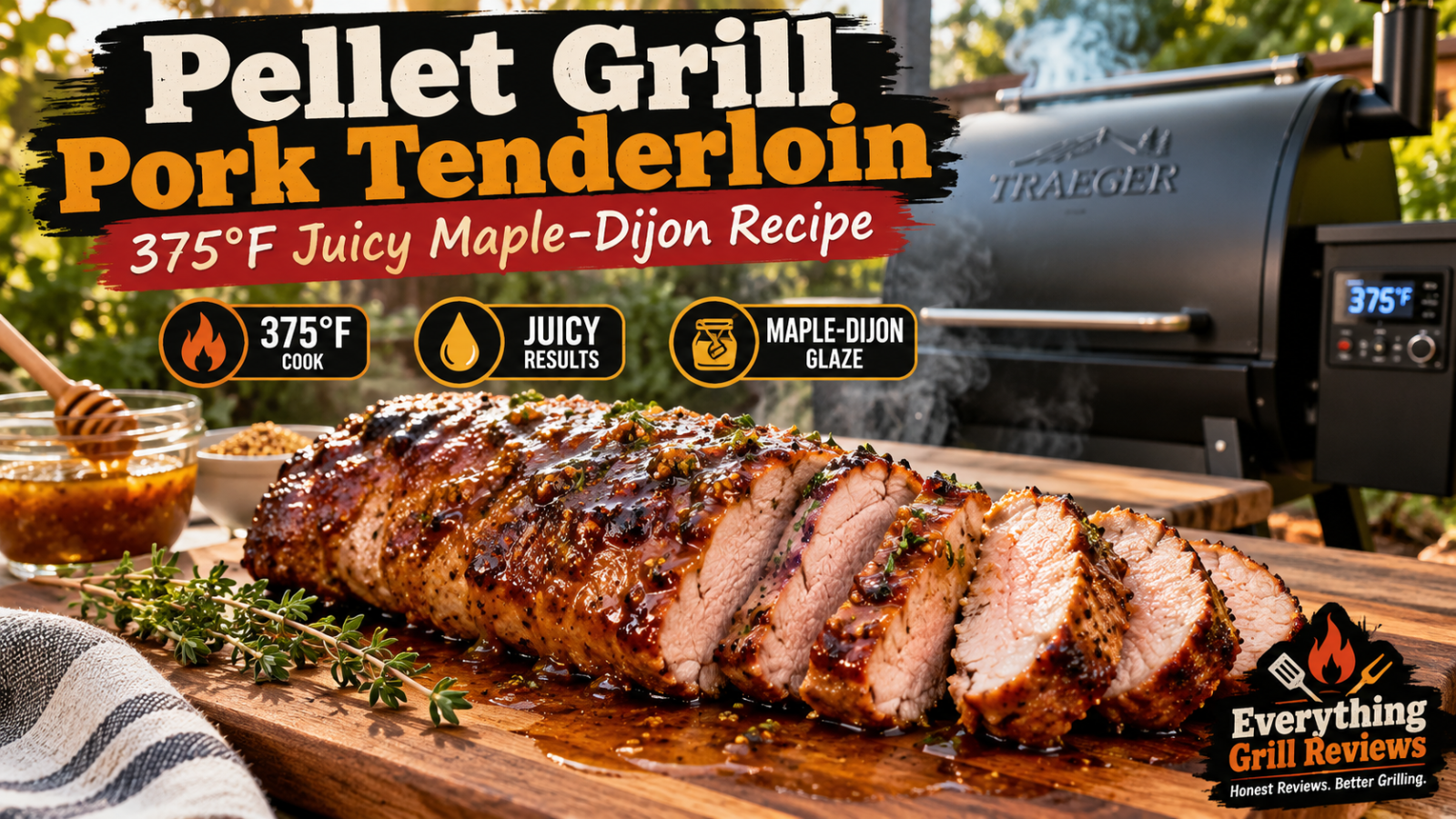
This pellet grill pork tenderloin recipe uses a 375°F cooking temperature, a savory dry seasoning, and a maple-Dijon glaze added near the end so the sugar does not burn. The tenderloins come off the grill at 145°F and rest for at least 3 minutes, giving you a practical weeknight meal with light wood flavor instead of dry, gray pork.
Quick Answer: Preheat the pellet grill to 375°F. Season two trimmed pork tenderloins, cook with the lid closed, and brush on the maple-Dijon glaze near 135°F. Continue until each tenderloin reaches 145°F in its thickest part, then rest at least 3 minutes before slicing.
In This Recipe
- Recipe timing, yield, and temperatures
- Exact ingredients and equipment
- Step-by-step cooking instructions
- The correct internal temperature
- Troubleshooting dry pork, pale color, and burnt glaze
- Substitutions and variations
- Safe storage and reheating
- Frequently asked questions
Pellet Grill Pork Tenderloin Recipe at a Glance
| Yield | 6 servings |
|---|---|
| Meat | 2 pork tenderloins, 1 to 1¼ pounds each |
| Preparation time | 15 minutes |
| Estimated cooking time | 25 to 40 minutes after preheating |
| Resting time | At least 3 minutes; 5 minutes is practical |
| Pellet grill setting | 375°F |
| Safe internal temperature | 145°F in the thickest part, followed by at least a 3-minute rest |
| Pellet choices | Apple, oak, pecan, hickory, or a balanced hardwood blend |
The cooking time is a planning range, not the doneness test. Tenderloin thickness, starting temperature, wind, outdoor temperature, probe position, and the way a particular pellet grill cycles can all move the finish time. If one tenderloin is smaller, remove it when it reaches 145°F rather than waiting for the larger piece.
What Is Pork Tenderloin?
Pork tenderloin is a small, lean muscle that cooks quickly and should not be confused with pork loin or pork shoulder. A typical grocery package often contains two narrow tenderloins. Each piece may have a tapered tail and a strip of shiny, tough silver skin on the surface.
Pork loin is a larger roast cut from a different part of the animal. Pork shoulder contains more connective tissue and is suited to a long cook until probe-tender. Tenderloin has very little internal fat and no tough collagen structure that benefits from hours at high internal temperatures. If you cook tenderloin toward the 195–205°F range used for pulled pork, it will be dry rather than shreddable.
The site’s thick-cut pellet grill pork chops use the same 145°F safety minimum, but their shape and bone options make their timing different. Treat temperature as the common rule and time as the variable.
Ingredients and Equipment
The recipe needs two tenderloins, a simple spice coating, and a small glaze that goes on only during the final stage. The seasoning is deliberately moderate so the pork does not taste salty after the glaze reduces.
For the Pork
- 2 pork tenderloins, 1 to 1¼ pounds each, about 2 to 2½ pounds total
- 1 tablespoon neutral cooking oil or olive oil
- 1½ teaspoons kosher salt
- 1 teaspoon coarse black pepper
- 1 teaspoon smoked paprika
- 1 teaspoon garlic powder
- ½ teaspoon onion powder
For the Maple-Dijon Glaze
- 2 tablespoons pure maple syrup
- 1½ tablespoons Dijon mustard
- 1 teaspoon apple cider vinegar
- ¼ teaspoon dried thyme, crushed between your fingers
Equipment
- Pellet grill capable of holding 375°F
- Instant-read thermometer or leave-in probe
- Sharp boning or paring knife for silver skin
- Small bowl and clean basting brush
- Tongs
- Clean cutting board or platter
If your pork package says it contains a salt solution, reduce the added salt. The label may use wording such as “enhanced,” “contains up to,” or “solution added.” Pre-seasoned tenderloins also need less or no added salt, and their sweet exterior can darken sooner than an unseasoned cut.
How Do You Trim Pork Tenderloin?
Remove the tough silver skin while leaving the soft edible meat and most small fat deposits intact. Silver skin is the shiny, pale membrane that does not melt during this short cook. Leaving it on can make one side curl and create chewy bites.
- Remove the tenderloins from the package over a sink or rimmed tray so raw juices do not spread.
- Pat them dry with paper towels. Put the used towels straight into the trash.
- Slide the tip of a sharp knife just under one end of the silver skin.
- Angle the blade slightly upward toward the membrane, not downward into the meat.
- Hold the loose membrane and make short, shallow strokes until it releases.
- Trim any ragged flap that is thin enough to burn, but do not carve away good meat trying to make the tenderloin perfectly smooth.
Wash the knife, board, your hands, and anything else that touched raw pork before mixing or applying a finishing glaze. Set aside a clean brush for the glaze. Do not dip a brush that touched raw meat back into sauce that will be served at the table.
How Do You Cook Pork Tenderloin on a Pellet Grill at 375°F?
Season the trimmed pork, preheat the grill fully, cook to about 135°F, glaze, and continue to 145°F before resting. The late glaze gives the maple time to set without exposing it to the full cook.
Step 1: Preheat the Pellet Grill
Fill the hopper with dry pellets and preheat the grill to 375°F with the lid closed, following the startup directions for your model. Make sure the grease path and drip container are clear. A short lean-meat cook does not release much fat, but old grease under the grate can still cause smoke or a fire.
Apple gives the mildest sweet smoke. Oak or a balanced blend is the easiest all-purpose choice. Hickory adds a stronger barbecue flavor, so use it if that is what your family likes. You do not need to empty a hopper full of good pellets just to match a recipe.
Step 2: Season the Tenderloins
Mix the salt, pepper, paprika, garlic powder, and onion powder. Rub the trimmed tenderloins with 1 tablespoon of oil, then distribute the seasoning over every side. Press it on rather than rubbing until it forms a wet paste.
You can season immediately before cooking. For deeper salt penetration, season and refrigerate the pork uncovered for up to 8 hours. Keep it refrigerated until the grill is nearly ready; do not leave raw pork on the counter for an extended warm-up.
Step 3: Mix the Glaze
In a clean bowl, stir together 2 tablespoons maple syrup, 1½ tablespoons Dijon mustard, 1 teaspoon apple cider vinegar, and ¼ teaspoon dried thyme. Set the clean brush beside the bowl. This glaze is for the nearly cooked surface, not the raw pork.
Step 4: Put the Pork on the Grill
Place both tenderloins on the center portion of the grate with space between them. Tuck the thin tail under itself by about 2 inches if it is dramatically thinner than the rest. This makes the shape more even and helps keep the tip from overcooking.
Insert a leave-in probe from the side into the thickest center of one tenderloin. The sensing tip should be in meat, not near the surface or touching the grate. Close the lid.
Step 5: Cook Until About 135°F
Cook with the lid closed until the thickest part reaches roughly 130–135°F. Begin checking after about 20 minutes. Rotate or turn the tenderloins once if your grill has a known hot side, but do not open the lid every few minutes.
The 135°F mark is only the glazing point. It is not the finished serving temperature. If one piece reaches the glazing stage before the other, handle them separately.
Step 6: Glaze and Finish at 145°F
Brush a thin layer of maple-Dijon glaze over the top and sides. Close the lid and continue cooking. Check both tenderloins in more than one spot with an instant-read thermometer. Remove each piece only after its coolest thick section reaches 145°F.
If glaze remains in the clean bowl and never contacted raw pork, you may brush on a final thin coat just before removal. Do not pour a large puddle over the meat; excess maple drips onto the heat shield and can scorch.
Step 7: Rest and Slice
Transfer the pork to a clean cutting board. Rest for at least 3 minutes; 5 minutes is convenient and gives the surface a moment to settle. Do not cut into the tenderloin immediately to check its color. Temperature, not pinkness, is the doneness test.
Slice across the muscle fibers into ½-inch medallions. The grain can change direction slightly as the narrow muscle curves, so turn the tenderloin as needed. Spoon any clean board juices over the slices and serve.
What Internal Temperature Is Pork Tenderloin Done?
Pork tenderloin is safely cooked at 145°F in its thickest part followed by a rest of at least 3 minutes. The FoodSafety.gov safe-temperature chart lists 145°F with a 3-minute rest for whole cuts of pork. It lists 160°F for ground meat and sausage, which is a different category.
Measure the temperature before the tenderloin leaves the grill. This recipe does not tell you to pull at 138°F and hope carryover heat finishes the safety requirement. Carryover varies with meat size, grill temperature, air temperature, and resting surface. Reaching 145°F on the grill removes that guess.
A faint blush of pink can remain at 145°F. Color is affected by meat chemistry, smoke, lighting, and seasoning, so it is not a reliable safety test. Clear juices are not a thermometer either.
How Long Does Pork Tenderloin Take at 375°F?
Plan on roughly 25 to 40 minutes after the pellet grill is fully preheated, but cook to temperature rather than the clock. A slim 1-pound piece can finish near the early end. A thick 1¼- to 1½-pound tenderloin may take longer, particularly in cold or windy weather.
| What changes the time? | What to do |
|---|---|
| Two tenderloins of different sizes | Probe both and remove each one at 145°F |
| Very thin tapered tail | Tuck it under before cooking |
| Cold or windy weather | Allow extra time and keep the lid closed |
| Grill running hotter on one side | Rotate once based on your known heat map |
| Frequent lid opening | Use a leave-in probe and check less often |
| Wrong probe position | Recheck the thickest center from the side |
For another short pellet-grill supper, the site’s sausage and vegetables recipe at 375°F uses the same cooker setting but a different safe internal temperature because fresh sausage is ground meat.
Why Add the Maple-Dijon Glaze Near the End?
Late glazing protects the sugar from prolonged high heat while giving the mustard enough time to cling and set. Maple syrup can darken quickly at 375°F. If it goes on at the beginning, the outside may taste bitter before the center reaches 145°F.
Use a thin coat at about 135°F, then watch the meat closely. The glaze should become glossy and slightly tacky. It does not need to turn black or form a hard candy shell. If your pellet grill has a particularly hot spot, keep the glazed surface away from it.
This recipe avoids a sugary dry rub for the same reason. Paprika gives color without asking brown sugar to survive the whole cook. The small amount of maple at the finish supplies enough sweetness.
Pork Tenderloin Troubleshooting
Why Did the Pork Turn Out Dry?
The usual cause is overshooting 145°F or leaving a smaller tenderloin on the grill while a larger one finishes. Check early, probe each piece, and remove them individually. Tenderloin is too lean to forgive an extra 20 or 30 degrees.
Why Is the Outside Pale?
A wet surface, incomplete preheat, or constant lid opening can limit browning. Pat the meat dry before oiling, let the grates heat fully, and leave space between the pieces. A pellet grill at 375°F produces roasted color, not the same crust as direct charcoal or a blazing cast-iron pan.
Why Did the Glaze Burn?
The glaze was probably applied too early, too heavily, or over a hotter-than-expected section. Add a thin coat near 135°F. If your cooker runs hot, wait until 138–140°F and use only enough glaze to cover the surface.
Why Is One End Done Before the Center?
The tapered tail is much thinner than the center. Fold the last 2 inches under before cooking, or cut off the very thin tail and cook it as a separate small piece. If you separate it, probe and remove it early.
Why Does the Seasoning Taste Too Salty?
The pork may have been enhanced with a salt solution or sold pre-seasoned. Check the package before adding the recipe’s salt. Mustard and some commercial rubs also contain sodium, so reduce salt when substituting a prepared seasoning blend.
Common Mistakes to Avoid
- Buying pork loin by mistake. A large loin roast needs a different time calculation even though its safe minimum is also 145°F plus a rest.
- Leaving the silver skin attached. It stays chewy and can pull the tenderloin out of shape.
- Cooking to pulled-pork temperature. Tenderloin does not contain the fat and connective tissue that make shoulder work at high internal temperatures.
- Glazing from the start. Maple sugar can burn during a 375°F cook.
- Using one thermometer reading. Check both pieces and more than one spot in the thicker end.
- Cross-contaminating the glaze. Use a clean bowl and brush after the raw-pork handling is finished.
- Cutting immediately. Give the pork at least the required 3-minute rest.
- Following time instead of temperature. The clock tells you when to begin checking, not when the meat is safe.
Substitutions and Variations
Can You Make It Without Maple Syrup?
Yes. Replace the maple syrup with 2 tablespoons of honey. Honey also burns if added too early, so the glazing point stays the same. For a less sweet finish, use 1 tablespoon honey and 1 additional tablespoon Dijon.
Can You Use a Commercial Pork Rub?
Yes. Replace the salt, pepper, paprika, garlic, and onion with about 1½ tablespoons of your preferred pork rub for two tenderloins. Check the label for salt and sugar. A salty rub needs no extra salt, and a sugar-heavy rub can darken faster at 375°F.
Can You Skip the Glaze?
Yes. The seasoned pork can cook straight to 145°F without glaze. Add a squeeze of lemon or a spoonful of unsweetened applesauce at the table if you want brightness without a sweet coating.
Can You Use Rosemary Instead of Thyme?
Yes. Use ⅛ teaspoon finely crushed dried rosemary because it is stronger and more woody than thyme. Fresh herbs can be used, but mince them finely so they do not form wet clumps in the glaze.
Can You Add More Smoke Flavor?
You can start at 225°F for 20 to 30 minutes, then raise the pellet grill to 375°F and finish the recipe. That two-stage method takes longer and may still produce a mild smoke profile on such a small lean cut. The manufacturer recipe from Traeger’s smoked pork tenderloin method uses 225°F and cooks to 145°F, illustrating the lower-and-longer option.
For a broader weeknight progression, this tenderloin is Day 16 in the site’s 30-day pellet grill recipe plan.
What Should You Serve With Pellet Grill Pork Tenderloin?
Choose sides that can finish at 375°F or sides you can prepare indoors while the pork cooks. The sweet-tangy glaze pairs especially well with roasted vegetables, potatoes, tart apples, or a crisp cabbage salad.
- Halved baby potatoes, parboiled first and then roasted in a grill-safe pan
- Brussels sprouts tossed with oil, salt, and black pepper
- Green beans with garlic
- Grilled apple halves without added sugar
- Vinegar-based coleslaw
- Warm dinner rolls and mustard
Put vegetables on early enough to finish with the meat, but do not keep the pork on the grill just because a side is still firm. Move the tenderloins to their clean resting board at 145°F and let the vegetables continue.
How Do You Store and Reheat Leftover Pork Tenderloin?
Refrigerate leftovers within 2 hours, use them within 3 to 4 days, and reheat leftovers to 165°F. FoodSafety.gov’s cold-storage chart lists 3 to 4 days for cooked meat or poultry in a refrigerator held at 40°F or below. It lists 2 to 6 months for frozen cooked meat or poultry as a quality range.
Cool the pork in a shallow covered container rather than leaving the whole platter on the counter. Store the tenderloin whole if possible; larger pieces lose less moisture than pre-sliced medallions. Keep extra glaze only if it remained separate from raw meat.
For reheating, slice only what you need and place it in a covered skillet or grill-safe pan with a tablespoon or two of broth or apple juice. Heat gently until the center reaches 165°F. A microwave also works when the slices are covered and turned halfway through. Reheating the entire tenderloin repeatedly will dry it out.
Cold leftover pork can be sliced thin for sandwiches only if it was cooled promptly, stored safely, and remains within the refrigerator window. When in doubt about how long it sat warm or how cold the refrigerator stayed, discard it.
Frequently Asked Questions
What temperature should a pellet grill be set to for pork tenderloin?
Set the pellet grill to 375°F for this quick weeknight method. The hotter setting provides better surface color than a long 225°F smoke while still leaving enough time to monitor the lean center.
What internal temperature should pork tenderloin reach?
Cook pork tenderloin to 145°F in the thickest part, then rest it for at least 3 minutes. Check the temperature before removing it from the grill.
How long does pork tenderloin take at 375°F?
Most 1- to 1¼-pound tenderloins need roughly 25 to 40 minutes after preheating. Begin checking around 20 minutes and let the thermometer, not the clock, decide when each piece is finished.
Do you flip pork tenderloin on a pellet grill?
You can rotate or turn it once for more even color, especially if the grill has a known hot side. It does not need constant turning because the covered pellet grill circulates heat around the food.
Should pork tenderloin still be pink inside?
A slight pink blush can remain in pork that has safely reached 145°F and rested for at least 3 minutes. Color is not a reliable doneness test. Use a thermometer in the thickest center.
Should you brine pork tenderloin before smoking it?
Brining is optional. This cut cooks quickly, and correct temperature control does more to prevent dryness than soaking it. If you brine or buy enhanced pork, reduce the added salt in the recipe.
Can you cook frozen pork tenderloin on a pellet grill?
Thaw it safely in the refrigerator first. A frozen center cooks unevenly while the narrow ends dry out, and it is harder to place a temperature probe accurately.
What pellets are best for pork tenderloin?
Apple, oak, pecan, hickory, and balanced hardwood blends all work. Apple is mild; hickory is stronger. Because this is a short 375°F cook, dry pellets and steady heat matter more than buying a special flavor.
Is pork tenderloin the same as pork loin?
No. Tenderloin is a small, narrow, very lean muscle. Pork loin is a much larger roast. Both use a 145°F minimum with a 3-minute rest, but their cooking times and portion sizes are not interchangeable.
Can pork tenderloin be cooked until it shreds?
It should not be. Tenderloin lacks the fat and connective tissue that make shoulder suitable for pulled pork. Cooking tenderloin to a shredding-style temperature usually produces dry meat. Slice it into medallions at 145°F instead.
Final Verdict: Is 375°F the Best Pellet-Grill Setting for Pork Tenderloin?
375°F is an excellent setting when you want pork tenderloin on the table in under an hour with light smoke and a properly browned finish. The important decisions are simple: trim the silver skin, keep the sugary glaze until the end, check both pieces, remove each at 145°F, and rest at least 3 minutes.
A 225°F cook gives the meat a longer smoke window, but it also keeps this lean cut on the grill much longer. For a weeknight, the 375°F method is the more practical balance. Save the all-day low-and-slow treatment for shoulder, ribs, chuck, and brisket.
About the Author
Frank W. Roberts is the author of Everything Grill Reviews. He has grilled since 1970 and brings more than 50 years of backyard cooking and competitive cookoff experience to fire management, smoke, and practical cooker use. This recipe is based on established pork-tenderloin technique, current FoodSafety.gov temperature and storage guidance, and published pellet-grill methods. It is not presented as a documented test on one named grill model. Safety and source details were last checked September 23, 2026.