
Updated: September 24, 2026
Updated and fact-checked: September 24, 2026
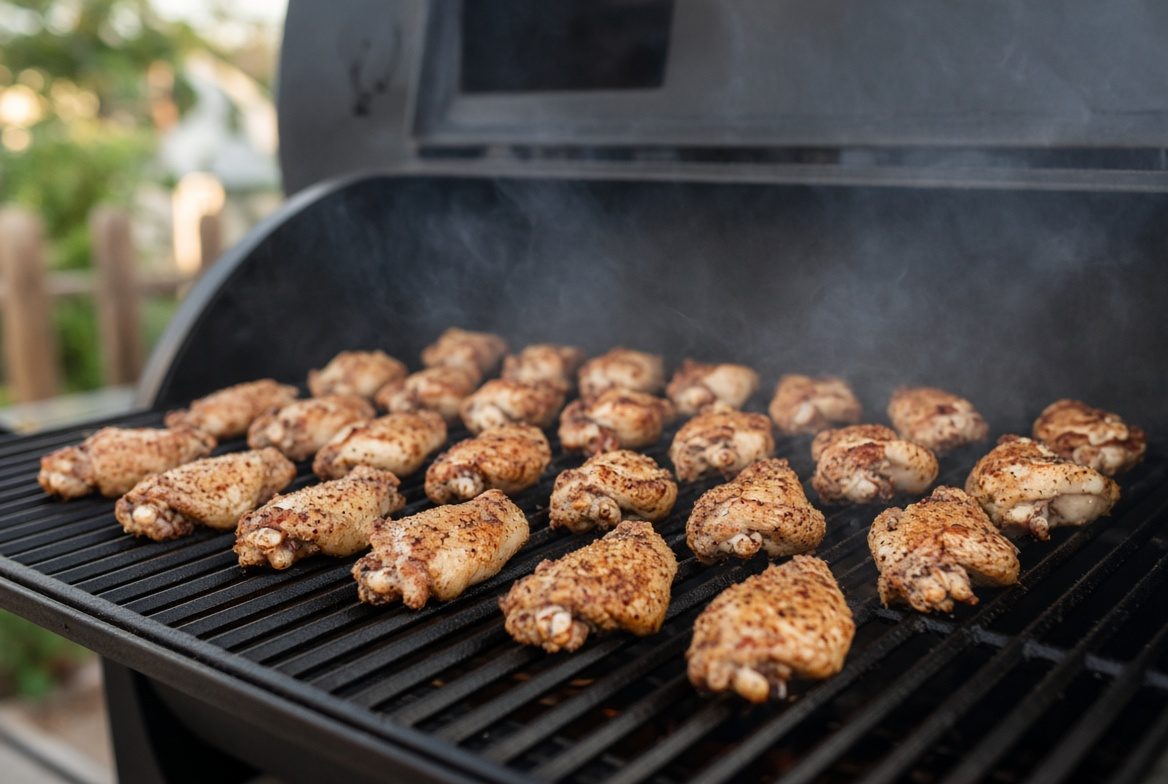
Pellet grill chicken wings cook best with a short smoke stage at 250°F, then a 375–400°F finish so the skin can render and brown. USDA guidance is 165°F in the thickest meat, measured away from the bone. Time after preheat is an estimate because wing size, starting temperature, weather, and lid openings change the clock.
Quick Answer: How Do You Cook Chicken Wings on a Pellet Grill?
Smoke dry, seasoned wings at 250°F for about 45–60 minutes, then raise the pellet grill to 375–400°F until every piece reaches 165°F and the skin is browned. Leave space between the wings. Sauce only after the skin is already crisp. Estimated grill time after preheat is 90–120 minutes.
Key Points
- USDA safe minimum for chicken wings is 165°F in the thickest meat, away from bone.
- A long 225–250°F cook without a hot finish is the usual reason skin stays rubbery.
- Pat the wings dry. Crowded, wet wings steam instead of browning.
- Sauce belongs at the end. Early sauce burns and keeps the skin wet.
- Color is not proof of doneness. Use a thermometer on more than one wing.
- Refrigerate leftovers within 2 hours and reheat them to 165°F.
Pellet Grill Chicken Wings Recipe at a Glance
| Recipe detail | Target |
|---|---|
| Yield | About 4 servings from 3–4 lb wings |
| First grill set point | 250°F |
| Finish set point | 375–400°F |
| Pellets | Oak, hickory, or a competition blend |
| Estimated time after preheat | 90–120 minutes |
| USDA safety target | 165°F in the thickest meat, away from bone |
| Sauce window | After the skin is crisp, last few minutes if desired |
What Ingredients Do You Need?
Keep the shopping list to wings, a little oil, a dry rub, and optional sauce. This recipe is for one batch. Thaw the wings in the refrigerator, not on the counter.
Wings and seasoning
- 3–4 lb chicken wings, whole or already split into drumettes and flats, fully thawed
- 1–2 Tbsp neutral oil or melted unsalted butter
- 2 tsp kosher salt
- 1 tsp coarse black pepper
- 1 tsp paprika
- 1 tsp garlic powder
- 1/2 tsp onion powder
- Optional: 1–2 tsp cornstarch for a slightly drier surface on the skin
Optional finish
- 1/2–3/4 cup buffalo sauce, barbecue sauce, or a dry extra dusting of rub
- Ranch or blue-cheese dressing and celery if you want a classic plate
Traeger’s published wing method uses a dry surface, a light cornstarch and seasoning coat, and a 375°F cook. That high-heat path works. The two-stage version below adds a short 250°F smoke period first, then uses the same hotter finish so the skin can still render.
How Should You Prep Chicken Wings for a Pellet Grill?
Dry the skin, split uneven whole wings, and season lightly so the coating stays dry. USDA FSIS advises against washing raw poultry because splashing spreads raw juices around the sink.
- Keep raw wings on a dedicated board. Wash hands and tools after handling raw poultry.
- If the wings are still whole, separate drumettes and flats at the joint. Save tips for stock if you want them. Even pieces cook more evenly.
- Pat every piece dry with paper towels. Moisture is the enemy of crisp skin on an indirect pellet grill.
- Toss with oil, then the salt, pepper, paprika, garlic, and onion powder. If you use cornstarch, dust it on after the oil and before or with the seasoning. Use a light coat, not a paste.
- An optional uncovered fridge rest on a rack for a few hours dries the skin further. Do not leave raw wings at room temperature to “dry.”
How Do You Set Up the Pellet Grill?
Preheat to 250°F with a clean grate and dry pellets before the wings go on. Damp pellets feed poorly and make dirty smoke. Store pellets in a sealed container away from humidity.
- Use oak for a clean middle flavor, hickory if you want a stronger pork-and-chicken barbecue note, or a competition blend if that is what you already keep in the hopper.
- Preheat with the lid closed until the grill is stable at 250°F.
- Leave the water pan out. Extra humidity works against crisp skin.
- Plan one layer on the grates. If the batch will not fit without touching, cook two rounds instead of stacking.
How Do You Cook Chicken Wings Step by Step?
Smoke at 250°F first, then raise the grill to 375–400°F and cook to 165°F. The clock is a planning tool. The thermometer is the finish line.
- Arrange the wings in a single layer with space between pieces. Close the lid.
- Hold 250°F for about 45–60 minutes. The skin should take on color and smoke, but it will not be crisp yet.
- Raise the set point to 375–400°F. Continue cooking until the thickest meat on several wings reads 165°F and the skin is browned and dry to the touch. Plan another 30–45 minutes. That second stage is an estimate.
- Turn the wings once during the hot stage so both sides of the skin see heat.
- If you want sauce, toss or brush it on only after the skin is already crisp. Return the wings for a few minutes if you want the sauce to set. Do not flood them early.
- Pull the batch when every checked wing is at or above 165°F. A few minutes of uncovered rest makes them easier to handle. Do not wrap them tightly in foil or the skin softens.
What Internal Temperature Are Chicken Wings Done?
Chicken wings are done for safety at 165°F in the thickest meat, away from the bone. That USDA FSIS minimum applies to all poultry, including wings, thighs, breasts, and ground chicken. Color alone is not a substitute. Pink near the bone can still appear after the meat is safe, and brown skin can hide undercooked meat.
Check more than one wing, including pieces from different parts of the grate. Insert an instant-read thermometer into the thickest meat and avoid the bone. If one wing is short of 165°F, keep cooking the batch until the stragglers catch up. Poultry does not have a required USDA rest the way whole beef or pork cuts do. A short uncovered pause is for handling, not for finishing raw meat.
This is not a pork-shoulder or rib cook. There is no separate “probe-tender” target past 165°F. Extra time at 375–400°F is only to finish skin and confirm every piece is safe.
Why Do Pellet-Grill Wings Stay Rubbery?
Wet skin, crowded grates, early sauce, and a cook that never leaves 225–250°F are the usual causes. A pellet grill is an indirect cooker. It will not blister skin the way a charcoal bed or a gas burner can unless you give the fat time to render at roasting heat.
| Mistake | What happens | Fix |
|---|---|---|
| Wings still damp from the package | Surface steams | Pat dry; optional fridge rest on a rack |
| Pieces touching | Soft spots where wings meet | One layer with gaps |
| Sauce at the start | Sticky, wet, sometimes scorched coating | Sauce after 165°F and after the skin has color |
| All-day 225°F with no hot finish | Smoky but rubbery skin | Raise to 375–400°F to finish |
| Tight foil after the cook | Steam softens the crust you just made | Rest uncovered |
For the broader skin method that also covers thighs, drumsticks, and breasts, use the site’s guide on how to get crispy chicken skin on a pellet grill.
Can You Cook Wings Hot the Whole Time?
Yes. A straight 375–400°F cook works when you care more about crisp skin than extra smoke time. Skip the 250°F stage, preheat fully, and still cook to 165°F. Smoke flavor will be lighter because pellet grills usually make more noticeable smoke at lower set points. If you want more smoke without staying low the entire cook, keep the short 250°F first stage in this recipe. For other ways to add clean smoke, see how to get more smoke flavor from a pellet grill.
How Do You Store and Reheat Leftover Wings?
Refrigerate cooked wings within 2 hours, eat them in 3–4 days or freeze them, and reheat leftovers to 165°F. USDA FSIS also says not to leave cooked wings out more than two hours at room temperature during a party unless you hold them hot at 140°F or above.
- Cool in shallow containers. Do not leave a deep covered pile on the counter.
- Reheat on the pellet grill, in an oven, or in an air fryer until 165°F. Check more than one piece.
- Microwave reheats work for safety if you spread the wings and check several spots, but the skin will not stay as crisp.
Final Verdict: Are Pellet Grill Chicken Wings Worth the Two-Stage Cook?
Yes, if you want both a little smoke and skin that is not rubbery. Stay at 250°F only long enough to pick up wood flavor, then finish at 375–400°F to 165°F. Skip the low stage if weeknight speed matters more than smoke. Do not treat wings like a 10-hour shoulder. The safety number is 165°F, and the texture work is the hot finish plus dry, uncrowded skin.
Frequently Asked Questions
What temperature should you cook chicken wings on a pellet grill?
Use 250°F for a short smoke stage, then 375–400°F to finish. A straight 375°F cook is also valid. The food is done when the thickest meat hits 165°F, not when a timer rings.
How long do chicken wings take on a pellet grill?
Plan about 90–120 minutes after preheat for the two-stage method, and treat that as an estimate. Smaller party wings finish faster than large whole wings. Wind, a cold start, and frequent lid opening stretch the time.
Should you sauce wings before they go on the grill?
No, not if you want crisp skin. Sugar-heavy sauces scorch during the hot finish and keep the surface wet. Toss after the skin has already rendered.
Do you need a water pan for smoked wings?
No. A water pan adds humidity. That can help a large roast stay moist. It works against dry, browned wing skin.
Can you cook frozen wings on a pellet grill?
Thaw them in the refrigerator first. Frozen wings shed water, cook unevenly, and make it harder to get a dry surface. USDA thawing guidance for poultry is refrigerator thawing, not a counter sit.
Related Reading
- How to Get Crispy Chicken Skin on a Pellet Grill
- How to Use a Meat Thermometer Correctly on a Grill or Smoker
- How to Rest Meat After Grilling (and When Not To)
- How to Get More Smoke Flavor From a Pellet Grill
- How to Store Wood Pellets and Charcoal So They Stay Dry
Authority sources: USDA FSIS safe temperature chart and USDA FSIS Safe Chicken Wings from Prep to Plate. Last verified September 24, 2026.
About Frank W. Roberts
Frank W. Roberts is the author of Everything Grill Reviews. He has grilled since 1970 and brings more than 50 years of backyard cooking and cookoff experience to fire management, fuel behavior, smoke, and practical cooker use. This article is a cooking-method recipe based on USDA poultry temperatures, established pellet-grill technique, and the site’s existing chicken-skin guidance. It is not a product review and does not claim a hands-on test of a named grill model. Last verified September 24, 2026.