
Updated: October 11, 2026
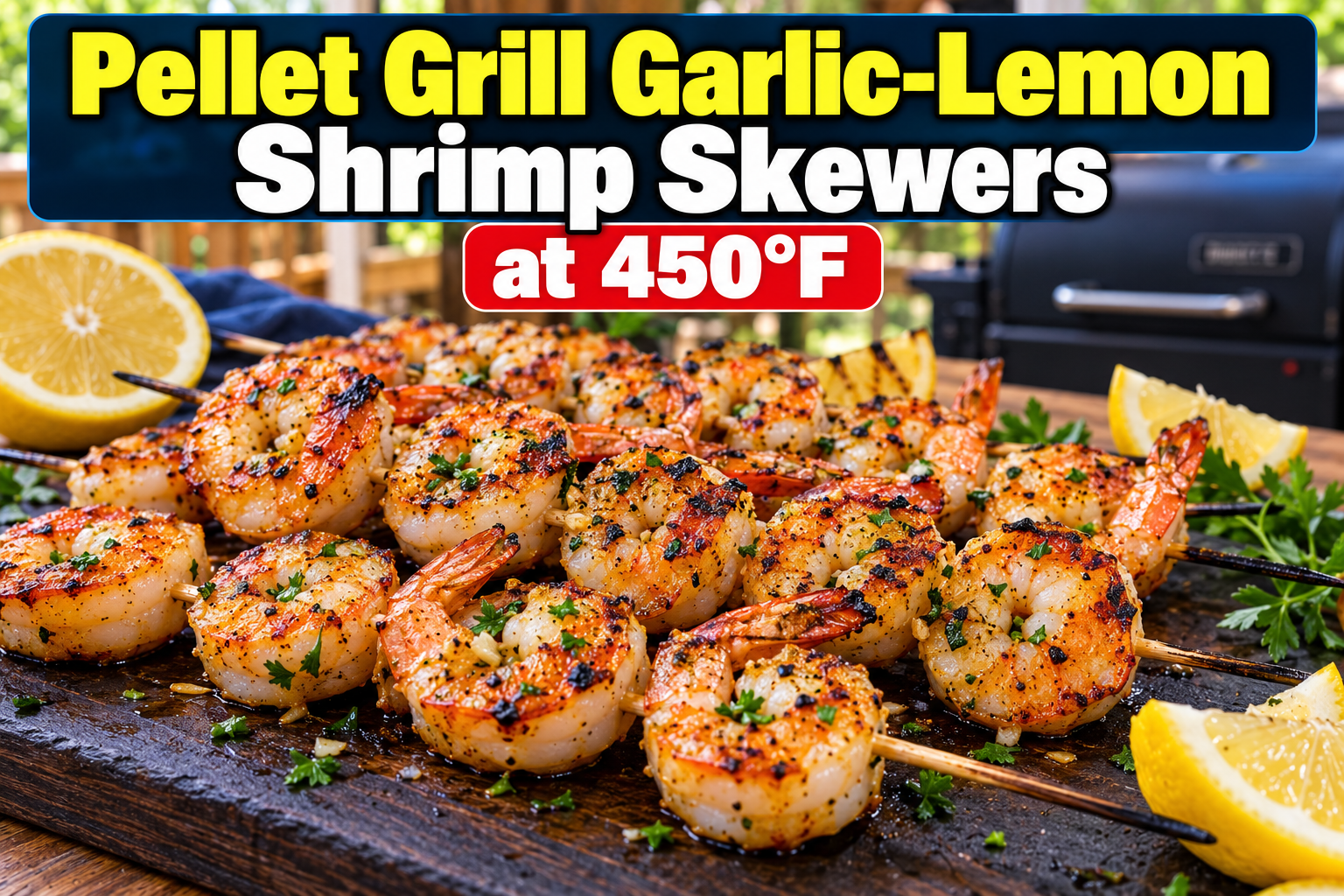
These pellet grill shrimp skewers cook hot and fast at 450°F, with a garlic-lemon marinade that adds flavor without burying the sweetness of the shrimp. Using large shrimp, threading them tightly enough to turn as a group, and checking doneness early gives you juicy, opaque shrimp instead of dry little curls.
Quick Answer: Preheat the pellet grill to 450°F. Marinate large peeled and deveined shrimp for 15 to 20 minutes, thread them onto skewers, and grill with the lid closed for about 2 to 4 minutes per side. Remove them when the flesh is pearly white and opaque; when you can get a reliable reading in a large shrimp, 145°F is a conservative thermometer target for shellfish.
In This Recipe
- Yield, timing, temperature, and equipment
- Exact ingredients
- Step-by-step grilling instructions
- How to tell when shrimp are done
- Troubleshooting and mistakes to avoid
- Substitutions and variations
- Safe storage and reheating
- Frequently asked questions
Pellet Grill Shrimp Skewers Recipe at a Glance
| Yield | 4 main-dish servings or 6 appetizer servings |
|---|---|
| Shrimp | 2 pounds large raw shrimp, peeled and deveined |
| Preparation time | 20 minutes |
| Marinating time | 15 to 20 minutes in the refrigerator |
| Estimated cooking time | 5 to 8 minutes after preheating |
| Pellet grill setting | 450°F |
| Doneness | Pearly white and opaque; 145°F when a reliable reading is possible |
| Pellet choices | Apple, cherry, alder, oak, or a mild blend |
The cooking time is only a planning range. Shrimp size, starting temperature, skewer material, weather, and the actual grate temperature all change the clock. Begin checking at the early end. Shrimp can go from juicy to rubbery in another minute or two.
Ingredients and Equipment
This recipe uses 2 pounds of large shrimp and a short garlic-lemon marinade made with oil, butter, paprika, salt, and pepper. Lemon zest gives citrus flavor without soaking the shrimp in too much acid. The lemon juice stays modest, and the refrigerated marinating time is limited to 20 minutes.
For the Shrimp
- 2 pounds large raw shrimp, preferably 16/20 or 21/25 count, peeled and deveined
- 2 tablespoons olive oil
- 2 tablespoons unsalted butter, melted and cooled slightly
- 4 garlic cloves, finely minced
- 1 tablespoon fresh lemon juice
- 1 teaspoon finely grated lemon zest
- 1½ teaspoons kosher salt
- 1 teaspoon smoked paprika
- ½ teaspoon coarse black pepper
- ¼ teaspoon crushed red pepper flakes, optional
For Serving
- 2 tablespoons chopped fresh parsley
- 1 lemon, cut into wedges
Equipment
- Pellet grill capable of holding 450°F
- 8 metal skewers or sturdy bamboo skewers
- Large bowl
- Tongs
- Instant-read thermometer with a thin tip
- Clean platter for cooked shrimp
Metal skewers are the simplest choice because they do not need soaking and they conduct some heat into the food. If you use bamboo, soak it in cold water for at least 30 minutes—or as directed on the package—before it goes near the heat. Soaking reduces scorching but does not make wood fireproof, so keep exposed ends away from the hottest area.
What Size Shrimp Works Best on a Pellet Grill?
Large shrimp in the 16/20 or 21/25 count range are easiest to skewer, turn, and check before they overcook. The count refers to the approximate number of shrimp per pound. A lower count means larger individual shrimp.
Small shrimp can fall between grates and finish before they pick up much wood-fired character. Extra-jumbo shrimp work too, but they may need another minute or two. The package size is not a doneness test, so watch the flesh and verify the center when possible.
Buy raw shrimp rather than precooked shrimp. Precooked shrimp only need reheating and can become tough during a full high-heat grill cycle. Peeled shrimp absorb the seasoning more directly; leaving the tail shell attached gives you a convenient handle for appetizers.
Should You Thaw Frozen Shrimp Before Grilling?
Yes. Thaw frozen shrimp completely, drain them, and pat them dry before marinating. Ice and surface water dilute the seasoning and encourage steaming. Partly frozen shrimp also cook unevenly because the outside can turn opaque while the center is still icy.
The safest simple method is to thaw the sealed package in the refrigerator. For a faster method, keep the shrimp in a leakproof bag and submerge it in cold water, changing the water every 30 minutes. Do not thaw seafood on the counter or in warm water. Keep it cold until the pellet grill is preheated.
How Do You Cook Garlic-Lemon Shrimp Skewers on a Pellet Grill?
Preheat to 450°F, marinate the shrimp briefly, thread them onto skewers, and cook for about 2 to 4 minutes per side. Have the platter and tongs ready before the skewers go on because this is a fast cook.
Step 1: Prepare the Skewers and Pellet Grill
If using bamboo skewers, soak them while you prepare the shrimp. Check that the grease channel and grease container are clear, then start the pellet grill according to its manual. Preheat to 450°F with the lid closed.
Use dry pellets that feed cleanly. Apple, cherry, and alder are mild enough for seafood. Oak or a balanced blend gives a slightly stronger background. This short cook will not produce deep low-and-slow smoke flavor, so there is no reason to empty a hopper of good pellets merely to change species.
Step 2: Dry the Shrimp
Keep the raw shrimp cold until the grill is heating. Drain well, then pat the shrimp dry with paper towels. Discard the towels immediately and wash your hands. Surface moisture makes the marinade slide off and prevents fast browning.
Step 3: Mix the Garlic-Lemon Marinade
In a large bowl, whisk together 2 tablespoons olive oil, 2 tablespoons melted butter, 4 minced garlic cloves, 1 tablespoon lemon juice, 1 teaspoon lemon zest, 1½ teaspoons kosher salt, 1 teaspoon smoked paprika, ½ teaspoon black pepper, and the optional crushed red pepper.
The butter should be warm enough to stay liquid but not hot enough to begin cooking the shrimp. If it firms into little pieces after it touches the cold seafood, that is harmless; the butter will melt quickly on the grill.
Step 4: Marinate for 15 to 20 Minutes
Add the shrimp and toss until every piece is lightly coated. Cover and refrigerate for 15 to 20 minutes. Do not leave this lemon marinade on for hours. Acid changes the texture of seafood, and this recipe needs only a short flavoring period.
While the shrimp marinates, set out a clean cooked-food platter. Do not reuse the bowl or plate that held raw seafood unless it has been washed with hot, soapy water.
Step 5: Thread the Shrimp
Thread 5 to 7 shrimp on each skewer, depending on their size. Pierce each shrimp twice—once near the thicker head end and once closer to the tail—so it cannot spin when you turn the skewer. Leave a small gap between pieces so hot air can circulate, but do not spread them so far apart that the skewer becomes hard to handle.
For very flexible shrimp, use two parallel skewers. This “ladder” arrangement keeps the whole row flat and makes one-motion turning easier.
Step 6: Grill the First Side
Place the skewers on the clean, preheated grates. Close the lid and cook for 2 to 4 minutes. At 450°F, there is little margin for repeated peeking. Check once at 2 minutes if the shrimp are on the smaller end of the range.
Step 7: Turn and Finish
Turn each skewer with tongs and close the lid again. Cook for another 2 to 4 minutes. Remove the skewers as soon as the thickest shrimp are pearly white and opaque through the center. When you can insert a thin thermometer tip into the side of a large shrimp and keep the sensing area centered, 145°F is a conservative finish target.
Do not wait for every shrimp to form a tight circle. A relaxed C shape is common when shrimp are just cooked; a very tight O often signals that the proteins have contracted from extra heat. Shape is only a clue, however—opacity and a reliable temperature reading are better checks.
Step 8: Garnish and Serve
Transfer the skewers to the clean platter. Sprinkle with chopped parsley and serve with fresh lemon wedges. The shrimp do not need a long rest. Serve promptly while they are warm and juicy.
What Temperature Are Shrimp Done?
Shrimp are done when the flesh is pearly or white and opaque; a 145°F center reading is a conservative thermometer check when the shrimp are large enough to probe accurately. The FoodSafety.gov safe-temperature chart gives the opaque visual standard specifically for shrimp, lobster, crab, and scallops. Federal food-safety guidance also uses 145°F for fish and shellfish.
A tiny shrimp is difficult to probe correctly because the sensing tip can pass through the meat or sit against the grate. Use the largest shrimp on the skewer for the check, insert from the side into the thickest section, and confirm that the center is opaque. If the thermometer cannot stay fully inside the flesh, rely on the published visual standard rather than pretending the reading is precise.
Color alone is imperfect because some shrimp turn pink before the center is done. Check the thickest part, not only the tail. The meat should no longer look gray or translucent.
How Long Do Shrimp Take at 450°F?
Large shrimp usually need about 5 to 8 minutes total on a fully preheated 450°F pellet grill. Traeger’s official spicy shrimp skewer recipe uses 450°F and directs a 2-to-3-minute cook on each side. This recipe allows a slightly wider range because shrimp count, weather, and pellet-grill heat recovery differ.
| What changes the cooking time? | How to respond |
|---|---|
| 16/20 shrimp | Expect the later part of the range and check the thickest piece |
| 21/25 shrimp | Begin checking at 2 minutes per side |
| Cold or windy weather | Allow more recovery time and keep the lid closed |
| Metal skewers | They may cook the interior slightly faster than thick wood skewers |
| Crowded skewers | Expect uneven doneness; leave small gaps |
| Grill running above 450°F | Shorten the check interval and move away from a known hot spot |
For a slower seafood cook with more time to monitor doneness, use the site’s pellet grill salmon at 350°F. The shrimp method is deliberately hotter and faster because each piece is small.
Can You Get Smoke Flavor in a Six-Minute Shrimp Cook?
You can get a light wood-fired note, but not the deep smoke profile of a long pork shoulder or brisket cook. Shrimp spend only a few minutes over the fire, and pellet grills generally burn cleaner at higher temperatures.
Choose a flavorful but not aggressive pellet such as apple, cherry, alder, or oak. Starting shrimp at a low temperature just to chase more smoke extends the time in the cooker and makes it easier to dry them before the surface colors. A smoke tube is unnecessary for this recipe and can overwhelm delicate seafood during a very short cook.
If you want to understand why pellet flavor changes with heat, see the guide to getting more smoke flavor from a pellet grill. Apply those ideas selectively; stronger is not automatically better for shrimp.
Shrimp Skewer Troubleshooting
Why Did the Shrimp Turn Rubbery?
They stayed on the grill after the centers turned opaque. High heat finishes shrimp quickly. Begin checking at 2 minutes per side, remove finished skewers separately, and do not wait for every piece to curl into a circle.
Why Did the Shrimp Stick to the Grates?
The grates may not have been fully preheated, the shrimp may have been wet, or they were turned before the surface released. Pat the shrimp dry, preheat completely, and keep a thin oil coating in the marinade. Clean grates also release more predictably than grates covered in old sugary sauce.
Why Did the Garlic Taste Burnt?
Large garlic pieces fell onto a hot surface or the grill ran well above 450°F. Mince the garlic finely, coat rather than bury the shrimp, and shake off heavy puddles of marinade before skewering. Do not pour leftover raw-seafood marinade over the grates.
Why Did the Shrimp Cook Unevenly?
The pieces were different sizes, crowded tightly, or placed across a known hot spot. Use one size range, leave narrow gaps, and orient the skewers so all the shrimp receive similar heat. Move a faster skewer to the platter instead of overcooking it while another catches up.
Why Did the Shrimp Taste Mushy?
The acidic marinade likely sat too long. Lemon juice changes seafood proteins even without heat. Keep this marinade to 15 to 20 minutes in the refrigerator. Add extra lemon at the table, not by extending the soak.
Common Mistakes to Avoid
- Using precooked shrimp. They are already done and become tough during a full grill cycle.
- Grilling partly frozen shrimp. The outside can overcook before the icy center warms through.
- Skipping the preheat. A lukewarm grate stretches the cook and limits color.
- Leaving too much surface water. Wet shrimp steam and shed the marinade.
- Marinating for hours. The lemon can make the texture soft before grilling.
- Threading each shrimp only once. One puncture lets it spin instead of turning with the skewer.
- Using time as the final test. Check opacity and temperature rather than obeying the clock.
- Reusing the raw-shrimp platter. Always move cooked seafood to a clean plate.
- Pouring raw marinade over cooked shrimp. Discard marinade that contacted raw seafood unless it is boiled separately to a food-safe state.
- Walking away. The useful doneness window is short at 450°F.
Substitutions and Variations
Can You Make the Shrimp Dairy-Free?
Yes. Replace the 2 tablespoons of butter with 2 additional tablespoons of olive oil. The shrimp will lose a little buttery richness but the garlic, lemon zest, and paprika still provide plenty of flavor.
Can You Use a Cajun Seasoning?
Yes. Replace the smoked paprika, black pepper, red pepper flakes, and up to half of the salt with 1½ to 2 teaspoons of Cajun seasoning. Check the label first because many blends are salt-heavy. Add more salt only after accounting for the blend.
Can You Cook the Shrimp Without Skewers?
Yes. Use a perforated grill basket or a rimmed grill-safe pan so the shrimp cannot fall through the grates. Spread them in one layer and turn or stir once. A solid pan limits direct grate contact, while a basket lets more heat circulate.
Can You Add Vegetables to the Same Skewers?
Only use vegetables that cook in the same short window, such as very thin zucchini half-moons or small pieces of green onion. Bell pepper chunks, mushrooms, and onion wedges usually need longer than shrimp. Put slower vegetables on separate skewers and start them first.
Can You Use Lime Instead of Lemon?
Yes. Use 1 tablespoon lime juice and 1 teaspoon lime zest. Cilantro can replace parsley for a taco-style variation. Keep the same short marinating time because lime is also acidic.
Can You Make the Shrimp Spicier?
Increase the red pepper flakes to ½ teaspoon, or add ¼ teaspoon cayenne. For a milder batch, omit the pepper flakes entirely. Adjust heat in the bowl before the shrimp go in so you do not taste marinade after it has contacted raw seafood.
What Should You Serve With Garlic-Lemon Shrimp Skewers?
Serve the shrimp with quick sides that can be ready before the skewers hit the grill. Because the shrimp cook in minutes, sides that need a long grill time should start first.
- Rice pilaf or lemon-herb rice
- Grilled asparagus started several minutes before the shrimp
- A crisp cucumber and tomato salad
- Warm flatbread
- Garlic pasta with parsley
- Corn on the cob cooked before the shrimp
- Tacos with cabbage, avocado, and lime crema
If this is your first fast pellet-grill meal, the site’s easy pellet grill recipes for beginners explains why full preheating and cooking to doneness matter more than a rigid minute count.
How Do You Store and Reheat Leftover Shrimp?
Remove the shrimp from the skewers, refrigerate them in a shallow airtight container within 2 hours, and use them within 3 to 4 days. If the outdoor temperature is above 90°F, refrigerate within 1 hour. Discard seafood that has remained outside those limits.
For reheating, use gentle heat only until the leftovers reach 165°F. A covered skillet over low heat with a teaspoon of water works better than returning small shrimp to a 450°F grill. You can also eat properly chilled leftovers cold in a salad if they were handled safely after cooking.
Freeze cooled cooked shrimp in a freezer-safe container if you will not use them within the refrigerator window. Thaw frozen cooked shrimp in the refrigerator. The texture may be firmer after freezing, so leftovers are often best in pasta, rice, soup, or tacos.
Frequently Asked Questions
What temperature should a pellet grill be for shrimp?
Set the pellet grill to 450°F for this skewer recipe. The high heat cooks large shrimp quickly and helps the surface color before the interior dries out.
How long do shrimp take on a pellet grill?
Large shrimp usually take about 5 to 8 minutes total at 450°F, often 2 to 4 minutes per side. Size, weather, and actual grate temperature can change the time, so check doneness early.
Do you flip shrimp skewers on a pellet grill?
Yes. Turn the skewers once so both sides receive direct grate heat. Piercing each shrimp twice—or using two parallel skewers—keeps it from spinning during the turn.
Can you put frozen shrimp directly on a pellet grill?
It is better to thaw them first. Fully thawed, dried shrimp season more evenly and cook more predictably. Partly frozen centers can remain cold while the exterior becomes rubbery.
Should you peel shrimp before grilling?
For this garlic-lemon recipe, peel and devein the shrimp so the seasoning reaches the flesh. You can leave the tail shell attached for easier handling. Shell-on shrimp are also grillable, but they need a different seasoning approach.
How do you keep shrimp from drying out?
Use large shrimp, preheat fully, begin checking after 2 minutes per side, and remove each skewer as soon as the centers are opaque. The oil and butter help the surface, but they cannot rescue shrimp left over the heat too long.
What pellets are best for shrimp?
Apple, cherry, alder, oak, and mild hardwood blends all work. The cook is short, so the wood flavor will be light. Avoid chasing heavy smoke at the expense of overcooking the seafood.
Can you marinate shrimp overnight?
Not in this lemon-based marinade. Limit the refrigerated soak to 15 to 20 minutes because prolonged contact with acid can change the shrimp’s texture. A nonacidic oil-and-spice marinade offers more flexibility, but seafood must still stay refrigerated.
Can you use a grill basket instead of skewers?
Yes. A perforated grill basket is a practical choice, especially for smaller shrimp. Preheat the basket with the grill, spread the shrimp in one layer, and stir or turn once while checking for opaque centers.
Can you cook shrimp beside chicken or sausage?
You can use the same grill, but prevent raw juices from touching the shrimp and give each food its own safe-temperature check. Chicken needs 165°F, while shrimp finish much faster. For a chicken cook, see the site’s pellet grill chicken wings guide rather than assuming the same timing.
Final Verdict
Pellet grill garlic-lemon shrimp skewers are a practical choice when you want a fast meal with light wood-fired flavor. The recipe succeeds by keeping the shrimp large, dry, cold before cooking, and on the 450°F grill only until opaque. Marinate briefly, turn once, check early, and move the finished skewers to a clean platter.
About the Author
Frank writes Everything Grill Reviews to help home cooks make clearer decisions about grills, cooking methods, and outdoor-food safety. This recipe is based on current manufacturer cooking guidance and federal food-safety recommendations; no hands-on test or personal cooking result is claimed.