
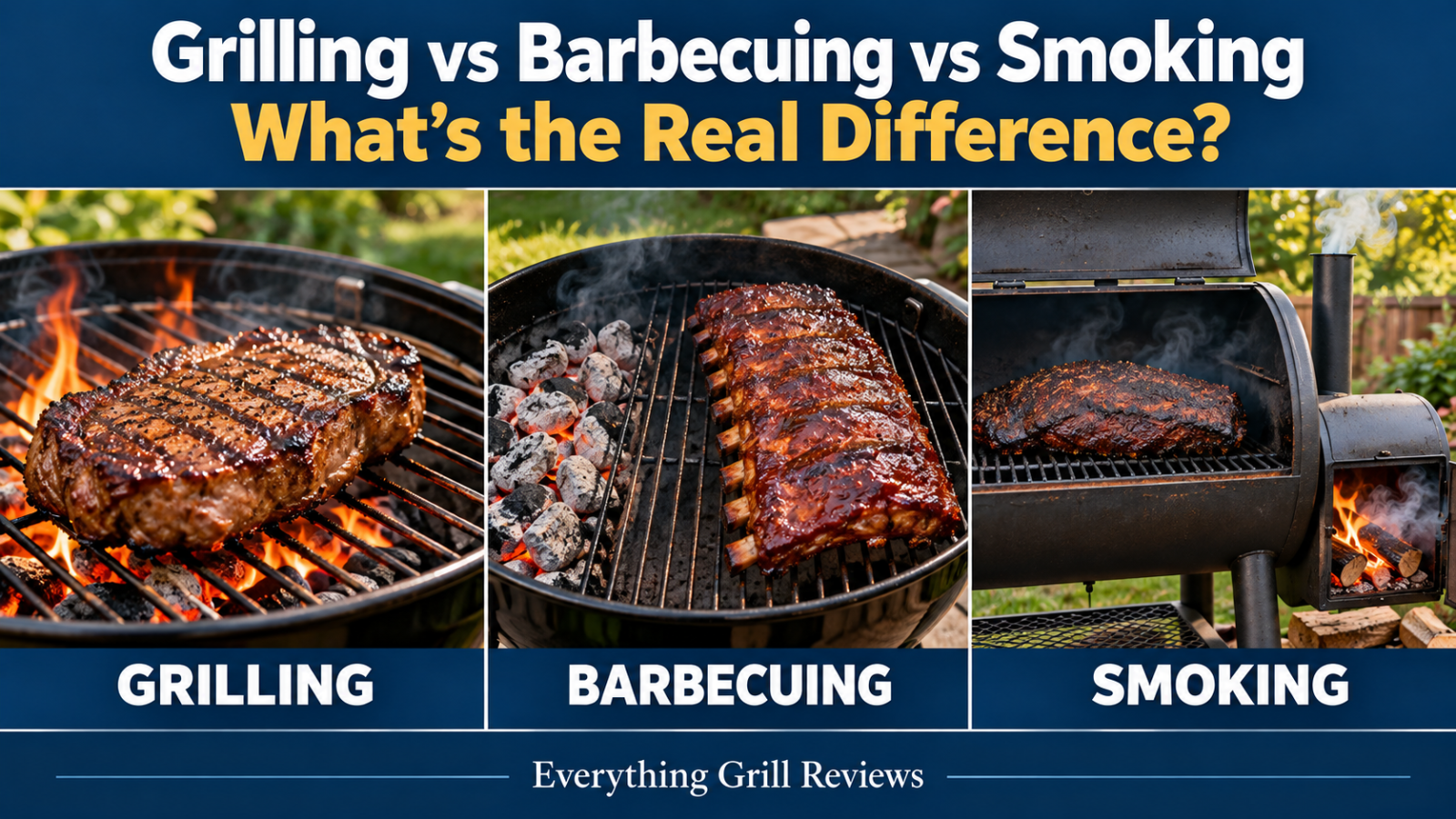
Grilling vs barbecuing vs smoking comes down to how you use heat, how long the food needs to cook, and whether you deliberately add smoke. Those choices matter when you have an expensive steak or a big pork shoulder on the grate. A burger needs good browning and a safely cooked center. A shoulder needs enough time to become tender. Calling both meals “barbecue” is fine, but cooking them the same way can waste good meat.
Quick Answer: Grilling usually uses higher heat for faster cooking. Barbecuing often means cooking larger or tougher cuts slowly, usually with indirect heat. Smoking deliberately exposes food to wood smoke; hot smoking also cooks it. The methods overlap, and “barbecue” can also mean a cookout.
By Frank W. Roberts, Everything Grill Reviews
Updated: October 12, 2026
Think about the result you want before worrying about the name. Are you trying to brown the outside quickly, soften a tough cut over several hours, or give dinner a noticeable wood-smoke flavor? Once you answer that, choosing the setup becomes much easier.
Table of Contents
Grilling vs Barbecuing vs Smoking at a Glance
Grilling favors quick browning, traditional slow barbecue favors tenderness, and smoking adds smoke flavor. These are useful working descriptions, rather than three rules that every cook must follow.
| Method | How the heat is used | Common cooking temperatures | Good examples |
|---|---|---|---|
| Grilling | Usually direct heat for browning; indirect heat can finish thicker food. | Often about 375–550°F; the food and recipe determine the setting. | Burgers, steaks, chops, shrimp, vegetables. |
| Slow barbecuing | Gentler heat over a longer cook, commonly with the food away from the fire. | Often about 225–300°F; some barbecue methods run hotter. | Brisket, pork shoulder, spare ribs. |
| Hot smoking | Cooking heat plus deliberate exposure to wood smoke, commonly using indirect heat. | Often 225–300°F for slow-smoked meat; other recipes use higher heat. | Smoked brisket, ribs, poultry, meatloaf. |
These are cooker temperatures, not safe internal meat temperatures. A grill set to 250°F does not mean the middle of a roast has reached 250°F. The temperature ranges also overlap; changing the dial does not automatically change a meal’s name.
- A brisket cooked slowly in wood smoke is both barbecued and smoked.
- A steak can cook gently over indirect heat, then finish with direct-heat grilling.
- A whole chicken can roast with indirect heat, with or without added smoke.
What Is Grilling?
Grilling usually means cooking relatively quickly with enough heat to brown the food’s surface. Direct grilling places food above the heat source. Indirect grilling places it away from that heat, or behind a heat barrier, so it can cook more gently.
Picture a steak above hot charcoal or burgers above lit gas burners. The food’s outside gets substantial heat, which helps build a browned crust. You stay nearby because a few extra minutes can change the result considerably.
When Does Direct Grilling Work Best?
Direct grilling works best for foods that can cook through before the outside burns. Steaks of suitable thickness, burgers, thin chops, vegetable slices, and shrimp are familiar examples.
Thickness matters as much as the ingredient. Two pork chops from the same package may need different handling if one is much thicker. Give the thicker one a place to finish away from the strongest heat instead of leaving it above the flame until the outside turns black.
Is Indirect Grilling Still Grilling?
Yes. Indirect grilling is a standard term for cooking on a grill away from the direct heat source. With the lid closed, the cooker behaves more like an outdoor oven. That makes it useful for larger pieces and for finishing food after searing.
Weber’s guide to direct, indirect, and two-zone grilling explains these different heat arrangements. Indirect heat alone does not make food smoked; you must also expose it to smoke.
What Is Barbecuing?
In the slow-cooked barbecue sense, barbecuing means giving meat sustained, gentler heat until it develops the texture you want. Brisket, pork shoulder, and ribs are common examples. Wood smoke often contributes to the flavor.
Tough barbecue cuts need a different plan from a quick steak dinner. Their connective tissue takes time to soften. A pork shoulder can reach a safe temperature yet still resist pulling apart. Keeping it over the fire longer is about tenderness, once the food-safety requirement has been met.
“Low and slow” describes a useful approach, but it is not a requirement for every regional barbecue style. Some cooks barbecue at higher temperatures, and some traditional methods place meat above coals at a controlled distance. Gentle heat can come from positioning and fire management as well as from a low thermometer reading.
Does Barbecue Have to Mean Low and Slow?
No. The word “barbecue” has broader everyday and regional meanings. People use it for the food, the cooking method, the equipment, or a gathering where food is cooked outside.
If a neighbor invites you to a barbecue and serves hamburgers, there is no need to correct the invitation. But a recipe needs more detail. “Cook over direct medium-high heat” or “smoke over indirect heat at 250°F” tells you something useful that “barbecue it” does not. Traeger’s explanation of the three terms also notes their overlapping meanings.
Does Barbecue Sauce Make Food Barbecued?
Sauce adds flavor; it does not determine the cooking method. A burger cooked quickly above a burner is still grilled when you brush it with barbecue sauce. Slowly cooked ribs can be barbecue even when they are served with a dry rub and no sauce.
Choose sauce because you enjoy it, then decide how to cook the meat underneath. That order helps you avoid treating a sticky glaze as a substitute for good browning, tenderness, or proper doneness.
What Is Smoking?
Smoking deliberately exposes food to smoke, commonly from cooking hardwood, to develop flavor. Hot smoking combines that smoke with enough heat to cook the food. It often overlaps with slow barbecue.
A smoked brisket is the obvious example, but smoking is not limited to big, tough cuts. A meatloaf can pick up smoke while cooking through. Poultry can be cooked with smoke at a recipe’s higher roasting temperature. You do not have to turn every smoked meal into an all-day project.
Are Smoking and Barbecuing the Same Thing?
They often describe the same cook, but they emphasize different things. Slow barbecuing emphasizes how the meat cooks and becomes tender. Smoking emphasizes its exposure to smoke.
That distinction is useful when diagnosing a disappointing meal. Tender ribs with weak smoke flavor may need a different smoke approach. Strongly smoky ribs that are still tough need more attention to cooking and tenderness. Adding another handful of wood will not fix every problem.
Does More Visible Smoke Mean Better Flavor?
No. More smoke is not automatically better smoke, and too much exposure can make food taste bitter. Start with a modest amount of cooking wood and judge the finished food before increasing it next time.
Weber’s smoking tips stress both avoiding excessive wood and keeping air moving through the cooker. Follow your grill’s vent instructions. Do not cover exhaust openings to try to imprison the smoke; the fire and airflow need to work together.
A smoke tube does not replace cooking heat. Use it only in a setup permitted by the equipment manufacturer, with the grill supplying the heat needed for your recipe. Smoke coming from a tube does not prove raw meat has reached a safe internal temperature.
Cold smoking is a separate process that may add smoke without cooking the food to a safe temperature. It should not be improvised as a way to cook raw meat. This guide’s cooking advice concerns hot smoking.
Which Method Should You Use for Your Food?
Choose the method by the cut’s tenderness, thickness, and the flavor you want. The following examples are starting points for choosing a recipe, rather than complete cooking instructions.
What Works Best for Burgers and Steaks?
Direct grilling is a useful starting point for burgers and thinner steaks; thicker steaks often benefit from an indirect stage. That gives you a way to balance a browned outside with a properly cooked center.
For a thick steak, consider a reverse sear: cook gently first, then finish with stronger heat. You can add smoke during the gentle stage if you want it. Our guide to reverse searing a steak explains the sequence.
What Works Best for Brisket, Shoulder, and Ribs?
Choose a barbecue or hot-smoking recipe that gives the meat time to become tender. Trying to cook a full brisket like a thin steak usually leaves you with a poor balance between the outside and the center.
Allow a generous dinner window for these cuts. Size, thickness, weather, and the cooker all affect the finish. Have side dishes ready to wait, rather than promising guests that a shoulder will pull apart at an exact minute.
What Works Best for Chicken?
Chicken works with grilling, indirect roasting, or hot smoking, but each approach needs enough heat to cook it safely. Thin boneless pieces and a whole bird should not get identical treatment.
If crisp skin matters, choose a recipe designed for that result rather than assuming the lowest possible smoker setting is best. If you mainly want sliced breast meat, focus on checking its temperature before it dries out. Either way, use a food thermometer.
How Do You Set Up a Grill for These Methods?
Put food above the heat for direct cooking, away from the heat for indirect cooking, and add an approved smoke source when smoke flavor is part of the plan. The details depend on your cooker.
How Do You Set Up a Charcoal Grill?
A two-zone charcoal setup puts the main bed of coals on one side and leaves the other side available for gentler cooking. Use the hot side for browning and the indirect side for finishing or a suitable slow-cooking recipe.
- Arrange and light the charcoal using your grill’s instructions.
- Leave enough grate space away from the main fire for the food you intend to cook.
- Preheat with the lid positioned as directed, then check the cooking temperature.
- For smoking, use cooking wood and a fuel arrangement suited to the length of the recipe. Maintain the airflow your cooker needs.
How Do You Set Up a Gas Grill?
On a gas grill with suitable independently controlled burners, indirect cooking usually means leaving the burner beneath the food off while another burner supplies heat. Check the manual because burner layouts vary.
For smoke flavor, use a manufacturer-approved smoker box or other approved accessory in its specified position. A gas grill can cook indirectly without producing much wood-smoke flavor. Those are separate features, so plan for both if you want them.
How Do Pellet Grills and Dedicated Smokers Fit In?
Many pellet grills cook with a heat diffuser between the firepot and the food, making their usual setup indirect. They can hot-smoke at lower settings and cook at higher settings within their specified range. Direct-flame or searing features vary by model.
A dedicated smoker may be excellent at sustained smoking temperatures without offering a convenient steak-searing area. Before buying another cooker, list the meals you actually make. A useful indirect setup and a thermometer may let your existing grill handle more of them.
What Mistakes Cause the Most Trouble?
The common problems are using one heat level for every cut, confusing smoke with doneness, and relying on appearance instead of measurement. Avoid these habits:
- Keeping thick food over intense direct heat. Move it to a gentler zone when the outside is browning faster than the center is cooking.
- Adding too much wood. Taste the result of a modest amount before increasing the smoke load.
- Putting a sugary sauce on too early. Follow the recipe’s glazing stage so the sauce does not burn before the meat is ready. Weber’s rib-cooking example applies its sweet sauce near the end.
- Following the clock alone. Cooking times help you plan, but temperature and the cut’s finished texture tell you more.
- Buying equipment before identifying the missing capability. Ask whether you need stronger searing, easier long cooking, more capacity, or better smoke control.
Which Temperatures Tell You the Food Is Safe?
The food’s internal temperature determines whether it meets the safe cooking minimum, regardless of whether you grilled, barbecued, or smoked it. Use a food thermometer in the appropriate thickest area, away from bone.
| Food | Minimum internal temperature |
|---|---|
| Chicken and turkey, including ground poultry | 165°F |
| Ground beef and ground pork | 160°F |
| Whole beef, pork, lamb, and veal steaks, chops, and roasts | 145°F, followed by at least a 3-minute rest |
| Fish | 145°F |
Source: FoodSafety.gov’s safe minimum internal temperature chart. Tough barbecue cuts commonly cook beyond their safety minimum to achieve tenderness. That extra cooking is a texture decision, not a different safety rule for smoked food.
For a slow-smoking setup, USDA’s smoking guidance recommends monitoring the cooking chamber at 225–300°F. Follow a suitable recipe and monitor the food as well as the cooker. Dark bark, grill marks, and a smoky smell cannot replace an internal-temperature check.
Frequently Asked Questions
Can You Barbecue on a Regular Grill?
Yes, if the grill can provide a suitable indirect setup and maintain the temperature your recipe needs. A lidded charcoal kettle or a suitably designed gas grill can handle many slow cooks. Capacity, fuel supply, and heat control determine the practical limits.
Do You Need a Separate Smoker to Smoke Meat?
No. Some grills can hot-smoke using indirect heat and an approved source of cooking-wood smoke. A dedicated smoker may make long sessions easier, but you should first check what your current grill supports.
Is a Pellet Grill Grilling or Smoking?
It can do either, depending on how you use it. A low-temperature cook with deliberate smoke exposure is hot smoking. A higher-temperature cook may be grilling or roasting, although direct searing capability depends on the model.
Can Meat Be Both Barbecued and Smoked?
Yes. Brisket, ribs, and pork shoulder cooked slowly with wood smoke are common examples. “Barbecued” describes the cooking style, while “smoked” highlights the smoke exposure and flavor.
Does Indirect Heat Automatically Make Food Smoked?
No. Indirect heat describes where the food sits in relation to the heat source. Smoking also requires exposure to smoke. A chicken can roast over indirect gas heat without being deliberately wood-smoked.
Does Smoked Meat Have to Cook All Day?
No. Cooking time depends on the food’s size, thickness, recipe, and temperature. A full brisket and a small meatloaf have different needs. Follow the appropriate safe internal temperature and tenderness checks for the food.
Frank’s Verdict: Choose the Method for the Meal
Use grilling for quick browning, slow barbecue for cuts that need time to soften, and smoking when wood-smoke flavor is part of the goal. Combine them when the food benefits: smoke and then sear a thick steak, or barbecue a pork shoulder while exposing it to smoke.
The label on the cooker matters less than whether you can control the heat, place the food correctly, and check the result. Start with the equipment you own and one suitable recipe. Learn how that combination behaves before spending money to solve a problem you have not identified.
Related Grill How-To Guides
How Smoker Temperature Control Actually Works
Understand the role of fuel, airflow, and temperature probes.
How to Reverse Sear a Steak on a Grill
Combine gentle cooking with a hotter finishing stage.
How to Get More Smoke Flavor From a Pellet Grill
Explore smoke flavor when your current cooker produces a lighter result than you want.
Everything Grill Reviews
Practical advice from a backyard cook who has been grilling since 1970. Choose your heat, check your food, and enjoy the meal.