
Updated: October 9, 2026
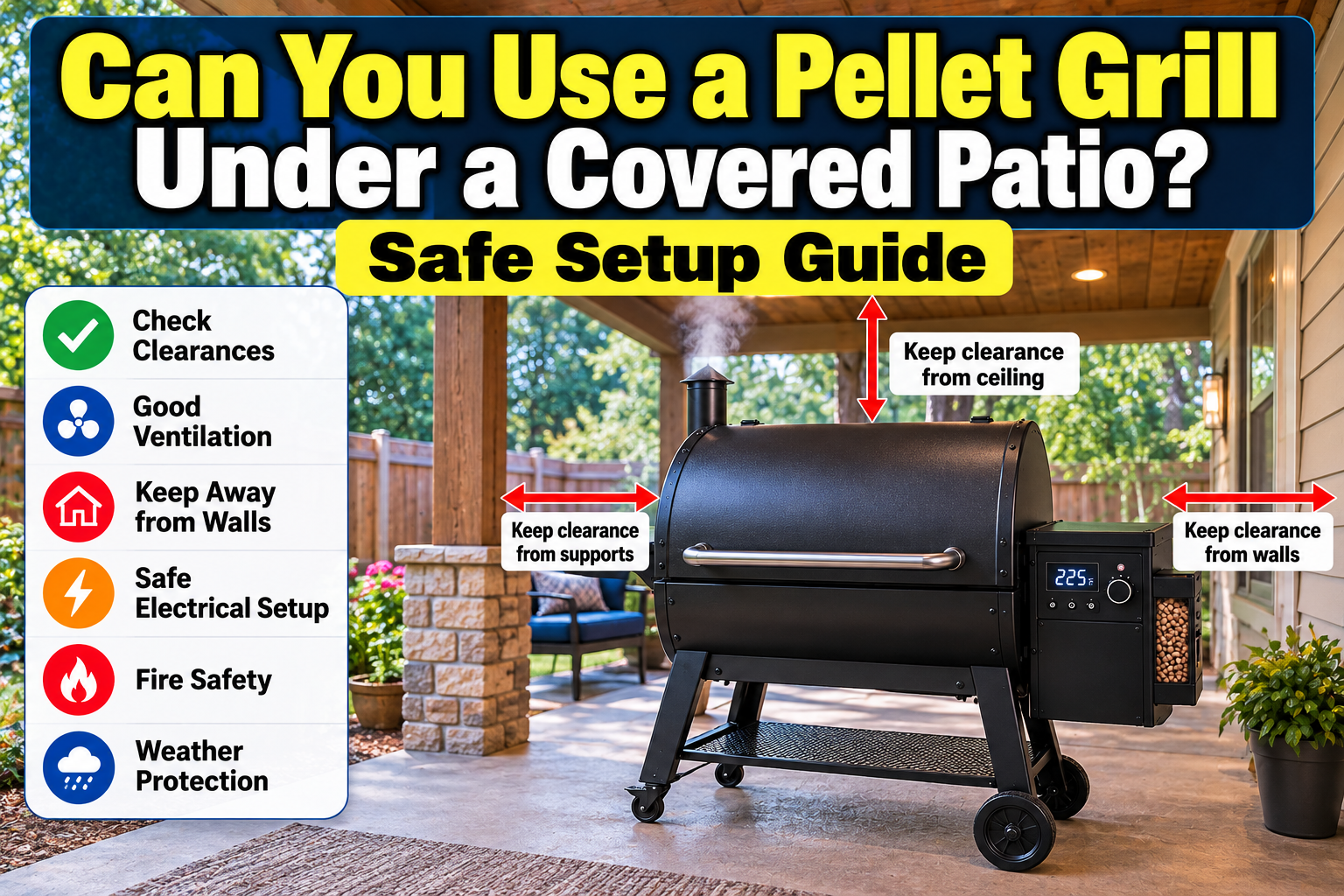
Can you use a pellet grill under a covered patio? Only when the exact grill manual allows that placement and the patio provides every required overhead, side, rear, ventilation, and electrical clearance. Many current pellet-grill manuals prohibit operation beneath a combustible ceiling or overhang. If the manual does not clearly permit your setup, move the grill beyond the roofline into an open outdoor area.
Quick Answer: Do not assume a covered patio is safe just because its sides are open. Check the manual for your exact model. If it bans combustible ceilings or overhangs, the grill must sit outside the cover. Never operate a pellet grill in a garage, screened porch, breezeway, shed, tent, or other enclosed space, and never solve a clearance problem with a homemade heat shield.
Table of Contents
- When is a covered patio safe?
- Why roof clearance matters
- What current manuals say
- Safe placement checklist
- Smoke, wind, and open doors
- Rain and electrical safety
- Grease-fire planning
- Mistakes to avoid
- Safer weather protection
- Frequently asked questions
When Can a Pellet Grill Be Used Near a Covered Patio?
A pellet grill can be used near a covered patio when it remains outdoors, the exact manufacturer instructions allow the location, all measured clearances are satisfied, smoke cannot enter the house, and the electrical connection stays dry and protected. “Near” the cover is usually easier to make safe than “under” it.
The simplest arrangement is to park and store the cool grill under the cover, then roll it completely beyond the roof edge before lighting it. The hot barrel, chimney or rear exhaust, grease system, and hopper all need the space specified by the manual—not merely the wheels or cart.
A patio roof can be noncombustible while still containing combustible rafters, trim, curtains, furniture, screens, wiring, leaves, or decorations. Measure to the closest combustible object in every direction. Do not judge the setup only by the ceiling material you can see.
| Location | Practical answer | Main concern |
|---|---|---|
| Open yard or uncovered patio | Usually the easiest safe location when manual clearances are met | Combustibles, wind, level surface, and power |
| At the outer edge of a patio roof | Possible if the entire hot cooker and exhaust are beyond the overhang and all clearances are met | Roof edge, siding, doors, windows, and smoke drift |
| Under a combustible patio roof | Do not use it there when the manual prohibits overhead combustible construction | Radiant heat, escaping flame, grease fire, and smoke accumulation |
| Screened porch or lanai | No unless the exact manual explicitly recognizes the design, which many manuals do not | Enclosure, carbon monoxide, smoke, and nearby combustibles |
| Garage with the door open | No | Carbon monoxide, stored fuels, walls, ceiling, and smoke entering the home |
| Pop-up canopy or tent | No unless the canopy manufacturer and grill manual expressly approve the combination | Low fabric roof, wind movement, melting, and ignition |
Why Is a Covered Patio Risky for a Pellet Grill?
A covered patio concentrates several risks in one place: a wood fire, grease, hot metal, electricity, combustible building materials, and a roof that can trap heat and smoke. Normal operation may look calm, but safe placement must also account for abnormal operation.
A pellet grill feeds fuel automatically. If ignition is delayed, pellets can accumulate before catching. A dirty firepot can overfill. Grease on a drip tray can ignite. Wind can push heat or sparks toward siding. None of those problems is improved by a low roof.
Heat Travels Above and Behind the Grill
The lid thermometer or digital display measures cooking temperature, not the hottest air leaving the exhaust. Hot gases leave through a chimney, rear slots, downdraft opening, or another factory exhaust path. That stream can heat wood trim, vinyl siding, screens, or patio curtains even when the object does not touch the grill.
Clearance is an air space, not a place to store pellets, a grill cover, paper towels, furniture cushions, or a trash can. A grill can satisfy the distance to the wall and still be unsafe because a curtain blows into the gap.
A Grease Fire Is Hotter Than a Normal Cook
During an ordinary 225°F smoke, the patio roof may never feel alarming. A grease fire is different. Accumulated fat can produce flames and intense radiant heat that the normal cooking temperature does not predict. Safe placement must allow for that failure case.
Routine cleaning reduces this risk. The site’s pellet-grill cleaning guide covers the firepot, drip tray, grease channel, bucket, temperature sensor, and exhaust path.
Carbon Monoxide Has No Safe Indoor Shortcut
Pellet grills burn wood and produce carbon monoxide. Opening a garage door or porch window does not turn an enclosed structure into the open outdoors. Smoke that appears to leave can reverse direction when wind changes, and carbon monoxide cannot be judged by smell.
The National Fire Protection Association advises placing grills well away from the home, deck railings, and out from under eaves and overhanging branches. Its grilling-safety guidance is a useful general rule, but the model-specific owner’s manual remains the controlling source for your grill.
What Do Pellet-Grill Manuals Say About Patio Clearance?
Current manufacturer instructions prove there is no single clearance number for every pellet grill. The correct distance depends on the exact model and market. Some manuals prohibit any combustible overhead construction; older or different models may publish a specific overhead distance.
For example:
- A current Traeger Silverton XL manual requires at least 18 inches from nearby combustibles and says not to operate the grill under a combustible ceiling or overhang.
- A Weber Searwood manual says not to use the grill under overhead combustible construction and lists a 60-centimeter clearance from combustible material for that market version.
- Pit Boss’s current FAQ tells owners to keep the grill outdoors and at least 36 inches from combustible construction.
- An older Traeger Pro assembly guide has published a 40-inch overhead-combustible figure while also requiring 18 inches around the grill.
Those differences are the reason this article does not give a universal “three-foot rule.” A distance printed for another brand, another generation, or another country’s model does not override your manual.
Use this order of authority:
- The owner’s manual for the exact model and country version.
- The grill’s safety label and manufacturer support guidance.
- Local fire, building, landlord, HOA, and insurance requirements.
- General fire-safety guidance when it is more conservative and does not conflict with the instructions above.
If two instructions conflict, use the stricter placement until the manufacturer or local fire official gives a clear answer. Do not average two distances.
How Do You Set Up a Pellet Grill Safely Near a Covered Patio?
Start with the exact manual, choose an open location, measure every required air space, control the cord and smoke path, and inspect the grill before ignition. Use this sequence before the next cook.
1. Identify the Exact Grill Model
Find the model number on the data plate rather than relying on a family name such as Pro, Navigator, Woodridge, or Searwood. Manufacturers revise products, and two grills with similar names can carry different clearance instructions.
Download the manual from the manufacturer. Search within it for “clearance,” “combustible,” “overhead,” “outdoor,” “enclosed,” “power cord,” and “extension cord.” Keep the manual on your phone or print the safety pages.
2. Decide Whether the Patio Is Open or Enclosed
A roof with one open side is not the same as an uncovered outdoor location. Screens, roll-down shades, half walls, privacy panels, and glass doors reduce airflow and add combustible surfaces. If the manual prohibits a screened porch, lanai, breezeway, or enclosed area, do not rename the structure and use it anyway.
3. Check the Overhead Rule First
If the manual says not to operate beneath a combustible ceiling or overhang, stop there. More side clearance does not cancel the overhead prohibition. Roll the grill beyond the roofline or choose another open location.
If the manual expressly allows an overhead installation with a stated vertical clearance, measure from the highest and hottest part of the cooker as the instructions show. Include beams, fan blades, light fixtures, wiring, gutters, and hanging decorations.
4. Measure Side and Rear Clearances
Measure from the grill body and any exhaust outlet to siding, doors, window frames, railings, posts, furniture, trees, storage bins, and trash cans. Leave the exhaust path completely open. Do not place a board, sheet metal, foil, or a welding blanket over a factory vent.
Mark the safe parking position on the patio with a small weather-resistant floor marker if you roll the grill before each cook. That removes guesswork and helps another family member place it correctly.
5. Use a Stable Surface Approved by the Manual
The grill must sit level so grease drains toward the designed cup, tray, or keg. Lock the casters if provided. Keep it away from a slope, soft ground, steps, and any edge where a wheel can drop.
Some manuals prohibit combustible floors; others permit specific deck placement when clearance and protection rules are met. Follow your model. A grill mat may protect a surface from stains, but it does not change an overhead prohibition or create missing fire clearance.
6. Keep the Exhaust Away From Doors and Windows
Close nearby doors and windows before ignition. Aim the exhaust away from air-conditioning intakes, soffit vents, and places where people sit. Smoke blowing into the house means the location is not working, even if the tape measure says the side clearance is adequate.
7. Set Up Power Without Creating a Water or Trip Hazard
Use the grounded outlet and outdoor-rated cord arrangement specified by the manual. Keep every connection dry, off the ground when required, away from hot surfaces, and outside walking paths. Never cut off a grounding prong or use a damaged cord.
Do not stretch the cord across a doorway or depend on a wet indoor power strip. If the outdoor outlet, cover, or ground-fault protection is questionable, have an electrician correct it rather than improvising around a wood-burning appliance.
8. Inspect the Fire and Grease Systems
With the grill cold and unplugged, confirm that the firepot is reasonably clean, the grease tray and drain are open, the grease container is not full, and all heat shields are installed in their correct positions. Remove dry leaves and debris from beneath and behind the grill.
Do not line the cooker in a way that blocks airflow or grease drainage. A foil shortcut can turn a small drip into a pool of fuel.
9. Check Wind Before Ignition
Wind can push heat, smoke, and embers toward the structure. It can also blow curtains or a cover toward hot metal. Move lightweight furniture and fabric well away, and postpone the cook when the manufacturer or local fire warning says conditions are unsafe.
For fuel-specific precautions, use the site’s guide to grilling in wind safely.
10. Stay Close During Startup and Cooking
Watch the complete ignition cycle. Confirm that the grill lights normally and smoke begins to clear rather than becoming a growing cloud from delayed ignition. Do not leave because the app shows a temperature.
Remote monitoring is a convenience, not permission to leave an active fire unattended. Keep children and pets away, know where the plug is, and have a clear route away from the grill.
How Do Smoke and Wind Change a Covered-Patio Setup?
Smoke follows moving air, not the direction you hoped it would travel. A grill that vents cleanly on a calm morning may send smoke under the roof and into the house when an afternoon crosswind develops.
Before a long cook, stand at the proposed location and look for:
- Doors, windows, dryer vents, bathroom vents, and HVAC intakes.
- Roof corners where smoke can collect instead of escaping.
- Fences or privacy walls that create a swirling pocket.
- Fabric curtains or shades that can move several feet in a gust.
- Dry leaves, pine needles, paper, or mulch near the exhaust side.
Do not build a close windbreak around the grill. A panel may reduce wind while reflecting heat toward the cooker, trapping smoke, or violating clearance. If a windbreak is allowed, it must be noncombustible, stable, open enough for ventilation, and placed at the distance required by the manual.
Can You Run a Pellet Grill in Rain Under a Patio Roof?
A patio roof does not automatically make rainy operation safe. The grill still has powered controls, a motor, fan, igniter, plugs, and cord connections. Wind-driven rain can reach them from the side, and water may pool where the cord lies.
Follow the exact weather and electrical warnings in the owner’s manual. Keep connections dry, never handle a wet plug with wet hands, and do not operate equipment with damaged insulation or a questionable outlet. Stop if rain reaches the controller or electrical connections in a way the manufacturer does not approve.
Never drape a grill cover, tarp, umbrella, or sheet over an operating cooker. A cover is for a completely cool grill. For off-season protection and fuel storage, see how to winterize a gas, charcoal, or pellet grill.
What Should You Do If a Pellet-Grill Fire Starts Near the Patio?
Follow the emergency instructions for your exact grill. If the fire is not contained, threatens the structure, or you cannot take the manufacturer-directed action safely, move everyone away and call the fire department.
A current Traeger manual directs users facing a grease fire to keep the grill door and pellet-hopper lid closed, unplug the grill if that can be done safely, move away, and never throw water on it. It recommends an approved all-class ABC extinguisher if the fire is not contained within the grill. Another brand’s shutdown directions may differ, which is why the manual must be read before an emergency.
Do not roll a burning grill away from the house. Moving it can spill burning grease or pellets, feed the fire with air, tip the cooker, or bring you closer to flames. Do not open the lid repeatedly to look.
The site’s guide to preventing flare-ups and responding to a grease fire explains why clean grease paths and closed lids matter.
Common Covered-Patio Mistakes to Avoid
Using a Clearance Number From Another Grill
An 18-inch, 24-inch, 36-inch, or 40-inch figure found online may belong to a different model. Use the label and manual for the grill in your yard.
Measuring From the Wheels Instead of the Hot Parts
The cart footprint does not define fire clearance. Measure as the manual illustrates—from the barrel, exhaust, chimney, hopper, or other specified point to the combustible object.
Assuming a Metal Roof Makes Everything Safe
Metal panels may attach to wood rafters and sit beside wiring, vinyl trim, curtains, leaves, or insulation. The whole assembly matters, and the manual may prohibit overhead placement even when the visible roof panel is metal.
Adding a Homemade Heat Shield
A sheet of metal can reflect heat, restrict airflow, hide scorching, and create a false sense of safety. Unless the grill manufacturer approves a specific installation method, a homemade shield does not rewrite the clearance requirement.
Running a Patio Fan or Hood Without Approval
A household ceiling fan can spread smoke or blow fabric into the cooker. A kitchen-style hood may collect grease and may not be designed for a pellet grill’s exhaust or fire output. A properly engineered outdoor cooking enclosure is a construction project, not an appliance hack.
Leaving the Grill Because the App Is Connected
Wi-Fi can report temperature, but it cannot move a curtain, empty a grease cup, correct a blocked firepot, or call for help. Someone capable of responding must remain nearby.
Storing Pellets and the Cover Under the Hot Grill
Pellets, cardboard, paper towels, and covers are fuel. Keep them outside the required clearance and away from heat. Let the grill finish its shutdown and cool completely before covering or moving it back into storage.
What Is the Safer Way to Get Weather Protection?
The safest simple solution is a movable grill parked under cover only when cold, with a marked cooking position beyond the roofline. That gives the cooker open air during operation without requiring a permanent outdoor-kitchen project.
Other practical options include:
- A manufacturer-approved freestanding shelter specifically designed with the required open sides and clearances.
- A permanent noncombustible outdoor-cooking structure designed to local code by a qualified professional.
- A longer safe route to an existing outdoor-rated outlet instead of moving the fire closer to the house.
- A grill cover used only after shutdown is complete and every surface is cool.
- Postponing the cook when high wind, severe weather, burn restrictions, or electrical exposure make the setup unsafe.
Do not buy a generic canopy based only on a product photo showing a grill underneath it. Confirm in writing that both the shelter instructions and the grill manual allow the proposed use.
Simple Pre-Cook Patio Safety Checklist
- Exact model manual checked.
- No prohibited ceiling, overhang, garage, porch, or enclosed placement.
- Overhead, side, and rear clearances measured.
- Exhaust clear of walls, doors, windows, and air intakes.
- Grill level, stable, and on an approved surface.
- Grease tray, drain, bucket, and firepot checked.
- Dry pellets in the hopper.
- Grounded power connection kept dry and away from heat and foot traffic.
- Wind and local fire conditions acceptable.
- Children, pets, furniture, curtains, leaves, and stored fuel kept away.
- Owner present for ignition and cook.
- Emergency plan and correct extinguisher accessible.
Frequently Asked Questions
How much overhead clearance does a pellet grill need?
There is no universal distance. Some manuals prohibit operation beneath any combustible ceiling or overhang, while certain models publish a specific vertical clearance. Use the exact model’s manual and local requirements, choosing the stricter rule when instructions differ.
Can I use a pellet grill under a metal-roof patio?
Only if the grill manual allows overhead placement and the entire structure—including rafters, trim, wiring, insulation, curtains, and nearby objects—meets every clearance requirement. A visible metal panel does not automatically make the roof assembly noncombustible or approved.
Can I use a pellet grill in a screened porch?
Do not use it there when the manual prohibits screened porches, lanais, breezeways, or enclosed areas. Screens restrict ventilation and add nearby surfaces that can collect grease and smoke. Move the cooker to an open outdoor location.
Can I use a pellet grill in a garage with the door open?
No. A garage remains an enclosed building with a ceiling, walls, stored combustibles, and a path for smoke and carbon monoxide into the home. Move the grill completely outdoors.
Can a pellet grill sit on a wood deck?
Only when the exact manual and local rules permit it. Some pellet-grill manuals prohibit combustible floors or surfaces. A grill mat can catch stains but does not override the manual or supply missing clearance.
Does a grill mat make a covered patio safe?
No. A grill mat may protect the floor from grease, but it does not correct an unsafe roof, wall, exhaust, ventilation, or electrical setup. It also must not interfere with wheels, grease drainage, or airflow.
Can I put a pellet grill under a pop-up canopy?
Not unless both the canopy instructions and the grill manual specifically allow that use with the required clearances. Most ordinary fabric canopies are too low, can move in wind, and add combustible material directly above the cooker.
Will a patio ceiling fan make pellet grilling safer?
Not necessarily. A ceiling fan can redirect smoke, sparks, and heat, and its blades or wiring may lie inside the prohibited clearance. Do not use a fan as a substitute for open-air placement.
Can I move the pellet grill back under the roof while it is shutting down?
No. The firepot and metal remain hot, and the fan may continue running during the shutdown cycle. Leave the grill in its approved cooking position until shutdown is complete and the unit is fully cool.
What should I do if smoke enters the house?
Close doors and windows, keep people away from the smoke, and shut the grill down according to its manual if it is safe to do so. Do not roll a hot operating grill. Before the next cook, choose a location where wind cannot drive exhaust toward openings or air intakes.
About the Author
Frank W. Roberts has been grilling since 1970 and writes Everything Grill Reviews to help backyard cooks make safer, more practical equipment decisions. This guide does not replace the owner’s manual, local fire code, landlord rules, or professional installation advice. Safety details were checked against current NFPA guidance and manufacturer instructions from Traeger, Weber, and Pit Boss on October 9, 2026.