
Updated: October 23, 2026
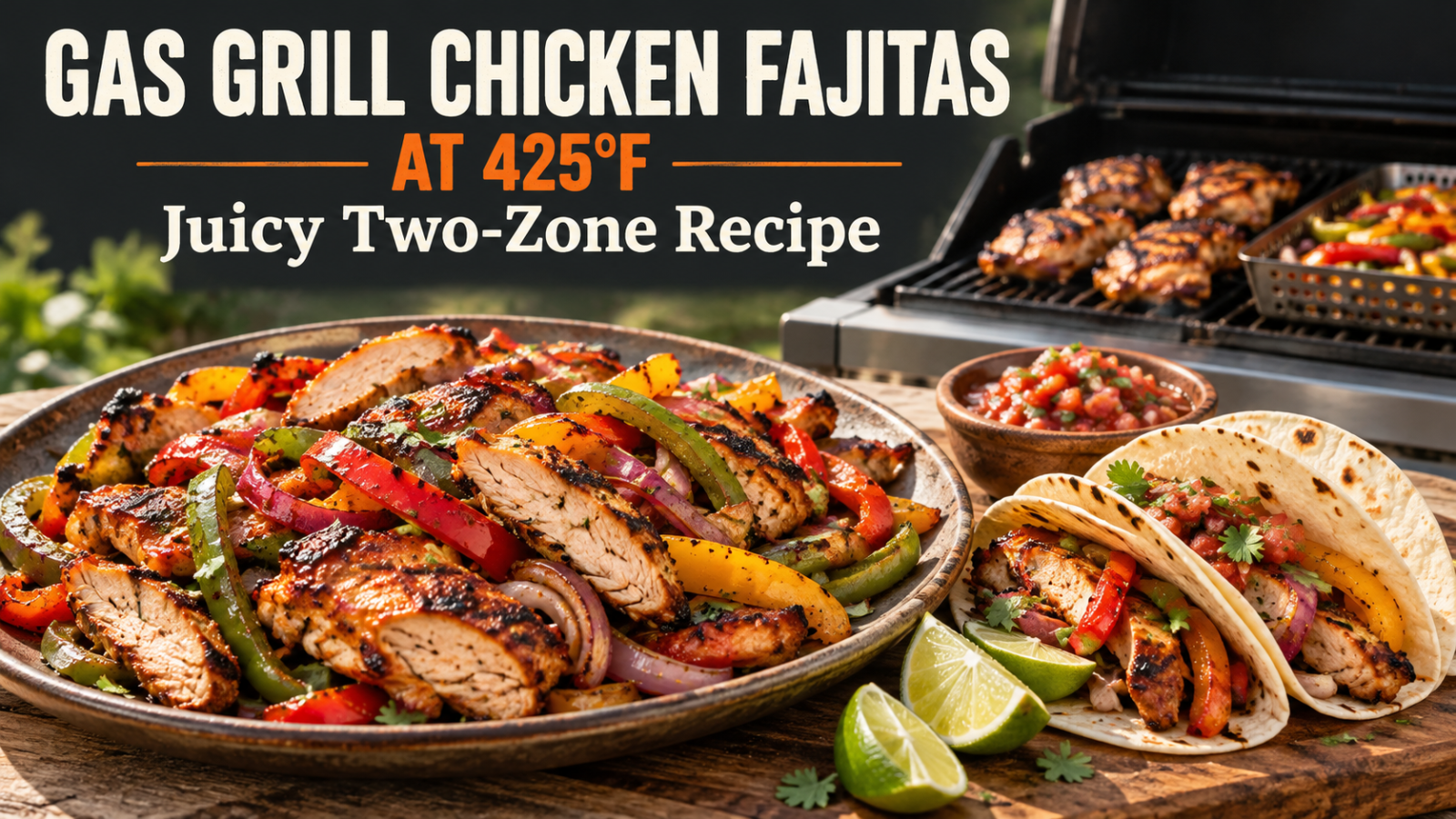
These gas grill chicken fajitas combine browned chicken thighs, charred peppers, and warm tortillas in a meal that works for a weeknight. The trick is controlling the heat. A two-zone setup gives you a hot side for color and an unlit side where the chicken can finish without scorching.
Quick Answer: How Do You Make Chicken Fajitas on a Gas Grill?
Marinate whole boneless chicken thighs for 30 minutes to 2 hours. Grill at 425–450°F over direct heat, moving the chicken to indirect heat as needed, until every piece reaches 165°F. Cook peppers and onions in a grill basket, rest the chicken 5 minutes, then slice and serve in warm tortillas.
Recipe at a Glance
| Servings | 6 |
|---|---|
| Prep time | 20 minutes |
| Marinating time | 30 minutes to 2 hours |
| Grill time | 25–35 minutes in separate batches; about 15–20 minutes if chicken and vegetables cook together |
| Rest time | 5 minutes |
| Grill temperature | 425–450°F with direct and indirect zones |
| Chicken doneness | 165°F in the thickest part |
| Best cut | Boneless, skinless chicken thighs |
Why This Gas-Grill Method Works
Fajitas have three moving parts: chicken, vegetables, and tortillas. They do not need the same amount of heat or the same cooking time. Treating them as one pile is how the onions burn while the chicken stays undercooked, or the peppers turn soft before the meat has browned. The direct side of the grill supplies the heat needed for grill marks and caramelized edges. The indirect side is your control zone. If the marinade begins to darken too fast, move the chicken away from the lit burners and close the lid. Hot circulating air will finish the center more gently. The same cool side keeps cooked vegetables warm and lets tortillas soften without charring. A perforated grill basket is worth using for the peppers and onion. It keeps the pieces from slipping between the grates while still exposing them to dry heat and smoke. Preheat the basket, oil the vegetables rather than flooding the basket, and leave enough room for hot air to move. No basket? A grill-safe cast-iron skillet works, although the vegetables will sauté more than char.
Ingredients
For the Chicken and Marinade
- 2 pounds boneless, skinless chicken thighs, trimmed of loose fat
- 1/4 cup avocado oil or canola oil
- 1/4 cup fresh lime juice, about 2 large limes
- 4 garlic cloves, finely minced
- 2 teaspoons chili powder
- 2 teaspoons ground cumin
- 1 teaspoon smoked paprika
- 1 teaspoon kosher salt
- 1/2 teaspoon dried oregano
- 1/2 teaspoon ground black pepper
For the Peppers and Onions
- 1 large red bell pepper, stemmed, seeded, and cut into 1/2-inch strips
- 1 large yellow bell pepper, stemmed, seeded, and cut into 1/2-inch strips
- 1 large green bell pepper, stemmed, seeded, and cut into 1/2-inch strips
- 1 large red onion, cut into 1/2-inch wedges
- 1 tablespoon avocado oil or canola oil
- 1/2 teaspoon kosher salt
- 1/4 teaspoon ground black pepper
For Serving
- 12 small flour tortillas, about 6 inches each
- 2 limes, cut into wedges
- 1/2 cup chopped fresh cilantro
- 1 cup salsa
- 1 avocado, sliced, or 1 cup prepared guacamole
- 1/2 cup sour cream, optional
Equipment You Need
- Gas grill with at least two independently controlled burners
- Instant-read meat thermometer
- Grill basket or grill-safe cast-iron skillet
- Long-handled tongs
- Two clean platters—one for raw chicken and one for cooked food
- Large bowl or zip-top bag for marinating
- Cutting board and sharp knife
A thermometer matters more than the clock. Chicken thighs vary in thickness, and gas grills do not all deliver the same heat at the grate. The site’s guide to using a meat thermometer correctly shows where to place the probe and how to avoid a misleading reading.
How to Make Gas Grill Chicken Fajitas
1. Mix the Marinade
Whisk the 1/4 cup oil, lime juice, garlic, chili powder, cumin, smoked paprika, 1 teaspoon salt, oregano, and 1/2 teaspoon black pepper in a large bowl. Reserve nothing from this mixture for serving because it will contact raw chicken. Add the chicken thighs and turn them until every surface is coated. Cover and refrigerate for at least 30 minutes and no longer than 2 hours. Lime juice helps flavor the surface quickly, but a long acidic soak can make the outside of the chicken soft and mealy. Keep the bowl in the refrigerator rather than on the counter.
2. Cut and Season the Vegetables
Rinse the peppers and other fresh produce under running water before cutting. Wash your hands with soap for at least 20 seconds after handling raw chicken, and use a clean board and knife for the vegetables. Cut the peppers into strips about 1/2 inch wide. Cut the onion into wedges of similar thickness, leaving a little of the root end attached if you want the layers to stay together. Toss the vegetables with 1 tablespoon oil, 1/2 teaspoon salt, and 1/4 teaspoon black pepper. Uniform pieces matter more than perfect knife work. Thin wisps of onion burn before thick pepper strips soften. Pieces around the same width finish close enough together that you can remove the whole basket at once.
3. Set Up the Gas Grill for Two-Zone Heat
Use the grill outdoors with the clearances required by its manual. Clean the grates, check the grease tray, and open the lid before lighting according to the manufacturer’s instructions. Then arrange the burners so one section is hot and another has no flame directly beneath it:
- Two-burner grill: Light one burner and leave the other off.
- Three-burner grill: Light the left and center burners; leave the right burner off.
- Four-burner grill: Light the two burners on one side; leave the other two off.
Preheat with the lid closed until the grill is holding roughly 425–450°F. Put the empty grill basket over direct heat for the last 5 minutes so the metal is hot when the vegetables arrive. A hot basket starts browning sooner and reduces sticking. If your grill has strong hot spots, use the burner layout rather than the lid thermometer alone. You want one clearly hot cooking area and enough unlit grate space to hold all the chicken. The complete setup is covered in the two-zone grilling guide.
4. Grill the Peppers and Onion
Transfer the seasoned vegetables to the preheated basket. Spread them into a loose layer instead of packing them into a mound. Close the lid and cook over direct heat for 10–14 minutes, tossing with tongs or a grill spatula every 3–4 minutes. Choose a schedule that fits your grill. On a small grill, finish the vegetables first and then cook the chicken; allow roughly 25–35 minutes of grill time in total. If the hot zone has room for both the basket and chicken while leaving the indirect zone clear, start the vegetables a few minutes before adding the chicken. Cooking them together can bring grill time closer to 15–20 minutes. Keep raw chicken and its tools away from cooked vegetables. They are ready when the peppers have dark spots but still hold their shape and the onion is tender at the edges. If they are coloring before they soften, slide the basket toward the cooler side and close the lid for a few minutes. Move the finished vegetables to a clean platter and cover loosely with foil. Do not seal them tightly or trapped steam will soften the charred edges.
5. Grill the Chicken Over Direct Heat
Remove the chicken from the marinade and let the excess drip back into the bowl. Discard the used marinade. Lay the thighs flat over the direct-heat side, leaving a little space between them. Close the lid and cook for 5–7 minutes without moving them. Flip with tongs and cook the second side for another 4–6 minutes. Wash utensils that have touched raw or undercooked chicken before using them to remove finished food or handle tortillas. Exact time depends on thickness and grill heat. Watch the surface, not just the clock. A dark mahogany crust is good; bitter black patches mean the marinade is burning.
6. Finish the Chicken to 165°F
Begin checking the thickest thighs with an instant-read thermometer. Insert the probe from the side into the center of the meat, away from the grate. Chicken must reach 165°F in the thickest part. FoodSafety.gov lists 165°F as the safe minimum for all poultry. If the outside is well browned but the center is below 165°F, move the thighs to the unlit side. Close the lid and check again after 2–3 minutes. That is the main reason to build two zones: you can finish the center without sacrificing the crust. Check more than one piece. The largest thigh and the piece that sat in the coolest part of the grill are the most important. Do not judge safety by clear juices or color alone.
7. Rest, Slice, and Warm the Tortillas
Move the chicken to a clean board and let it rest for 5 minutes. While it rests, wrap the tortillas in two foil packets and set them on the indirect side for 2–3 minutes, turning once. Keep them away from direct flame because thin tortillas go from toasted to brittle quickly. Slice the rested chicken across the grain into strips about 1/2 inch wide. Cutting across the visible muscle fibers shortens them and makes each bite easier to chew. Pour any clean resting juices over the sliced meat, then combine it with the warm peppers and onions or serve each component separately.
8. Build the Fajitas
Fill each warm tortilla with chicken, peppers, and onion. Add cilantro, salsa, avocado, sour cream if you like it, and a squeeze of lime. Keep the first fajita modest. Overfilling makes a good tortilla split and hides the grilled flavor under toppings.
Temperature and Timing Guide
| Food | Grill Zone | Approximate Time | How to Know It Is Ready |
|---|---|---|---|
| Chicken thighs | Direct, then indirect if needed | 10–15 minutes | 165°F in the thickest part |
| Bell peppers and onion | Direct in a basket | 10–14 minutes | Tender-crisp with browned edges |
| Flour tortillas | Indirect in foil | 2–3 minutes | Warm and flexible |
These times are planning ranges, not doneness rules. Wind, outside temperature, burner output, lid opening, and the thickness of the chicken all change the pace. Cook the vegetables to the texture you want and cook the chicken to temperature.
How to Keep Chicken Fajitas Juicy
Boneless thighs give you more room for error than breasts because they contain more fat and stay tender after reaching the safe minimum. Even so, the best results come from a few simple habits:
- Keep the pieces whole while grilling. Thin raw strips overcook quickly and are awkward to keep from falling through the grates.
- Use moderate-high heat, not maximum heat. A 425–450°F grill is hot enough to brown without turning the lime-and-spice coating bitter.
- Move instead of burning. When the surface is browned, the indirect side is the right place to finish.
- Use a thermometer. Remove the guesswork and stop cooking once every piece has reached 165°F.
- Rest before slicing. Five minutes lets the heat even out and keeps more juice in the meat instead of on the cutting board.
- Slice across the grain. The same chicken feels more tender when the muscle fibers are shortened.
Common Problems and Easy Fixes
The Chicken Burns Before It Reaches 165°F
Move it to the indirect side, close the lid, and lower the lit burner slightly if the grill is running above 450°F. Excess marinade on the chicken can also scorch. Let it drip off before the meat goes on the grate. Do not rinse the chicken or pat away all the seasoning. If dripping fat causes flames, use the site’s guide to preventing grill flare-ups safely.
The Chicken Sticks to the Grate
Start with clean, fully preheated grates and give the first side time to brown. Meat often releases more easily once a crust forms. If it tears when you try to flip it, wait another minute and approach from a different angle with the tongs.
The Vegetables Turn Watery
The basket is overcrowded or was not preheated. Cook the vegetables in two batches if they sit deeper than about 1 1/2 inches. Keep the lid closed between tosses so the grill recovers heat, and do not cover finished vegetables tightly.
The Onion Burns Before the Peppers Soften
Cut thicker onion wedges and keep the layers together. You can also add the onion 2 minutes after the peppers. If small loose pieces darken early, move them to the indirect side of the basket while the peppers finish.
The Fajitas Taste Flat
Add lime and a small pinch of salt at the table before reaching for more sauce. The seasoning on grilled food can taste muted after it is divided among tortillas and toppings. Fresh acid wakes it up without covering the char.
Substitutions and Variations
Can You Use Chicken Breasts?
Yes. Use 2 pounds of boneless, skinless breasts and pound the thickest portions to an even 3/4 inch. Grill over direct heat, turn once, and move them to the indirect side if they brown early. Cook to 165°F and rest 5 minutes before slicing. Breasts often finish a little faster than thighs, so begin checking early.
Can You Make the Fajitas Less Spicy?
Use mild chili powder and sweet or mild smoked paprika, and leave out cayenne and hot sauce. Smoked paprika adds smoke flavor; its heat depends on whether the variety is sweet or hot. For more heat, add 1/4–1/2 teaspoon cayenne to the marinade or serve sliced jalapeños at the table.
Can You Use Corn Tortillas?
Yes, but corn tortillas are smaller and can crack when cold. Warm them in foil over indirect heat, or heat them one at a time for 10–15 seconds per side over a cooler part of the grate. Double them if they are very thin.
What If You Do Not Have a Grill Basket?
Use a grill-safe cast-iron skillet, a perforated grill pan, or large pepper quarters and thick onion slabs directly on the grate. Grill the large pieces until browned and tender, then slice them after cooking. Do not use an ordinary indoor sheet pan or skillet unless its maker rates it for grill heat.
Can You Make This Dairy-Free or Gluten-Free?
The chicken and vegetables are naturally dairy-free. Skip sour cream or use a dairy-free alternative. For gluten-free fajitas, use certified gluten-free corn tortillas and check the labels on chili powder, salsa, and other packaged toppings for cross-contact information.
What to Serve with Chicken Fajitas
Fajitas already provide protein and vegetables, so one simple side is enough. Black beans, Mexican-style rice, grilled corn, or a crisp cabbage slaw all work. If the grill is crowded, make the side indoors and save the grate space for ingredients that benefit from fire. For a larger group, set out the chicken, vegetables, tortillas, and toppings separately. A build-your-own line keeps the tortillas from getting soggy and lets people choose their own heat level. Hold cooked food above 140°F if it will sit out for service, or bring it to the table promptly.
How to Store and Reheat Leftover Fajitas
Refrigerate the chicken and vegetables in shallow airtight containers within 2 hours of cooking, or within 1 hour when the outside temperature is above 90°F. Store tortillas and cold toppings separately so they do not become soggy. Use cooked chicken and vegetable leftovers within 3–4 days. Reheat the filling in a covered skillet over medium heat with a tablespoon of water, or microwave it in short intervals, stirring between rounds. Reheated leftovers should reach 165°F. FoodSafety.gov’s cold-storage chart lists 3–4 days for cooked meat or poultry leftovers. For best texture, aim to use frozen chicken-and-vegetable filling within about 2 months. Refrigerate leftovers promptly in shallow containers rather than leaving them on the counter to cool. Once chilled, transfer to freezer-safe containers and freeze. Keep the refrigerator at 40°F or colder and the freezer at 0°F or colder; continuously frozen food remains safe longer, although quality declines. Thaw overnight in the refrigerator. The peppers will be softer after freezing, but the filling still works well in quesadillas, rice bowls, or soup.
Frequently Asked Questions
What Temperature Should a Gas Grill Be for Chicken Fajitas?
Preheat the grill to 425–450°F with a direct side and an indirect side. That range browns the chicken and vegetables without making a lime-based marinade scorch as quickly as an all-out high-heat fire.
How Long Do Chicken Thighs Take on a Gas Grill?
Boneless, skinless thighs usually take about 10–15 minutes at 425–450°F, but thickness and grill performance vary. Turn them once, move them indirect if necessary, and rely on a 165°F internal reading rather than time alone.
Should You Slice Chicken Before or After Grilling for Fajitas?
Grill the thighs or breasts whole, rest them for 5 minutes, and slice afterward. Whole pieces are easier to turn, less likely to fall through the grates, and less prone to drying out than thin raw strips.
Can You Cook the Chicken and Vegetables at the Same Time?
Yes, if the grill is large enough to keep the raw chicken separate from cooked food. Start the vegetable basket first, then add the chicken. Use separate tools or clean them after they touch raw poultry, and never put cooked food back on the raw-chicken platter.
How Long Should Chicken Marinate for Fajitas?
Thirty minutes to 2 hours is enough for this lime marinade. A longer acidic soak does not push flavor deep into the meat and can make the exterior texture soft. Always marinate chicken in the refrigerator.
Do You Close the Grill Lid for Fajitas?
Close the lid between turns so the grill holds heat and the indirect side works like an oven. Open it to toss the vegetables, flip the chicken, move food between zones, and check temperature.
What Is the Best Onion for Chicken Fajitas?
Red onion holds up well on the grill and adds color, but yellow or white onion works just as well. Cut it into thick wedges or slabs so it softens without disappearing through the basket.
Can You Use Bottled Lime Juice?
You can, but fresh lime juice has a brighter flavor and the zest can be added if you want more citrus aroma. If using bottled juice, check that it is unsweetened and use the same 1/4-cup amount.
Final Takeaway
Good gas-grill chicken fajitas come down to control. Keep the chicken whole, give the peppers and onion room to brown, and build an indirect zone before you need it. The hot side creates the char people expect from fajitas. The cool side lets you finish the chicken to 165°F without burning the marinade. Rest, slice, and bring everything to the table while the tortillas are warm.