
Updated: November 6, 2026
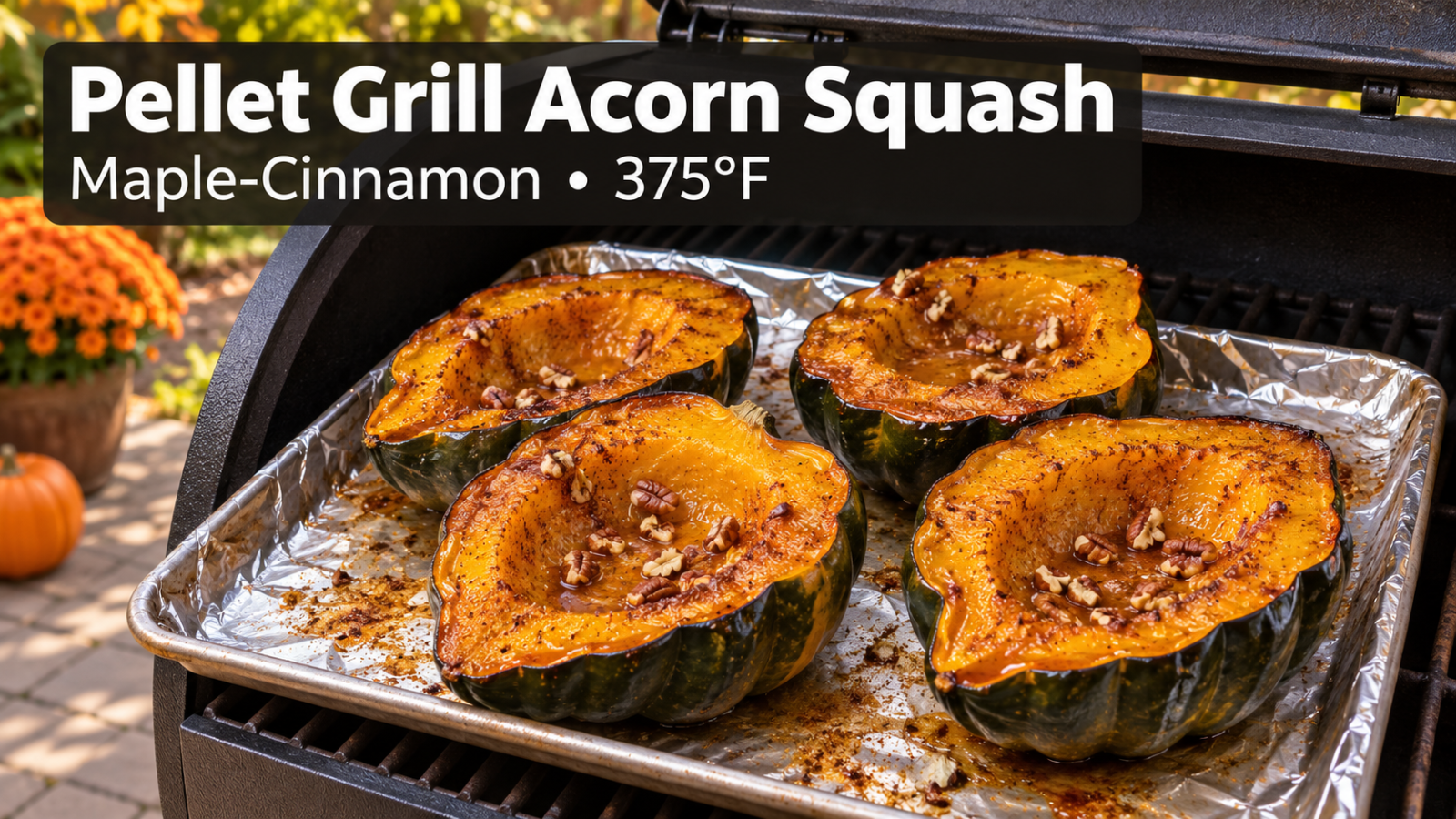
Pellet grill acorn squash at 375°F turns a hard winter squash into a tender, lightly smoky side with very little hands-on work. The simplest reliable method is to roast the halves cut-side down first, flip them once they begin to soften, then add the maple-cinnamon butter so the sugar glazes instead of burning.
Quick Answer: Heat the pellet grill to 375°F. Halve and seed two medium acorn squash, brush them with oil, season with salt, and roast cut-side down on a foil-lined rimmed metal pan for 25 minutes. Flip, brush with maple-cinnamon butter, and cook 20–30 minutes more. The squash is ready when a fork slides easily into the thickest flesh and the center reads roughly 200–205°F as a texture check. Rest 5 minutes and serve one half per person.
Key Points
- Yield: 4 side-dish servings from 2 medium acorn squash.
- Grill setting: 375°F after a full preheat.
- Estimated cook time: 45–55 minutes after preheating.
- Start cut-side down without the sugary glaze; flip and glaze after 25 minutes.
- Doneness: fork-tender throughout; about 200–205°F is a useful texture target, not a federal safety minimum.
- Refrigerate leftovers within 2 hours, use within 3–4 days, and reheat to 165°F.
What Does This Pellet Grill Acorn Squash Recipe Make?
This recipe makes four generous side-dish portions: one roasted squash half per person. The flavor is gently sweet, buttery, warm with cinnamon, and lightly smoky rather than heavily barbecued.
| Recipe Detail | Target |
|---|---|
| Yield | 4 side-dish servings |
| Prep time | 15 minutes |
| Pellet grill temperature | 375°F |
| Estimated cook time | 45–55 minutes |
| Rest time | 5 minutes |
| Total estimated time | About 65–75 minutes including preheat |
The cook time is a range because acorn squash vary in size, density, and starting temperature. A small squash may be tender before 45 minutes. A large one can need an hour. The fork test is more useful than forcing every half to follow the same clock.
What Ingredients Do You Need?
You need two medium acorn squash and a short pantry list. Maple syrup provides the glaze, butter carries the cinnamon, and a little salt keeps the finished side from tasting flat.
- 2 medium acorn squash, about 1 1/4 to 1 1/2 pounds each
- 1 tablespoon neutral oil or olive oil
- 1/2 teaspoon kosher salt, divided
- 1/4 teaspoon black pepper
- 2 tablespoons unsalted butter, melted
- 2 tablespoons pure maple syrup
- 1/2 teaspoon ground cinnamon
- 1/8 teaspoon ground nutmeg, optional
- 2 tablespoons chopped toasted pecans, optional for serving
What Equipment Makes the Recipe Easier?
A sharp chef’s knife, stable cutting board, spoon, small bowl, pastry brush, and rimmed metal sheet pan are enough. The pan catches the butter and maple syrup, makes the squash easier to carry, and keeps sticky glaze out of the pellet grill’s grease system.
- Pellet grill with enough dry food-grade pellets for about 75 minutes
- Sharp chef’s knife
- Large stable cutting board with a damp towel underneath
- Sturdy spoon for removing seeds
- Rimmed metal baking sheet or grill-safe roasting pan
- Aluminum foil for easy cleanup
- Small bowl and pastry brush
- Instant-read thermometer, optional but useful
Use a metal pan unless the manufacturer of another dish specifically approves it for the temperature and outdoor-grill environment. Metal handles heat changes and grill handling without the thermal-shock concern that can come with some glass or ceramic bakeware.
How Do You Cut Acorn Squash Safely?
Stabilize the squash, use a sharp knife, and keep your free hand away from the blade path. If cutting a hard squash feels unsafe, buying pre-halved squash is a sensible shortcut, not a compromise.
- Wash and dry the outside because the knife passes through the skin into the flesh.
- Put a damp kitchen towel under the cutting board so it cannot slide.
- Set the squash on its side. Slice a very thin piece from the blossom end opposite the stem to create a stable base.
- Stand the squash on that flat base. Place the knife tip just beside the stem and cut down through one side.
- Turn the squash and complete the cut from the other end. Pull the halves apart around the stem instead of forcing the blade through the woody stem.
- Scoop out the seeds and stringy center with a sturdy spoon. Leave the firm orange flesh intact.
Do not try to catch a rolling squash while the knife is moving. If the blade sticks, stop, set the squash flat again, and work from the opposite side. Pre-cut halves from the produce section are the easiest option for anyone with limited hand strength.
How Do You Cook Acorn Squash on a Pellet Grill at 375°F?
Roast the seasoned halves cut-side down for 25 minutes, flip them, add the maple-cinnamon butter, and continue until fork-tender. Delaying the glaze prevents its sugar from spending the entire cook against hot metal.
- Preheat the pellet grill. Set it to 375°F and preheat with the lid closed according to the grill manual. Line a rimmed metal sheet pan with foil.
- Prepare the squash. Wash, halve, and seed both squash. Pat the cut surfaces dry.
- Season the first side. Brush the cut flesh and skin lightly with the oil. Sprinkle the cut surfaces with 1/4 teaspoon kosher salt and all the black pepper.
- Begin cut-side down. Place the four halves cut-side down on the prepared pan. Set the pan on the grill grate, close the lid, and cook for 25 minutes.
- Mix the glaze. While the squash cooks, stir the melted butter, maple syrup, cinnamon, optional nutmeg, and remaining 1/4 teaspoon salt in a small bowl.
- Flip carefully. After 25 minutes, use tongs and a spatula to turn every half cut-side up. Keep the pan level because it is hot.
- Glaze the cavities. Divide the maple mixture among the four halves, brushing it over the exposed flesh and letting a little collect in each cavity.
- Finish roasting. Close the lid and cook 20–30 minutes more. Begin checking the smallest half after 18 minutes.
- Check doneness. Pierce the thickest flesh near the skin with a fork or thin knife. It should slide in easily with no hard center. An instant-read thermometer will commonly read about 200–205°F in tender flesh.
- Rest and serve. Remove the pan, spoon any glaze from the cavities back over the flesh, and rest 5 minutes. Add optional pecans just before serving.
The 200–205°F range is a texture guide, not a safety rule. Acorn squash does not have a federal minimum internal temperature. If the fork still meets resistance at 205°F in one spot, check another area and continue cooking until the flesh is evenly soft.
For a manufacturer reference point, Traeger’s winter squash recipe also sets the pellet grill to 375°F and cooks acorn squash in a baking dish until tender. This recipe uses halves instead of cubes, so the fork test and the 45–55 minute range remain specific to the method here.
Why Do You Start the Squash Cut-Side Down?
Starting cut-side down puts the flat flesh close to the hot pan so it softens and picks up light browning. Flipping later creates a bowl for the glaze and keeps maple sugar from scorching during the first half of the cook.
You can roast the halves cut-side up from the beginning, but they may take a little longer and the exposed edges can dry before the thickest flesh is tender. The flip adds one step, yet it produces a more even result without needing foil packets or added water.
Which Pellets Work Best With Maple-Cinnamon Squash?
Apple, cherry, maple, pecan, or a mild hardwood blend works well. The squash cooks at 375°F, where a pellet fire burns relatively cleanly, so the smoke should stay in the background.
Mesquite can overwhelm the mild squash and cinnamon. Strong hickory is better for cooks who already know they like it with sweet vegetables. There is no need for a smoke tube; the goal is a roasted side with a light wood-fired note, not a heavily smoked dessert.
Use dry pellets that snap rather than crumble. Damp pellets can feed poorly and make temperature control erratic. The site’s guide to pellet-grill smoke flavor explains why more smoke is not always better.
How Do You Know When Acorn Squash Is Done?
Acorn squash is done when a fork or thin knife slides easily through the thickest flesh near the skin. The surface should look moist and glazed, and the cavity edges should be lightly browned rather than black.
- Undercooked: The fork stops in a firm or crunchy center.
- Ready: The fork reaches the skin with little resistance and the flesh scoops easily.
- Overcooked: The skin collapses, the flesh becomes watery, and the glaze may darken sharply.
Temperature can support the texture test. Read the thick flesh, not the empty cavity or the pan. A center around 200–205°F usually corresponds to soft squash, but size and moisture still matter. Do not keep cooking a perfectly tender half only to chase an exact number.
What Can You Substitute in the Maple Glaze?
You can change the fat, sweetener, spice, or finish without changing the basic cook. Keep the total glaze modest so it coats the squash rather than pooling over the pan.
- Dairy-free: Replace butter with 2 tablespoons olive oil or melted plant-based butter.
- Honey: Replace maple syrup with the same amount of honey. Watch the final browning closely.
- Brown sugar: Use 1 packed tablespoon brown sugar plus 1 tablespoon warm water in place of the maple syrup.
- Less sweet: Reduce maple syrup to 1 tablespoon and add 1 teaspoon apple cider vinegar.
- Savory: Omit maple, cinnamon, and nutmeg. Use melted butter, black pepper, 1/2 teaspoon dried sage, and a small pinch of garlic powder.
- Nut-free: Skip pecans or use toasted pumpkin seeds if appropriate for the people eating.
Do not double the syrup without also increasing the squash. Excess sugar collects in the pan, burns around the edges, and makes the side cloying.
What Should You Serve With Pellet Grill Acorn Squash?
Serve it with pork, turkey, chicken, sausages, or a hearty grain-and-bean main dish. The sweet glaze pairs best with a savory protein and something crisp or acidic on the plate.
- Grilled pork chops with mustard
- Roast or smoked turkey
- Herb-seasoned chicken thighs
- Fresh sausage cooked to its safe temperature
- Kale salad with cider vinaigrette
- Wild rice with dried cranberries
If you want another fall dish at the same set point, pellet grill apple crisp at 375°F can go on after the squash comes off. Keep dessert separate from grease splatter and strong meat smoke.
Can You Prepare Acorn Squash Ahead?
You can halve and seed the squash up to one day ahead, then refrigerate it covered. Wait to add salt, oil, and glaze until the grill is preheating so the cut surface does not weep or dry out.
The maple-cinnamon butter can also be mixed a day ahead and refrigerated. Warm it gently until brushable before use. Do not leave butter-based glaze at room temperature for extended periods.
How Do You Store and Reheat Leftover Acorn Squash?
Refrigerate leftovers within two hours, use them within three to four days, and reheat to 165°F. Store the halves in a shallow covered container so they cool promptly.
For the best texture, place the halves cut-side up on a covered metal pan and reheat at 350°F until the center reaches 165°F, then uncover for a few minutes. A microwave is faster: cover loosely and heat in short intervals, checking the center before serving. FoodSafety.gov lists 165°F for leftovers and advises using cooked leftovers within four days.
You can freeze cooked squash flesh for up to about three months for best quality. Scoop it from the skin, cool it promptly, pack it airtight, and thaw in the refrigerator. The texture will be softer, so frozen leftovers work best as a mash, soup, or puree.
Frequently Asked Questions
Do you have to peel acorn squash before grilling?
No. Roast the halves in their skins. The skin holds each portion together and acts as a serving bowl. Diners can scoop out the soft flesh; some skins become tender enough to eat, but that varies by squash.
Can you cook acorn squash directly on the pellet grill grate?
Yes, but a rimmed metal pan is easier for this glazed recipe. It catches maple-butter drips, simplifies carrying, and keeps sugar out of the grease system.
Can you cook the squash at 350°F instead?
Yes. Expect the cook to take roughly 10–20 minutes longer, then judge by tenderness. Keep the same flip-and-glaze sequence.
Can you cook the squash at 400°F?
Yes, but begin checking earlier and watch the glaze closely. The flesh can finish a little faster while maple syrup browns more aggressively.
Why is my acorn squash still hard?
The halves may be large, the grill may not be holding 375°F, or the squash may simply be dense. Keep cooking in 5–10 minute increments and check the thickest flesh near the skin.
Can you eat the seeds?
Yes. Clean, dry, oil, and season the seeds, then roast them separately until crisp. They finish much faster than the squash, so do not leave them on the pan for the full cook.
Is 200–205°F required for safety?
No. That range is a practical tenderness cue for cooked squash, not a government safety minimum. The final test is soft, evenly tender flesh.
Final Verdict: Is Pellet Grill Acorn Squash Worth Making?
Yes. Pellet grill acorn squash at 375°F is a useful fall side because the grill handles the roasting while the pan contains the mess. Starting cut-side down speeds softening; delaying the maple glaze protects it from burning. Use mild pellets, cook until genuinely fork-tender, and treat the 45–55 minute window as a guide rather than a guarantee.
About the Author
Frank W. Roberts has been grilling since 1970 and brings more than five decades of backyard cooking and cookoff experience to Everything Grill Reviews. This recipe is based on established squash-roasting technique, current pellet-grill manufacturer guidance for cooking winter squash at 375°F, and federal leftover-safety recommendations. It does not claim a hands-on test on every pellet-grill model. Method and safety details were checked November 5, 2026.