
Updated: November 23, 2026
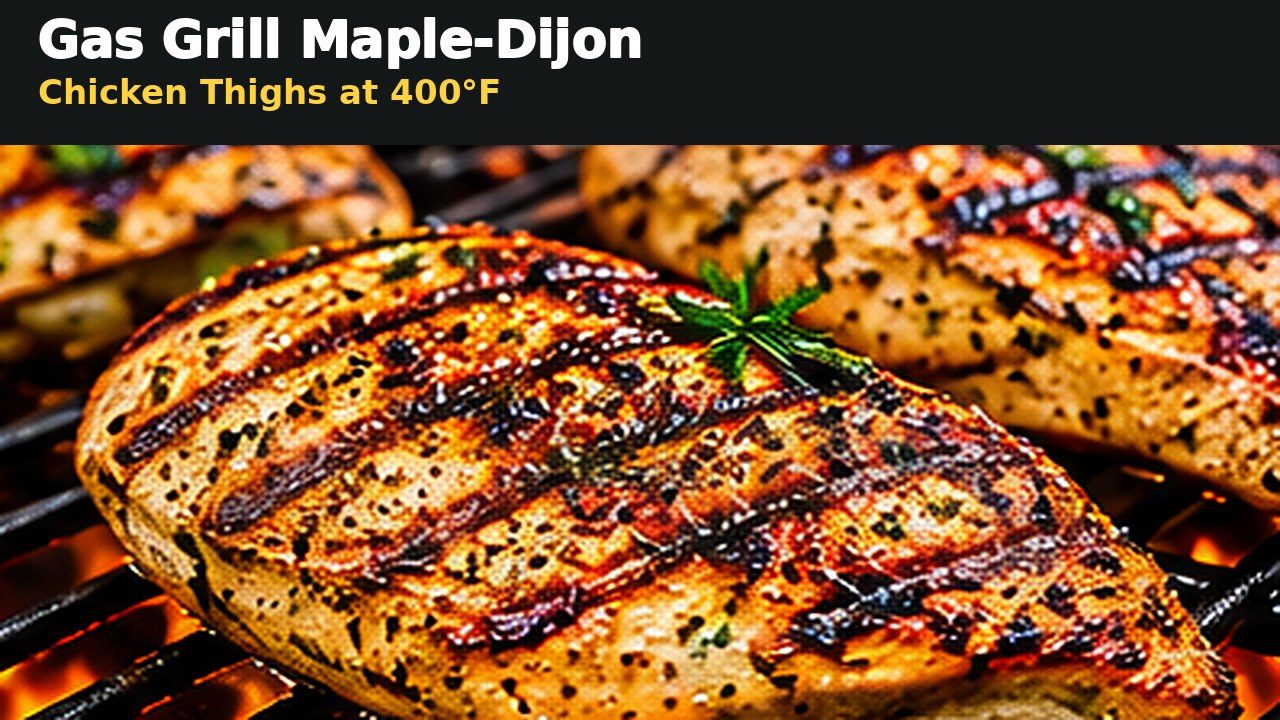
Updated and fact-checked: November 22, 2026. These gas grill maple-Dijon chicken thighs use a short direct-heat sear, then finish away from the flame. That last move matters: maple syrup tastes great on chicken, but it can scorch if you brush it on too early. You can make the glaze while the grill preheats—no overnight marinade required.
Quick Answer: How Do You Grill Maple-Dijon Chicken Thighs?
Preheat a gas grill around 400°F with a direct and an indirect zone. Season 2 pounds of boneless thighs, sear about 3–4 minutes per side, then move to indirect heat. Brush with maple-Dijon glaze near the finish and cook until every thigh reaches 165°F. Rest 5 minutes.
Key Points
- Serves: 4, using about 2 pounds of boneless, skinless chicken thighs.
- Prep: 15 minutes; grill: roughly 12–22 minutes after preheating; rest: 5 minutes.
- Grill: about 400°F, with at least one burner off for indirect cooking.
- Food safety: check the thickest part of each thigh; 165°F is the minimum.
- Glaze: apply late so the maple syrup does not burn over direct flame.
What Ingredients Do You Need?
The recipe uses common pantry ingredients. The chicken gets a simple savory coating; the maple-Dijon mixture stays separate until the last part of cooking.
Chicken and seasoning
- 2 pounds boneless, skinless chicken thighs (about 6–8 pieces)
- 1 tablespoon olive or canola oil
- 1 teaspoon smoked paprika
- 3/4 teaspoon kosher salt (adjust for your salt brand and preference)
- 1/2 teaspoon freshly ground black pepper
Maple-Dijon glaze
- 3 tablespoons Dijon mustard
- 2 tablespoons pure maple syrup
- 1 tablespoon apple cider vinegar
- 1 teaspoon finely minced garlic (or 1/4 teaspoon garlic powder)
Equipment: gas grill with a lid and two usable heat zones, small bowl, two clean small cups for dividing the glaze, tongs, basting brush, and an instant-read food thermometer.
How Do You Set Up a Gas Grill for These Chicken Thighs?
Preheat according to the grill manual, then create a hotter side for browning and a burner-off side for finishing. Aim for about 400°F on the grill’s hood gauge, recognizing that grate temperature may differ.
- Two burners: one burner at medium or medium-high, the other off.
- Three or more burners: light the burners at one end, leaving an area over unlit burners for the finish.
- Before food goes on: clean the grates, check that the grease tray is not overloaded, and keep the grill outdoors with required clearances.
Need a reminder of the setup? See our two-zone grilling guide. On a small grill, adjust the lit burner as needed so the indirect side is warm enough to finish the chicken without exposing the glaze to direct flame.
How Do You Cook Maple-Dijon Chicken Thighs Step by Step?
Season, sear, finish indirectly, and glaze late. The times are starting points for average boneless thighs; thickness, wind, and the actual grate heat will change them.
- Mix the glaze. Whisk the Dijon, maple syrup, vinegar, and garlic. Divide evenly into two clean cups: one for brushing during cooking and one untouched portion for serving. Keep the serving cup separate from raw chicken and the basting brush.
- Prepare the chicken. Pat the thighs dry. Toss with 1 tablespoon oil, smoked paprika, salt, and pepper. Keep the chicken refrigerated until the grill is ready.
- Preheat and set two zones. Heat the grill as the manufacturer directs, then leave one side unlit and adjust the cooking temperature toward 400°F.
- Sear the first side. Place the thighs over the lit burner, close the lid, and cook about 3–4 minutes until lightly browned and easy to release.
- Turn and sear again. Flip with clean tongs and cook about 3–4 minutes more. If fat causes flare-ups, move the chicken to the indirect side immediately.
- Finish away from the flame. Move thighs over the unlit area and close the lid. Start checking the thickest centers after a few minutes. When the chicken is approaching doneness (around 150–155°F), brush lightly with the cooking portion of glaze. Keep the chicken on indirect heat while the glaze sets, about 2–5 minutes, until every piece reaches at least 165°F.
- Rest and serve. Transfer to a clean platter, rest 5 minutes, and spoon on a little of the untouched reserved glaze if desired. Discard any basting glaze that touched undercooked chicken.
USDA and FoodSafety.gov list 165°F as the safe minimum for all poultry. Don’t remove the chicken at a lower number and assume the rest will make up the difference. Our thermometer guide explains how to check the center without touching the grate.
Why Put the Maple-Dijon Glaze on Near the End?
Maple syrup contains sugars that brown quickly and can turn bitter over a direct burner. Starting with a dry savory seasoning gives the chicken time to brown; finishing with the glaze on indirect heat gives you flavor without making the sauce the first thing to burn.
Keep the serving sauce untouched by raw chicken. If you want a thicker glaze, let it set for another minute or two on indirect heat, but stop when the meat reaches 165°F. Don’t chase a dark sticky coating at the expense of dry chicken.
What If Your Chicken Is Bone-In or Your Grill Runs Hot?
Bone-in thighs need more time and often benefit from a longer indirect stage. If you substitute them, use the same seasoning and late-glaze principle, but plan roughly 25–40 minutes total and verify 165°F near the bone without touching it. For very large thighs, expect longer. Boneless breasts are leaner and can dry out faster; use a thermometer and shorten the cook as needed.
| Situation | Adjustment |
|---|---|
| Glaze starts darkening too fast | Move fully off direct heat and reduce the lit burner |
| Chicken browns before reaching 165°F | Finish over the unlit zone with the lid closed |
| One thigh is much thicker | Check it separately; remove only pieces that reach 165°F |
| No pure maple syrup | Use the same amount of honey; still glaze late |
| No Dijon mustard | Use whole-grain mustard for a chunkier, slightly different glaze |
| Prefer less sweetness | Reduce maple syrup to 1 tablespoon; sauce will be tangier |
For more on preventing flare-ups when fat drips, see our flare-up guide.
What Goes Well With These Chicken Thighs?
Rice, a green salad, or simple grilled vegetables all work. For a side you can cook on the same gas grill, try gas-grill foil packet potatoes if you have room to manage the cooking zones and their different timing. Check both foods independently rather than assuming they finish together.
How Do You Store and Reheat Leftover Chicken?
Refrigerate the cooked chicken in shallow, covered containers within two hours, or within one hour when outdoor temperatures exceed 90°F. Keep at 40°F or below and use within 3–4 days. Reheat leftovers to 165°F. See the FoodSafety.gov cold-storage chart.
Frequently Asked Questions
Can I marinate the chicken in the maple-Dijon glaze first?
You can, but it isn’t necessary for this method. A sweet coating on the chicken from the start can scorch over direct heat. Season first and brush the glaze on during the indirect finish.
Can I use bone-in chicken thighs?
Yes. Allow more time over indirect heat and check the thickest meat near, but not touching, the bone. Every thigh must reach at least 165°F.
Can I cook these thighs without a two-zone grill?
You can cook over moderate heat, turning and watching closely, but the sugary glaze is easier to manage with an unlit escape zone. If your grill cannot create one, use a grill-safe pan on moderate heat and add the glaze late.
Can I use honey instead of maple syrup?
Yes, use 2 tablespoons of honey in place of the maple syrup. Honey also burns over direct flame, so keep the same late-glaze method.
Is 165°F enough for chicken thighs?
Yes, 165°F is the federal safe minimum for poultry. Some people prefer thighs cooked further for a softer texture, but a higher target is a preference, not the safety requirement.
Final Verdict: Are Maple-Dijon Chicken Thighs Better With Two-Zone Heat?
Yes. Two-zone heat makes this simple weeknight recipe easier to control. Brown the seasoned chicken first, then move it away from direct flame before adding the maple-Dijon glaze. A thermometer decides when dinner is ready; the clock and the color of the sauce are only clues.
About the Author
Frank W. Roberts has grilled since 1970 and shares practical backyard cooking advice at Everything Grill Reviews. This recipe is a research-based method informed by manufacturer grilling guidance and federal food-safety standards; it is not presented as a personal cooking test or a guaranteed result.