
Updated: September 2, 2026
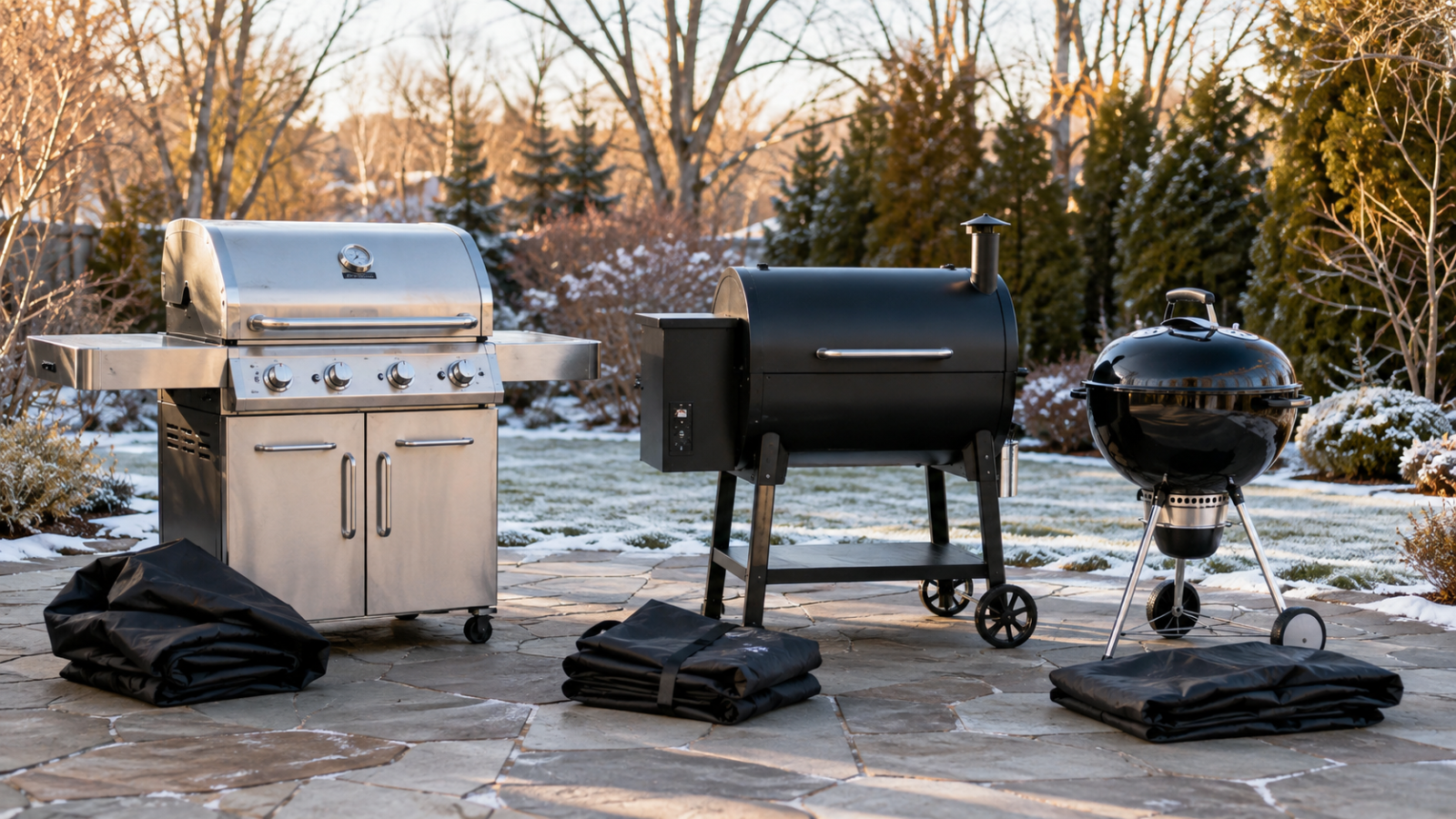
Updated and fact-checked: September 2, 2026 Learning how to winterize a grill is mostly about removing the things that cause trouble while the grill sits: food residue, grease, ash, moisture, and poorly stored fuel. The right procedure depends on whether you own a gas, pellet, or charcoal grill, but every grill should go into storage clean, completely cool, dry, and protected from weather. Disclosure: This article may contain affiliate links. If you buy through these links, Everything Grill Reviews may earn a commission at no extra cost to you.
Quick Answer: How Do You Winterize a Grill?
Let the grill cool, remove grease, ash, and food residue, clean and fully dry the removable parts, protect bare cast iron with a thin oil film, and secure the grill under a fitted cover. Empty a pellet hopper before long storage, and never store a propane cylinder in a garage, shed, basement, or other enclosed area.
Key Winter Grill Storage Rules
- Clean before covering. Grease and food scraps attract pests, encourage mold, and hold moisture against metal.
- Let every part dry. Covering a wet grill can trap the very moisture you are trying to keep out.
- Empty grease and ash. Old grease is a fire risk, while damp ash can promote corrosion.
- Remove pellets for long storage. Moist pellets swell, crumble, and can contribute to an auger jam.
- Keep propane cylinders outdoors. Close the valve and keep the cylinder upright and away from heat and ignition sources.
- Never cook in storage space. Do not operate a gas, pellet, or charcoal grill in a garage, shed, house, or other enclosed area.
- Follow the grill manual. Model-specific shutdown, fuel-removal, and storage directions take priority over a general checklist.
In This Guide
- Do you need to winterize a grill?
- Can a grill stay outside all winter?
- The universal winterizing checklist
- How to winterize a gas grill
- How to winterize a pellet grill
- How to winterize a charcoal grill
- How to store propane, pellets, and charcoal
- How to use a grill cover correctly
- The spring restart checklist
Do You Really Need to Winterize a Grill?
Yes, if the grill will sit unused for several weeks or months, a careful cleaning and storage check can prevent rust, mold, pests, damaged fuel, and a smoky or unsafe first startup in spring. Winterizing is not a complicated mechanical service. It is a thorough end-of-season cleanup followed by correct fuel storage and weather protection. You do not have to quit grilling because the weather turns cold. If you cook outdoors all winter, keep using the normal cleaning schedule, keep pellets and charcoal dry, empty grease and ash regularly, and cover the fully cooled grill between cooks. The full storage procedure matters when you know the grill will not be used for an extended period. Cold alone is not the main enemy. Water, salty air, repeated freeze-and-thaw cycles, wet ash, damp pellets, grease, and neglected food scraps do more damage. The goal is to put the grill away without leaving any of those problems trapped inside.
Can You Leave a Grill Outside All Winter?
Most outdoor grills can remain outside through winter when they are clean, dry, stable, and protected by a properly fitted cover. Weber states that its grills do not have to be brought inside for winter, although model instructions and local conditions still matter. Choose a level location where roof runoff, melting snow, and standing water will not collect around the wheels or lower cabinet. Lock the casters if the grill has them, secure loose shelves or accessories, and make sure wind cannot turn the cover into a sail. Do not position a stored grill where falling ice, snow from a roof, or a snowplow can strike it. A grill body can sometimes be stored in a garage after it is cold, cleaned, and stripped of hazardous fuel, provided the manufacturer allows it. That does not mean the grill may be operated there. The U.S. Consumer Product Safety Commission says grills should be used outdoors only and never in a garage, breezeway, carport, porch, or beneath a combustible surface.
| Grill type | Most important storage step | Fuel concern | Power concern |
|---|---|---|---|
| Gas grill | Remove grease and inspect the hose, burners, and cabinet. | Close the cylinder valve; keep any disconnected cylinder upright outdoors. | Unplug electronic accessories if the manual directs. |
| Pellet grill | Empty grease, cold ash, pellets, and loose sawdust. | Store sound pellets in a dry, sealed container away from heat. | Complete the shutdown cycle, let it cool, and unplug it. |
| Charcoal grill | Remove completely cold coals and all ash. | Keep charcoal dry and keep starter products away from heat or flame. | None unless the grill has electronic accessories. |
What Supplies Do You Need to Winterize a Grill?
You need only basic cleaning and storage supplies: gloves, a finish-safe grate tool, a plastic or wooden scraper, mild dish soap or manufacturer-approved cleaner, towels, a cold-ash vacuum for pellet grills, a small amount of cooking oil for bare cast iron, dry fuel containers, and a correctly fitted grill cover.
- Work gloves and eye protection
- Nylon brush, wooden scraper, or another tool approved for your grate finish
- Plastic putty knife for grease and loose buildup
- Warm water, mild dish soap, and clean cloths
- Manufacturer-approved degreaser when ordinary soap is not enough
- Wet-dry vacuum reserved for completely cold pellet ash
- High-smoke-point cooking oil for uncoated cast iron
- Dry, lidded container for usable pellets or charcoal
- Fitted, weather-resistant cover for the exact grill shape
Match every cleaner and brush to the grill material. Porcelain enamel, bare cast iron, stainless steel, painted steel, and powder-coated surfaces do not all tolerate the same treatment. This guide to deep cleaning grill grates without damaging the finish explains the differences.
What Is the Basic Winter Grill Storage Checklist?
The universal checklist is simple: shut the grill down correctly, let it cool, remove fuel and waste as appropriate, clean away food and grease, dry every surface, protect rust-prone metal, inspect for damage, and cover the grill only after it is dry.
- Read the storage section of the owner’s manual. Locate the correct shutdown procedure and any model-specific warnings before removing parts.
- Finish the normal shutdown. A pellet grill must complete its powered shutdown cycle. Gas and charcoal grills must be fully extinguished according to their manuals.
- Wait until the grill is completely cool. Never vacuum warm ash, cover a warm cooker, or handle a propane connection beside a flame.
- Remove waste. Empty the grease cup, drip pan, ash catcher, grease-and-ash keg, or other collection system.
- Remove food residue. Clean grates, heat shields, drip surfaces, and the cookbox using tools approved for those materials.
- Dry the grill. Wipe the parts dry and allow hidden seams, the cook chamber, shelves, and cabinet to air-dry before reassembly.
- Inspect it. Look for rust-through, loose wheels, damaged cords, cracked hoses, nests, clogged drains, damaged seals, and missing hardware.
- Protect and cover. Apply a thin oil film only where appropriate, put dry parts back correctly, secure accessories, and install the fitted cover.
How Do You Winterize a Gas Grill?
Winterize a gas grill by shutting off its fuel, cleaning the grates and cookbox, emptying the grease system, inspecting the hose and burners, drying all parts, and deciding whether the grill body will remain outside or be stored without its propane cylinder.
1. Shut Off the Gas Safely
Turn every burner control to the off position and close the propane cylinder valve. Let the grill cool completely. If you plan to disconnect the cylinder, use the procedure in the grill manual and do the work outdoors away from sparks, cigarettes, flames, and other ignition sources. Do not loosen, repair, or modify the cylinder valve, regulator, hose, manifold, or gas fittings. If you smell propane, hear hissing, find a damaged hose, or see bubbles during an approved leak test, stop. Keep people away and contact the propane retailer, grill manufacturer, fire department, or a qualified gas-appliance professional as appropriate.
2. Remove Grease and Food Debris
Grease and food scraps are more than cosmetic problems. They attract animals, support mold growth, and create a fire risk when the grill is restarted. Remove the cooking grates and heat tents or flavorizer bars according to the manual. Scrape loose buildup with a plastic or wooden tool and empty the grease pan and catch cup. For a neglected cooker, follow the full gas grill deep-cleaning guide rather than spraying cleaner blindly around burners, valves, and ignition parts.
3. Inspect the Burners and Fuel System
With the grill cold and the fuel off, inspect accessible hoses for cracks, brittleness, abrasion, melted areas, and animal damage. Look over burner ports and burner inlets for corrosion, grease, webs, or insect nests. Clean only as the manufacturer directs and reinstall every burner in its correct position over the valve orifice. Do not stuff cloth, foil, or an improvised plug into a venturi or gas opening unless the manual specifically tells you to use a supplied storage cap. Forgotten material can obstruct the air-and-gas mixture during the next startup.
4. Dry and Protect the Cooking Surfaces
Dry the grates, heat shields, and cookbox before putting them back. Bare cast-iron grates benefit from a very thin coat of high-smoke-point cooking oil after they are dry. Porcelain-enameled grates do not need to be seasoned like bare iron; replace them if the coating is badly flaking or the metal has rusted through.
5. Store the Grill Body and Cylinder Correctly
If the gas grill remains outside, close the cylinder valve, follow the manufacturer’s connection guidance, and cover the fully cooled, dry grill. If the grill body goes into a garage, disconnect the cylinder outdoors and leave the cylinder outdoors. Never operate the grill in the garage.
Propane Storage Warning
The Propane Education & Research Council says portable cylinders must stay upright outdoors with the valve closed and away from heat and ignition sources. It specifically warns against storing cylinders in enclosed places such as a basement, garage, shed, or tent—even when the cylinder seems empty. Read its portable propane cylinder safety guide.
If the grill already has weak heat, yellow flames, an ignition fault, or a questionable hose, do not hide the problem under a cover until spring. Use this gas grill troubleshooting guide to separate low-risk checks from problems that require professional service.
How Do You Winterize a Pellet Grill?
Winterize a pellet grill by completing its shutdown cycle, unplugging it after it cools, removing grease and cold ash, emptying the hopper for long storage, clearing loose sawdust as the manual directs, and protecting the dry grill with a fitted cover.
1. Complete the Shutdown Cycle
Do not simply unplug a running pellet grill. Use its normal shutdown procedure so the controller can stop the auger and run the fan for the required cool-down period. Once the cycle has finished and every part is cold, switch off and unplug the grill.
2. Empty Grease and Vacuum Cold Ash
Remove and empty the grease bucket, grease-and-ash keg, or other collection system. Take out the grates, drip tray, and heat baffle only as the manual allows. Scrape away grease with a nonmetallic tool, then vacuum ash from the firepot and cook chamber only when it is completely cold. A pellet grill can hide ash around and below the firepot even when the upper chamber looks clean. Follow the complete pellet grill cleaning guide if the cooker has gone several long sessions without a deep clean.
3. Empty the Pellet Hopper Before Long Storage
Pellets should not remain in a hopper through months of damp weather. Wood pellets absorb moisture, lose their hard glossy surface, crumble into sawdust, and can swell inside the feed system. Use the hopper cleanout door or pellet slide if your model has one. If it does not, follow the manufacturer’s removal procedure. Traeger’s official instructions say not to tip a grill to empty the hopper and describe using a bucket plus a wet-dry vacuum to remove remaining pellets and sawdust. Some models also require a specific powered procedure to clear pellets from the auger tube. Do not invent your own method; consult the manual or the manufacturer’s pellet-removal guidance.
4. Inspect the Cord, Probe Ports, Gaskets, and Drainage
Look for cracked insulation, bent plug blades, chewed wiring, damaged temperature probes, a loose chimney cap, torn gaskets, and grease blocking a drain or chute. Do not spray water or cleaner into the hopper, auger tube, controller, motor, fan, igniter, or electrical connectors.
5. Dry, Reassemble, Unplug, and Cover
Wipe the cooking chamber and removable parts dry. Reinstall each baffle, tray, and grate in the correct order. Keep the grill unplugged during extended storage unless its manual requires otherwise. Close the hopper lid and use a cover made for the model so rain and melting snow cannot pool over the controller or hopper.
How Do You Winterize a Charcoal Grill?
Winterize a charcoal grill by allowing every coal to extinguish and cool, disposing of the coals and ash safely, cleaning food residue from both grates and the bowl, drying the cooker, protecting bare cast iron, and covering it against precipitation.
1. Make Certain the Fire Is Out
Close the vents as the grill manufacturer directs and wait until the fuel is completely cold. Charcoal can remain hot inside while the outside looks harmless. Never move a grill with live coals into a garage or other enclosed space. The CPSC warns that charcoal continues producing carbon monoxide until it is completely extinguished.
2. Remove Ash Instead of Storing It
Empty the ash catcher and remove ash from the bowl only after everything is cold. Damp ash holds moisture against steel and can harden into a stubborn mass. Dispose of it in a noncombustible container according to local rules; never dump questionable coals directly into household trash.
3. Clean and Dry the Grill
Brush both the cooking grate and charcoal grate with a finish-safe tool. Scrape loose food and carbon from the lid and bowl without removing sound porcelain enamel. Clean the ash sweeper and vents so they move freely, then dry everything before reassembly. For a deeper end-of-season check, use these charcoal grill maintenance tips. Ceramic kamado owners should also inspect the bands, hinge, gasket, firebox, vent cap, and cart according to the manufacturer’s manual. Do not attempt to carry a heavy ceramic cooker alone.
4. Protect the Grates and Cover the Cooker
Apply a thin oil film to dry, uncoated cast iron. Porcelain enamel needs gentle cleaning and complete drying, not heavy seasoning. Fit the cover only after the grill is fully dry, and make sure the grill cannot roll or tip in winter wind.
How Should You Store Propane, Pellets, and Charcoal?
Store every fuel according to its own hazard: propane stays upright outdoors, while pellets and charcoal need a dry container away from flames, sparks, and excessive heat. A grill cover is not a substitute for correct fuel storage.
| Fuel | Correct winter storage | Discard or replace when |
|---|---|---|
| Propane cylinder | Upright outdoors, valve closed, stable, and away from heat and ignition; keep spare cylinders away from the grill. | It leaks, has fire damage, severe rust, dents, or other disqualifying damage. Contact a propane retailer; never put it in household trash. |
| Wood pellets | Dry, sealed container away from heat, flame, and humidity. | They are damp, swollen, dull, soft, moldy, or crumble easily instead of snapping cleanly. |
| Charcoal | Dry, lidded container away from ignition sources; follow the package directions. | It is wet, contaminated, moldy, or will no longer light and burn predictably after it dries. |
Do not assume an empty propane cylinder is harmless. Residual propane can remain inside. Likewise, do not put questionable pellets into a hopper just to avoid wasting them. A bag of fuel costs far less than clearing a feed system packed with swollen wood.
Should You Cover a Grill for Winter?
Yes, a fitted weather-resistant cover helps protect a stored outdoor grill from snow, rain, dirt, pollen, and windblown debris. Put it on only after the cooker is off, completely cool, clean, and dry. A cover should fit the grill’s actual shape without pressing hard against a controller, chimney, side burner, or sharp shelf corner. Secure its straps or fasteners so it stays in place during wind. Avoid a loose tarp that can rub the finish, collect gallons of water, or tear free. A covered grill still deserves an occasional look. After a severe storm or a stretch of damp weather, check for pooled water, a torn cover, animal activity, condensation, and rust beginning around fasteners or the lower cabinet. If moisture got underneath, uncover the grill on a dry day and let it air out before covering it again.
Can You Keep Grilling During Winter Instead?
Yes, you can continue grilling in winter as long as the grill remains outdoors in a safe, well-ventilated location and you follow its cold-weather instructions. Do not move a lit grill into a garage, carport, shed, tent, or enclosed porch to escape the weather.
- Clear snow and ice from the work area so you can reach the controls safely.
- Keep combustible covers, gloves, towels, and decorations away from the hot grill.
- Expect a longer warmup and greater fuel use in cold or windy weather.
- Keep pellet fuel dry and the controller protected as the manual directs.
- Do not wrap a grill in an ordinary moving blanket or improvised insulation while it is operating.
- Use only a thermal blanket approved for the exact grill model and temperature range.
- Remove the storage cover completely before lighting the grill.
What Winterizing Mistakes Damage Grills?
The worst storage mistakes trap moisture, leave combustible waste inside, damage fuel, or create a gas and carbon-monoxide hazard. Avoid these shortcuts:
- Covering a wet or warm grill. Heat can damage the cover, and trapped moisture promotes corrosion.
- Leaving grease in the pan. It attracts pests, can turn rancid, and may ignite at the next startup.
- Leaving ash in a charcoal or pellet grill. Ash plus humidity can form a corrosive, hardened mess.
- Leaving pellets in a damp hopper for months. They can crumble or swell and obstruct the feed system.
- Storing a propane cylinder in a garage or shed. Propane released in an enclosed space can collect and ignite.
- Pressure-washing the whole grill. Water can enter burners, bearings, controllers, motors, igniters, wiring, and seams.
- Using harsh abrasives on porcelain enamel. Once the coating chips, the steel underneath becomes vulnerable to rust.
- Blocking vents or burner inlets with improvised plugs. Forgotten material can interfere with safe combustion.
- Assuming the cover makes inspections unnecessary. Wind, rodents, and standing water can cause damage under a cover.
How Do You Restart a Grill Safely in Spring?
Restart a stored grill by uncovering and inspecting it before adding fuel or power. Look for animals, webs, corrosion, damaged hoses or cords, blocked vents, loose burners, stale pellets, and grease that was missed during storage.
- Remove the cover and let any trapped moisture dry.
- Open the lid and inspect the cookbox, hopper, firepot, burners, venturi openings, chimney, grease path, and lower cabinet.
- Confirm that every removed part is present and installed in the right order.
- For propane, inspect the cylinder, hose, regulator, and connection. Perform the manufacturer-approved bubble leak test whenever reconnecting a cylinder.
- For pellet grills, add only dry pellets, prime the auger if the manual requires it, and check that the firepot is empty and correctly installed before ignition.
- For charcoal grills, make sure vents and the ash system move freely before building a fire.
- Complete the first startup outdoors while staying beside the grill. Watch the flame, smoke, temperature response, grease drainage, and electrical operation.
Stop if you smell gas, see flames where they do not belong, hear unusual popping, find damaged wiring, or discover severe rust in a structural or fuel-carrying part. Spring is the time to replace a model-specific worn part—not to improvise a gas fitting or electrical repair.
Bottom Line: What Is the Best Way to Winterize a Grill?
The best way to winterize a grill is to remove the material that attracts pests and holds moisture, store each fuel correctly, and keep the clean, dry cooker protected without hiding a known safety problem. Gas grills need special attention to grease, hoses, and outdoor propane-cylinder storage. Pellet grills need cold ash removal, an empty hopper for long storage, and protection for their electrical system. Charcoal grills need every ember and every pile of ash gone before storage. You do not need an expensive winterizing kit. You need the correct manual, a careful cleaning, dry fuel storage, a sound cover, and a spring inspection before the next fire.
Frequently Asked Questions About Winterizing a Grill
Do I need to winterize my grill if I use it all year?
No full shutdown is necessary when you grill regularly through winter, but the same maintenance still matters. Keep grease and ash under control, protect dry fuel, inspect the grill after storms, and cover it only after it has cooled. Always operate it outdoors.
Can a propane tank stay outside all winter?
Yes. Portable propane cylinders are designed for outdoor storage. Keep the cylinder upright, stable, with its valve closed, and away from heat and ignition sources. Never move it into a garage, basement, shed, tent, or other enclosed area.
Can I store a gas grill in the garage?
The cold, clean grill body may be stored there if its manufacturer permits, but the propane cylinder must remain outdoors. Never light or operate a grill in the garage, even with the door open.
Should I empty the pellets from my grill for winter?
Yes, empty the hopper before a long period of storage, especially where humidity or temperature swings can introduce moisture. Follow the model’s instructions for removing pellets and clearing residual sawdust. Store good pellets in a dry, sealed container.
Should I oil grill grates before winter storage?
Apply a very thin coat of high-smoke-point cooking oil to clean, dry, uncoated cast iron. Porcelain-enameled grates do not need seasoning like bare iron. Stainless steel may receive a light protective wipe, but follow the manufacturer’s care instructions.
Is a grill cover enough protection for winter?
No. A cover protects the exterior, but it cannot remove grease, ash, moisture, damaged pellets, or a propane-storage hazard. Clean and dry the grill first, then use the cover and inspect underneath it occasionally.
Can I leave charcoal in the grill over winter?
Do not leave loose charcoal and ash in the grill for months. After the coals are completely extinguished and cold, remove them and empty the ash. Store usable dry charcoal in a closed container away from moisture and ignition sources.
Sources and Further Safety Guidance
- Propane Education & Research Council: Safety Guide for Portable Propane Cylinders
- U.S. Consumer Product Safety Commission: Outdoor Cooking and Grilling Safety
- Weber: Preparing Your Grill for Storage
- Traeger Support: How to Remove and Replace Pellets
Related Grill Care Guides
Clean the cookbox, burners, grease system, grates, and exterior safely.
Complete Pellet Grill Cleaning Guide
Remove cold ash, grease, and sawdust without harming the feed system.
Charcoal Grill Maintenance Tips
Control ash, moisture, rust, and wear on kettles and other charcoal cookers.
How to Deep Clean Grill Grates
Match the cleaning method to porcelain, cast iron, or stainless steel.
About Frank W. Roberts
Frank W. Roberts has been grilling since 1970 and has more than 50 years of backyard cooking and cookoff experience. At Everything Grill Reviews, he focuses on practical advice that helps buyers and owners use outdoor cooking equipment confidently. This guide is based on current manufacturer instructions and official propane and consumer-safety guidance; it does not replace the manual for your exact grill.