
Updated: September 1, 2026
Updated and fact-checked: September 1, 2026 How to deep clean grill grates without scraping off the finish starts with matching the cleaner and the tool to the grate, not with more pressure. Porcelain enamel chips. Bare cast-iron seasoning scrapes away. Stainless steel scratches if you grind it with the wrong pad. A finish-safe deep clean uses heat or a soak to loosen carbon, then a nylon brush, wooden scraper, or baking-soda paste instead of a metal scraper.
Quick Answer: How Do You Deep Clean Grill Grates Without Scraping Off the Finish?
Identify the grate material, loosen the residue with heat or a soak, then scrub with a nylon brush, wooden scraper, or baking-soda paste. Do not use steel wool, pumice bricks, or a metal scraper on porcelain enamel. Cast iron can be cleaned more firmly, but it still needs a dry, thin oil coat afterward. Stainless steel can take more abrasion than enamel, but it does not need to be gouged clean.
Key Points
- Porcelain enamel is a glass-like coating. A chip cannot be brushed back on, and the steel under it rusts fast.
- Uncoated cast iron has a seasoning layer you can rebuild. Porcelain does not work that way.
- The safest everyday habit is a high-heat burn-off, then a gentle brush while the grates are warm, not blazing hot.
- A baking-soda paste, warm soapy soak, or food-safe degreaser does more work than extra scraping.
- Wire-bristle brushes can shed metal into food. The U.S. CPSC has recalled millions of those brushes in 2026.
- Replace porcelain grates that are already flaking. Cleaning cannot repair a broken coating.
Is It Safe to Deep Clean Grill Grates at Home?
Yes, if the grill is off and cool enough to handle, the tank or power is isolated when you remove parts, and you keep harsh chemicals off food surfaces until they are rinsed completely. Wear heat-resistant gloves for warm grates. Work outdoors or in a well-ventilated area if you use a commercial degreaser or oven cleaner. Never mix vinegar with bleach. Never spray cleaner into burner ports, a pellet firepot, or electrical controls. Stop and get help from a qualified technician if you smell gas, see damaged hoses or regulators, find loose wiring, or have an active grease fire. Do not bypass a safety device to make cleaning easier.
What Kind of Grill Grates Do You Have?
Most backyard grates are porcelain-enameled steel or cast iron, uncoated cast iron, or stainless steel. Look at color, sheen, and the owner’s manual before you pick a tool. A glossy dark coating that chips at the edges is porcelain enamel. A dull, matte black surface that oils and darkens with use is usually seasoned cast iron. Bright or slightly gray bars that stay metallic are stainless steel. Traeger lists many of its grates as porcelain-coated cold-rolled steel, with stainless steel reserved for some Timberline models. Weber uses porcelain-enameled steel, porcelain-enameled cast iron, and stainless steel across different lines.
| Grate type | What the finish is | Safe deep-clean tools | Do not use |
|---|---|---|---|
| Porcelain-enameled steel or cast iron | Glass-like coating fused to the metal | Nylon brush, wooden scraper, soft sponge, baking-soda paste, warm soapy soak | Steel wool, wire scraper, pumice brick, sharp spatula edge, pressure washer on the bars |
| Uncoated cast iron | Seasoned polymerized oil on bare iron | Warm scrape, coarse salt, brief soapy wash only if you re-season immediately | Long soaks, dishwasher, leaving the grate wet overnight |
| Stainless steel | Bare stainless with a self-healing oxide film | Burn-off, nylon or stainless-safe pad along the grain, soapy soak, baking soda | Chlorine bleach, harsh chloride cleaners, grinding across the grain |
How Often Should You Deep Clean Grill Grates?
Brush after every cook, and deep clean when grease and carbon no longer come off with heat and a gentle brush. For most backyard cooks that means a deeper soak a few times a season, not every weekend. Sauce-heavy cooks, sugary glazes, and neglected winter storage need the soak sooner. Daily scraping with a metal tool is what chips porcelain, not the occasional careful wash.
What Is the Finish-Safe Everyday Clean?
Burn the residue loose, then brush or wipe while the grates are warm. This is the method Weber describes for regular grate care: preheat on high with the lid closed for about 15 minutes, then brush. Traeger says cleaning works best while the grates are still warm and recommends nylon bristles or a wooden scraper rather than a wire brush.
- Finish cooking and, if the grill can run hotter, give it a short high-heat burn-off with the lid closed until the smoke from old drippings dies down.
- Turn the grill off. Let the bars drop from searing-hot to warm. Porcelain can crack from a sudden cold splash on a blazing-hot grate.
- Brush with a nylon brush or wooden scraper. Follow the bars. Do not dig a metal corner into the coating.
- Wipe with a damp cloth or paper towel held in tongs if soot remains.
- For cast iron and for stainless that will sit unused, wipe a very thin coat of high-smoke-point oil onto a dry surface.
Texas A&M AgriLife Extension meat specialist Davey Griffin has warned that a cheap wire brush can leave metal particles on the grate and in food. A crumpled ball of heavy-duty foil held with tongs can knock loose carbon on stainless or uncoated iron. Skip foil scraping on intact porcelain if the foil has hard, sharp folds.
How Do You Deep Clean Porcelain-Coated Grill Grates?
Soak or paste first, then use a nylon brush. Do not grind the enamel off. Porcelain enamel is fused glass. Once it chips, the bare metal underneath rusts, and the chip can end up in food. Weber also warns against scraping porcelain with metal tools such as a spatula edge, and it tells owners to avoid citrus-heavy soaps if they wash grates in a sink because those formulas can promote corrosion. Dry the bars completely. Air-drying wet enamel-coated steel invites rust at any nick.
- Let the grill cool enough to lift the grates without burning yourself. On a gas grill, shut the burners off and close the tank valve before you wrestle heavy grates around open gas fittings.
- Knock off loose carbon with a nylon brush or wooden scraper. Leave the cooked-on film for the soak.
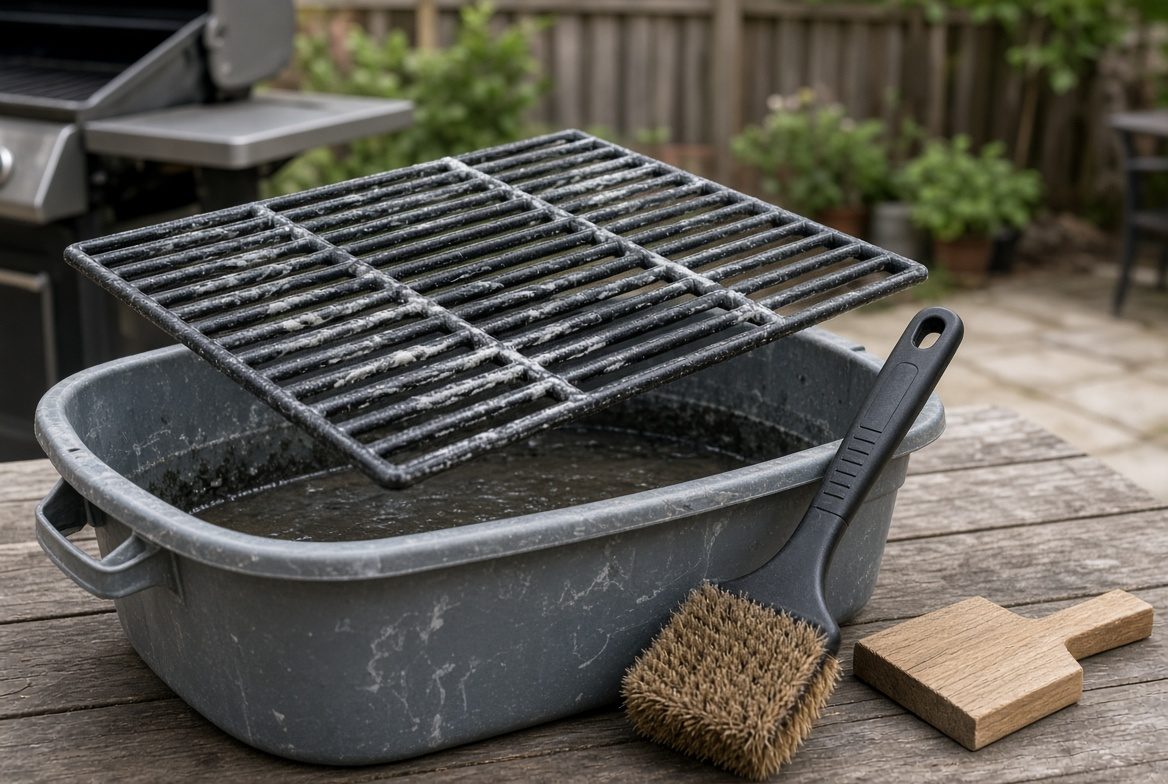
- Set the grates in a tub, utility sink, or heavy trash bag. Cover them with warm water and a squirt of mild dish soap, or spread a paste of baking soda and a little water over the bars.
- Wait 20 to 60 minutes. Overnight is fine for heavy grease if the water stays warm at the start and you are not soaking already-chipped bars for days.
- Scrub with a nylon brush or non-scratch sponge. Work along the bars and into the joints where two rods meet.
- Rinse until no slick cleaner remains. Soap left on the bars tastes like soap on the next steak.
- Dry with a towel, then set the grates back on a warm grill for a few minutes to drive off hidden moisture.
- A light oil wipe is optional on intact porcelain. It helps food release. It does not repair a chip.
Traeger tells owners not to put grates in the dishwasher because they can warp. That advice is worth following on porcelain and cast iron alike.
How Do You Deep Clean Cast-Iron Grill Grates Without Stripping Them?
Clean off food carbon, keep the iron dry, and put a thin oil film back on before the grate rusts. Seasoning is the finish on bare cast iron. You can remove some of it and rebuild it. You cannot leave wet iron sitting in a tub and expect it to stay black.
- Brush the warm grate after a cook. Most of the work should happen here.
- For a sticky mess, sprinkle coarse kosher salt on a barely damp cloth or paper towel and rub with the grain of the bars.
- If you need soap, use a brief wash, not an overnight soak. Lodge-style cast-iron care allows a little soap. The damage comes from leaving the iron wet.
- Rinse, towel dry, then heat the grate until it is fully dry.
- Wipe on a thin coat of canola, grapeseed, or another high-smoke-point oil. Too much oil turns sticky and collects dirt.
If the grate is orange with rust but still sound, heat it, scrub the rust to bare metal, dry it, and rebuild several thin oil coats. Deep pitting or a cracked bar means replacement, not more seasoning.
How Do You Deep Clean Stainless-Steel Grill Grates?
Use heat plus a soak, then scrub along the grain. Stainless steel is the most forgiving of the three common finishes, but bleach and chloride cleaners can pit it. A dishwasher is still a poor idea because grease coats the machine and heat can warp a grate.
- Burn off residue on high with the lid closed.
- Remove cooled grates and soak in hot soapy water. Add baking soda if the grease is thick.
- Scrub with a nylon brush or a stainless-safe pad, moving with the grain.
- Rinse and dry. A thin oil wipe before storage helps if the grill sits outside in damp air.
Which Cleaners Are Safe on Grill Grate Finishes?
Mild dish soap, baking soda, white vinegar used separately from soap soaks, and a food-surface-safe degreaser are the usual finish-safe options. Traeger lists distilled white vinegar, lemon, onion, and baking soda with vinegar among household options, and it points owners toward an all-natural degreaser rather than a harsh solvent. Weber sells its own grate cleaner for heavy grease after the grill has cooled.
| Cleaner | Best use | Caution |
|---|---|---|
| Baking soda paste | Porcelain and stainless deep cleans | Needs dwell time; rinse well |
| Mild dish soap and warm water | Grease on all three materials | Weber advises against citrus-heavy soaps on washed porcelain grates; dry thoroughly |
| White vinegar | Mineral film and some grease | Do not mix with bleach; rinse before food contact |
| Food-safe degreaser such as Simple Green used as directed | Heavy grease on cooled grates | Rinse completely; keep spray off controls and burners |
| Lye oven cleaner | Neglected stainless, or intact porcelain only if the label allows it | Strips cast-iron seasoning; fumes; never on chipped enamel or near burners |
Oven cleaner is the method some testers reach for when grates are neglected. It is not the first choice for a finish you want to keep. If you use it, work outdoors, bag the grates, follow the label, and rinse until the slick film is gone. Skip it on chipped porcelain. Alkaline cleaner on exposed steel under enamel speeds rust.
What Should You Never Use on Porcelain Grill Grates?
Do not use steel wool, a sharp metal scraper, a pumice grill brick, or a worn wire brush on porcelain enamel. Those tools remove carbon by cutting the surface. On enamel they also cut the coating. Grill bricks and pumice are useful on some uncoated iron and steel. They are a poor match for a glossy fused coating. Also skip these habits:
- Dumping ice or cold water on a glowing-hot porcelain grate
- Banging the grate against the firebox to knock carbon loose
- Running porcelain or cast-iron grates through the dishwasher
- Leaving wet grates in a closed, damp grill overnight
- Using a recalled or shedding wire-bristle brush, even on stainless
In 2026 the CPSC announced large recalls of metal wire-bristle grill brushes, including Weber, Nexgrill, and Cuisinart models, after reports that detached bristles were swallowed and required medical treatment. Inspect any remaining wire brush for loose bristles before each use, and prefer nylon, wood, coiled bristle-free steel, or foil on a finish that can take it.
When Should You Replace Grill Grates Instead of Cleaning Them?
Replace the grates when the coating is flaking, a bar is cracked, or rust has eaten through the metal. Surface rust on bare cast iron can often be cleaned and re-seasoned. Flaking porcelain is different. Chips can land in food, and the exposed steel keeps rusting under the remaining enamel. Warped bars that no longer sit flat also belong in the scrap pile. Cleaning will not flatten them.
How Do You Keep Grill Grates From Needing a Harsh Scrub?
Clean while the residue is still soft, oil lightly when the metal needs it, and keep sauce off the bars until the last minutes of the cook. Weber’s rust-prevention notes are practical here: brush every use, shake extra marinade off the food, and wait to sauce until the end so sugar does not bake into a black crust. A cover keeps rain off the grates. Empty the grease tray so old fat is not baking onto everything above it. Grease management also cuts flare-ups on gas and charcoal cookers. A raw onion half on a hot grate is an old backyard trick. The acid and steam can loosen light film. It is not a substitute for a real soak when the bars are glazed with months of sauce.
Final Verdict: Can You Deep Clean Grill Grates Without Ruining the Finish?
Yes. Heat or a soak does the hard work, and the right soft tool protects the coating. Porcelain needs nylon, wood, and patience. Cast iron needs dryness and a thin oil film more than it needs a perfect shine. Stainless can take a firmer scrub, but it still cleans better after a soak than after you grind it. If the enamel is already coming off, buy new grates. No paste will fuse glass back onto steel.
Frequently Asked Questions
Can I use a wire brush on porcelain-coated grill grates?
Avoid it. Steel bristles can chip enamel and can break off into food. Traeger tells owners not to use wire brushes on its grates. Weber still lists a stainless brush in some grate-care pages and sells brushes it approves for its porcelain-enameled cast iron, but it also warns against sharp edges and loose bristles. A nylon brush or wooden scraper is the safer default on enamel, especially after the 2026 CPSC wire-brush recalls.
Does baking soda damage grill grate coatings?
No, a baking-soda paste is one of the gentler deep-clean options on intact porcelain and stainless steel. Mix it with a little water, give it dwell time, then use a nylon brush. Rinse well. It will not rebuild chipped enamel, and aggressive scrubbing can still wear a thin coating.
Should I oil porcelain grill grates after cleaning?
A light oil wipe can reduce sticking, but porcelain does not need seasoning the way bare cast iron does. Weber notes that porcelain enamel is baked on and does not require seasoning. Oil is optional protection and release, not a repair for chips.
Can I put grill grates in the dishwasher?
No. Traeger says the dishwasher can warp grates. Grease also coats the dishwasher. Cast iron rusts. Porcelain can chip against racks. Hand-soak in a tub instead.
How do I clean rusty porcelain grill grates?
If rust is only at a small nick, dry the grate, keep it oiled, and stop using metal scrapers. If the coating is flaking across several bars, replacement is the honest fix. Rust remover soaks can clean bare metal, but they will not restore a glass coating.
Is oven cleaner safe on grill grates?
Only as a last resort on cooled stainless or fully intact porcelain, used outdoors and rinsed completely. It strips cast-iron seasoning. Do not use it on chipped enamel, near gas orifices, or on a grate you cannot rinse until no residue remains.
Related Reading
- Thin Blue Smoke vs White Smoke for Barbecue Cooking
- Pellet Grill Smoke vs Charcoal Smoke: Which Tastes Better?
- What Is Traeger Super Smoke Mode? How to Use It
About Frank W. Roberts
Frank W. Roberts is the author of Everything Grill Reviews. He has grilled since 1970 and brings more than 50 years of backyard cooking and cookoff experience to fire management, fuel behavior, smoke, and practical cooker use. This article is based on manufacturer grate-care instructions, university extension food-safety notes, and current CPSC brush-recall information, not a lab test of every grate coating. Last verified September 1, 2026.