
Updated: August 14, 2026 Disclosure: Everything Grill Reviews may earn a commission from qualifying purchases. This does not change what we recommend or what you pay.
Quick Answer: Most households should look for a three- or four-burner gas grill with independently controlled burners, about 350 to 500 square inches of primary cooking space, sturdy grates, an accessible grease tray, and replacement parts you can actually buy. Choose propane for portability or a dedicated natural-gas model for a permanent setup. Do not let a large BTU number or an inflated “total cooking area” decide for you.
A gas grill is usually the best fit when you want fast startup, straightforward temperature control, and less cleanup than charcoal. It is excellent for burgers, chicken, vegetables, chops, and weeknight meals. It can cook ribs with an indirect setup, but it is not the first choice for someone whose main goal is heavy wood-smoke flavor or all-day brisket.
Table of Contents
- The four decisions to make first
- Gas grill specifications that matter
- Propane vs. natural gas
- What a gas grill cooks well
- Features worth paying for
- What different budget levels buy
- Three useful shopping benchmarks
- Common problems to check before buying
- Final buying checklist
- Frequently asked questions
The Four Decisions to Make First
Ignore the shiny control panel for a moment. The right gas grill begins with four practical questions: how many people you normally feed, whether you need two-zone cooking, which fuel is available, and what you cook most often.
1. How many people do you normally cook for?
| Usual Crowd | Good Starting Size | What to Know |
|---|---|---|
| 1–3 people | Two burners; roughly 300–400 sq. in. of primary space | Compact and easier to fit on a small patio, but limited for large indirect cooks. |
| 3–5 people | Three burners; roughly 350–500 sq. in. | The practical sweet spot for many households. |
| 5–8 people | Four burners; roughly 450–650 sq. in. | More room for batches and better flexibility for separate heat zones. |
| Large gatherings | Five or more burners; 600+ sq. in. | Useful only if you regularly fill the grate; otherwise it costs more to buy, fuel, clean, and store. |
These are shopping ranges, not hard rules. Grill makers count cooking space differently, so compare the primary grate area, not just the advertised total. Warming racks are useful for buns and finished food, but they are not equal to the main grate.
2. Do you need two-zone cooking?
For most buyers, the answer is yes. Two-zone cooking means keeping one area hot for browning while another stays cooler for finishing food gently. It helps prevent chicken from burning before it is done, gives you a safe place to move burgers during flare-ups, and makes indirect cooking possible. Three or four independently controlled burners make this easier. A two-burner grill can still create two zones, but the usable indirect area will be smaller.
3. Propane or natural gas?
Choose propane if you want portability or do not have an outdoor gas connection. Choose natural gas if the grill will stay in one place and your home already has a properly installed gas line. Buy the grill in the correct fuel version from the beginning; do not assume every propane grill can be safely converted.
4. What do you cook most often?
If you mainly cook burgers, chicken, sausages, vegetables, and quick family meals, concentrate on even heat, easy grease cleanup, and enough primary grate space. Steak cooks may value a dedicated high-heat zone. If ribs, pork shoulder, and brisket dominate your plans, a smoker or pellet grill may fit you better than an oversized gas grill.
Gas Grill Specifications That Actually Matter
| Specification | What It Tells You | Buying Advice |
|---|---|---|
| Primary cooking area | The usable size of the main grate. | Compare this number before “total area,” which often includes the warming rack. |
| Burner count | How many separately controlled heat zones you can create. | Three or four burners suit many families; more is not automatically better. |
| BTU input | How much fuel energy the burners can use. | Do not treat BTU as a performance score. Firebox design, grate mass, airflow, and heat distribution matter too. |
| Grate material | Heat retention, rust resistance, and maintenance needs. | Porcelain-enameled cast iron holds heat well; stainless steel is generally easier to maintain. |
| Firebox and lid | How well the grill contains and recovers heat. | Look for a solid lid, stable cart, good fit, and materials appropriate for your climate. |
| Grease system | How drippings leave the firebox. | Favor a tray and catch pan you can reach without taking half the grill apart. |
| Warranty and parts | What is covered and whether the grill is repairable. | Read coverage by component. Confirm that burners, ignition parts, grates, and heat tents are sold separately. |
Why BTU alone can mislead you
A large BTU number does not guarantee faster preheating, even temperatures, or a better sear. A thin, drafty cookbox can waste heat, while a well-designed grill can use a more modest input effectively. Compare burner output only alongside the cooking area, construction, grate type, and credible cooking tests.
Grates: cast iron or stainless steel?
Porcelain-enameled cast-iron grates retain heat well and can produce strong browning. Their enamel should be cleaned without gouging, and damaged surfaces can become vulnerable to corrosion. Stainless-steel grates are usually more tolerant of moisture and vigorous cleaning, but thin stainless rods do not hold heat like heavier grates. Material matters, but thickness and build quality matter too.
Warranty length is not the whole story
Read which parts are covered, for how long, and under what conditions. A long warranty on the cookbox does not necessarily give every igniter, grate, knob, or cosmetic finish the same coverage. Easy access to replacement parts can be more useful than a headline warranty number.
Propane vs. Natural Gas
| Fuel | Best For | Tradeoffs |
|---|---|---|
| Liquid propane | Renters, movable grills, patios without a gas line | The tank must be refilled or exchanged, and it can run out during a cook. |
| Natural gas | Permanent outdoor cooking areas with an existing connection | The grill stays near the connection and must be designed for natural gas. |
Important: Never improvise a fuel conversion. Orifices, regulators, valves, and certification differ. Use the fuel type listed for the grill and follow the manufacturer’s instructions.
What a Gas Grill Cooks Well
Burgers, sausages, and weeknight meals
This is where gas grilling shines. Fast preheating and adjustable burners make it easy to cook a batch, move food away from a flare-up, and finish dinner without managing charcoal. An even grate and an accessible grease tray matter more here than a side burner you may never use.
Steaks and chops
Look for strong preheat performance, substantial grates, and either a dedicated sear zone or burners that deliver concentrated heat. A sear feature is worthwhile for frequent steak cooks, but it should not come at the expense of basic build quality or usable grate space.
Chicken
Chicken is a good test of burner control. Start with direct heat for browning, then move bone-in pieces to a cooler zone so they can finish without scorching. A three- or four-burner layout gives you more room to manage this than a compact two-burner.
Vegetables and delicate foods
Gas heat is easy to reduce and repeat, which helps with vegetables, fish, and foods cooked in a grill basket. Multiple burners let you keep one section gentler while other food cooks over higher heat.
Ribs, pork shoulder, and brisket
Ribs can work with indirect heat and an optional smoker box, but a gas grill produces a lighter smoke profile. Large pork shoulders and briskets require long, stable low-temperature cooks and benefit from a purpose-built smoker or pellet grill. Buy for the cooking you do most often, not for a once-a-year possibility.
Features Worth Paying For
- Independent burners: More control over direct and indirect zones.
- A useful sear zone: Worth considering if steaks and chops are frequent meals.
- Accessible grease management: Makes routine cleaning easier and helps reduce flare-ups.
- Folding side shelves: Valuable on a small patio if they genuinely reduce the stored width.
- A fuel gauge or scale: Helpful for avoiding an empty propane tank mid-cook.
- Reliable parts support: Burners, igniters, heat tents, and regulators are service items.
Features you may not need
Side burners are useful if you regularly make sauces or sides outdoors. Rotisserie systems make sense for cooks who will use them. Smart probes and app controls can help with longer cooks, but they do not fix poor heat distribution. Glass windows soil quickly and add another surface to clean. Pay for a feature only when it solves a problem you actually have.
What Different Budget Levels Usually Buy
Entry level
Basic grills can cook burgers and chicken perfectly well when new, but savings often come from lighter carts, thinner grates, simpler grease systems, shorter component coverage, and fewer available replacement parts. This tier can make sense for occasional use, a temporary living situation, or a first experiment with gas grilling.
Midrange
This is the most sensible place for many regular backyard cooks. You are more likely to find stronger carts, porcelain-enameled cast-iron or substantial stainless grates, better burner control, more convenient grease trays, and longer support for key components. A well-chosen three- or four-burner grill in this class can provide the features most families actually use.
Premium
Higher prices may buy heavier materials, refined fit and finish, stronger high-heat options, longer warranties, better lighting, integrated storage, and outdoor-kitchen compatibility. Premium is worthwhile for frequent grilling or a permanent cooking space, but it is not a guarantee that every electronic or ignition component will last forever. Value rule: Buy the least expensive grill that meets your real size, heat-control, cleaning, and repairability needs—not simply the cheapest grill or the model with the longest feature list.
Three Useful Shopping Benchmarks
These are reference points, not claims that one model is right for everyone. Specifications below were checked against manufacturer pages on August 14, 2026. Retail prices and configurations can change, so confirm the exact fuel version and model number before ordering.
| Model | Why Compare It | Main Tradeoff |
|---|---|---|
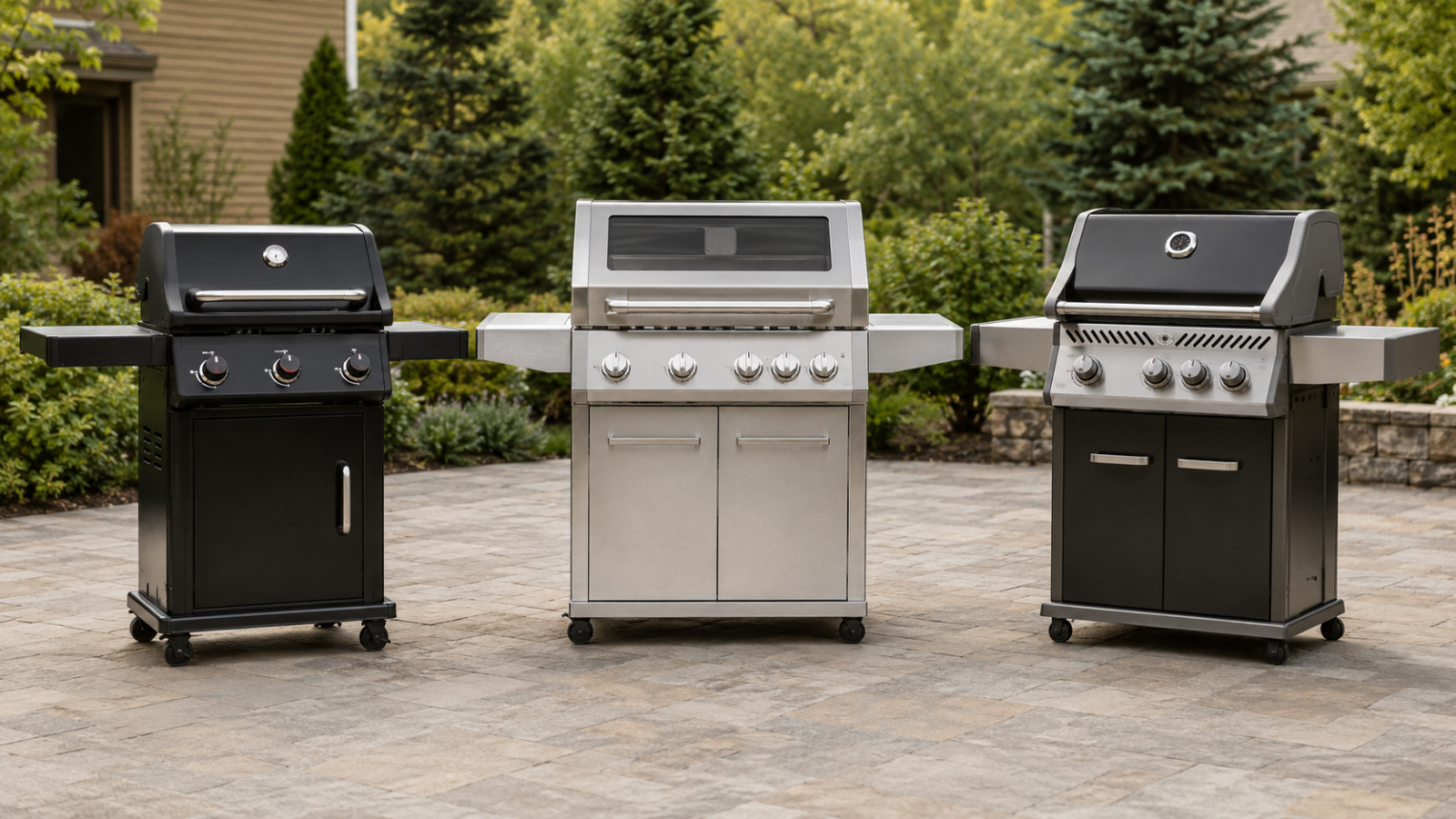
| Weber Spirit E-325 | A three-burner family-size benchmark with 360 sq. in. of primary cooking space, a 90 sq. in. warming rack, porcelain-enameled cast-iron grates, and propane and natural-gas versions. | Its 450 sq. in. advertised total includes the warming rack; buyers needing a large primary grate may want a four-burner model. |
| Monument Mesa 415BZ | A propane, four-burner value-oriented option for shoppers who want more zones and a dedicated high-heat feature. | It is propane-only according to the manufacturer; natural-gas shoppers need a different model. |
| Napoleon Rogue 425 | A step-up three-burner benchmark with a manufacturer-listed 42,000-BTU input and propane or natural-gas variants. | The base Rogue 425 should not be confused with higher-priced Rogue versions that add infrared side burners or other extras. |
The Weber Spirit E-325 is a sensible starting point for a typical household that values parts support and does not need an oversized grate. The Monument is worth comparing when four-burner flexibility matters at a value-oriented level. The Napoleon gives shoppers a useful step-up comparison. None should be purchased until you check the primary grate size, fuel type, assembled dimensions, current warranty, and final delivered price.
Common Gas Grill Problems to Check Before Buying
| Problem | What to Check Before Purchase | What Helps Later |
|---|---|---|
| Uneven heat | Look for credible preheat and bread-test results, not only manufacturer temperature claims. | Keep burner ports clear and replace badly corroded heat tents. |
| Frequent flare-ups | Inspect the grease path and whether the tray is easy to remove. | Empty the catch pan and remove grease buildup before it becomes a fire hazard. |
| Ignition failure | Check the ignition warranty and the cost of replacement electrodes or modules. | Keep contacts clean, replace batteries when applicable, and follow the manual for safe manual lighting. |
| Rust and corrosion | Compare materials, drainage, component warranties, and parts availability. | Clean salt and grease residue, let the grill dry, and use a breathable fitted cover after it cools. |
| Difficult assembly | Read the manual before buying and check whether assembly service is available. | Inspect every panel before assembly and keep the box until the grill is confirmed complete. |
| Weak or yellow flame | Choose a brand with accessible burner instructions and replacement parts. | Check for blocked burner ports or venturi tubes and follow the manufacturer’s troubleshooting steps. |
A little-known maintenance issue: insects in burner tubes
Spiders and other insects can obstruct burner venturi tubes while a grill sits unused. That can contribute to weak, uneven, or abnormal flames. Inspect and clean these areas only as directed in the owner’s manual, and shut off the fuel supply before maintenance.
Who Should Buy a Gas Grill?
- Families who want quick meals without building and managing a charcoal fire.
- Weeknight cooks who value repeatable control and fast cleanup.
- Hosts who need several heat zones and enough room for batches.
- Steak cooks who choose a model with strong high-heat performance.
- Homeowners with a suitable natural-gas connection who want a permanent setup.
Who Should Skip a Gas Grill?
- Cooks whose top priority is deep charcoal or wood-smoke flavor.
- People planning frequent overnight brisket or pork-shoulder cooks.
- Apartment residents whose building or local rules prohibit open-flame grills.
- Anyone without a safe, outdoor location with the clearances required by the manual.
Gas Grill Safety and Maintenance
Gas equipment deserves respect. Use the grill outdoors, follow the clearance requirements in its manual, and never light it if you smell gas. The U.S. Consumer Product Safety Commission advises checking hoses and connections for damage and leaks, keeping cylinders upright, and not storing a spare propane cylinder under or near the grill. See the CPSC gas-grill safety guidance for more detail.
- Read the complete manual before the first lighting.
- Leak-test connections as the manufacturer directs whenever the cylinder is reconnected.
- If a leak is detected, turn off the gas and do not light the grill until the problem is corrected.
- Empty grease trays regularly and clean heavy buildup from the firebox.
- Inspect burner ports, heat tents, hoses, and regulators during the grilling season.
- Keep the grill covered only after it is completely cool and dry.
- Never store a propane cylinder indoors or in an enclosed area.
Final Gas Grill Buying Checklist
Before paying, make sure you can answer yes to the items that apply:
- The primary cooking area fits my normal crowd.
- I have enough independent burners for direct and indirect zones.
- The grill is built for the fuel I will use.
- It fits my space with the lid open and the shelves extended.
- The grate material and cleaning needs suit me.
- The grease tray is easy to remove.
- Replacement burners, igniters, heat tents, and grates are available.
- I read the warranty by component, not just the headline.
- I checked repeated owner complaints for this exact model number.
- I have a safe outdoor location and can meet the manual’s clearance rules.
- I am paying for features I will use, not showroom decoration.
Frequently Asked Questions
How many burners does a family need?
Three or four independently controlled burners work well for many families. They provide enough flexibility for a hot direct zone and a cooler indirect zone. A two-burner grill can suit one to three people, while larger grills make sense when you regularly cook for a crowd.
Is a higher BTU rating better?
No. BTU measures heat input, not cooking quality. Heat distribution, firebox design, grate construction, airflow, and the size of the cooking surface all affect real performance. Compare credible cooking results rather than choosing the largest number.
Should I buy propane or natural gas?
Propane is the better choice when you need portability or lack a home gas connection. Natural gas suits a permanent location with a properly installed line. Buy the correct fuel version and never assume a grill can be converted.
Is a sear burner worth paying for?
It can be worthwhile if you frequently cook steaks or chops and want concentrated high heat. It is less important for burgers, vegetables, and moderate-temperature cooking. Do not sacrifice basic build quality or grate space for a sear feature.
Can a gas grill cook brisket?
It can cook brisket with careful indirect heat management, but it is not the easiest tool for a long, smoky cook. A dedicated smoker or pellet grill usually provides more convenient low-temperature control and stronger smoke flavor.
Do I really need a grill cover?
A properly fitted, breathable cover can protect a cooled grill from weather and debris. It does not replace cleaning, drying, and inspection. Trapped moisture can also encourage corrosion, so follow the grill and cover manufacturers’ directions.
Final Verdict
For most backyard cooks, the right gas grill is not the one with the most burners, the highest BTU number, or the longest feature list. It is the smallest well-built model that comfortably fits your normal crowd, creates two useful heat zones, cleans easily, and has parts support after the sale. A three-burner grill with roughly 350 to 500 square inches of primary space is a strong starting point for many households. Move to four burners when you regularly cook for larger groups or want more indirect-cooking room. Choose propane for flexibility and a dedicated natural-gas model for a fixed installation. The Weber Spirit E-325 remains a sensible comparison point, but its 360-square-inch primary grate is more important than its 450-square-inch advertised total. Compare that usable space and the complete delivered price against value-oriented four-burner models and step-up alternatives before deciding.
About the author
Frank W. Roberts has been grilling since 1970 and has participated in competitive cookoffs. He evaluates grills from a buyer’s point of view, combining decades of cooking experience with manufacturer documentation, repairability, owner-reported patterns, and practical value. Specific models in this guide were not all personally tested, and no hands-on claim is implied.