
Updated: September 6, 2026
How to add smoke flavor to a gas grill
Best for: Backyard grill buyers
A solid option worth comparing before you buy.
Check Price on Amazon (paid link)As an Amazon Associate I earn from qualifying purchases.
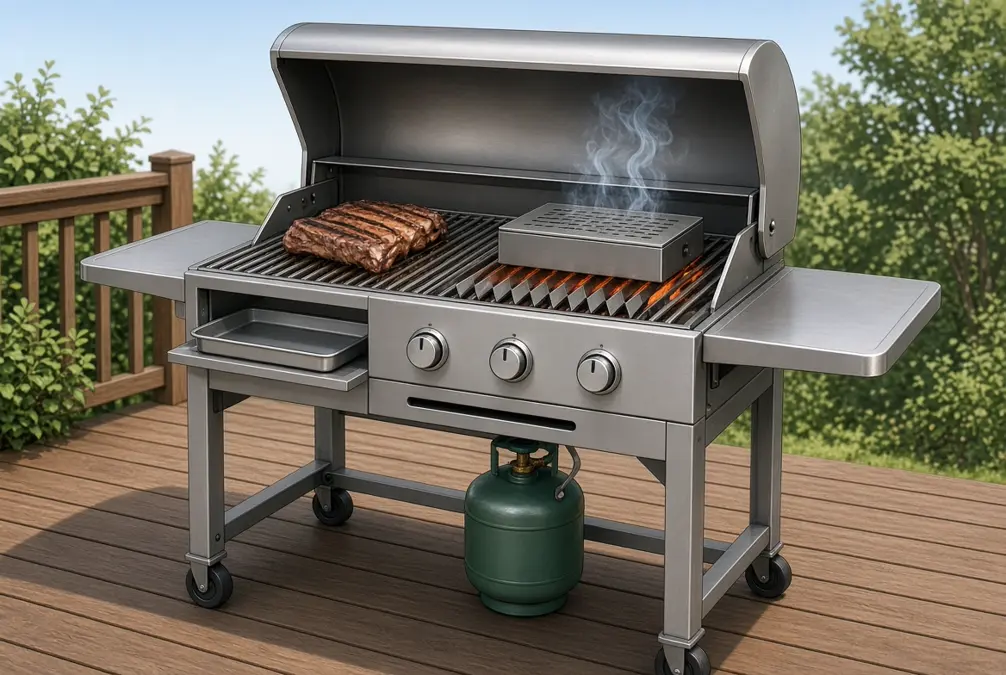
Updated and fact-checked: September 5, 2026 How to add smoke flavor to a gas grill is a two-zone cook plus a contained hardwood fire, not a pile of chips dumped on a burner. A propane grill will not taste like a stick-burning offset. It can still put real wood smoke on chicken, ribs, pork shoulder, and a weeknight roast if the wood smolders cleanly and the lid stays closed.
Quick Answer: How Do You Add Smoke Flavor to a Gas Grill?
Use a two-zone setup and a metal smoker box, foil packet, or smoke tube of dry hardwood over one lit burner. Wait for thin, clean-smelling smoke before the food goes on the cool side. Keep the lid closed, stop adding wood once the surface has color, and cook the meat to a safe internal temperature. Last verified September 5, 2026.
Key Points
- Gas heat cooks the food. Wood in a box, packet, or tube supplies the smoke.
- Two-zone cooking keeps the meat off the flame that is lighting the wood.
- Dry chips in a closed metal box usually start faster than soaked chips. Manufacturer pages do not all agree on soaking.
- Thick white smoke is steam or incomplete combustion. Wait it out or fix the fire before you load the food.
- A gas grill is better at adding smoke to shorter cooks than at replacing a dedicated smoker for overnight brisket.
- USDA smoking guidance tells cooks to keep cooker air between 225°F and 300°F and to measure the meat with a food thermometer.
Can You Really Smoke Food on a Gas Grill?
Yes, you can add real hardwood smoke on a gas grill, but you are flavoring food, not converting the grill into an offset smoker. Propane burns clean. That is why steaks on a gas grill taste like grilled meat instead of campfire. To change that, you need a separate, contained wood fire that smolders while the burners hold temperature. Weber’s own smoking pages treat a gas grill as a cooker that can take a smoker box, a foil pan of chips, or a built-in smoker box over a dedicated burner. The company is also clear that true low-and-slow smoking is easier on a cooker designed for it. That matches what I have seen for fifty-plus years: gas is convenient heat. Smoke is a wood problem. Expect a lighter result than charcoal with drippings hitting the coals. Expect a much lighter result than a stick burner. For chicken halves, pork chops, sausage, salmon, a rack of ribs, or a small pork shoulder, the extra wood note is worth the extra pan.
What Do You Need Before You Start?
You need a lid that seals reasonably well, a way to run two heat zones, a thermometer at grate level, and a safe container for the wood. A grill with no lid will waste most of the smoke.
- A three-burner or larger gas grill is easier because one burner can heat the wood while the food sits over an unlit side. A two-burner grill can still work if you keep the food as far from the lit burner as the grate allows.
- A stainless smoker box that sits on the cooking grate or on the flavorizer bars. Weber still sells a universal stainless smoker box, part 7576, listed for Q 200/2000 and larger gas grills as of September 5, 2026.
- Heavy-duty aluminum foil if you do not own a box.
- A pellet smoke tube if you already own one. The same tube used on a pellet grill can sit on a gas-grill grate. Follow the tube maker’s lighting instructions and keep it off dripping fat when possible.
- Dry cooking chips or pellets labeled for food use: oak, hickory, apple, cherry, pecan. Do not use construction lumber, painted wood, pressure-treated wood, or resinous pine.
- A grate-level thermometer plus a food thermometer. The lid dial is an air reading at the top of the lid, not the temperature next to the meat.
- A drip pan for longer cooks. USDA’s grilling-and-food-safety page describes smoking on a covered grill with a pan of water beneath the meat.
Should You Soak Wood Chips for a Gas Grill?
Soaking is optional, and current sources disagree, so treat it as a delay tactic rather than a flavor upgrade. Water does not soak far into a chip. The wet surface has to steam off before the wood can smolder. That steam is not smoke flavor. Weber’s consumer-care page on wood chips still tells cooks to soak chips, not chunks, for at least 30 minutes so they are less likely to flare. An older Weber gas-smoking article says to soak chips about 20 minutes before filling a grate-top smoker box. Weber’s instructions for the Genesis smoker box with water pan say the opposite for that specific box: use dry chips because they ignite quickly and create smoke faster. Independent cooking tests, including America’s Test Kitchen’s gas-grill smoking method, have used a mix of dry chips for immediate smoke and soaked chips to stretch the packet. My working rule on a gas grill:
- Use dry chips in a closed metal smoker box or a foil packet with only small slits. The container, not the water, keeps the wood from bursting into flame.
- Soak only if your chips keep catching fire in an open tray or if you need the smoke to start later.
- Never soak pellets you plan to light in a smoke tube. Water turns that job into a soggy mess.
- Never put wet chips into a burner tube, venturi, or under a flavorizer bar where water and ash can clog the gas path.
How Do You Set Up Two-Zone Heat for Smoke?
Light the burner under the wood and leave the food over an unlit burner. That is the same two-zone idea used for roast chicken or indirect ribs. If you need a refresher on burner layout, use the site’s guide to two-zone grilling on charcoal or gas.
- Place the grill outdoors, lid closed between steps, on a stable surface away from walls and overhangs.
- Put the smoker box or foil packet over the burner you plan to leave on. On many Weber-style grills that means on the flavorizer bars or on the grate above those bars. Weber’s Genesis box instructions tell owners to set only the narrow end of that particular box over a lit burner so the rest of the box sits over an unlit bar.
- Set a drip or water pan under the cool side for a longer cook.
- Preheat with the lid closed until the wood starts to smoke. Weber’s grate-top smoker-box article says this often takes about 20 minutes.
- When the smoke thins and smells like clean wood instead of steam or a campfire, turn the unused burners off and drop the lit burner to medium or low so the cooker settles in the smoking band.
- Put the food on the cool side. Close the lid.
If the grill will not come down near 225–275°F, you are running too much burner or the lid is leaking. Cut the lit burner further. Do not spray the wood with water inside a hot firebox.
How Do You Use a Smoker Box on a Gas Grill?
Fill the box loosely with food-grade chips, set it over a lit burner, close both lids, and wait for clean smoke before the food goes on. Packing the box tight chokes airflow. Overfilling it spills ash onto the bars.
- With the grill cool, open the box and add chips from end to end without jamming them.
- Close the box lid. The holes in the lid are the exhaust.
- Set the box on the grate or on the flavorizer bars according to your grill and the box design. A universal box such as Weber 7576 is made to sit on the cooking grates.
- Preheat on high until smoke appears, then lower the burner under the box.
- Do not hover with the grill lid open. Smoke flavor collects with the lid down.
- If the chips burn out and you still want smoke, add more only with long tongs and a plan for a hot metal box. Weber’s Genesis dedicated-box instructions say not to refill that particular box while it is hot. Follow the sheet that came with your box.
A foil-packet backup works when you do not own a box. America’s Test Kitchen described an 8-by-4½-inch packet with two short slits for a 45–60 minute burn from about 4.75 ounces of chips, roughly two cups. Put the packet on the bars or on the grate over the lit burner. Do not wrap so many layers of foil that the chips never heat.
Can You Use a Smoke Tube on a Gas Grill?
Yes, a pellet smoke tube can add a longer, steadier stream of smoke on a gas grill if you light it the way the tube maker describes and park it where grease will not drown it. The site already covers the lighting and placement details in how to use a smoke tube in a pellet grill. On gas, the extra rule is location. Set the lit tube on the grate at the edge of the cool zone or near the divider between zones, not in a puddle of drippings and not blocking the only hot burner you are using for heat. A tube can run an hour or more. That is useful for ribs or a small shoulder. It is extra gear you do not need for a 20-minute batch of chicken thighs if a small chip box already smokes. Do not pour loose pellets into a gas burner. Do not use a tube as an excuse to skip two-zone heat.
What Wood Should You Use on a Gas Grill?
Use a food-grade hardwood and match intensity to the food, not to a marketing name on the bag. Gas already gives you less smoke than charcoal, so a mild fruitwood will taste even milder. That is not a defect. It is a reason not to bury chicken in mesquite.
| Wood | Character | Better on | Go easy on |
|---|---|---|---|
| Oak | Balanced, not sweet, not sharp | Beef, pork, mixed cooks | Delicate fish if you overdo the load |
| Hickory | Stronger, bacon-like | Pork ribs, shoulder, beef | Chicken and fish in a closed gas lid |
| Apple or cherry | Milder and a little sweet | Poultry, pork, vegetables | A long beef cook if you want a deeper note |
| Pecan | Closer to hickory, a little softer | Poultry and pork | Anything already covered in a heavy rub |
| Mesquite | Intense and easy to overdo | Short beef or steak cooks | Long poultry cooks in a tight lid |
Chips start fast and die fast. Chunks last longer but need more heat and space than most grate-top boxes give them. Pellets belong in a tube or in a box that lists pellets as acceptable. Mix woods if you want, but change one variable at a time so you can taste what you did.
How Long Should Food Sit in Gas-Grill Smoke?
Most of the useful smoke attaches while the surface is still cool and moist, so front-load the wood and stop adding it once the bark or skin has set. A closed gas lid will keep washing the same smoke over the food. That helps early. Later it can turn harsh if you keep feeding chips. Practical windows, not promises:
- Burgers, boneless chicken, fish, vegetables: 15–30 minutes of clean smoke is usually enough.
- Bone-in chicken, pork chops, a small roast: 30–60 minutes of smoke, then finish on two-zone heat.
- Ribs or a small pork shoulder: smoke for the first 1–2 hours, then manage temperature and tenderness. Refill wood only if the smoke has gone dead and the surface still looks pale.
Time is an estimate. Wind, burner output, chip size, and how often you open the lid change it. Measure the food, not the clock. See how to use a meat thermometer correctly.
Is Smoking on a Gas Grill Safe?
It is safe when the cooker stays in the smoking-air band, the food reaches a USDA minimum internal temperature, and the wood stays in a container instead of inside the gas system. USDA’s grilling-and-food-safety page and a June 2024 USDA food-safety briefing both tell cooks to keep smoker or grill air between 225°F and 300°F during smoking. Another FSIS smoking page lists 250°F to 300°F. Stay inside that overlap and do not treat the lid thermometer as the last word. USDA also says to thaw meat before smoking so the food does not linger too long in a temperature range where bacteria can grow. Cook outdoors only. Keep raw and cooked food on separate tools.
| Food | Safe minimum internal temperature | Rest |
|---|---|---|
| Beef, pork, lamb, and veal steaks, chops, and roasts | 145°F | At least 3 minutes |
| Ground beef, pork, lamb, and veal | 160°F | None required by the USDA chart |
| All poultry, including ground poultry | 165°F | None required by the USDA chart |
| Fish with fins | 145°F | None required by the USDA chart |
Collagen-rich cuts such as pork shoulder or chuck may need to go well past 145°F before they feel tender. That extra heat is texture, not a substitute for the safety minimum. The site’s guide to cooking tough cuts until tender covers that difference.
What Mistakes Ruin Smoke Flavor on a Gas Grill?
The usual failures are dirty smoke, an open lid, wood in the wrong place, and cooking so hot the food is done before it takes on smoke.
| What you notice | Likely cause | First fix |
|---|---|---|
| Bitter, sooty taste | Thick white smoke, wet chips steaming, or wood on fire | Wait for thin smoke. Use a closed box. Cut the burner under the wood. |
| No smoke at all | Chips not hot enough, box packed tight, or lid leaking | Preheat longer. Loosen the load. Check that the box sits over heat. |
| Food tastes only like propane and rub | Cooked too hot, wrapped too early, or lid opened constantly | Start lower. Leave the meat unwrapped early. Close the lid. |
| Flare-ups around the box | Fat dripping on an open tray of chips or a burner on high | Use a lidded box. Move food to the cool side. Lower the burner. |
| Grill will not hold 250°F | Too many burners lit or a windy lid gap | Shut unused burners. Shield the grill. Read temp at the grate. |
If the smoke looks like the thick white column described in the site’s thin blue smoke vs white smoke guide, do not park chicken in it. Clean combustion first.
When Should You Skip Gas-Grill Smoking?
Skip it when the cook needs hours of heavy smoke, when the grill cannot hold a lid-down temperature in the 225–300°F band, or when you would have to put wood where it can foul the burners. A small two-burner patio grill with a warped lid will frustrate you on pork shoulder. A dedicated pellet grill or a charcoal kettle with a snake fire will do that job with less fuss. Compare the flavor ceiling in pellet grill smoke vs charcoal smoke if you are deciding whether gas smoking is even the right tool. Also skip homemade smoke bombs made from treated lumber, cardboard, or mystery pellets. Food-grade wood is the line.
Frank’s Take
I would rather add a little clean smoke to a gas cook than pretend the grill is a pit. I grew up on charcoal kettles and stick-burning offsets. Those fires put a deeper bark on meat because fat hits coals and the wood is part of the heat source. A gas grill does not work that way. The burner is still propane. Used honestly, a smoker box earns its keep on weeknight chicken, a rack of ribs, and the occasional small shoulder when I do not want to haul another cooker onto the patio. Used as a shortcut for 12-hour brisket, it usually disappoints. Get the smoke clean, get the lid down, and stop feeding wood when the surface already looks like barbecue.
Final Verdict: Can a Gas Grill Make Food Taste Smoky?
Yes, a gas grill can add honest hardwood flavor if you contain the wood, run two zones, and wait for clean smoke. It will not replace charcoal or an offset for cooks whose whole point is pit smoke. Use a smoker box, foil packet, or smoke tube on the hot side, keep food on the cool side, and judge doneness with a thermometer, not with the color of the smoke.
Frequently Asked Questions
Do I need a smoker box, or will a foil packet work?
A foil packet works for a single short cook. A stainless box is easier to refill, less likely to tear, and keeps chips from spilling onto the bars. Weber still lists a universal grate-top box for larger gas grills. Buy the box if you plan to smoke more than once or twice a summer.
Can I put wood chips directly on the flavorizer bars?
Do not scatter loose chips on the bars or down the burners. They flare, they ash into the gas path, and they are miserable to clean. Keep the wood in a box, a foil packet with small vents, or a smoke tube.
Why is my gas grill making white smoke?
Startup steam and incomplete combustion look white. Wet chips, a cold box, or a burner that is either too low to ignite the wood or so high the chips are boiling off water will do it. Wait. If the smell turns acrid, open the lid away from your face, cut the heat under the wood, and do not add food until the smoke thins.
Does a water pan help when smoking on gas?
A pan under the meat can catch grease and blunt some heat spikes. USDA describes smoking on a covered grill with a water pan beneath the food. The pan is not a substitute for burner control. An empty drip pan still protects the inside of the grill.
Can I smoke a brisket on a gas grill?
You can finish a small brisket on a tight-lidded gas grill, but it is the wrong tool for most backyard pits. Holding 225–275°F for 8–12 hours on propane, with a tiny chip box, usually means light smoke and a lot of babysitting. Choose a kettle, drum, or pellet cooker if brisket is the regular job.
Is visible smoke required the whole time?
No. Clean smoke is often thin enough to miss if you are watching from the patio door. Smell the exhaust. If it is faintly woody and the food is coloring, you are in better shape than a grill dumping a white cloud.
Related Reading
- How to Use a Smoke Tube in a Pellet Grill
- Thin Blue Smoke vs White Smoke for Barbecue Cooking
- How to Set Up Two-Zone Grilling on Charcoal or Gas
- How to Get More Smoke Flavor From a Pellet Grill
- How to Use a Meat Thermometer Correctly
About Frank W. Roberts
Frank W. Roberts is the author of Everything Grill Reviews. He has grilled since 1970 and brings more than 50 years of backyard cooking and cookoff experience to fire management, fuel behavior, smoke, and practical cooker use. This article is a how-to based on established smoking practice, current USDA food-safety pages, and manufacturer smoking instructions. It is not a hands-on test of every smoker box on the market. Last verified September 5, 2026.
How to add smoke flavor to a gas grill
Best for: Backyard grill buyers
A solid option worth comparing before you buy.
Check Price on Amazon (paid link)