
Updated: November 16, 2026
Updated and fact-checked: November 16, 2026
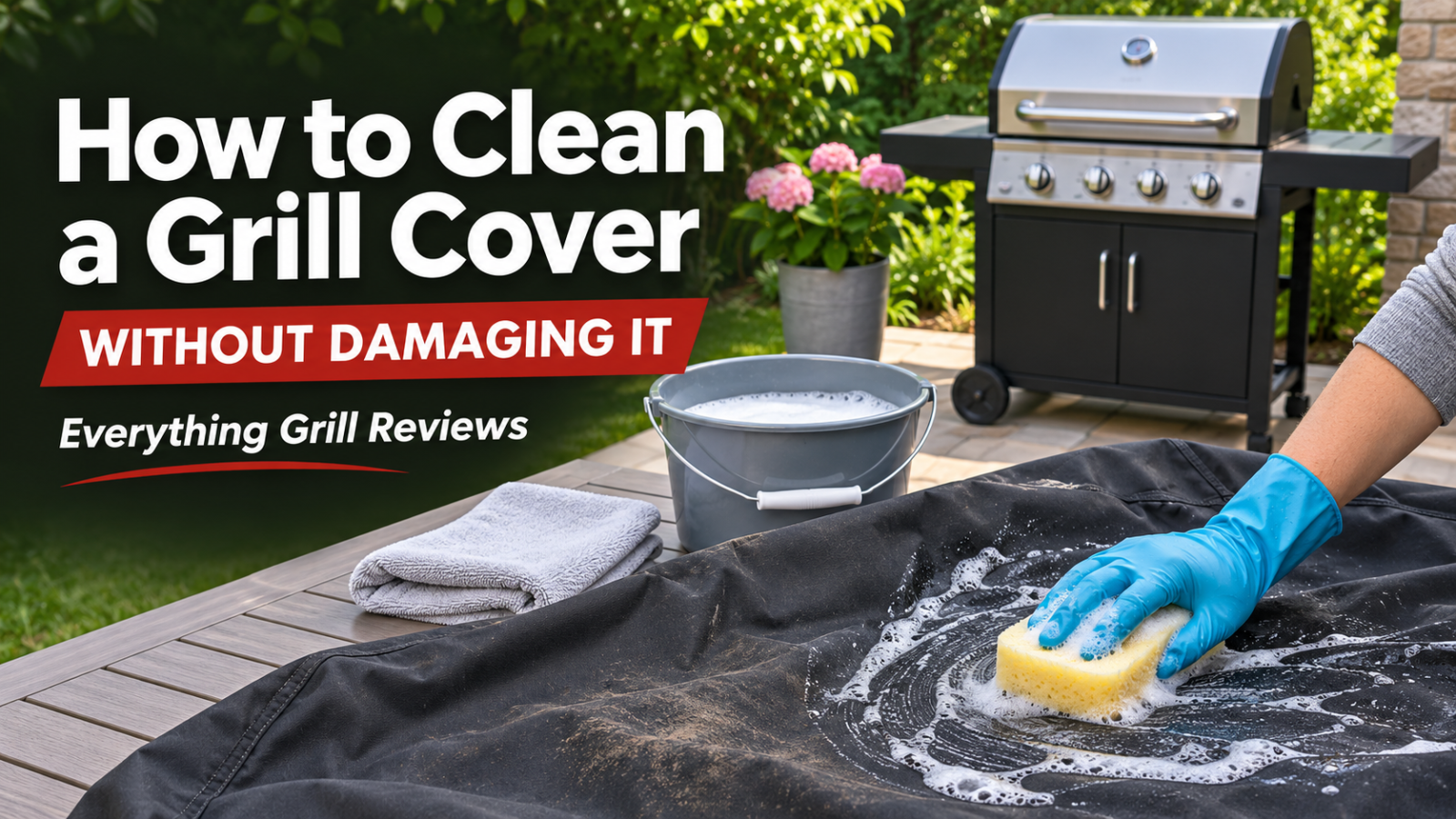
Learning how to clean a grill cover starts with the care label. Some covers are spot-clean only, while others may be hand washed and gently rinsed. Use mild soap, a soft cloth or sponge, cool-to-warm water, and complete air-drying. Avoid pressure washing, harsh chemicals, and putting a wet cover back on the grill. The Dawn dish washing detergent would be my choice. It is not harmful to a grill cover. Also if there is debris you can use a soft brush to brush off cover.
Quick Answer: What Is the Safest Way to Clean a Grill Cover?
Remove the cover from a completely cold grill, shake or brush off loose debris, and follow its label. Spot-clean a Weber-style coated cover with mild dish soap and water; hand wash and gently rinse only when the maker permits it. Clean both sides, rinse away soap, and air-dry the cover completely before storage or reuse. Make sure you check what your grill maker says about cleaning the grill cover, first.
Key Points
- Read the label first: Care instructions override a universal cleaning method.
- Use a light touch: Mild soap and a soft sponge protect seams and water-resistant coatings.
- Skip the pressure washer: High pressure can strip coatings, open seams, and force water into layers.
- Clean the inside too: Grease, condensation, pollen, and mildew often collect against the grill.
- Dry both sides completely: A damp cover can trap moisture against the cooker.
- Replace failed material: Cracks, tears, brittle fabric, broken straps, and widespread coating failure are not cleaning problems.
What Supplies Do You Need?
You need only the cleaner and tool allowed by the cover manufacturer. For most washable coated-polyester or vinyl covers, that means mild dish soap, water, a soft sponge or cloth, a soft brush for durable woven fabric, towels, and a clean drying area.
- Care label or manufacturer instructions
- Bucket of cool or lukewarm water
- A small amount of mild dish soap
- Soft microfiber cloth or nonabrasive sponge
- Soft-bristled brush only when the material allows it
- Garden hose on gentle flow only when rinsing is allowed
- Clean towels and a shaded or mildly sunny air-drying area
- Gloves and an N95 respirator if visible mold or mildew will be disturbed
Do not begin with bleach, solvent, abrasive powder, a stiff deck brush, a pressure washer, washing machine, or clothes dryer. One manufacturer may allow a method that another specifically prohibits.
How Do You Read the Care Label Before Cleaning?
Look for instructions about spot cleaning, detergent, rinsing, machine washing, water temperature, and air drying. If the label is missing, search the cover’s exact model number rather than relying on the grill model alone.
| Label says… | Use this method | Do not assume |
|---|---|---|
| Spot clean only | Work on small areas with mild soap and a damp cloth; blot or wipe away residue | Do not soak, hose, or machine wash |
| Hand wash / rinse | Lay flat, use mild soap and a soft tool, then gently rinse | Do not use high pressure or a harsh degreaser |
| Water only | Use warm or cool water as directed and gently scrub spots | Do not add detergent because another brand allows it |
| Machine washable | Follow the exact cycle, temperature, and detergent instructions | Do not put it in a dryer unless the label explicitly allows heat |
| No readable label | Use the gentlest spot-clean test in a hidden area or contact the maker | Do not gamble on bleach, soaking, or machine agitation |
For example, Weber says its covers should be spot cleaned only with hot water, dish soap containing a mild degreaser, and a towel or rag. Traeger’s support page allows wiping a cover with warm soapy water or mild detergent and rinsing, but says not to machine wash or use bleach. The label wins because even respected brands use different constructions.
How Do You Clean a Washable Grill Cover Step by Step?
Work from dry debris to damp cleaning, then rinse only as permitted and dry both sides. This order keeps grit from grinding into the coating and prevents a clean-looking exterior from hiding grease underneath.
- Cool the grill completely. Do not remove or replace a cover around a warm cooker. Disconnect any cover-integrated light or accessory if applicable.
- Remove the cover carefully. Release straps and lift rather than dragging it across sharp shelf corners, handles, or concrete.
- Check for damage. Find tears, cracked vinyl, loose seam tape, broken buckles, and areas where the backing is flaking.
- Remove loose dirt dry. Shake off leaves and dust outdoors or sweep gently with a soft brush. Avoid creating a mold cloud.
- Test a hidden area. Apply the planned soap solution under a hem or flap. Stop if color transfers or the coating becomes tacky.
- Clean the outside. Wipe or gently scrub from top to bottom with the tool allowed by the label. Work in sections so soap does not dry on the fabric.
- Turn it inside out. Clean grease marks, condensation residue, pollen, and mildew on the surface that faces the grill.
- Remove cleaner. Rinse gently if allowed. For a spot-clean-only cover, wipe repeatedly with a clean damp cloth instead of soaking it.
- Air-dry both sides. Hang it over a clean rail or lay it across clean supports with air around it. Turn it once so seams and folds dry.
- Inspect before reuse. The cover should feel dry at hems, straps, seams, and lining—not just across the center panel.
Never reinstall the cover while the grill or cover is damp. That traps water next to painted metal, stainless seams, controllers, shelves, and fasteners.
How Should You Clean Polyester, Vinyl, and Canvas Covers?
Use a sponge on vinyl, a soft cloth or brush on coated polyester when permitted, and the product’s own instructions for canvas or specialty fabric. Material names alone do not reveal the coating, seam tape, backing, or dye.
| Cover material | Safest starting method | Main risk |
|---|---|---|
| Coated polyester | Mild soap, damp cloth or soft brush, gentle rinse only if allowed | Stripping the water-repellent coating or seam tape |
| Vinyl | Soft sponge, mild soap, gentle wiping | Scratches, stiffness, cracking, and heat damage |
| Canvas or woven specialty fabric | Manufacturer-approved hand wash or spot cleaning | Shrinkage, dye loss, and long drying time |
| Multi-layer cover | Minimal water and thorough air-drying | Water trapped between layers |
| Cover with electronics or built-in lights | Disconnect and follow exact accessory instructions | Electrical damage |
A retailer’s general care method cannot override your cover. One Costco-listed multi-layer cover, for example, specifies warm water without detergent because detergent may alter color or leave spots. That is why “use dish soap on every cover” is not a safe universal rule.
How Do You Remove Grease From the Inside?
Blot fresh grease, lift residue with the mild cleaner allowed by the label, and repeat light passes instead of saturating the lining with a powerful degreaser. Grease concentrated around shelf corners and lid edges may need several short cleanings.
- Turn the dry cover inside out.
- Place an absorbent towel under the stained area.
- Blot—do not smear—loose grease with a disposable towel.
- Apply a small amount of approved mild soap solution.
- Work from the outside edge of the stain toward the center.
- Wipe or rinse away all cleaner as the label allows.
- Dry completely and check whether the inner coating has softened or separated.
If grease repeatedly transfers from the grill to the cover, the cooker may be getting covered before it is clean and fully cool. Use our gas grill deep-cleaning guide to address the source rather than washing the cover after every cook.
How Do You Remove Mold or Mildew From a Grill Cover?
Move the cover outdoors, protect yourself from spores, dry-brush as little as possible, and use only the mildew treatment approved by the cover maker. Mild soap and water are the safest common starting point; bleach can discolor fabric and damage protective coatings.
Traeger specifically says not to use bleach on its grill covers. Some general guides suggest vinegar, but vinegar is not automatically safe for every coating, seam adhesive, or printed panel. Spot-test only if the manufacturer permits it. When mildew covers a large area, returns after complete cleaning and drying, or sits inside cracked layers, replacement is often the better use of time.
Clean the cold grill before putting the cover back. Otherwise, mold, grease, or food residue under the cover can restart the same problem. People with asthma, mold allergies, chronic lung disease, or weakened immunity should avoid mold cleanup or have someone else handle it.
Can You Machine-Wash or Pressure-Wash a Grill Cover?
Only machine-wash when the exact care label permits it, and do not pressure-wash. Many major grill-brand covers prohibit machine washing because agitation can stress seams and coatings. High-pressure water can cause similar damage while forcing moisture into layered fabric.
A clothes dryer is also risky. Heat can shrink fabric, soften coatings, distort buckles, and make vinyl brittle. Air-drying is the safe default unless the manufacturer explicitly provides a dryer setting.
How Do You Dry a Grill Cover Completely?
Support it so air reaches both faces, open every fold and vent flap, turn it once, and give thick hems and straps extra time. The cover is not dry just because the broad top panel looks dry.
- Do not drape a wet cover back over the grill as a drying rack.
- Do not lay it on dirty concrete where grit can stick to the damp lining.
- Use mild sun and moving air, but avoid excessive heat on vinyl or dark coated fabric.
- Open hook-and-loop tabs and separate folded straps.
- Feel underneath seam overlaps and elastic hems before storing.
Napoleon advises letting a wet cover dry completely before putting it back on a grill. The same principle belongs in long-term storage: our grill winterizing checklist starts with a clean, cool, dry cooker.
When Should You Replace the Cover Instead of Cleaning It?
Replace a cover when it can no longer shed weather, stay secured, or protect the grill without scratching it. Cleaning cannot repair failed fabric, seams, straps, or coating.
| What you see | Clean or replace? | Why |
|---|---|---|
| Surface dust or pollen | Clean | Normal removable buildup |
| Small grease spot with sound backing | Clean | Localized stain, not structural failure |
| Minor mildew that washes away and does not return | Clean and correct the moisture source | Material may still be serviceable |
| Cracks, tears, holes, or brittle vinyl | Replace | Water and UV can reach the grill |
| Flaking inner coating or open seam tape | Replace | Protective layers are failing |
| Broken straps or stretched hem that cannot secure the cover | Repair only with maker-approved parts; otherwise replace | Wind can remove or whip the cover against the finish |
| Widespread recurring mold inside layers | Replace | It may not dry or clean completely |
How Do You Keep a Grill Cover Cleaner Longer?
Cover only a clean, completely cool, dry grill; keep straps secure; let a soaked cover dry after storms; and remove leaves before they hold water against the fabric.
- Wait until the grill is cool to the touch and the grease system is not radiating heat.
- Wipe greasy shelf edges before covering.
- Position the cover so vents are not blocked by a wall.
- Use the fitted straps so wind does not grind the lining against painted corners.
- Brush off pollen, leaves, bird droppings, and tree sap before they bake into the surface.
- After long rain or heavy humidity, lift the cover and check for trapped moisture.
- Store the cover clean and dry when the grill is operating; never stuff it into the warm cabinet.
Frequently Asked Questions
Can you use dish soap on every grill cover?
No. Mild dish soap is common advice, but some covers specify water only and others are spot-clean only. Read the exact label or manufacturer page first.
Can you use bleach on black mildew spots?
Not unless the manufacturer explicitly allows it. Bleach can discolor fabric and damage water-resistant coatings, seam tape, and stitching. Traeger specifically says not to use bleach on its covers.
Can you put a grill cover back on while it is damp?
No. Dry the cover and grill completely. Trapped moisture encourages mildew and holds water against metal, paint, fasteners, and electronics.
How often should you clean a grill cover?
Clean it when pollen, bird droppings, grease, mildew, or sticky debris appears, plus a seasonal inspection before long storage. Light maintenance is easier on the coating than waiting for heavy buildup.
Should you use a grill as the drying rack?
No. The hidden side may stay wet, and water can be trapped against the grill. Dry the removed cover where air reaches the inside and outside.
Conclusion: What Is the Best Way to Clean a Grill Cover?
The best method is the gentlest one the care label allows: remove loose dirt, use mild soap or water with a soft tool, clean the inner surface, remove all residue, and air-dry every seam and fold. Do not assume every cover can be hosed or machine washed. A careful hand cleaning preserves the weather coating; a fully dry cover protects the grill instead of trapping the moisture that causes rust and mildew.
About the author: Frank W. Roberts writes Everything Grill Reviews for home cooks who want practical maintenance advice without risky shortcuts. This guide is research-based and compares current manufacturer care instructions; it does not claim a hands-on test of every grill-cover material or brand.