
Updated: November 26, 2026
By Frank W. Roberts
Updated and fact-checked: November 25, 2026
Knowing how to freeze smoked turkey saves you from eating the same dinner four nights in a row. The useful trick is to put away portions you will actually use: a small pack for sandwiches, a larger one for soup, and separate breast slices for another supper. Start with safely handled turkey and good freezer packaging.
Quick Answer
Carve smoked turkey, refrigerate promptly in shallow containers, then freeze the chilled meat in meal-size freezer bags with excess air pressed out. Label the cooking and freezing dates. Keep the freezer at 0°F or below, aim to use the packs within 3 months for quality, and thaw in the refrigerator.
Jump to the freezing steps | Choose a pack size | Thawing and reheating
Key Points
- Freeze good leftovers early. Freezing preserves food; it does not repair unsafe handling.
- Make shallow portions. A flat pack is easier to store and thaw than a solid lump.
- Use freezer-weight bags. Ordinary thin sandwich bags provide less protection.
- Match the pack to the meal. You should not have to thaw a pound for one sandwich.
- Label two dates. Knowing when the turkey was cooked helps you keep track of its handling history.
Can You Freeze Homemade Smoked Turkey Safely?
Yes, if it was fully cooked and promptly refrigerated. Homemade smoked turkey is still perishable poultry; smoke flavor does not make leftovers safe to keep on the counter.
The USDA’s leftover-handling guidance says to refrigerate at 40°F or below, use shallow containers, and limit room-temperature time to 2 hours, or 1 hour when the temperature is above 90°F. Refrigerated leftovers should be used within 3–4 days or frozen for longer storage.
Count carving and serving time when the turkey is sitting out. Do not give a platter another two hours each time it moves between the table and kitchen. If the handling history is uncertain, do not freeze it for a future meal. This guide covers household leftovers, rather than commercially cured or shelf-stable products with different label directions.
How Do You Freeze Smoked Turkey Step by Step?
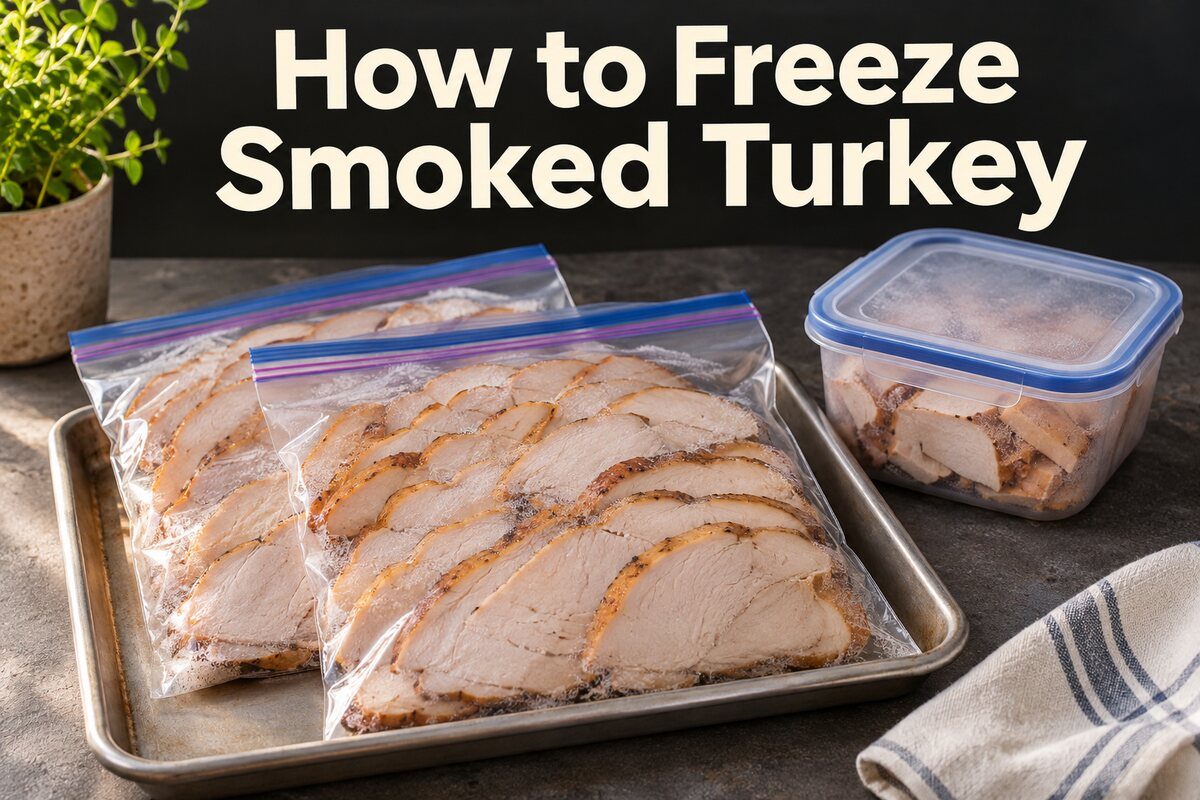
Remove the meat from the carcass, chill it promptly in shallow containers, then pack the cold meat in small freezer portions. Press out excess air, seal, label, and freeze the packs flat.
What You Need
- Fully cooked smoked turkey that has been handled safely
- A clean knife, cutting board, and shallow refrigerator containers
- Freezer-weight zip-top bags or airtight containers labeled for freezer use
- A marker, labels, and a small tray that fits in the freezer
- Optional: a little chilled, unsalted turkey or chicken broth for packs intended for hot meals
Hands-on time: Roughly 10–15 minutes for carving and packaging a few pounds, plus refrigerator chilling and freezing time. Actual time depends on the amount and how much is already carved.
- Decide what to save. Set aside only the amount you expect to eat soon. Plan to freeze the rest as soon as it has chilled, rather than waiting until the end of the refrigerator-storage window.
- Carve before chilling. Remove breast meat, thighs, and other usable meat from the carcass. Separate large pieces into smaller portions and place them in shallow containers. Refrigerate promptly; do not leave turkey on the counter until it feels cold.
- Choose useful cuts. Keep breast meat in serving slices for plates or sandwiches. Chop other meat for soup or casseroles. Pull out small bones and gristle now, while the meat is easy to examine.
- Pack the chilled turkey. For example, divide 1 pound of cooked boneless meat into four 4-ounce packs. Arrange slices in a thin layer rather than folding them into a thick ball. Use the pack-size table below if you need larger portions.
- Add broth only if it suits the meal. For a hot-dinner pack, an optional tablespoon or two of cold unsalted broth per 8 ounces of turkey can supply a little reheating liquid. Keep sandwich portions plain. This is a practical starting amount, not a preservation requirement.
- Seal without squeezing the meat. Gently press excess air from a freezer bag, keep the zipper area clean, and close it completely. With a rigid container, choose a close-fitting size and leave the manufacturer’s recommended expansion space if you add liquid.
- Label clearly. Record “smoked turkey,” the cut, the amount, the cooking date, and the freezing date. Add “broth included” if relevant. A label written before filling the bag is easier to read.
- Freeze flat. Lay bags in a single layer on the tray at 0°F or below. Once solid, stack or stand them where they are easy to find. Avoid loading a freezer with a large pile of warm food.
A vacuum sealer is optional. The USDA’s freezer-packaging advice explains why tight wrapping and freezer-weight materials matter: they limit air exposure and freezer burn. Good ordinary freezer bags can do this job without another appliance.
What Size Turkey Packs Should You Make?
Use 4 ounces of cooked boneless turkey per person as a simple meal-planning starting point, then adjust for appetite and other ingredients. These amounts describe the meat going into the package, not the weight of a whole bird.
| Planned use | Useful pack size | How to arrange it |
|---|---|---|
| One modest lunch or sandwich meal | 4 ounces cooked meat | Thin slices, packed plain |
| Two plates with side dishes | 8 ounces cooked meat | Serving slices; optional small amount of broth |
| Four portions with sides | 1 pound cooked meat | Use two 8-ounce packs if you may serve only two people |
| Soup or casserole | The amount your recipe calls for | Chopped or shredded meat; label the weight |
Keeping a small pack separate can save a larger pack from being opened unnecessarily. If tomorrow’s lunch is the only reason to thaw turkey, a family-size bag is inconvenient.
Before you freeze: open the quick pack check
- Was the turkey refrigerated within the safe time limit?
- Is this cold pack an amount you can use for one meal?
- Is the bag marked for freezer use, sealed, and free of trapped air pockets?
- Are both dates and the amount readable?
If the first answer is no, discard the turkey. Fix packaging or labeling problems before freezing the other packs.
Should You Freeze Turkey in Broth or Keep It Plain?
Keep sandwich meat plain. A small amount of broth is useful for turkey you plan to serve hot, but it is optional and cannot reverse meat that was already overcooked.
Freeze gravy separately so the same turkey can work in more than one dish. That also makes portions easier to adjust. If you prefer a large amount of liquid around the meat, use a freezer-safe container with its specified headspace; a container filled to the rim can leak or crack as the contents expand.
The skin will usually soften after freezing, thawing, and covered reheating. Plan around the meat rather than expecting freshly grilled skin. For the original cooking stage, see how to smoke a turkey.
How Long Does Smoked Turkey Keep in the Freezer?
A practical quality target is to use these packs within 3 months. That is a planning target, not a date when properly frozen turkey suddenly becomes unsafe.
The FoodSafety.gov storage chart gives cooked meat or poultry a general freezer-quality range of 2–6 months. It also distinguishes quality from safety: food kept continuously frozen at 0°F or below can remain safe indefinitely. Packaging, the original meat, and temperature changes still affect how it tastes.
Put older packs in front and use them first. Dry, pale freezer-burned patches point to quality damage; their absence does not prove that turkey was safely handled before freezing. A bag’s appearance or smell cannot reconstruct its time on the serving table.
How Do You Thaw and Reheat Frozen Smoked Turkey?
Place the sealed pack on a tray in the refrigerator at 40°F or below. Allow roughly a day for a small, flat pack, and more time for a thicker package. When serving it hot, reheat the meat to 165°F.
Check that the center has thawed instead of assuming every bag will be ready overnight. Keep it refrigerated until needed. USDA’s leftover-thawing guidance allows 3–4 days of refrigerated storage after thawing; using a pack promptly is an easier household routine. Freezing never makes turkey with an unsafe earlier handling history acceptable.
For the full covered-pan method, use our guide to reheating smoked turkey without drying it out. Check several thick pieces with a clean food thermometer. Our thermometer placement guide shows why the probe needs to measure the meat rather than the hot pan or broth.
Do not thaw a pack on the counter. If you use microwave defrosting, continue heating it immediately to 165°F and check several places. A freezer bag is not automatically microwave-safe or suitable for boiling; transfer the food to cookware approved for the heating method.
FAQ
Can you freeze turkey that was previously frozen raw?
Yes. Turkey that was safely thawed, fully cooked, and promptly chilled can be frozen as cooked leftovers. Its earlier raw-frozen state does not prevent this.
Do you have to freeze slices separately on a baking sheet first?
No. That extra step helps when you want loose individual pieces, but a small pack intended for one meal can go straight into the freezer once chilled and packaged.
Can you freeze turkey legs with the bone in?
Yes, after safe cooling, but boneless portions are easier to pack flat. Protect bags from sharp bone ends with freezer-safe wrapping and avoid forcing a large leg into a thin bag.
Does vacuum sealing make smoked turkey safe at room temperature?
No. Vacuum packaging does not replace refrigeration or freezing. Treat the turkey as perishable food before and after sealing.
Final Verdict
Freeze smoked turkey early, in portions that suit your next meal. Shallow chilling, freezer-weight packaging, clear labels, and refrigerator thawing matter more than owning a vacuum sealer. A few small flat packs are easier to use well than one forgotten bag of leftovers.
About Frank W. Roberts
Frank W. Roberts has grilled since 1970 and writes Everything Grill Reviews. This guide combines practical kitchen planning with published USDA and FoodSafety.gov guidance. It does not claim a timed freezing or reheating test.