
Updated: September 21, 2026
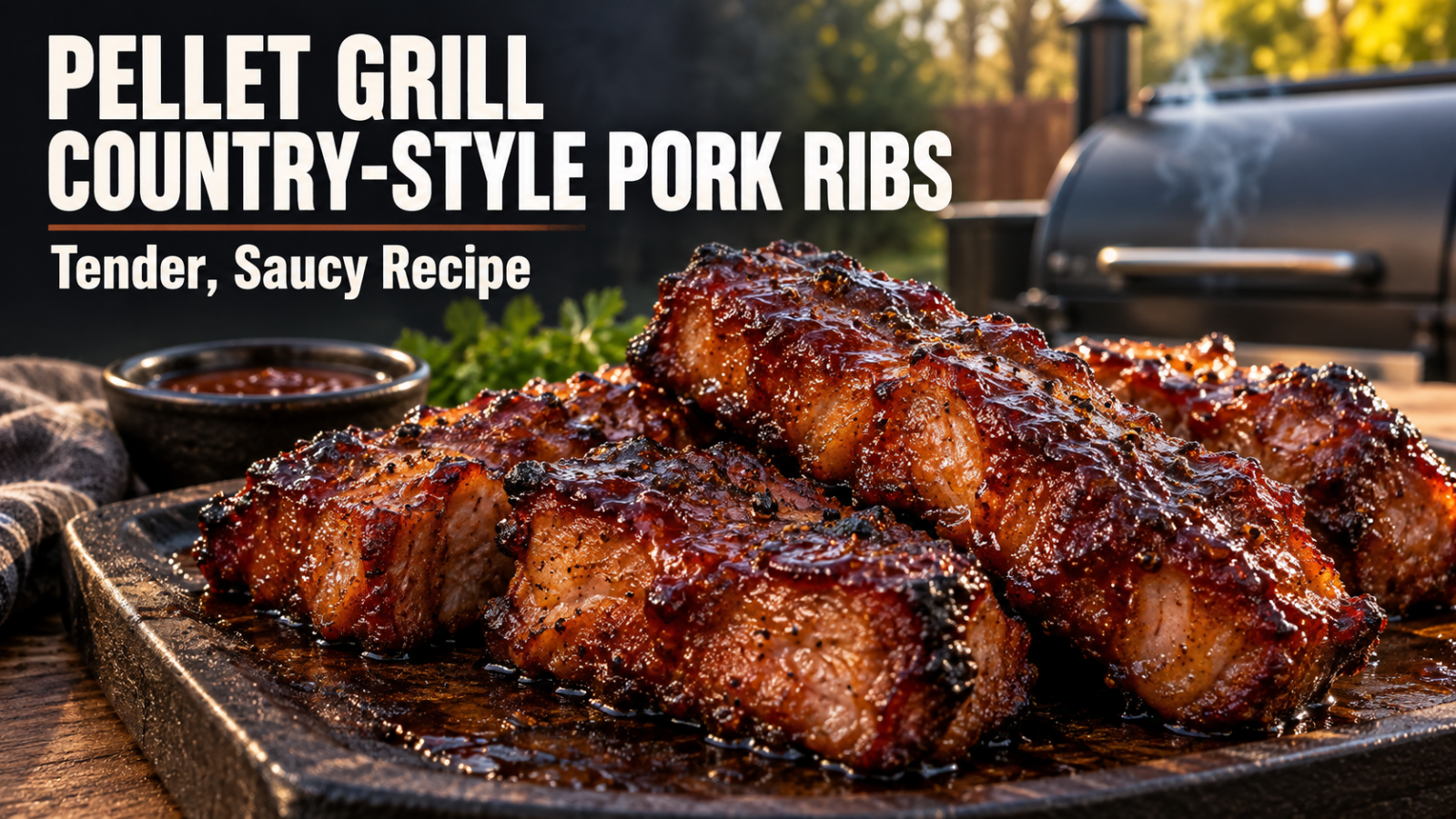
Pellet grill country-style pork ribs turn an affordable, meaty cut into tender barbecue without an all-day rack-rib cook. This recipe is specifically for well-marbled country-style ribs cut from pork shoulder. They get 90 minutes of clean smoke, a covered braise until probe-tender, and a short uncovered finish that sets the sauce instead of burning it.
Quick Answer: Season 3 pounds of shoulder-cut country-style pork ribs, smoke them at 250°F for 75 to 90 minutes, then cover them in a foil pan with apple juice and cook at 275°F until a probe slides in with little resistance, usually at 195–205°F. Brush with barbecue sauce and finish uncovered at 300°F for 15 to 25 minutes. Plan on about 3 to 4 hours including prep and rest, but cook to tenderness rather than the clock.
Table of Contents
- Recipe at a glance
- Choose the right country-style ribs
- Ingredients and equipment
- Step-by-step instructions
- Temperature and tenderness
- Troubleshooting and mistakes
- Storage and reheating
- Frequently asked questions
Pellet Grill Country-Style Pork Ribs at a Glance
| Recipe detail | Target |
|---|---|
| Yield | 6 servings |
| Meat | 3 lb well-marbled, shoulder-cut country-style pork ribs |
| Prep time | 20 minutes |
| Estimated cook time | 2 hours 30 minutes to 3 hours 30 minutes |
| Rest time | 10 to 15 minutes |
| Pellet grill temperatures | 250°F smoke, 275°F covered braise, 300°F glaze |
| Tenderness target | Probe-tender, commonly around 195–205°F |
| Wood pellets | Hickory, oak, pecan, or an apple-oak blend |
The times are planning estimates. Rib thickness, how cold the meat is, outdoor temperature, lid openings, and the accuracy of the grill controller can all move the finish. The thermometer tells you where the meat is; the probe-tender test tells you whether the collagen has softened enough to eat.
Which Country-Style Pork Ribs Should You Buy?
Buy thick, well-marbled strips cut from pork shoulder or Boston butt for this low-and-slow recipe. The package may say “boneless country-style ribs,” but the important words are pork shoulder or pork butt. These pieces usually look irregular, contain visible seams of fat, and sometimes include a section of blade bone.
The label “country-style ribs” is not always applied to the same cut. Some packages contain lean, uniform strips from the rib end of the pork loin. Those cook more like thick pork chops. If you take lean loin strips to 200°F in a long covered braise, they can become dry and stringy instead of juicy.
How can you tell shoulder-cut ribs from loin-cut ribs?
Shoulder-cut pieces are generally darker, more marbled, and less uniform. Loin-cut pieces are typically pale, smooth, and shaped like thick boneless chops. Read the small print on the package and ask the meat counter when the cut is unclear. If the label says “pork loin,” use the quicker loin-cut method later in this guide.
This distinction matters more than whether the ribs contain a bone. Bone-in and boneless shoulder pieces can use the same method; boneless pieces may finish sooner because they are often smaller. Probe every piece rather than assuming the whole pan finishes together.
Ingredients and Equipment
For the pork
- 3 pounds shoulder-cut country-style pork ribs, each about 1 1/2 to 2 inches thick
- 1 tablespoon yellow mustard or neutral cooking oil, used as a binder
For the dry rub
- 2 tablespoons packed light brown sugar
- 2 teaspoons kosher salt
- 2 teaspoons smoked paprika
- 1 1/2 teaspoons garlic powder
- 1 1/2 teaspoons onion powder
- 1 teaspoon coarse black pepper
- 1 teaspoon chili powder
- 1/4 teaspoon cayenne pepper, optional
For the covered braise
- 3/4 cup unsweetened apple juice
- 2 tablespoons apple cider vinegar
- 2 tablespoons unsalted butter, cut into 6 pieces
- 1 tablespoon honey
For the glaze
- 3/4 cup barbecue sauce
- 2 tablespoons strained liquid from the braising pan
- 1 teaspoon apple cider vinegar, optional for a less-sweet finish
Equipment
- Pellet grill with enough dry, food-grade pellets for a 4-hour cook
- Instant-read thermometer or leave-in probe
- Disposable foil pan or grill-safe metal pan, approximately 9 by 13 inches
- Heavy-duty aluminum foil
- Tongs
- Silicone basting brush
- Small bowl and whisk
Hickory gives pork a stronger traditional barbecue profile. Oak is balanced and forgiving. Pecan falls between oak and hickory, while an apple-oak blend gives a gentler smoke with enough backbone for the shoulder. Use what is already dry and feeding reliably before buying a special bag. The site’s 30-day pellet grill recipe plan explains why dry fuel and a clean firepot matter more than an elaborate pellet blend.
How Do You Make Country-Style Pork Ribs on a Pellet Grill?
Build smoke on the uncovered meat first, then cover it with a modest amount of liquid to tenderize the shoulder, and finish uncovered so the sauce becomes tacky. Do not submerge the ribs or sauce them at the beginning.
Step 1: Prepare the grill
Fill the hopper with dry cooking pellets and preheat the pellet grill to 250°F with the lid closed. Start with a clean grate, an unobstructed grease path, and enough room for air to move around each rib. Follow the startup procedure in the manual for your exact grill.
Do not put food on during the heavy startup-smoke phase. Wait until ignition is stable and the grill is holding close to the set temperature. A short startup cloud is normal; stale white smoke through the whole cook is not the goal.
Step 2: Trim and season the ribs
Pat the pork dry with paper towels. Trim only loose flaps and hard exterior fat that will not soften. Leave the fine marbling and softer seams that protect shoulder meat during a long cook.
Mix the brown sugar, salt, smoked paprika, garlic powder, onion powder, black pepper, chili powder, and optional cayenne in a small bowl. Rub the mustard or oil over every side of the pork. Apply all of the dry rub evenly, including the ends.
If time allows, refrigerate the seasoned ribs uncovered for 30 to 60 minutes while the grill heats. Keep raw pork cold; there is no need to leave it on the counter to “come to room temperature.” Wash hands and sanitize the board, knife, and counter after handling the raw meat.
Step 3: Smoke uncovered at 250°F
Arrange the ribs directly on the grate with at least 1 inch between pieces. Place thicker pieces toward the hotter area only if you already know the grill’s heat pattern. Close the lid and smoke for 75 to 90 minutes.
Do not chase an exact internal temperature during this stage. You are looking for a dry, darkened surface, seasoning that no longer wipes away, and a light mahogany color. Most pieces will be somewhere around 150–165°F, but color and rub set are the better reasons to move to the pan. If the surface is still pale at 75 minutes, give it another 15 minutes before covering.
For a stronger wood note, use the clean early-smoke techniques in the site’s guide to getting more smoke flavor from a pellet grill. Do not create dirty smoke by restricting airflow or using damp pellets.
Step 4: Cover and braise at 275°F
Place the smoked ribs in a single layer in the foil pan. Whisk together the apple juice and 2 tablespoons of apple cider vinegar, then pour the mixture around the ribs rather than over the rub. Drizzle 1 tablespoon of honey across the meat and place the butter pieces around the pan.
Cover the pan tightly with heavy-duty foil and increase the grill set point to 275°F. Cook covered for 60 minutes before checking. Open the foil carefully because hot steam will escape.
Check the thickest pieces with an instant-read thermometer and a thin probe or skewer. Continue covered in 20- to 30-minute intervals until the probe enters the meat with little resistance. Shoulder-cut country ribs commonly become tender around 195–205°F, but one piece may be ready at 192°F while another still feels tight at 203°F. Texture makes the final decision.
Step 5: Sauce and set the glaze at 300°F
When the ribs are nearly tender, carefully transfer 2 tablespoons of braising liquid to a clean bowl. Whisk in the barbecue sauce and the optional teaspoon of cider vinegar. Increase the grill to 300°F.
Remove the foil and brush a thin coat of glaze over the top and sides of each rib. Return the uncovered pan to the grill for 15 to 25 minutes, just until the sauce looks glossy and tacky. Thick sugary sauce can scorch, so this is a finishing step, not a second long cook.
If the ribs were already very soft when uncovered, shorten the glaze stage. A sauce that has not fully set is better than meat that falls apart when you try to lift it.
Step 6: Rest and serve
Remove the pan from the grill and rest the ribs for 10 to 15 minutes. Keep the pan loosely covered if the weather is cool, but do not seal it so tightly that the glaze steams off. Serve one large rib or two small ribs per person with extra sauce at the table.
Useful sides include coleslaw, baked beans, cornbread, grilled corn, or a sharp vinegar salad. The pork is rich and sweet, so at least one crisp or acidic side keeps the plate balanced.
What Internal Temperature Makes Country-Style Ribs Tender?
Shoulder-cut country-style ribs are safe to eat at 145°F followed by a three-minute rest, but they will usually still be chewy at that point. For this recipe, continue cooking until a probe slides in easily, commonly around 195–205°F. That higher range is a barbecue tenderness target for collagen-rich shoulder meat, not a different government safety minimum.
FoodSafety.gov’s current minimum-temperature chart lists 145°F with a three-minute rest for pork steaks, roasts, and chops. It also lists 165°F for reheated leftovers. Use those numbers for safety, then use feel to decide when shoulder meat is tender.
Temperature alone cannot tell you whether every strip is ready. Probe through the side into the thickest section, avoiding bone and large pockets of fat. If the reading is 200°F but the probe still pushes back, cover the pan again and cook another 20 minutes. If a small piece feels tender at 193°F, remove it to a covered plate while the larger pieces finish.
Can You Use Loin-Cut Country-Style Ribs?
Yes, but do not use the long shoulder method. Lean loin-cut country-style ribs should be cooked like thick pork chops: preheat to 375°F, grill until the center reaches 145°F, then rest at least three minutes. Brush on sauce only during the last 5 to 10 minutes so the sugar does not burn.
Begin checking 1 1/2-inch loin strips after about 20 minutes, turn once, and let the thermometer—not an estimated schedule—decide when they are done. The site’s thick-cut pork chop method explains probe placement and the 145°F finish in detail.
If you cannot confirm whether the package came from shoulder or loin, compare the appearance and ask the butcher. A long braise is forgiving for marbled shoulder but risky for lean loin. Choosing the right method before lighting the grill prevents the most common dry-country-rib disappointment.
Substitutions and Variations
What can replace apple juice?
Use 3/4 cup low-sodium chicken broth, pineapple juice, or water. Keep the 2 tablespoons of cider vinegar unless the substitute is already tart. Pineapple juice makes the pan sweeter, so omit the tablespoon of honey.
Can you make the recipe less sweet?
Reduce the brown sugar in the rub from 2 tablespoons to 1 tablespoon, omit the honey from the pan, and choose a vinegar-forward sauce. Add the optional teaspoon of cider vinegar to the glaze. Do not eliminate all sugar if you want the same glossy surface, but the recipe does not need to taste like candy.
Can you use a store-bought rub?
Yes. Use about 1/4 cup of a pork barbecue rub for 3 pounds of meat. Check the sodium line and ingredient list first. If salt is near the top, do not add the 2 teaspoons of kosher salt from the homemade blend.
Can you make them spicy?
Increase the cayenne to 1/2 teaspoon and whisk 1 tablespoon of hot sauce into the glaze. Add heat at the end so guests who prefer mild pork can use plain barbecue sauce.
Can you use bone-in country-style ribs?
Yes. The same three-stage method works for shoulder-cut bone-in pieces. Insert the thermometer into meat without touching bone. Bone-in pieces may not finish at the same moment as boneless ones, so check them individually.
Why Did the Country-Style Ribs Turn Out Dry or Tough?
Dry ribs usually came from a lean loin cut, excessive time after tenderness, or too little liquid in an uncovered pan. Tough shoulder ribs usually need more covered time. Diagnose the cut and the texture before changing the temperature.
| Problem | Likely cause | Best correction |
|---|---|---|
| Ribs are tough at 180°F | Shoulder collagen has not softened | Cover tightly and continue at 275°F in 20- to 30-minute intervals |
| Ribs are dry and stringy | Lean loin cut or shoulder cooked too long after tender | Confirm the cut next time; use the 145°F loin method or shorten the finish |
| Rub washes off | Liquid was poured over the meat or the crust had not set | Pour braising liquid around the ribs and smoke until the rub is dry first |
| Sauce is burned | Sugary sauce was added too early or heat ran high | Glaze only during the final 15 to 25 minutes at 300°F |
| Food tastes bitter | Dirty smoke, damp pellets, or too much supplemental smoke | Use dry pellets, clean the firepot when cold, and aim for clean light smoke |
| Some pieces fall apart while others are tight | Uneven size or hot spots | Remove tender pieces early and leave larger ones covered longer |
Common Mistakes to Avoid
- Buying by the big label only: “Country-style ribs” can describe shoulder or loin pieces. Read the small print and inspect the marbling.
- Treating 200°F as a magic number: A reading does not replace the probe test. Finish when the meat is tender.
- Submerging the meat: The pan needs enough liquid to create a moist braise, not enough to boil away the bark.
- Wrapping before the rub sets: Give the uncovered stage time to build color and smoke flavor.
- Saucing from the start: Sugar darkens fast during a long cook. Sauce near the end.
- Opening the lid on a schedule: Every peek dumps heat. Use the first stated check time, then assess with a thermometer.
- Using the raw-pork tray for cooked ribs: Move finished food to a clean platter and use a clean brush for the glaze.
- Trusting one rib to represent the pan: Different thicknesses finish at different times. Check several pieces.
Food-Safety Guidance
Keep raw pork refrigerated until preparation. Use separate utensils and plates for raw and cooked meat, wash hands with soap and water after handling raw pork, and sanitize work surfaces. Cook outdoors on a stable grill with the clearances and startup procedure required by the manufacturer.
FoodSafety.gov lists 145°F plus a three-minute rest as the safe minimum for whole cuts of pork. This recipe continues shoulder-cut ribs beyond that point for texture. Do not partially cook the pork, refrigerate it, and finish it another day. If you need to cook ahead, complete the cook, chill the finished ribs promptly, and reheat them to 165°F.
Open a covered pan with tongs or heat-resistant gloves and direct the steam away from your face and hands. Hot braising liquid and rendered fat can splash. Do not pour water on a grease fire; follow the emergency guidance in the grill manual and call emergency services if the fire is not contained.
How Do You Store and Reheat Leftover Country-Style Ribs?
Refrigerate leftovers in a shallow airtight container within two hours of serving. Eat refrigerated ribs within three to four days, or freeze them for two to three months for best quality. Label the container with the date.
For moist reheating, put the ribs and 2 to 3 tablespoons of water or apple juice in a covered pan. Reheat in a 300°F pellet grill or oven until the center reaches 165°F. A microwave also works: cover the meat, use medium power in short intervals, rotate the pieces, and verify 165°F in the thickest one.
Freeze ribs with a spoonful of cooking liquid or sauce so exposed edges do not dry out. Thaw in the refrigerator, not on the counter. Discard leftovers that sat at room temperature for more than two hours—or more than one hour when the air temperature was above 90°F.
What Is the Final Answer?
The best pellet grill country-style pork ribs start with the right cut. Choose visibly marbled shoulder pieces, smoke them uncovered at 250°F until the rub has set, braise them covered at 275°F until probe-tender, and apply sauce only for a short 300°F finish. Use 195–205°F as a useful tenderness window, not an automatic stopping point.
If the package contains lean loin meat, switch methods and stop at 145°F plus a three-minute rest. That one decision—matching the cooking method to the actual cut—does more for juicy results than any expensive sauce or complicated rub.
Frequently Asked Questions
How long do country-style ribs take on a pellet grill?
Shoulder-cut country-style ribs usually take about 2 1/2 to 3 1/2 hours of cooking: 75 to 90 minutes uncovered at 250°F, followed by roughly 60 to 120 minutes covered at 275°F and 15 to 25 minutes glazed at 300°F. Thickness and tenderness matter more than the clock.
What temperature should country-style pork ribs reach?
Whole pork is safe at 145°F with a three-minute rest. Shoulder-cut country ribs are normally still tough there, so continue until they are probe-tender, commonly around 195–205°F. Lean loin-cut pieces should stop at 145°F and rest three minutes instead of going to the shoulder tenderness range.
Should you wrap country-style ribs?
Yes for this shoulder-cut method. Smoke them uncovered first so the rub and color develop, then cover the pan tightly to trap moisture and soften the collagen. Remove the cover for the final glaze.
Are country-style ribs the same as spare ribs?
No. Spare ribs come from the rib cage and are sold as a rack with multiple bones. Country-style ribs are thick individual pieces, commonly cut from the shoulder area or the rib end of the loin. That is why checking the package matters.
Can you cook frozen country-style ribs on a pellet grill?
Thaw them in the refrigerator before this recipe. Fully thawed pieces season more evenly and move through the cook more predictably. Do not thaw pork on the counter.
Do country-style ribs need barbecue sauce?
No. You can skip the glaze and serve the tender pork with its reduced pan juices. If you use sauce, add it near the end so the sugar becomes tacky without burning.
What pellets are best for country-style pork ribs?
Hickory or oak are the strongest general choices. Pecan is a medium option, while apple blended with oak is milder. Dry pellets and clean combustion matter more than chasing a specific brand.
Can you prepare the ribs the day before?
Yes. Complete the entire cook, cool the ribs promptly, and refrigerate them in a shallow covered container. Reheat covered with a little liquid until the center reaches 165°F. Do not partly cook raw pork one day and finish it the next.
Why are my country-style ribs still tough at 200°F?
The temperature may be reading a fat pocket, touching bone, or measuring a section that has not softened yet. Check another spot. If a probe still meets resistance, cover the pan and continue cooking in 20-minute intervals. Tenderness is the finish test.
About the Author
Frank W. Roberts is the author of Everything Grill Reviews. He has grilled since 1970 and brings more than 50 years of backyard cooking and cookoff experience to fire management, fuel behavior, smoke, and practical cooker use. This recipe is based on established pork-safety guidance, current manufacturer cooking guidance, and standard smoke-then-braise technique; it does not claim that a particular grill model or this exact batch was personally test-cooked. Facts and linked guidance were checked September 20, 2026.