
Updated: September 21, 2026
Updated and fact-checked: September 20, 2026
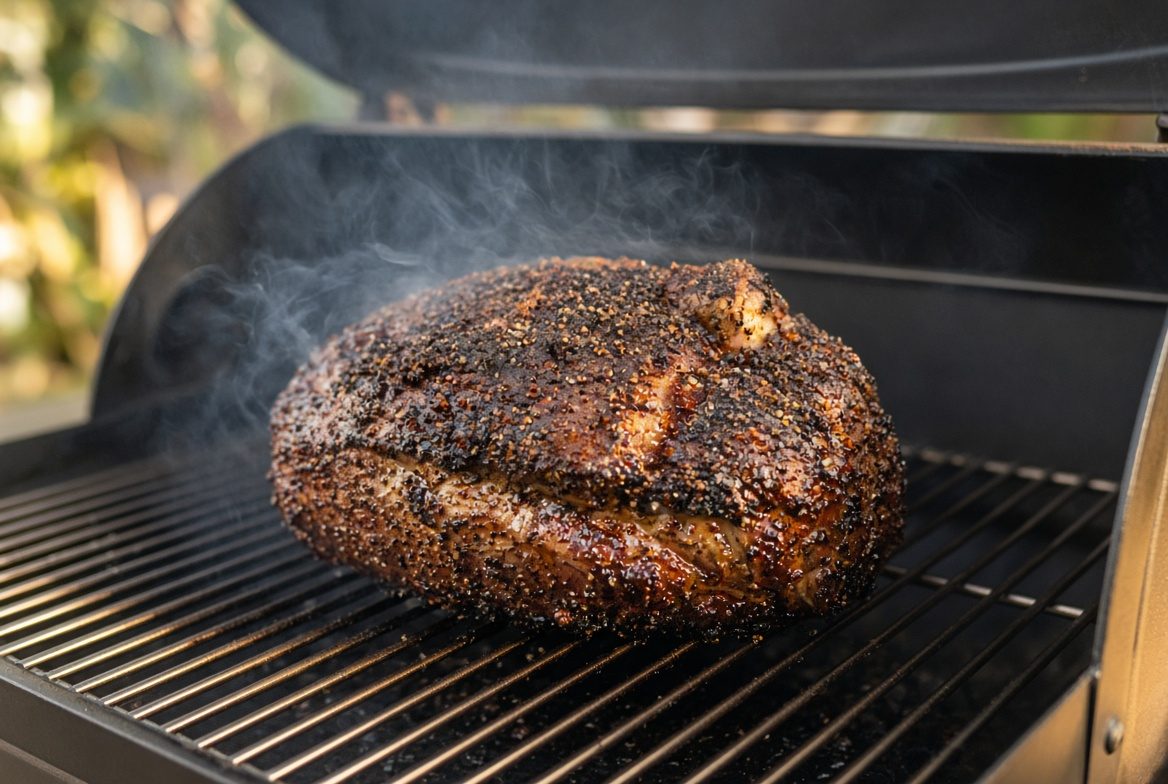
Smoked pork shoulder on a pellet grill is a 250°F cook that stays on the grate until a probe slides in with almost no resistance, often 195–205°F inside a 6–8 pound Boston butt. USDA safety for a whole pork roast is 145°F plus a 3-minute rest. Pulled-pork texture is a separate target past that number. Time after preheat is an estimate of 8–12 hours.
Quick Answer: How Do You Smoke Pork Shoulder on a Pellet Grill?
Set the pellet grill to 250°F with oak or hickory, season a 6–8 lb Boston butt, and cook until probe-tender rather than watching the clock. Wrap when the bark is set, usually around 165–170°F. Rest at least 1 hour before pulling. Leftovers go in the fridge within 2 hours and reheat to 165°F.
Key Points
- A pellet grill set point of 250°F is a practical backyard starting point for pork shoulder.
- USDA lists 145°F plus a 3-minute rest as the safe minimum for pork roasts. That is not the pulled-pork finish.
- Barbecue tenderness for shoulder is probe feel, commonly in the 195–205°F neighborhood.
- Total time after preheat is often 8–12 hours for a 6–8 lb bone-in butt. Treat that as an estimate.
- Wrap after the bark sets if the surface is drying or the stall is dragging the cook.
- Chill leftovers within 2 hours, eat in 3–4 days or freeze, and reheat to 165°F.
What Cut Should You Buy for Pulled Pork?
Buy a bone-in Boston butt, also labeled pork shoulder or pork butt, in the 6–8 pound range if you want a full backyard cook without an all-night packer-size project. Boston butt comes from the upper shoulder. Picnic shoulder is the lower part of the same region and can work, but it is often a little leaner and more awkward to trim.
Leave a thin fat cap. Trim only thick, hard fat that will not render. Bone-in gives you a built-in doneness clue: the blade bone should wiggle free when the meat is ready to pull. Boneless butts cook the same way. They just need more attention when you place the probe.
This cut is collagen-rich. That is why it belongs in the same family as chuck, brisket, and ribs in the site guide to cooking tough, cheap cuts until tender. A pork chop can be done at the USDA roast minimum. A shoulder at that same number is usually still too tight to pull.
What Temperature Should a Pellet Grill Be for Pork Shoulder?
250°F is the set point for this method. It is hot enough to move a 6–8 lb butt in a daylight window for many cooks and cool enough to build bark and take on clean wood smoke. 225°F also works. It usually adds time. 275°F can shorten the cook and still tenderize if you do not rush the wrap.
The cooker air temperature is not doneness. USDA smoking pages talk about smoker air in a low-and-slow band. The meat still has to hit a safe internal temperature, then, for pulled pork, stay on heat until connective tissue softens.
| Set point | What it usually does | Tradeoff |
|---|---|---|
| 225°F | Longer smoke window, slower stall | Easy to run past 12 hours on a larger butt |
| 250°F | Balanced bark and a common 8–12 hour estimate | Still weather- and meat-dependent |
| 275°F | Shorter cook, still can go probe-tender | Bark can darken faster if the rub is heavy on sugar |
Which Pellets Work Best With Pork Shoulder?
Oak is the everyday choice. Hickory is the stronger pork choice. Apple or cherry can sit in a blend if you want a milder edge. Do not chase thick white smoke. Clean, thin smoke is the goal on a pellet grill. If the cook tastes too mild, the fix is usually dry pellets, an unwrapped first stage, and patience, not a heavier bag of mesquite for 10 hours. The site’s guide on how to get more smoke flavor from a pellet grill covers that problem in more detail.
What Ingredients Do You Need?
Keep the shopping list to the shoulder, a binder, a salt-forward rub, and wrap material. Sauce is optional and goes on after the meat is pulled if you want it.
Meat and seasoning
- 1 bone-in pork shoulder (Boston butt), 6–8 lb
- 2–3 Tbsp yellow mustard or hot sauce as a binder
- ¼ cup kosher salt
- ¼ cup coarse black pepper
- 2 Tbsp paprika
- 1 Tbsp garlic powder
- 1 Tbsp onion powder
- 1 tsp cayenne (optional)
For the cook
- Oak or hickory pellets
- Optional spritz: equal parts apple cider vinegar and water
- Heavy-duty foil or butcher paper
- Leave-in probe plus an instant-read thermometer
You do not need a complicated injection for a first pellet-grill shoulder. Salt, time, and probe tenderness do more than a long condiment list.
How Do You Set Up the Pellet Grill?
Preheat to 250°F with a clean firepot, a dry hopper, and a grease path that is not packed with old fat. A dirty pellet grill can drift, smoke dirty, or starve for air in the middle of an 8–12 hour cook. Fill the hopper so you are not adding pellets after midnight unless you planned an overnight cook.
- Empty the grease bucket if it is full.
- Confirm the heat deflector and drip tray are in place.
- Load oak or hickory pellets.
- Start the grill and let it reach 250°F before the meat goes on.
- Place a water pan only if you already use one and know how your grill behaves with it. It is not required for this method.
How Do You Cook Pork Shoulder Step by Step?
Season the butt, smoke it unwrapped until the bark sets, wrap if needed, then stay on 250°F until the probe says tender. The clock is a planning tool. The probe is the finish line.
- Pat the shoulder dry. Trim only thick hard fat. Leave a thin cap.
- Coat lightly with mustard or hot sauce.
- Apply the rub on all sides, including the ends.
- Let the meat sit 30–60 minutes at room temperature while the grill preheats, or season it the night before and keep it refrigerated. If it was refrigerated, do not leave it out for hours before the cook.
- Place the shoulder fat-side up on the grate. Put a leave-in probe in the thickest muscle, off the bone and out of large fat seams. The thermometer guide on this site explains that placement in how to use a meat thermometer correctly.
- Smoke at 250°F with the lid closed. Leave it unwrapped through the early smoke stage.
- Optional: spritz once or twice after the first 3 hours if the surface looks dry. Do not soak the bark.
- When the bark is set and the internal temperature is often around 165–170°F, wrap tightly in foil or butcher paper. Foil usually speeds the finish and softens the bark more. Paper usually protects the bark a little better.
- Return the wrapped shoulder to 250°F.
- Begin checking probe tenderness as the meat enters the 195–205°F neighborhood. Done means the probe slides in with almost no resistance in more than one spot, not that a single number appeared on the app.
- Move the wrapped shoulder to a pan. Rest at least 1 hour, still wrapped, in a towel-lined cooler or an oven that is off. Keep the meat hot. Do not treat a long cooler sit as a food-safety free pass if the pork has cooled into the danger zone.
- Pull with forks or gloved hands. Discard large unrendered fat and the bone. Mix in a little of the collected juices if the meat looks dry. Sauce after tasting, not before.
Expect about 8–12 hours after preheat for a 6–8 lb bone-in butt. Wind, meat starting temperature, wrap timing, and how hard the stall hits can move that window. A smaller boneless roast can finish sooner. A cold 9-pound picnic can run longer.
What Internal Temperature Is Safe, and What Temperature Makes It Pull?
USDA FSIS lists 145°F plus at least 3 minutes of rest as the safe minimum for pork steaks, chops, and roasts. Pulled pork is cooked well past that point so collagen breaks down. Many backyard shoulders become tender somewhere around 195–205°F, but that range is a checking window, not a promise.
Color is not proof of safety. Pork can stay pink after it is past 145°F. A smoke ring is a color change, not a tenderness score. Use a thermometer for safety and a probe-feel check for pull-apart texture. The FSIS safe-temperature chart is the authority for the minimum, not a barbecue forum number.
| Target | Number | What it means |
|---|---|---|
| USDA pork roast safety | 145°F + 3-minute rest | Safe whole-cut minimum. Usually too tight to pull. |
| Bark-set / wrap window | Often 165–170°F | Surface is ready to wrap if you are wrapping. |
| Pulled-pork checking window | Often 195–205°F | Start probing several spots for tenderness. |
| Leftovers | Reheat to 165°F | USDA leftover minimum, not a new smoke target. |
Source for the safety numbers: USDA FSIS safe temperature chart.
How Long Should Pork Shoulder Rest?
Rest a pellet-grill pork shoulder at least 1 hour while it stays hot, then pull. A large barbecue cut needs time for juices to settle and for the interior temperature to even out. The rest is not a substitute for finishing the cook. If the meat is still tight when you open the wrap, it needed more heat, not a longer cool-down.
Hold it so it stays out of the 40–140°F danger zone. The site’s rest guide covers the same idea for brisket and shoulder in how to rest meat after grilling. If you cannot keep it hot, pull sooner, portion it, and get it into the refrigerator.
What Are the Common Mistakes?
The most common mistake is calling the shoulder done at 195°F without checking probe tenderness. Some pieces are ready there. Some need a few more degrees or more time in the wrap. Temperature is a clue. Feel decides.
- Stopping at the USDA 145°F roast minimum and expecting pulled pork.
- Wrapping too early, before the bark has set, so the surface steams pale.
- Probing against bone or into a fat pocket and trusting that high reading.
- Opening the lid every 20 minutes to “check the smoke.”
- Letting leftovers sit out past 2 hours, then reheating by eye instead of to 165°F.
How Should You Store and Reheat Leftover Pulled Pork?
Refrigerate pulled pork within 2 hours, use it in 3–4 days or freeze it, and reheat leftovers to 165°F. USDA leftover guidance is the same whether the pork came off a pellet grill or out of an oven. Portion into shallow containers so it chills faster. Add a splash of reserved juices or broth when reheating so the meat does not dry out.
Do not reheat a big cold pile in a low slow cooker from refrigerator temperature. Get it hot first, then hold it hot if you are serving a crowd.
Final Verdict: Is 250°F Pork Shoulder Worth the All-Day Cook?
Yes, if you want pulled pork with bark and you can leave a pellet grill alone for most of a day. 250°F on a 6–8 lb Boston butt is a straightforward backyard method: simple rub, clean smoke, wrap when the bark is ready, then wait for probe tenderness in the 195–205°F neighborhood. The safety floor remains 145°F plus a rest. The eating target is tenderness. Plan leftovers on purpose. A shoulder this size is rarely a one-meal roast.
Frequently Asked Questions
How long does a 8-pound pork shoulder take on a pellet grill at 250°F?
Plan on about 8–12 hours after preheat, then treat that as an estimate. Starting temperature, weather, wrap timing, and the individual piece of meat change the clock. Begin checking tenderness when the internal temperature enters the mid-190s.
Should you wrap pork shoulder in foil or butcher paper?
Wrap in foil if you want a faster finish and a softer bark. Wrap in butcher paper if you want to protect the crust a little more. You can also leave it unwrapped the whole way if the surface is not drying out and you are not fighting a long stall. Wrapping is a tool, not a requirement.
Can you cook pork shoulder overnight on a pellet grill?
Yes, if the grill is outdoors, on a stable surface, away from combustibles, and you have enough dry pellets to finish the cook. Use a leave-in probe with an alarm. Do not start an overnight cook on a dirty grill with a half-empty hopper. Food safety still applies after the cook: fridge within 2 hours if you are not holding the pork hot.
Is pink pork shoulder safe?
Pink color alone does not tell you whether pork is safe or done. A whole pork roast is at the USDA minimum at 145°F after a 3-minute rest. Pulled pork is usually much hotter than that. Smoke and myoglobin can leave a pink ring even when the meat is well past the safety number. Use a thermometer.
Do you put sauce on before the shoulder goes on the grill?
No. Season with a dry rub. Sauce after you pull, if you sauce at all. Sugar-heavy sauce on the grate for 10 hours is a good way to darken the surface before the inside is tender.
Related Reading
- How to Cook Tough, Cheap Cuts of Meat Until Tender
- How to Use a Meat Thermometer Correctly on a Grill or Smoker
- How to Rest Meat After Grilling
- How to Get More Smoke Flavor From a Pellet Grill
- Smoked Meatloaf on a Pellet Grill
About Frank W. Roberts
Frank W. Roberts is the author of Everything Grill Reviews. He has grilled since 1970 and brings more than 50 years of backyard cooking and cookoff experience to fire management, fuel behavior, smoke, and practical cooker use. This article is a cooking-method guide based on standard backyard pellet-grill practice and USDA food-safety temperatures. It is not a review of one named grill model. Last verified September 20, 2026.