
Updated: September 22, 2026
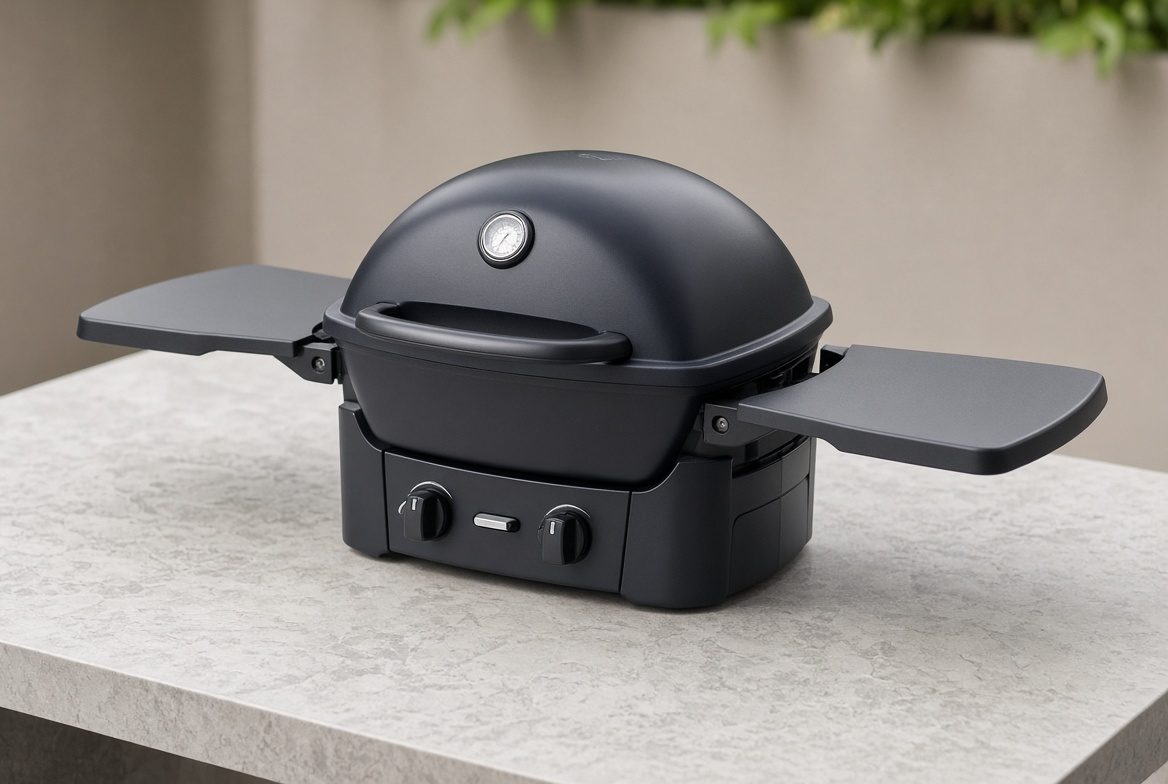
This Weber Q 2800N+ review looks past the “portable” label to answer the question that matters: is this two-burner gas grill easy enough to travel with, or is it better as a space-saving patio grill? With 320 square inches of cooking area, a manufacturer-listed 250–700°F temperature range, removable side tables, and a 31.6-pound grill body, the Q 2800N+ occupies a useful middle ground—but it is not the best fit for every kind of outdoor cook.
Quick Answer: The Weber Q 2800N+ is best for apartment patios, small decks, RV basecamps, and tailgates where you want more cooking room and higher heat than a small camping grill. It is portable in the sense that it can be moved and its side tables stow away, but the 31.6-pound grill, required 20-pound propane tank, and separately sold cart make it less convenient for one-person grab-and-go use. Buy it for compact versatility; skip it if you want an ultra-light travel grill, an included stand, or the broad zone control of a full-size three-burner grill.
Research note: This is a source-based review of Weber model 1500375, not a claim of hands-on testing. Specifications, included equipment, operating guidance, and warranty terms were checked against Weber’s U.S. product information. Practical conclusions are identified as buyer guidance or inference where appropriate.
Table of Contents
- The short verdict
- Specifications and included equipment
- Cooking performance
- How portable is it?
- Build, setup, and cleaning
- Pros and cons
- Who should buy or skip it?
- Alternatives
- Frequently asked questions
Is the Weber Q 2800N+ Worth Buying?
Yes, for a cook who needs full-meal capacity in a compact footprint and does not mind carrying a separate full-size propane tank. The Q 2800N+ combines a 320-square-inch grate, two stainless-steel burners, porcelain-enameled cast-iron cooking grates, and a high-dome lid in a body only 30 inches wide with the lid closed. That is a compelling package for a small patio or an RV site where a conventional freestanding grill would take up too much room.
The more important qualification is portability. At 31.6 pounds before the propane tank, food, tools, or an optional cart, it is movable rather than effortless. The side tables remove and stow in a cradle, which helps, but Weber specifies a 20-pound liquid-propane tank and says it does not recommend adapting the grill to a one-pound cylinder. In practical terms, this is a compact grill that can travel when planned—not a tiny grill you casually carry to a picnic table.
The unusual burner arrangement is another tradeoff. Weber describes a main burner and a separate “Plus” burner that extend the claimed range from approximately 250°F to 700°F. This gives the grill more temperature flexibility than a basic single-burner tabletop model. However, it does not create the same wide left-to-right indirect zone available on a full-size three-burner grill. That difference matters if you routinely cook large roasts with a cool side or juggle several foods at different heat levels.
Our Bottom Line
The Weber Q 2800N+ makes the most sense as a small-space primary grill that can occasionally travel. It is less convincing as a dedicated camping grill. Its strengths are useful cooking area, a wide manufacturer-listed temperature range, cast-iron grates, a tall lid, and compact storage. Its weaknesses are the separate stand, the reliance on a 20-pound tank, and less flexible heat zoning than a larger grill.
Weber Q 2800N+ Specifications
The table below reflects Weber’s U.S. listing for the liquid-propane tabletop configuration, part number 1500375. Accessories, colors, stock status, and prices can change, so confirm the exact configuration before ordering.
| Specification | Weber Q 2800N+ (Model 1500375) |
|---|---|
| Fuel | Liquid propane; designed for a 20-pound tank sold separately |
| Burners | 2 stainless-steel burners |
| Main burner input | 18,000 BTU per hour |
| Plus burner input | 4,000 BTU per hour |
| Manufacturer-listed temperature range | 250–700°F |
| Total cooking area | 320 square inches |
| Cooking grates | Porcelain-enameled cast iron |
| Weight | 31.6 pounds |
| Dimensions, lid closed | 16.70 inches high × 30.00 inches wide × 19.70 inches deep |
| Dimensions, lid open | 28.87 inches high × 30.00 inches wide × 26.50 inches deep |
| Side tables | 2 removable tables that stow in the grill’s cradle |
| Ignition | Electronic ignition powered by a AAA battery |
| Other listed features | Built-in lid thermometer, high-dome lid, front-facing grease tray, and 4 tool hooks |
| Stand or cart included? | No; the portable cart is an optional accessory for this tabletop configuration |
Those numbers show why comparing grills by burner output alone can mislead. Heat performance depends on the cooking area, grill shape, grate mass, airflow, and burner design as well as total BTUs. Our guide to BTU ratings and heat flux explains the distinction.
How Does the Weber Q 2800N+ Cook?
On paper, it is unusually versatile for a compact gas grill. Weber lists a 250–700°F operating range, and the two-burner system is meant to cover gentle cooking, everyday grilling, and high-heat searing. The porcelain-enameled cast-iron grates should retain more heat than thin wire grates, while the high-dome lid creates room for taller food.
High-Heat Grilling and Searing
Weber says using both burners can take the grill to approximately 700°F. That makes steaks, burgers, chops, kebabs, and vegetables the Q 2800N+’s clearest use cases. The cast-iron grate provides a substantial cooking surface for a portable-format grill, although the final sear still depends on preheating, outdoor temperature, wind, food moisture, and how often the lid is opened.
The 320-square-inch grate is larger than many tabletop grills. Weber says it can fit up to 12 burgers or two full racks of ribs. Treat that as a manufacturer fit estimate rather than a promise of ideal spacing: thick burgers, large buns, unusually wide rib racks, or the need for a cooler area can reduce practical capacity. For most households, the grate is better described as comfortable for several servings than as a replacement for a large party grill.
Lower-Temperature Cooking
Weber says the Plus burner can operate by itself at about 250°F, while the main burner provides approximate low, medium, and high settings around 300°F, 400°F, and 500°F. That range makes covered roasting, thicker chicken pieces, sausages, and reverse-seared steaks more realistic than they are on a simple high-output tabletop burner.
Those figures are manufacturer targets, not guaranteed grate temperatures. Compact gas grills respond quickly to cold weather, wind, lid opening, and the thermal load of cold food. Use the lid thermometer as a broad chamber reference and an instant-read thermometer to judge the food itself. If you are cooking poultry or ground meat, follow safe internal-temperature guidance rather than relying on time or grill-dial position.
Can It Cook With Two Heat Zones?
Only in a limited sense. The two controls expand the temperature range, but the main and Plus burners do not provide the broad left-versus-right separation of a conventional three-burner grill. Based on the burner system Weber describes, buyers should not assume they can keep half the grate fully cool while searing over the other half.
You can still manage heat by adjusting the burners, preheating carefully, moving food around the grate, and using a small roasting rack or pan when appropriate. But anyone who frequently needs a clearly defined direct zone and a large indirect zone will find a full-size grill easier to control. The Weber Spirit E-325 review covers a three-burner patio alternative with more room for zone cooking.
What the Q 2800N+ Does Not Replace
This remains a propane grill. It will not generate the automatic wood-smoke profile of a pellet grill, and it is not a traditional charcoal cooker. Smoke boxes and wood-chip accessories may add some aroma, but they do not turn a compact gas grill into a dedicated smoker. Likewise, the optional griddle can broaden the menu, but it is another accessory to buy, store, and clean.
How Portable Is the Weber Q 2800N+?
It is transportable, but it is not an ultralight travel grill. The 31.6-pound grill body is manageable for many adults, and the removable tables stow neatly. Still, its 30-inch width and nearly 20-inch depth make it bulky. Add a 20-pound propane cylinder, regulator, food, tools, and possibly the optional cart, and moving the entire setup becomes a planned job.
The fuel choice is decisive. Weber specifies a standard 20-pound liquid-propane tank and explicitly says it does not recommend using a one-pound-cylinder adapter because the grill’s higher BTU requirements can affect performance. That is good for longer home cooking sessions but less convenient for hiking, beach trips, or quick campground meals.
Where Portability Works Well
- RV and travel-trailer sites: The grill can ride in a storage compartment or tow vehicle, then sit on a suitable outdoor table.
- Tailgates: It offers more capacity than a tiny camp stove when vehicle space is available.
- Small patios and balconies where permitted: The compact body can be stored without permanently dedicating space to a full cart.
- Seasonal homes: The grill is easier to relocate or store than many freestanding models.
Where Portability Falls Short
- One-person carry over distance: Thirty-one-plus pounds in a wide body can be awkward even before fuel and supplies.
- Picnics with no table: The tabletop model needs a stable, appropriate outdoor surface unless you buy a compatible cart.
- Minimalist camping: A 20-pound cylinder consumes more space than disposable camp fuel.
- Frequent setup and teardown: Separate grill, tank, table or cart, and accessories create more pieces to manage.
If an integrated fold-and-roll stand matters more than tabletop flexibility, see our Weber Traveler Compact vs Weber Q1200 comparison. It explains the tradeoff between a wheeled travel format and a smaller tabletop Q.
Build, Setup, and Everyday Usability
The Q 2800N+ is designed to keep daily operation simple. The electronic ignition uses a replaceable AAA battery, the lid has a built-in thermometer, and the grease tray slides out from the front. The two side tables create useful prep space, then detach and store in the cradle when the grill needs to travel or fit into a smaller storage area.
Cooking Grates and Heat Retention
The porcelain-enameled cast-iron grates are a strength for searing and temperature stability. They are also heavier than thin steel grids and should be treated as coated cast iron: preheat them, brush them with an appropriate grill brush or scraper, avoid aggressive impact, and do not chip the enamel with metal tools. After greasy cooks, burn off loose residue and clean once the grate is safe to handle.
Grease Management
The front-access grease tray should be easier to check than a pan hidden deep beneath a cart. Accessibility does not eliminate maintenance, however. Empty it before grease accumulates, especially after burgers, sausages, or skin-on poultry. Keep the cookbox free of heavy deposits to reduce flare-ups and avoid lining parts with foil unless the manual specifically permits it.
Counter or Table Requirements
Because model 1500375 is the tabletop configuration, the support surface is part of the buying decision. It must be stable, level, heat resistant, and located outdoors with the clearances required by the owner’s manual. Do not assume a plastic folding table, vehicle tailgate, wood railing, or enclosed porch is automatically safe. If you lack a suitable surface, budget for Weber’s compatible cart or choose a model with a stand included.
Temperature Monitoring
The built-in lid thermometer tells you the approximate air temperature near the lid, not the center temperature of a steak or chicken breast. Use a fast digital thermometer for doneness. The grill also has probe-cord slots described by Weber for compatible Weber Connect accessories, but the relevant probes and smart device are not listed as included with this model.
Warranty Coverage
Weber lists five-year coverage for several core components and two years for remaining parts, subject to its warranty terms. For model 1500375, Weber lists the cookbox and lid assembly for five years against rust-through or burn-through, with paint covered for two years excluding fading or discoloration. The stainless-steel burner tubes, porcelain-enameled cast-iron cooking grates, and plastic components are also listed for five years, with exclusions noted for fading or discoloration on plastic. All remaining parts are listed for two years.
A warranty is not a promise against ordinary wear, misuse, cosmetic aging, or neglected cleaning. Register the grill, retain proof of purchase, follow the owner’s manual, and review the current terms for your region before relying on any specific coverage.
Weber Q 2800N+ Pros and Cons
Pros
- Large 320-square-inch cooking area for a compact tabletop body
- Manufacturer-listed 250–700°F range covers low covered cooking through high-heat grilling
- Two burners provide more control than a basic single-burner portable grill
- Porcelain-enameled cast-iron grates support heat retention and searing
- High-dome lid accommodates taller food
- Two removable side tables create prep space and stow for transport
- Front-access grease tray simplifies routine checks
- Five-year limited coverage is listed for several major components
Cons
- At 31.6 pounds, it is not an effortless one-hand carry
- Requires a 20-pound propane tank; Weber does not recommend a one-pound-cylinder adapter
- Tabletop configuration does not include a stand or cart
- Burner layout is less suited to a broad direct/indirect split than a full-size three-burner grill
- Optional cart, griddle, rotisserie, and smart-temperature accessories add cost
- Not a substitute for a pellet smoker or charcoal grill when wood or charcoal flavor is the priority
Who Should Buy the Weber Q 2800N+?
Buy it if you want a capable compact gas grill that will live at home most of the time and travel occasionally. Its strongest buyers include couples and small families with limited outdoor space, RV owners who can transport a full-size propane cylinder, and tailgaters who prioritize cooking area over minimum weight.
It is also a logical choice for someone who wants a tabletop grill without accepting the limited capacity and temperature range common to small one-burner models. The high lid and optional cooking accessories give it room to grow with a household’s menu, provided you are comfortable paying separately for extras.
Who Should Skip It?
Skip it if portability means carrying the grill, fuel, and supplies a meaningful distance by yourself. A smaller one-burner grill and one-pound cylinder will be easier to manage. Also skip it if you need an included stand, a wide indirect zone, or enough grate space to feed a large gathering in one round.
Apartment and condominium residents should confirm building rules before buying any open-flame grill. Many properties prohibit propane grills on balconies regardless of the grill’s size.
Best Alternatives to Consider
Choose the Weber Q1200 for Easier Travel
The Q1200 is the more natural choice when lower weight, a smaller footprint, and one-pound-cylinder convenience matter more than cooking area and maximum heat. It is better suited to simple camping meals and short outings, while the Q 2800N+ is the more capable compact home grill.
Choose the Weber Traveler Compact for an Integrated Stand
The Traveler Compact is built around a folding cart and wheels, so it is easier to roll from a vehicle to a cooking spot. It gives up the Q 2800N+’s tabletop flexibility and has a different cooking layout, but it avoids the need to find or carry a separate support surface.
Choose the Weber Spirit E-325 for Permanent Patio Use
If the grill will never travel and you have the space, a full-size Spirit E-325 provides a freestanding cart, three main burners, and more intuitive heat zoning. The Q 2800N+ wins when storage and footprint matter; the Spirit is the stronger conventional backyard setup.
Safe Setup and Operation
Use the Q 2800N+ outdoors only, on a stable surface, and follow every clearance in the owner’s manual. The U.S. Consumer Product Safety Commission advises checking hoses and connections for cracks or leaks and using a soapy-water solution to test connections. Bubbles indicate a leak; shut off the gas and correct the connection before lighting.
- Never operate a propane grill inside a home, garage, camper, tent, or other enclosed area.
- Keep the grill away from siding, railings, dry vegetation, and overhead combustible materials according to the manual.
- Keep the lid open during the lighting procedure unless the manual directs otherwise.
- Do not leave a lit grill unattended.
- Keep the grease tray and cookbox reasonably clean to reduce flare-up risk.
- Close the propane-cylinder valve after cooking and transport the cylinder upright and secured in accordance with local rules.
- If you smell gas or the flame goes out unexpectedly, shut off the fuel and follow the manual’s relighting procedure.
Read Weber’s current instructions for the exact model before assembly or first use. For general gas-grill precautions, see the CPSC gas-grill safety guidance.
Frequently Asked Questions
Is the Weber Q 2800N+ Really Portable?
It is movable and travel-capable, but it is not a lightweight camping grill. The grill weighs 31.6 pounds, measures 30 inches wide with the lid closed, and uses a separate 20-pound propane tank. Removable stowable side tables help, but most buyers will find it best for vehicle-based travel or compact home use.
Can the Weber Q 2800N+ Use a One-Pound Propane Bottle?
Weber specifies a 20-pound propane tank for model 1500375 and says it does not recommend using a one-pound-cylinder adapter because the grill’s higher BTU requirements can affect performance. Follow the manufacturer’s fuel instructions rather than improvising an adapter.
Does the Weber Q 2800N+ Include a Stand?
No. Model 1500375 is the tabletop liquid-propane configuration. Weber sells a compatible portable cart separately, and other Q 2800N+ configurations may be packaged differently. Check the exact part number and included components before ordering.
How Hot Does the Weber Q 2800N+ Get?
Weber lists an operating range of approximately 250–700°F. The company says the Plus burner can hold about 250°F by itself and both burners can reach about 700°F. Actual temperature varies with weather, preheating, food load, lid opening, and grill condition.
Can You Smoke Food on the Weber Q 2800N+?
You can cook covered at lower temperatures and may be able to add light smoke with an appropriate accessory, but it is still a propane grill. It will not produce the same sustained wood-smoke character or automatic fuel delivery as a pellet smoker.
How Many Burgers Fit on the Weber Q 2800N+?
Weber says the 320-square-inch grate fits up to 12 burgers. That is a manufacturer capacity claim; real capacity depends on patty diameter, spacing, buns, and whether you reserve part of the grate for lower heat.
Can You Use a Griddle on the Weber Q 2800N+?
Yes. Weber lists a compatible griddle insert among the Q 2000-series accessories, but it is not included with the tabletop grill. Confirm compatibility by model number before buying an insert.
Does the Weber Q 2800N+ Have Separate Cooking Zones?
It has two independently controlled burners, but they do not create the same broad left-and-right separation as a conventional three-burner grill. The controls expand the temperature range; they should not be assumed to provide a large completely indirect half of the grate.
What Is the Weber Q 2800N+ Warranty?
Weber lists five-year limited coverage for the cookbox, lid assembly, stainless-steel burner tubes, porcelain-enameled cast-iron grates, and plastic components, with stated exclusions. Remaining parts are listed for two years. Coverage is subject to Weber’s complete terms and regional conditions.
Is the Weber Q 2800N+ Easy to Clean?
Routine cleanup is straightforward because the grease tray pulls out from the front and the grate is porcelain-enameled. It still requires regular grate cleaning, grease-tray checks, and removal of heavy deposits from the cookbox. Let components cool and follow the manual’s cleaning instructions.
Final Verdict
The Weber Q 2800N+ is a strong compact-grill concept with one naming trap: “portable” does not mean effortless. Its 320-square-inch grate, two-burner system, cast-iron cooking surface, high lid, and broad claimed temperature range make it far more versatile than a minimalist camp grill. Those same capabilities bring a 31.6-pound body, a full-size propane tank, and a collection of optional accessories.
For a small patio, RV basecamp, or vehicle-supported tailgate, the balance makes sense. For carrying to a remote campsite or cooking with distinctly separated heat zones, another format will be easier. Buy the Q 2800N+ as a compact primary grill that can travel—not as a featherweight travel grill that happens to cook like a full-size model.
About the Author
Frank writes Everything Grill Reviews to help backyard cooks compare grills and solve real cooking problems without inflated claims. This review is based on current manufacturer specifications, published operating guidance, and established safety information; it does not claim hands-on testing that was not performed.