
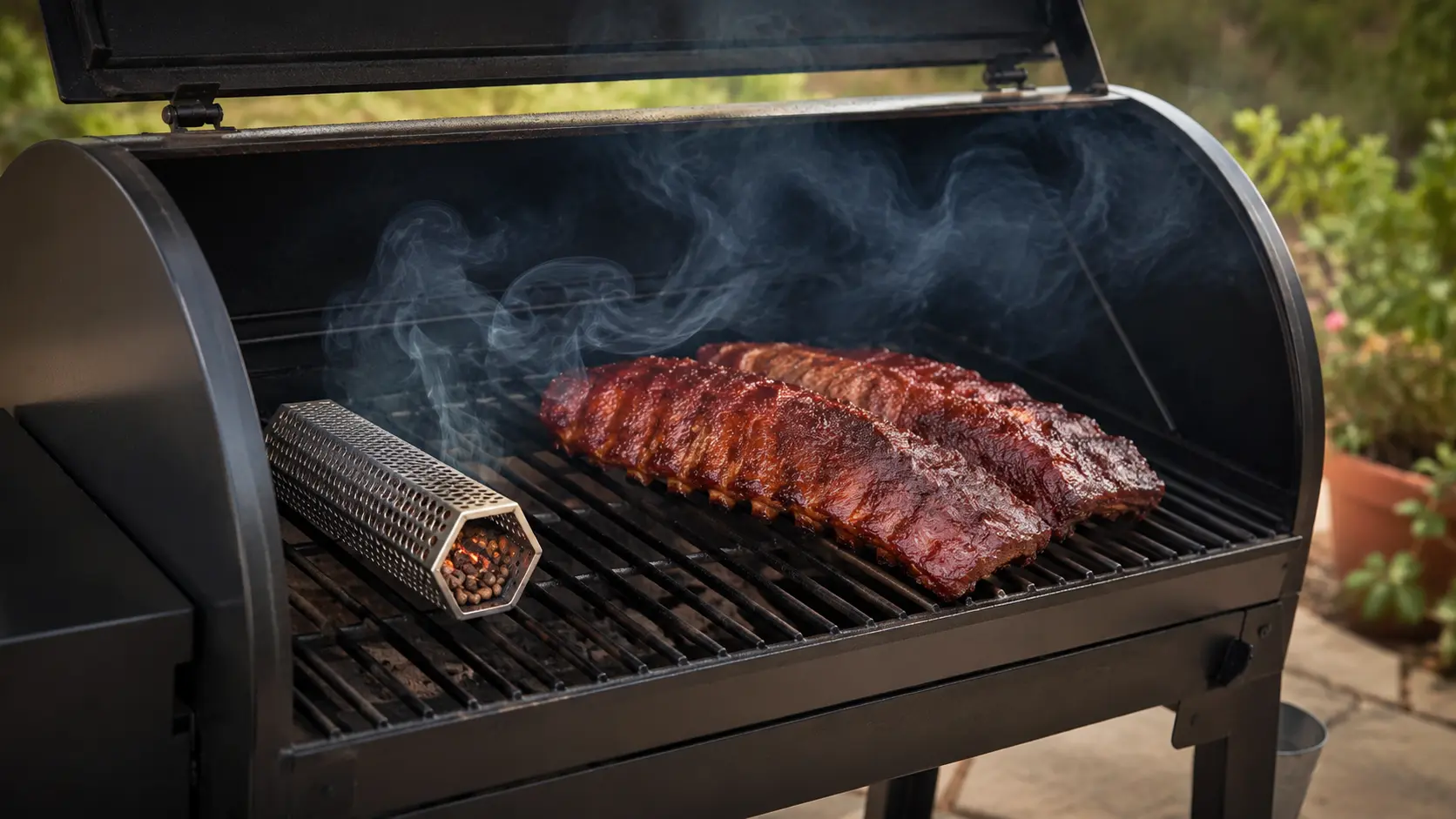
How to Use a Smoke Tube in a Pellet Grill for More Smoke Flavor
Best for: Backyard grill buyers
A solid option worth comparing before you buy.
Check Price on Amazon (paid link)As an Amazon Associate I earn from qualifying purchases.
Updated: September 4, 2026
Quick Answer: Fill the smoke tube with dry, food-grade hardwood pellets. Light the open end until a steady flame forms, let it burn for 5–10 minutes, blow out the flame, and lay the tube on the grate where airflow carries smoke across the food. Keep the pellet grill running to cook raw meat safely.
You may see this accessory called a cold smoke tube, pellet tube smoker, or simply a smoke tube. The name does not mean you must cold-smoke with it. In this guide, the pellet grill supplies the cooking heat while the tube supplies extra smoke.
Key Takeaways
- Use only dry, food-grade hardwood barbecue pellets—not heating pellets.
- Let the lighting flame build a good ember bed before blowing it out.
- Place the tube where it gets air but cannot catch grease drippings.
- Start with less smoke on chicken, fish, vegetables, and other mild foods.
- A little pale smoke during startup is normal; constant thick smoke is a warning sign.
- The tube does not safely cook raw meat by itself.
What Does a Smoke Tube Do in a Pellet Grill?
A smoke tube burns a small supply of pellets independently from the pellet grill, increasing smoke density and flavor without asking the grill to lower its cooking temperature.
A pellet grill feeds pellets into a burn pot to hold the temperature selected on its controller. Once the grill is hot and burning efficiently, visible smoke may become faint. That clean burn is good for temperature control, but some cooks want a more noticeable barbecue flavor.
The perforated tube lets a separate line of pellets smolder slowly. Smoke moves through the holes, circulates inside the cook chamber, and passes around the food before leaving through the exhaust. The tube does not connect to the grill, so it can work in almost any pellet grill with enough grate space and airflow.
A smoke tube adds smoke; it does not automatically improve every meal. Mild food can become bitter if it receives too much. The goal is a controlled boost, not a cook chamber packed with heavy white clouds.
What Do You Need to Use a Pellet Smoke Tube?
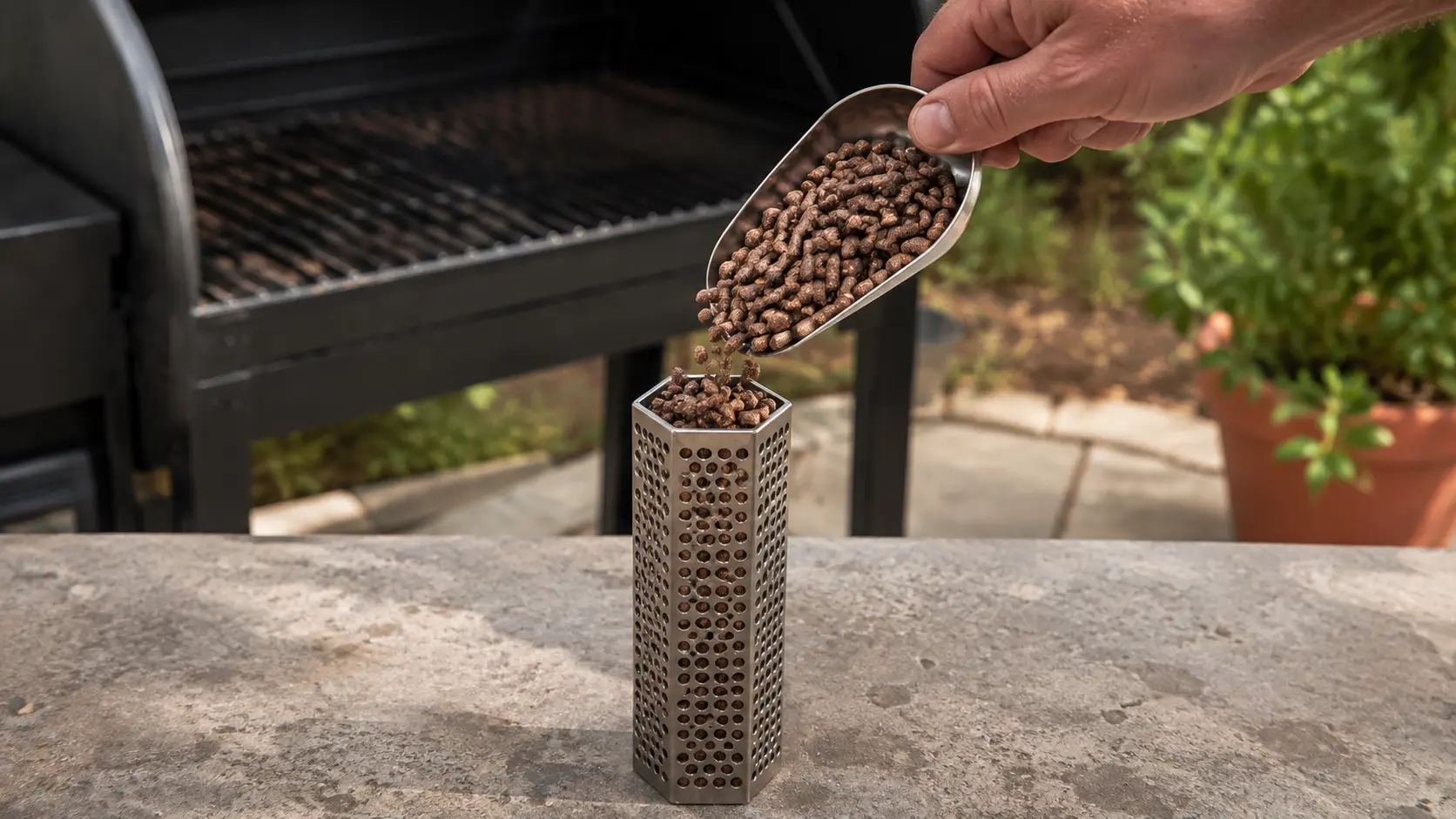
You need a stainless steel smoke tube, dry food-grade barbecue pellets, a torch or long-reach lighter approved by the tube maker, heat-resistant gloves, and a working food thermometer.
| Item | Why It Matters |
|---|---|
| Perforated smoke tube | Holds the pellets while allowing enough oxygen for a slow smolder. |
| Dry BBQ pellets | Dry pellets light more reliably and are less likely to make dirty, stale-smelling smoke. |
| Torch or suitable lighter | Creates a deep enough ember bed to keep the tube burning after the flame is blown out. |
| Gloves and long tongs | Let you position or remove hot metal without touching it. |
| Food thermometer | Confirms doneness because smoke color and cooking time cannot prove food is safe. |
Before buying another accessory, check the tube’s dimensions against the usable space in your grill. A longer tube may hold more pellets, but it also takes up more room. Burn time varies with tube size, pellet condition, wind, and airflow, so treat any advertised time as an estimate.
If you are building a practical setup, see this guide to useful pellet grill accessories. A dependable thermometer and dry pellet storage usually matter more than collecting a shelf full of gadgets.
How Do You Use a Smoke Tube in a Pellet Grill?
Preheat the grill, fill and light the tube outdoors, establish a strong ember bed, extinguish the open flame, then place the smoldering tube safely beside the food and cook as usual.
Step 1: Clean the Grill and Check Airflow
Start with a cold grill. Remove excess ash from the fire pot and scrape heavy grease from the drip tray according to your grill manual. A smoke tube needs oxygen, and a grease-loaded cooker is not where you want a second live ember source.
Make sure the exhaust is open and unobstructed. Do not seal vents in an attempt to trap more smoke. Smoke should move across the food and leave the cooker.
Step 2: Preheat the Pellet Grill
Start the pellet grill exactly as its manufacturer directs. Let it complete its normal ignition cycle and settle near the cooking temperature. For many low-and-slow meals, 225–250°F is a practical range, but the recipe and cut of food should determine the setting.
The grill and smoke tube are separate systems. The grill makes controlled heat; the tube adds flavor. Do not turn off the grill when raw meat is cooking just because the smoke tube is lit.
Step 3: Fill the Tube With Dry Pellets
Stand the tube with its open end up and pour in dry, food-grade hardwood barbecue pellets. Gently tap the side once or twice to settle them, but do not crush or tightly ram them into the tube. Air must move between the pellets.
A full tube is not required. If this is your first try, fill only part of it so you can learn how much smoke your food and family prefer. Light the filled end so the smolder travels through the pellets that are actually in the tube.
Step 4: Light One End and Build an Ember Bed
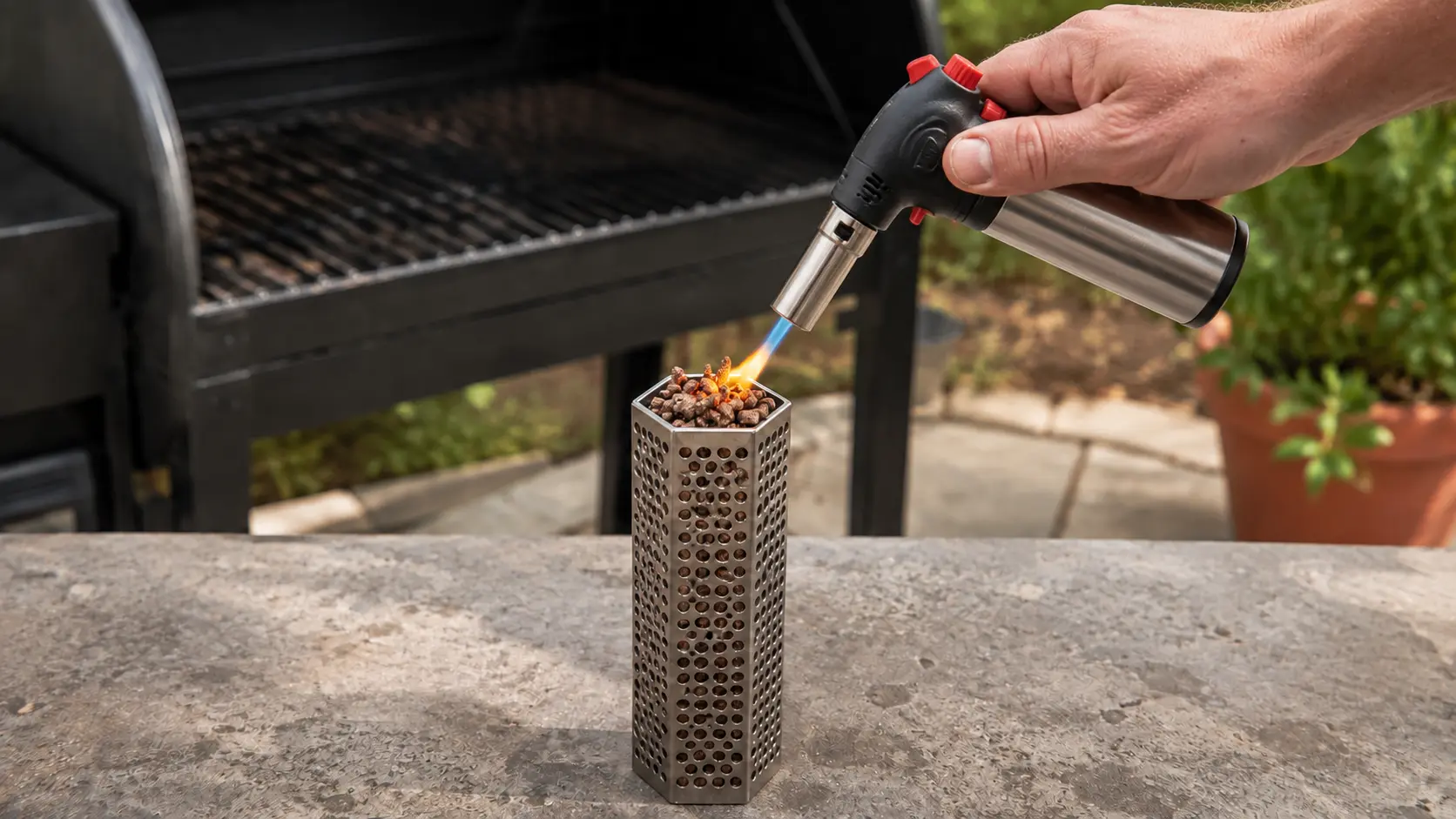
Place the tube upright on a stable, noncombustible surface outdoors or on a cool grill grate. Point the torch into the pellets at the open end for roughly 30–45 seconds, or follow the instructions supplied with your tube. Keep your face, clothing, pellet hopper, grease bucket, and anything flammable away from the flame.
Let the pellets burn with a visible flame for about 5–10 minutes. This is not wasted time. It builds the bed of glowing pellets that keeps the tube from going out as soon as you close the lid.
Step 5: Blow Out the Flame
Gently blow out the open flame while leaving the pellets glowing and smoking. The tube should smolder, not burn like a candle during the cook. Give it a minute and make sure smoke continues before moving it.
The first smoke after lighting is often pale gray or white and more visible. It should become lighter as the ember bed steadies. If it smells sharp, chemical, or unpleasant, do not put food in that smoke. Extinguish the tube, check the pellets, and start again.
Step 6: Place the Tube in the Pellet Grill
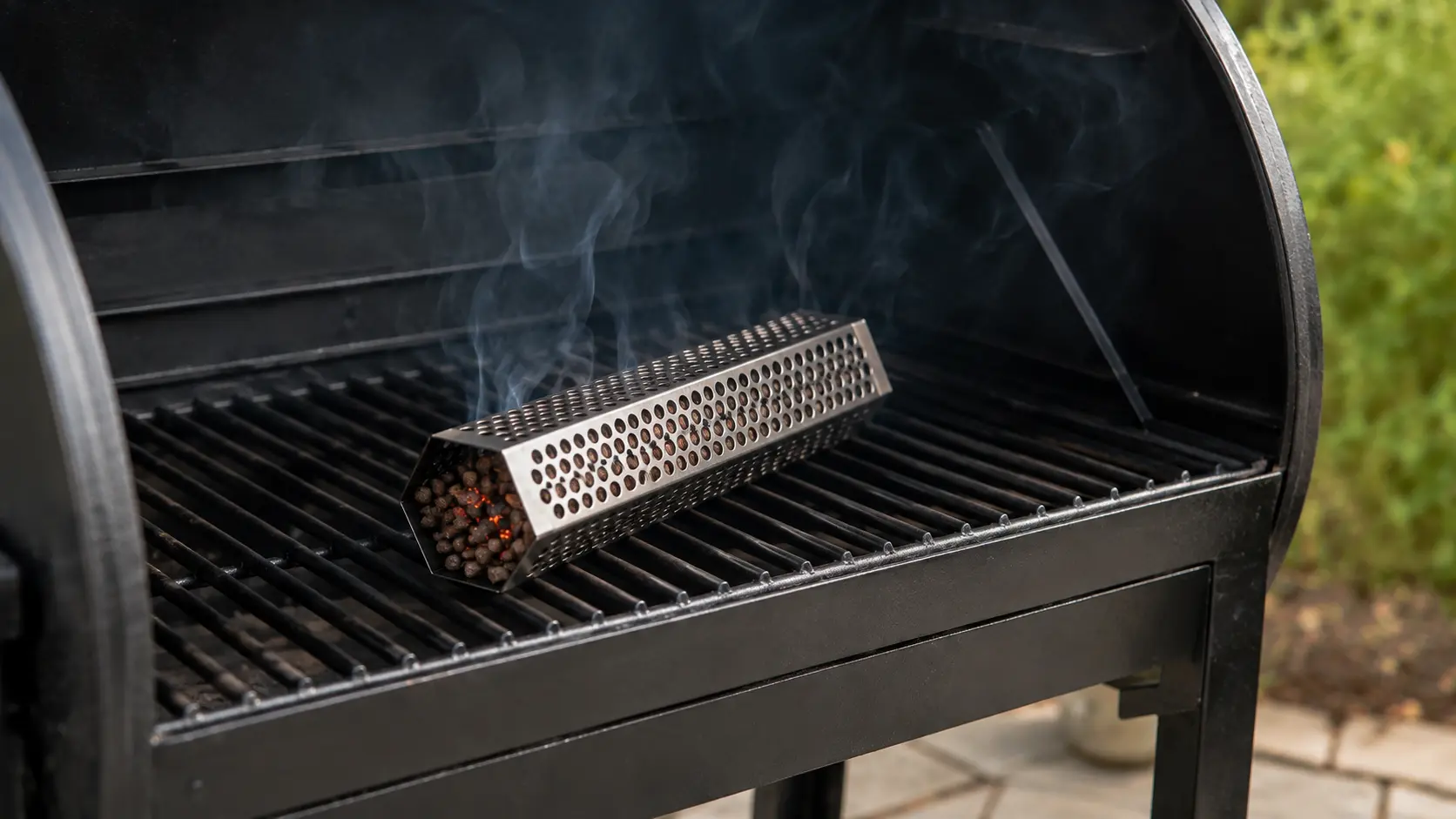
Using gloves or long tongs, lay the tube flat on a stable section of grate. Keep it away from the pellet grill’s temperature sensor, grease drain, direct flame area, and food that can drip heavily onto it.
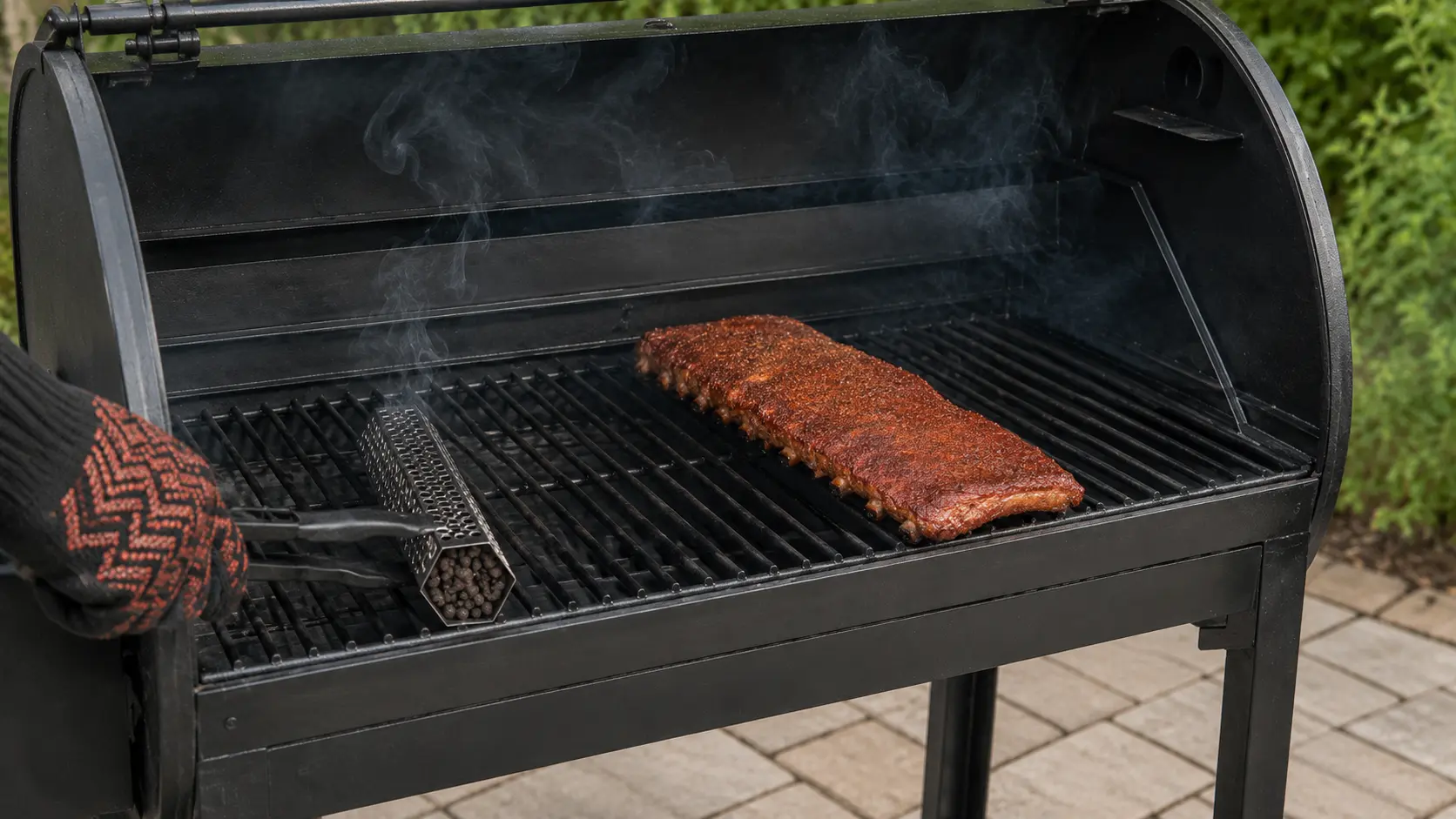
Step 7: Add the Food and Cook Normally
Place the food so the grill’s natural airflow carries smoke past it on the way to the exhaust. Close the lid and cook by temperature and tenderness, not by smoke color alone. Check the tube after 10–15 minutes the first time you use it to make sure it is still smoldering and has not flared.
Step 8: Extinguish and Cool the Tube Safely
At the end of the cook, assume the tube, ash, and remaining pellets are still hot. Close the tube in a noncombustible metal container if its manufacturer permits that method, or let it burn out in the closed outdoor grill with the grill shut down according to its manual. Do not empty hot ash into a trash can, onto a deck, or near dry grass.
Where Should a Smoke Tube Go in a Pellet Grill?
Place the tube on a level grate near one side of the cook chamber, where it receives airflow and the smoke must travel past the food before reaching the exhaust.
There is no universal left-or-right answer because pellet grills move air differently. Look for the exhaust stack, rear vents, or lid gaps. A good starting position puts the tube on the side opposite the main exhaust with the food between them.
- Keep it beside the food, not directly underneath it. Grease can drip through the grate and cause bitter smoke, extinguish the pellets, or contribute to a flare-up.
- Do not crowd the temperature sensor. Heat from the tube is modest, but placing it against a sensor can affect what the controller reads.
- Do not rest it where it can roll. A hexagonal or flattened tube is useful because it stays in place more easily.
- Leave breathing room around the holes. Foil, pans, and food should not block the tube’s air supply.
If the tube repeatedly goes out in one location, move it closer to a normal air path rather than opening the pellet grill repeatedly. Frequent lid opening disrupts the grill temperature and extends the cook.
How Do You Get Cleaner Smoke From a Smoke Tube?
Use dry pellets, build a strong ember bed, maintain normal ventilation, and wait for the heavy startup smoke to settle before exposing the food to it.
People often call the ideal result “thin blue smoke,” but it may not look bright blue. In daylight it can appear light gray, faint blue, or almost invisible. Smell is useful too: clean smoke should smell like the wood, not like a wet campfire or an ashtray.
Some visible white smoke at startup is normal. The trouble is a dense white cloud that continues rolling from the cooker. That usually points to damp pellets, weak ignition, restricted airflow, grease contamination, or too much smoldering fuel for the chamber.
Use these fixes in order:
- Replace soft, swollen, crumbly, or musty pellets with dry pellets.
- Relight the tube and give the flame enough time to establish glowing coals.
- Make sure the grill exhaust and the holes in the tube are clear.
- Move the tube away from a pan, wall, or corner that starves it of air.
- Use fewer pellets or a shorter smoking period on a small grill.
For more on fuel quality, read this guide to choosing wood pellets for grilling and smoking. Never use home-heating pellets; their wood source, binders, or additives may not be intended for cooking.
How Much Extra Smoke Should You Add?
Start with a partially filled tube or a short smoke period, then add more on a later cook if the flavor is too mild.
Smoke flavor builds during the cook, and you cannot remove it after the food turns bitter. A long brisket or pork shoulder can usually handle a longer smoke period than fish, boneless chicken, vegetables, or a pan of macaroni and cheese.
For a first cook, a useful approach is to smoke mild foods for 30–60 minutes and larger beef or pork cuts for 1–2 hours, then judge the finished flavor. These are starting points, not doneness times. Your tube, pellets, cooker size, airflow, and taste will change the result.
You can also control intensity by moving the food farther from the tube, choosing a milder wood, or waiting until the harsh startup smoke clears before loading the food. Do not close the exhaust to make smoke stronger.
Which Pellets Work Best in a Smoke Tube?
Dry, food-grade hardwood barbecue pellets work best; choose the wood species according to the food and the strength of smoke you enjoy.
| Wood | General Flavor | Good Starting Uses |
|---|---|---|
| Oak | Balanced and medium | Beef, pork, burgers, mixed cooks |
| Hickory | Strong and savory | Pork shoulder, ribs, beef |
| Apple | Mild and lightly sweet | Chicken, pork, fish, vegetables |
| Cherry | Mild, fruity, and rich | Poultry, pork, ribs |
| Mesquite | Very bold and earthy | Beef in short, controlled doses |
The pellets in the smoke tube do not have to match the pellets in the grill hopper. A mild hopper blend with a stronger oak or hickory tube is an easy way to raise smoke intensity. For a first attempt, avoid filling the grill and tube with the strongest wood available. You are trying to learn the difference the tube makes.
Which Pellet-Cooked Foods Benefit Most From a Smoke Tube?
Large beef and pork cuts benefit most because their long cook times and stronger flavors can handle extra smoke, while mild foods need shorter exposure.
| Food | Suggested Approach | What to Watch |
|---|---|---|
| Brisket and beef roasts | Start with oak or hickory during the early part of the cook. | Heavy mesquite can become sharp if used too long. |
| Pork shoulder and ribs | Try hickory alone or blended with apple or cherry. | Do not mistake dark, dirty-smoke buildup for good bark. |
| Chicken and turkey | Use apple or cherry and begin with a short smoke period. | Poultry skin can pick up bitter smoke quickly. |
| Fish | Choose mild wood and very limited exposure. | Thin pieces can become over-smoked before they are overcooked. |
| Vegetables and side dishes | Use a partial tube and taste before increasing smoke next time. | Uncovered fats and sauces can absorb smoke rapidly. |
Above roughly 250°F, many pellet grills burn cleaner and the food spends less time in smoke. A tube can keep adding smoke independently, but that does not mean every high-temperature cook needs one. Burgers, steaks, and thin chops may get enough flavor from a short smoke period before the final sear.
Pellet grills differ in airflow and smoke output. This Traeger and Green Mountain pellet grill comparison explains why fuel condition, cooking temperature, smoke settings, and the owner’s process can matter as much as the brand name.
What Are the Most Common Smoke Tube Mistakes?
The biggest mistakes are using damp or unsafe pellets, failing to establish an ember bed, restricting airflow, placing the tube under greasy food, and assuming more smoke always tastes better.
Using Damp Pellets
Moisture can make pellets swell, crumble, burn unevenly, or go out. If they feel soft or smell musty, replace them. Store cooking pellets in a sealed container in a dry location.
Blowing Out the Flame Too Soon
A tiny surface flame may not ignite enough pellets to support a long smolder. Give the tube time to build a glowing bed before you blow out the flame.
Choking the Airflow
Closing vents or wedging the tube tightly against a pan starves the pellets of oxygen. Keep the grill’s normal exhaust path open and leave space around the perforations.
Putting the Tube Under Dripping Meat
Grease landing on hot pellets can make acrid smoke or contribute to a fire. Set the tube to the side and use the grill’s grease-management system as designed.
Using a Full Tube on Every Food
A full tube may be useful for a large pork shoulder, but it can overwhelm fish, vegetables, poultry, or leftovers. Begin with less and keep notes about the wood, fill level, time, and result.
Using Smoke to Hide a Dirty Grill
Old grease and carbon do not create good barbecue flavor. Extra smoke cannot fix rancid buildup, a clogged fire pot, or pellets contaminated by moisture.
Is It Safe to Use a Smoke Tube With Raw Meat?
Yes, when the pellet grill is operating at a proper cooking temperature and a food thermometer confirms safe internal temperature; the smoldering tube alone is not a safe heat source for raw meat.
The USDA warns that low-temperature smoking can let food remain too long in the 40–140°F “Danger Zone,” where bacteria can multiply. Follow a tested cooking method, keep raw food refrigerated until the grill is ready, and use a thermometer rather than color, smoke ring, bark, or elapsed time to decide whether food is safe.
| Food | USDA Safe Minimum |
|---|---|
| Whole cuts of beef, pork, veal, and lamb | 145°F, followed by at least a 3-minute rest |
| Ground beef, pork, veal, and lamb | 160°F |
| All poultry, including ground poultry | 165°F |
| Fish with fins | 145°F |
| Leftovers and casseroles | 165°F |
Read the current USDA guidance for smoking meat and poultry and its safe minimum internal temperature chart. Manufacturer instructions for your exact grill and smoke tube also take priority over generic placement advice.
Cold-smoking is a separate food-preservation subject. Do not turn off the pellet grill and cold-smoke raw meat with only a tube unless you are following a research-based curing and cold-smoking procedure. This article is about adding smoke while the food is being cooked safely.
A Simple First-Cook Setup
- Set the pellet grill to the temperature required by your recipe.
- Half-fill the tube with dry oak pellets.
- Build a strong ember bed, blow out the flame, and wait for the startup smoke to thin.
- Place the tube beside—not beneath—the food.
- Use one hour of extra smoke, then judge the finished food before increasing it next time.
Is a Smoke Tube Worth Using in a Pellet Grill?
A smoke tube is worth using when you like the convenience of a pellet grill but want a stronger smoke profile, especially on brisket, pork shoulder, ribs, and other low-and-slow cooks.
It is inexpensive, simple, and adjustable. It will not turn a pellet grill into a stick burner, and it cannot replace good pellets, a clean cooker, or sound fire management. What it can do is move pellet-cooked food one useful step toward a fuller wood-smoke flavor.
The best approach is restraint. Use dry fuel, light it thoroughly, let the first heavy smoke settle, and begin with a shorter exposure. If the meal tastes pleasantly smoky instead of bitter, you used enough.
Frequently Asked Questions
Can You Use a Smoke Tube in Any Pellet Grill?
Most pellet grills can accommodate a smoke tube if there is stable grate space, adequate airflow, and a safe location away from grease and the temperature sensor. Check both manufacturers’ instructions before use.
Do You Leave the Flame Burning on a Smoke Tube?
No. Let a visible flame burn long enough to establish glowing pellets, then blow it out. The pellets should continue smoldering and producing smoke without an open flame.
Why Does My Pellet Smoke Tube Keep Going Out?
The usual causes are damp pellets, an ember bed that was not fully established, clogged tube holes, or poor airflow. Use fresh dry pellets, light them longer, and move the tube away from walls or pans that block oxygen.
Can You Put Wood Chips in a Pellet Smoke Tube?
Some tube makers allow a pellet-and-chip mixture, but others specify pellets. Follow the instructions for your model. Pellets generally feed the smolder more consistently; loose chips alone may burn unevenly or go out.
Can a Smoke Tube Make Food Taste Bitter?
Yes. Too much smoke, damp fuel, restricted airflow, grease hitting the pellets, or prolonged thick white smoke can leave a bitter or ashy taste. Use less fuel and correct the combustion problem rather than trapping more smoke.
Can You Cold-Smoke Meat With Only a Smoke Tube?
Do not cold-smoke raw meat with only a smoke tube unless you are following a research-based curing and cold-smoking process. A smoke tube adds smoke but does not supply enough controlled heat to cook raw meat safely.
Bottom Line
For more smoke flavor from pellet-cooked food, fill a tube with dry cooking pellets, establish a strong ember bed, blow out the flame, and place the smoldering tube safely in the grill’s airflow. Keep the pellet grill running, use a thermometer, and start with less smoke than you think you need. Clean, controlled smoke improves food; a chamber full of heavy smoke usually does not.
About Frank W. Roberts
Frank W. Roberts has grilled since 1970 and writes Everything Grill Reviews to help ordinary backyard cooks get better results without wasting money. This guide separates the smoke tube’s flavor job from the pellet grill’s cooking and food-safety job. It does not claim a laboratory test or a comparison of every smoke-tube brand.
Related Pellet Grill Guides
Pellet Grill Accessories
The useful tools for smoke, temperature control, maintenance, and safer cooking.
Wood Pellets for Grilling
How pellet quality and wood choice affect flavor, ash, and smoke.
Top Pellet Grills Compared
Compare pellet cookers for smoke performance, convenience, build, and value.
How to Use a Smoke Tube in a Pellet Grill for More Smoke Flavor
Best for: Backyard grill buyers
A solid option worth comparing before you buy.
Check Price on Amazon (paid link)