
How to Get More Smoke Flavor From a Pellet Grill
Best for: Backyard grill buyers
A solid option worth comparing before you buy.
Check Price on Amazon (paid link)As an Amazon Associate I earn from qualifying purchases.
Updated: September 6, 2026
Last verified: September 6, 2026
A pellet grill can produce stronger smoke flavor, but the best results come from adding clean smoke early instead of trying to make the cooker pour out thick white smoke all day. Start with fresh, dry pellets, cook at 225°F during the early part of the cook, use a stronger wood when it fits the food, and keep the lid closed. If that still tastes too mild, a properly lit pellet smoke tube is the simplest way to add another layer of smoke.
Quick Answer: To get more smoke flavor from a pellet grill, use fresh dry pellets, start fully thawed food at 225°F, keep it unwrapped during the early smoke period, try the upper rack, and add a pellet smoke tube if needed. Aim for clean, light smoke—not thick white smoke.
Food and fire safety: Use a pellet grill and smoke tube outdoors only, follow the grill and accessory manuals, and never leave a live cooker unattended. USDA guidance recommends keeping a smoker between 225°F and 300°F and using fully thawed food plus a food thermometer. If your grill has a manufacturer-approved smoke mode below 225°F, follow that model’s instructions and then return to the proper cooking temperature.
Why Does Pellet-Grill Food Sometimes Taste Lightly Smoked?
Pellet-grill food often tastes lightly smoked because the cooker burns a small, controlled fire with forced airflow. That steady, efficient combustion is excellent for temperature control, but it normally produces a cleaner and milder flavor than a charcoal cooker or a wood-burning offset.
The difference becomes more noticeable at higher cooking temperatures. A pellet grill feeds fuel faster to create heat, and the hotter fire usually burns with less smoldering. Food also finishes sooner, leaving less time for smoke to build on the surface. A chicken cooked entirely at 350°F may pick up a pleasant wood-fired background, but it will not usually taste like chicken that spent hours beside a wood fire.
That is a tradeoff, not necessarily a defect. Pellet grills exchange some smoke intensity for easy startup, steady heat, and less fire tending. My comparison of pellet-grill smoke versus charcoal smoke explains why the two fuels do not produce the same flavor.
What Is the Best Plan for Stronger Smoke Flavor?
The best general plan is to build clean smoke during the first part of the cook and then raise the temperature when the food needs more heat. For most backyard cooks, 225°F is the sensible starting point because it produces useful smoke while staying within USDA’s general smoker-temperature guidance.
| Stage | What to Do | Why It Helps |
|---|---|---|
| Before lighting | Check the firepot, grease path, pellets, and hopper. | Clean airflow and dry fuel support dependable combustion. |
| Early smoke period | Cook fully thawed, refrigerator-cold food at 225°F, or use the grill’s approved smoke mode as directed. | The lower heat gives the food more time around smoke before the surface dries and the cook advances. |
| Middle of the cook | Continue unwrapped until the color and bark are where you want them. | Foil blocks additional smoke from reaching the food. |
| Finishing stage | Raise the temperature when needed and cook to safe internal temperature and the proper texture. | Smoke flavor is important, but food safety and a properly finished cook come first. |
Traeger gives similar manufacturer guidance for weak smoke flavor: cook at a lower temperature for longer, use an upper rack when available, and turn on Super Smoke if the grill has it. Weber recommends using SmokeBoost near the beginning of a low-and-slow cook rather than treating it as the temperature for the entire cook.
How Do You Get More Smoke Flavor From a Pellet Grill Step by Step?
Get more smoke flavor by correcting fuel, airflow, temperature, placement, and timing in that order. The following steps work with the pellet grill instead of fighting its controller.
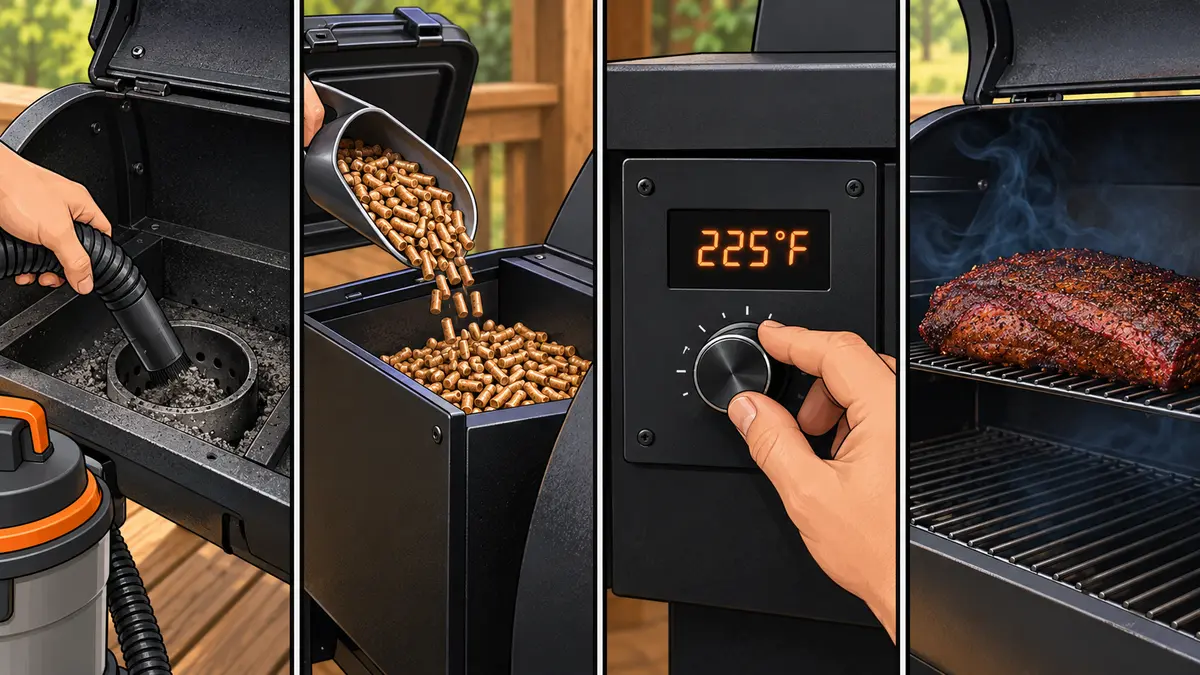
- Clean the firepot before blaming the pellets. Let the grill cool completely and disconnect power before cleaning. Remove excess ash according to the manual and make sure the grease route is not obstructed. A neglected firepot can produce poor ignition, unstable combustion, or dirty smoke rather than better flavor.
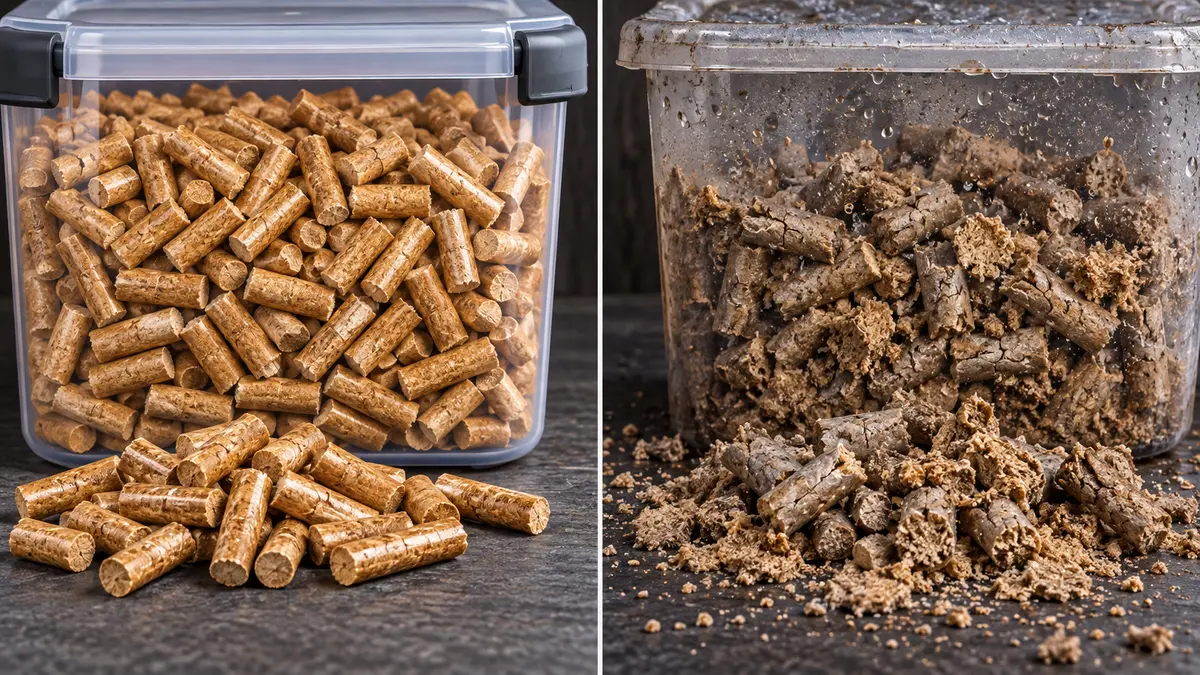
- Load fresh, dry cooking pellets. Good pellets should feel firm rather than swollen or spongy. Pellets that crumble easily or leave unusual amounts of damp sawdust may have absorbed moisture. Store opened pellets in a dry, tightly sealed container instead of trusting an opened paper or plastic bag in humid air.
- Choose a wood strong enough for the food. Oak is a dependable middle ground. Hickory gives pork, ribs, and beef a more obvious smoke profile. Mesquite is stronger and is usually easier to control as part of a blend. Apple and cherry are useful for color and a gentler flavor, but they may be too mild when the complaint is that the food hardly tastes smoked.
- Put fully thawed food on while it is still refrigerator-cold. Do not leave meat on the counter trying to warm it up. Weber recommends applying its low-temperature SmokeBoost early, when food is still cold and raw. This early period is the best time to build the first layer of flavor without extending a low-temperature cook unnecessarily.
- Begin at 225°F for ordinary low-and-slow cooking. A pellet grill generally creates more smoke at the lower end of its cooking range than it does at roasting temperatures. If your exact grill provides a lower smoke setting or a named mode such as Super Smoke or SmokeBoost, use it only as the manual directs. Do not assume every controller works the same way.
- Use the upper rack when the grill has one. The upper rack can keep the food farther from the firepot and closer to the circulating smoke. It also reduces some direct radiant heat from the grease tray, which can help the early stage move more slowly. Leave enough room around the food for air and smoke to circulate.
- Keep the lid closed. Opening the lid releases heat and smoke, then makes the controller feed more pellets while it recovers. Use a food probe and look only when you need to check color, moisture, or bark. Constant peeking does not create more smoke flavor.
- Wait to wrap until the bark and smoke flavor have developed. Foil is a strong barrier. Butcher paper breathes more, but it still reduces direct smoke contact. If the meat needs more smoke, do not wrap automatically just because a clock or recipe says it is time. Judge the surface first, then wrap when the color and bark are ready.
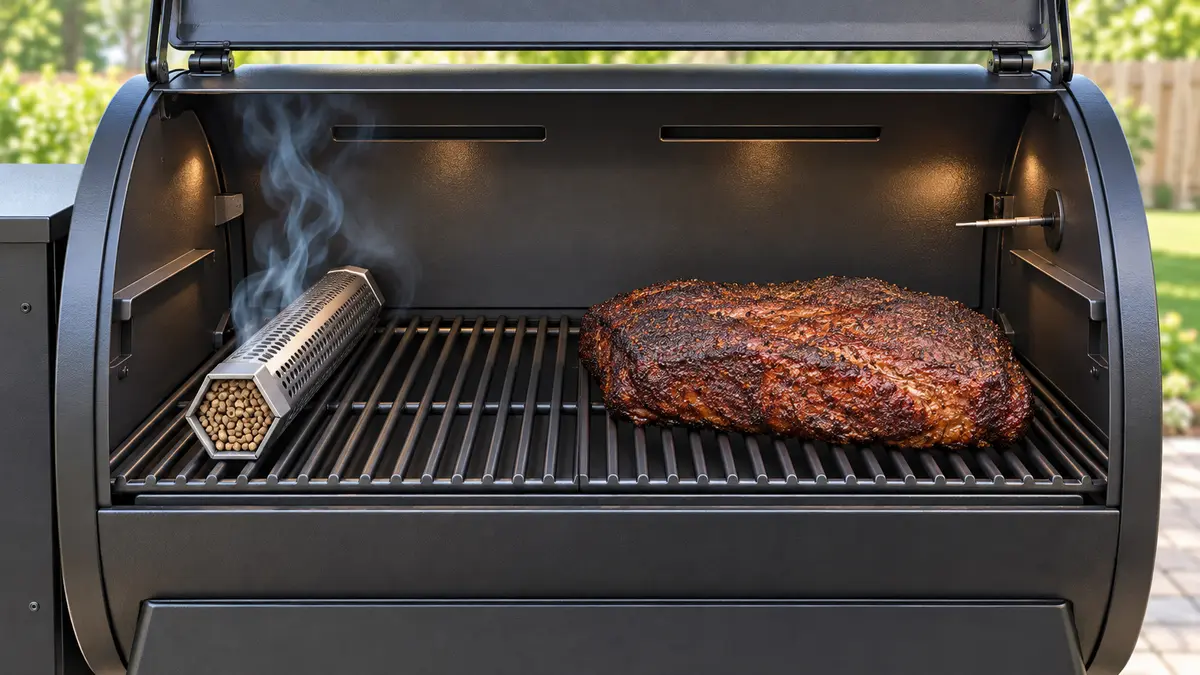
- Add a pellet smoke tube when the grill alone is still too mild. A smoke tube adds a separate bed of smoldering pellets without asking the controller to run poorly. Light and position it according to the tube maker’s directions, keep it away from dripping grease, and verify that it is smoldering rather than carrying an open flame.
- Raise the heat to finish the food correctly. After the early smoke period, increase the set temperature if the cut, skin, bark, or schedule requires it. Use a calibrated food thermometer. More time in smoke does not excuse undercooked food, and low heat for an entire poultry cook can leave the skin rubbery.
Change one major variable at a time. If you switch pellet brands, lower the temperature, move the food, spritz constantly, and add a smoke tube on the same cook, you will not know which change helped or which one made the food bitter.
Which Pellets Produce the Strongest Smoke Flavor?
Hickory and mesquite generally produce the boldest familiar barbecue flavor, while oak gives a balanced smoke that is easier to use across many foods. Fruitwoods such as apple and cherry are usually milder. Pellet formulas vary by brand, so the wood named on the bag does not guarantee identical flavor from every manufacturer.
| Pellet Wood | General Smoke Strength | pellet-smoke-tube-placementPractical Starting Point |
|---|---|---|
| Oak | Medium | Beef, pork, poultry, and general-purpose cooking |
| Hickory | Medium to strong | Ribs, pork shoulder, bacon, and beef |
| Mesquite | Strong | Beef or a blend when a long cook could become overpowering |
| Pecan | Medium | Pork, poultry, and beef when hickory seems too sharp |
| Apple or cherry | Mild | Poultry, pork, fish, and cooks where a lighter profile is wanted |
| Competition blend | Medium, depending on formula | A balanced first choice when one single wood seems too mild or too strong |
Read my guide to the best wood pellets for grilling before buying several bags. Freshness, how the pellets were stored, and the actual blend can matter as much as the large flavor name printed on the front.
Do Dry Pellets Really Affect Smoke Flavor?
Yes. Dry pellets feed and ignite more reliably, while moisture-compromised pellets may crumble, swell, create excess sawdust, or burn poorly. Traeger advises storing pellets in a dry, airtight container because humidity can compromise pellet quality, even when a bag has only recently been opened.
Do not try to rescue damp pellets inside a kitchen oven or microwave. Discard pellets that are swollen, wet, musty, or breaking down badly. A bag of pellets costs less than an auger cleanup or a ruined cook.
Does a Pellet Smoke Tube Make a Real Difference?
Yes, a pellet smoke tube can noticeably increase smoke exposure in a pellet grill, especially when the grill’s controller burns very cleanly. It is supplemental smoke, not a conversion that makes the cooker behave exactly like a wood-burning offset.
A tube is most useful after the basic problems have been corrected. If the firepot is full of ash or the hopper contains damp pellets, adding another smoke source covers up the maintenance problem instead of fixing it.
How Do You Use a Smoke Tube Safely in a Pellet Grill?
Use a smoke tube only outdoors and follow its manufacturer’s lighting and placement directions. The basic sequence is simple:
- Fill the tube with dry cooking pellets without packing them so tightly that air cannot move.
- Place the tube on a fire-safe surface and light the open end as the manufacturer directs.
- Let the flame establish for the specified time, then extinguish the visible flame so the pellets smolder.
- Place the tube securely on the cooking grate where it cannot roll, spill, block a sensor, or sit under heavy grease drips.
- Close the grill and confirm that the tube continues to smolder. Monitor the cooker throughout use.
Do not put loose wood chips, chunks, charcoal, or pellets directly into the pellet grill’s hopper or firepot unless the grill manufacturer specifically permits it. The auger, igniter, fan, and controller were designed around the approved fuel. A separate smoke tube keeps the supplemental fuel out of that system.
Does a Water Pan or Spritz Add More Smoke Flavor?
A water pan or light spritz may help keep the cooking environment or food surface from drying too quickly, but neither one creates smoke. Their effect is smaller than using dry pellets, lower early heat, proper airflow, and enough unwrapped time.
If you spritz, wait until the seasoning has set and use a light application. Opening the lid every 15 or 20 minutes loses more heat and smoke than the spritz is likely to help. A water pan can be useful in some cooks, but it also takes up grate space and absorbs heat. Use it because the food or cooker needs moisture control, not because somebody promised it would double the smoke flavor.
Should You Chase Thick White Smoke?
No. Thick white smoke is not proof of stronger or better barbecue flavor. A short cloud during ignition can be normal, but persistent heavy smoke may point to damp fuel, incomplete combustion, restricted airflow, or a dirty firepot.
The better target is clean smoke that may look thin, pale blue, or almost invisible once the grill settles. Too much stale smoke can leave meat bitter or ashy. My guide to thin blue smoke versus white smoke explains how to tell a clean fire from a dirty one.
What Should You Check When the Smoke Still Tastes Weak?
Check cooking temperature, pellet condition, wood strength, firepot cleanliness, food placement, wrapping time, and smoke-mode operation before assuming the grill is defective.
| What You Notice | Likely Explanation | First Safe Check |
|---|---|---|
| Very little visible smoke, but the grill holds temperature | Clean pellet smoke can be difficult to see, especially after startup. | Taste the food before deciding that no visible cloud means no smoke. |
| Food tastes mild after a hot, fast cook | High heat and short cooking time limited smoke exposure. | Start lower, then raise the heat to finish. |
| Smoke tube repeatedly goes out | Pellets may be damp, the tube may not be fully lit, or airflow may be weak. | Use dry pellets and repeat the tube maker’s lighting directions. |
| Heavy white smoke continues well after startup | Moisture, ash buildup, poor ignition, or an airflow problem may be causing dirty combustion. | Shut down safely if operation appears abnormal, let the grill cool, and inspect it according to the manual. |
| Food tastes bitter or ashy | The smoke may be dirty, the smoke tube may be overdoing it, or ash may be circulating. | Clean the cooker and shorten or remove the supplemental-smoke period. |
| Smoke mode will not activate | The selected temperature may be outside the mode’s allowed range, or the controller may need attention. | Check the exact model manual before changing parts or settings. |
If ash, grease, or old debris may be interfering with the cook, use the complete pellet-grill cleaning guide. Disconnect power and let the cooker cool completely before removing internal parts or vacuuming ash.
Which Mistakes Reduce Pellet-Grill Smoke Flavor?
The biggest mistakes are cooking too hot from the beginning, using compromised pellets, wrapping too early, opening the lid constantly, and assuming more visible smoke is always better.
- Cooking the entire meal at roasting temperature: This shortens the smoke period and usually produces a milder result.
- Using damp or crumbling pellets: Poor fuel can cause unreliable feeding, ignition, heat, and smoke.
- Choosing only a mild fruitwood: Apple or cherry may be pleasant but too gentle for a person expecting bold hickory-style barbecue.
- Wrapping by the clock: Wrapping before the bark and color develop cuts off direct smoke contact.
- Opening the lid repeatedly: Every look releases the cooking environment and makes the grill recover.
- Overloading the grate: Crowded food restricts circulation around the surfaces that need smoke.
- Ignoring the firepot: Supplemental smoke cannot repair bad combustion caused by neglected maintenance.
- Running a smoke tube for every minute of a long cook: More is not automatically better. Start with a shorter period and judge the flavor.
- Dumping unapproved fuel into the firepot or hopper: This can interfere with operation and create a fire risk.
What Is Frank’s Take on Stronger Pellet-Grill Smoke?
After cooking over charcoal, wood, gas, and pellet grills since 1970, my plain answer is that a pellet grill will not duplicate a stick burner’s flavor exactly. It can still make very good barbecue, and you can push the smoke flavor farther without making the food taste like an ashtray.
I would start with a clean grill, dry oak or hickory pellets, 225°F, the upper rack when it fits, and no early wrap. I would taste that result before adding anything else. If it is still too light, I would add a smoke tube during the early part of the next cook. I would not deliberately choke the grill, wet the pellets, or chase rolling white smoke. Clean smoke laid on gradually tastes better than a dirty cloud.
What Is the Final Answer?
The most dependable way to get more smoke flavor from a pellet grill is to use clean equipment, fresh dry pellets, a stronger wood, and more unwrapped time at 225°F early in the cook. Use the upper rack and the grill’s approved smoke setting when available. Add a correctly operated smoke tube only when the grill’s normal smoke remains too mild.
Do not judge smoke by how dramatic it looks. Judge it by whether the food develops a clean wood flavor without bitterness. That is the difference between improving pellet-grill barbecue and simply making more smoke.
Frequently Asked Questions
What Temperature Produces the Most Smoke on a Pellet Grill?
A pellet grill generally produces more smoke near the low end of its operating range, commonly around 180°F to 225°F depending on the controller. For general home smoking, 225°F is the safer starting point because USDA recommends smoker air temperatures of 225°F to 300°F. Use lower manufacturer-approved smoke modes only as directed for your exact grill.
Does Meat Stop Taking on Smoke at 140°F?
No hard switch makes meat stop collecting smoke flavor at exactly 140°F. Smoke can continue to settle on an exposed surface, although the early part of the cook is especially useful because the meat starts cold and the surface has not yet dried or been wrapped. Do not confuse smoke-flavor buildup with formation of the pink smoke ring; they are not the same thing.
Can You Use a Smoke Tube While the Pellet Grill Is Running?
Yes, many pellet smoke tubes are designed to smolder on the grate while the pellet grill operates normally. Follow both manuals, place the tube where it cannot roll or collect grease, and confirm that the lighting flame has been extinguished before closing the grill.
Can You Oversmoke Food on a Pellet Grill?
Yes. A smoke tube, strong pellets, dirty combustion, and a long unwrapped cook can combine to make food bitter or ashy. Begin with a limited supplemental-smoke period, keep the fire clean, and adjust the next cook based on taste.
Is Hickory or Mesquite Better for More Smoke Flavor?
Hickory is the easier bold choice for ribs, pork shoulder, bacon, and many beef cooks. Mesquite is stronger and can become sharp during a long cook, so many backyard cooks prefer it in a blend or for beef. Pellet-brand formulas differ, which is why two bags with the same wood name may not taste identical.
Why Is There No Visible Smoke Coming From My Pellet Grill?
A properly burning pellet grill may produce smoke that is thin and difficult to see once startup is complete. If the grill holds temperature and the food develops clean wood flavor, the lack of a white cloud is not a problem. Investigate when smoke flavor disappears along with ignition trouble, temperature problems, unusual noises, or controller errors.
Should I Put Frozen Meat on the Grill So It Smokes Longer?
No. USDA advises fully thawing meat and poultry before smoking because frozen food can take too long to reach a safe internal temperature. Use fully thawed food straight from the refrigerator, keep the cooker at a safe temperature, and verify doneness with a food thermometer.
Related Pellet-Grill Guides
- Thin Blue Smoke vs White Smoke for Barbecue Cooking
- Pellet Grill Smoke vs Charcoal Smoke: Which Tastes Better?
- Best Wood Pellets for Grilling
- Complete Guide to Cleaning Your Pellet Grill
Sources
- USDA Food Safety and Inspection Service: Smoking Meat and Poultry
- Traeger Support: Not Enough Smoke
- Weber Support: How to Use SmokeBoost
- Traeger Support: Pellet Condition and Storage
About Frank W. Roberts: Frank has grilled since 1970 and has more than 50 years of experience cooking with live fire, charcoal, gas, wood, and pellet grills. He focuses on practical methods that help real backyard cooks get better results without pretending every cooker works the same way.
SHORT DECISION NOTE ——————- Search intent: Help pellet-grill owners get a stronger but clean smoke flavor without unsafe controller tricks or bitter white smoke. Article type: Troubleshooting / how-to. Main conclusion: The best first improvements are dry pellets, clean airflow, stronger wood, 225°F during the early unwrapped stage, and upper-rack placement. A properly operated smoke tube is the next step when the grill alone remains too mild.
Pit Boss Competition Blend 100% All Natural Hardwood BBQ Pellets, 15 lb Bag
Best for: Backyard grill buyers
A solid option worth comparing before you buy.
Check Price on Amazon (paid link)