
Updated: October 23, 2026
Updated and fact-checked: October 23, 2026
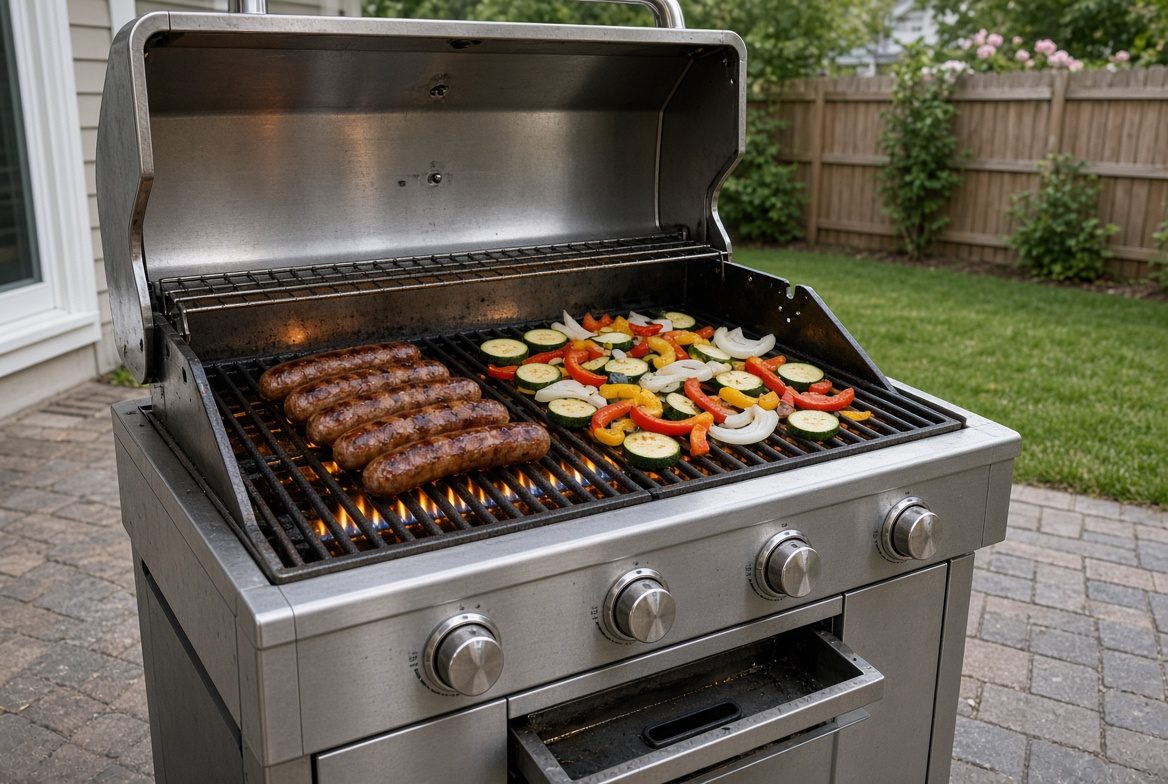
Gas grill sausage and vegetables cook cleanly at 375°F on a two-zone setup. Fresh sausage is done at 160°F internal. Vegetables finish when they are tender with light browning. The whole meal usually takes 25 to 40 minutes after the grill is preheated, but thickness and outdoor temperature change the clock.
Quick Answer: How Do You Grill Sausage and Vegetables on a Gas Grill?
Preheat to 375°F, use medium direct heat with a cooler zone if you can, and probe the sausage to 160°F. Cut onions, peppers, and zucchini into even pieces, toss them with oil and salt, and cook them on a pan or basket beside the links. Fully cooked smoked sausage only needs to be heated through. Fresh raw sausage must hit the USDA ground-meat minimum.
Key Points
- 375°F is a practical set point for both fresh sausage and most vegetables on a gas grill.
- Fresh sausage (pork, beef, or mixed) reaches the USDA safe minimum at 160°F internal. Poultry sausage is 165°F.
- A cooler zone or grill pan keeps vegetables from burning while the sausage finishes.
- Time is an estimate. Probe the thickest part of a link; do not rely on color or the clock alone.
- Refrigerate leftovers within 2 hours and reheat any mixed dish to 165°F.
What Temperature and Setup Work Best?
375°F with the lid closed and a two-zone layout gives the most control. Light one or two burners to medium for direct heat and leave at least one burner off or low so you can move food during a flare-up. Gas grills preheat faster than charcoal, so 10 to 15 minutes with the lid down is usually enough. An even grate and a clean grease tray matter more here than a side burner. For zone control basics, see the site’s guide to two-zone grilling on charcoal or gas.
If your grill runs hot or the links are thin, drop the burners a notch rather than chasing a higher number. Thick bratwurst or Italian sausage can sit over the medium zone the whole time; small pieces of vegetable move more easily.
Ingredients and Equipment
This is a one-grill meal for 4 people. Adjust amounts for the size of your grate.
- 1½ pounds fresh sausage links (Italian, bratwurst, or plain pork—check the label for raw versus fully cooked)
- 1 medium onion, cut into wedges or thick slices
- 2 bell peppers, seeded and sliced into strips
- 1 medium zucchini, sliced into ½-inch rounds
- 1–2 tablespoons oil, salt, and black pepper (or a light dry rub)
Equipment: gas grill, instant-read thermometer, tongs, and a grill pan, basket, or large sheet of perforated foil if you do not want small pieces falling through the grates. Potatoes, if you add them, need smaller cuts or a head start because they take longer than the other vegetables.
How Do You Prepare the Food?
Cut the vegetables evenly and season them before the grill is hot. Toss the onion, peppers, and zucchini with oil, salt, and pepper so the surfaces brown instead of steam. Leave the sausage links whole. If the package says the sausage is already fully cooked, you only need to heat it through; the 160°F target applies to fresh raw sausage. Keep raw sausage separate from the vegetables until it is on the grate.
Grill Setup and Cooking Steps
Preheat to 375°F, then cook the sausage over medium direct heat while the vegetables finish on a pan or the same zone. Estimated time after preheat is 25 to 40 minutes. The estimate assumes average link thickness and moderate outdoor temperature; colder weather or thicker sausage adds time.
- Preheat the grill with the lid closed until it holds near 375°F. Arrange a cooler zone if you have spare burners.
- Place the sausages on the grate over the medium burners. Put the vegetables on a grill pan, basket, or in a single layer on the grate.
- Close the lid. Turn the sausages once or twice. Stir or flip the vegetables halfway so they brown evenly.
- Move any piece that is browning too fast to the cooler zone. Fat from the sausage can flare; a clean grate and the cooler zone keep it manageable.
- Probe the thickest part of a sausage from the side. Fresh raw sausage is done at 160°F. Vegetables are ready when tender with light char.
- Pull everything off. Rest the sausages a couple of minutes before serving.
For probe placement details, the site’s thermometer guide covers how to measure sausage links and other thin foods correctly: How to Use a Meat Thermometer Correctly on a Grill or Smoker.
What Temperature Is Safe for the Sausage?
Fresh sausage made from ground beef, pork, lamb, or veal must reach 160°F internal. The U.S. Department of Agriculture lists 160°F as the safe minimum for ground meat and sausage on its Safe Minimum Internal Temperature Chart. Poultry sausage is 165°F. Fully cooked smoked sausage only needs to be heated through; treat leftovers of any mixed dish as 165°F reheats. Color is not a reliable test. A thermometer is.
Pink pork can still be safe once it has passed 145°F on whole cuts, but sausage is ground meat. The ground-meat rule is higher because bacteria can be mixed throughout. Resting is not required by the chart for ground meat, but a short rest keeps the links juicier.
Common Mistakes
Crowding thick vegetable pieces and expecting them to finish at the same moment as the sausage is the usual miss. Cut evenly, give denser vegetables smaller pieces or a head start, and use the cooler zone. Another frequent problem is leaving the lid open the whole time; the box acts like an oven only when it is closed. Skipping the thermometer and judging by color alone can leave the center of a thick link under 160°F. Keep the grease tray empty so drippings do not catch and create a sustained fire.
Leftovers and Reheating
Refrigerate within 2 hours and reheat any mixed leftovers to 165°F. Fresh sausage and vegetables keep 3 to 4 days in the refrigerator at 40°F or below. Freeze if you will not eat them in that window. Reheat covered on the grill, in a skillet, or in the oven until the center reaches 165°F. Do not rely on a warm leftover temperature.
Final Verdict: Is 375°F the Right Gas-Grill Method for Sausage and Vegetables?
Yes for most weeknight cooks. The temperature is high enough to brown the sausage and vegetables without the constant flare management of a full sear. A two-zone layout gives you an escape route when fat drips. Probe fresh sausage to 160°F, cut the vegetables evenly, and the meal comes off the grill in roughly half an hour after preheat. It is simpler than low-and-slow work and uses the strengths of a gas grill—fast preheat and adjustable burners—exactly as described in the site’s gas grill buying guide.
Frequently Asked Questions
Do I need a grill basket?
It helps with small pieces but is not required. A perforated pan, heavy foil with holes, or careful placement on the grate works. The basket mainly stops zucchini and pepper strips from falling through. Stir once either way.
Can I use fully cooked smoked sausage?
Yes. Heat it through rather than cooking it to 160°F from raw. The 160°F number is for fresh raw sausage. Smoked links that are already cooked only need to be hot. If you mix them with other foods and reheat the combination later, use 165°F.
What if the vegetables finish before the sausage?
Move them to the cooler zone or pull them off. Sausage thickness varies. The cooler zone holds the vegetables without further browning while the links reach temperature. Potatoes are the usual slow piece; cut them smaller next time.
Is this the same method as the pellet version?
The temperature and doneness target are the same; the heat source is not. The site’s 30-day pellet plan lists sausage and mixed vegetables at 375°F with the same 160°F fresh-sausage rule. Gas gives faster preheat and easier burner zoning; pellets add a light wood note if that is what you want.
Related Reading
- How to Set Up Two-Zone Grilling on Charcoal or Gas
- How to Use a Meat Thermometer Correctly on a Grill or Smoker
- 30-Day Pellet Grill Recipe Plan That Actually Works (includes the pellet sausage-and-vegetables entry)
- Gas Grill Buying Guide: How to Choose the Right Grill in 2026
About Frank W. Roberts
Frank W. Roberts is the author of Everything Grill Reviews. He has grilled since 1970 and brings more than 50 years of backyard cooking and cookoff experience to fire management, fuel behavior, smoke, and practical cooker use. This recipe is based on standard gas-grill technique and USDA doneness guidance, not a product test of any specific grill. Last verified October 23, 2026.