
Updated: October 22, 2026
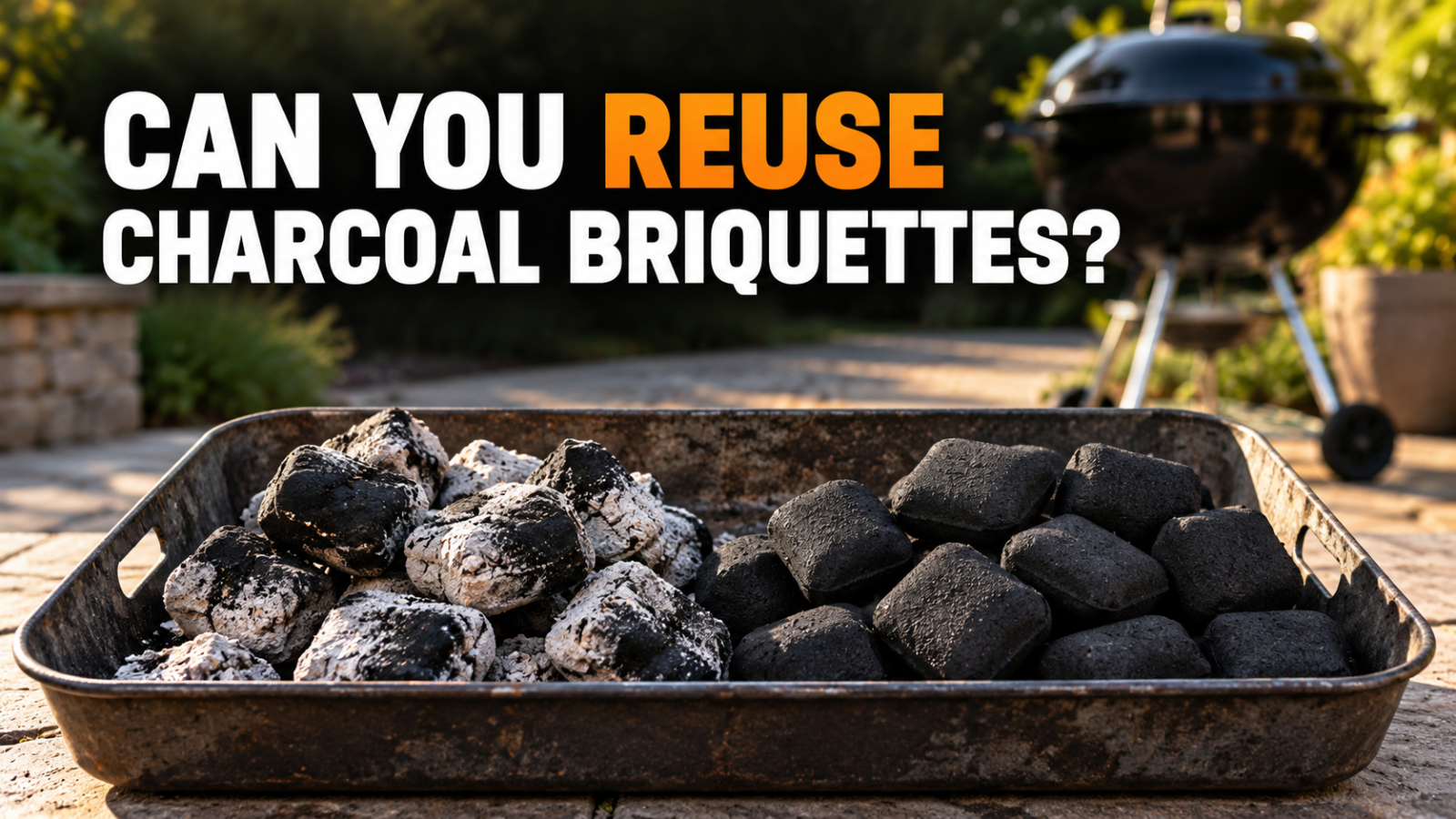
Can you reuse charcoal briquettes after a cook? Yes. Save pieces that are fully extinguished, completely cold, dry, and still solid enough to handle. Give them plenty of time to cool before sorting. Charcoal can hide heat under a gray layer of ash, and it can start burning again when fresh air reaches it.
Quick Answer: Can You Reuse Charcoal Briquettes?
Yes. Reuse charcoal briquettes that are fully extinguished, completely cold, dry, and firm. Shut the grill down as its manual directs, leave it outdoors to cool, then remove loose ash. Store sound pieces dry and mix them with fresh charcoal when relighting.
In This Guide
- Which charcoal can be reused?
- How to extinguish charcoal for reuse
- How to sort and store old charcoal
- How to relight used briquettes
- When should you throw charcoal away?
- Mistakes to avoid
- Frequently asked questions
Which Leftover Charcoal Can You Reuse?
Reuse pieces that remain firm, dry, and large enough to stay on the charcoal grate; discard loose ash, powder, damp fuel, and pieces contaminated with anything you would not want near a cooking fire.
Partially burned charcoal still contains fuel. A briquette may lose its sharp edges and shrink during the first cook, but that does not automatically make it useless. Lump charcoal can also survive a cook as solid black pieces. The best candidates are easy to pick up with tongs and do not crumble when handled gently.
| What You Find | Reuse It? | Reason |
|---|---|---|
| Firm, partly burned briquette | Yes | It still contains usable fuel once fully cold and dry. |
| Solid lump-charcoal piece | Yes | Large pieces generally relight better than tiny fragments. |
| Brittle fragment that turns to powder | No | It can restrict airflow and fall through the grate. |
| Wet or rain-soaked charcoal | Not until thoroughly dry | Moisture makes charcoal slow and unreliable to light; swollen or deteriorated briquettes may not recover. |
| Charcoal soaked with grease or an unknown chemical | No | It can flare, smell unpleasant, or contaminate the cooking fire. |
| Cold gray ash | No | Ash is spent material, not usable fuel. |
Kingsford’s shutdown guide says partially burned briquettes can be saved in the grill after they are completely cool. The sorting advice above is a practical recommendation based on fuel condition and airflow: keeping solid pieces makes the next fire more predictable.
How Do You Extinguish Charcoal So You Can Reuse It?
For a covered grill designed to shut down by restricting airflow, close the lid and all intake and exhaust vents, leave the grill outdoors, and do not handle the fuel until it is completely cold.
This method preserves more charcoal than letting the fire burn until nothing remains. It also avoids soaking the briquettes. The exact cooling time depends on the grill, the amount of fuel, the weather, and how tightly the cooker seals. Do not turn a time estimate into proof that the coals are safe.
Step 1: Finish the Cook and Remove the Food
Move food and cooking utensils away from the grill. Put hot tools on a stable, noncombustible surface. Keep children and pets out of the work area.
Step 2: Close the Lid and Vents
Close the grill lid, then close the bottom intake and top exhaust dampers if the manufacturer instructs you to extinguish the grill that way. Starving the fire of oxygen stops combustion while leaving unburned material behind.
Weber’s published instructions say to close both the lid damper and bowl damper, then leave them closed overnight so the charcoal does not reignite. Your cooker’s manual takes priority. A leaky grill may continue to burn, and some cookers have a different shutdown procedure. Closing a vent alone does not prove the fire is out.
Step 3: Leave the Grill Outside and Undisturbed
Do not roll a grill with questionable coals into a garage, shed, vehicle, porch, or other enclosed or partly enclosed area. Charcoal gives off carbon monoxide while it burns or smolders. The U.S. Consumer Product Safety Commission warns against bringing a charcoal grill into a house or barbecuing in a garage.
Keep the lid closed. Opening it to check every few minutes feeds the fire fresh oxygen and can make embers brighten again.
Step 4: Confirm That Everything Is Cold
Wait until the grill body, ash catcher, charcoal grate, ash, and remaining pieces are completely cold. Do not rely only on the absence of red glow or smoke. Heat can remain hidden below ash.
The National Fire Protection Association says coals should cool completely before disposal in a metal container. The same caution belongs here before storage or reuse.
Should You Pour Water on Charcoal You Want to Save?
Usually not; dry shutdown is the better choice when the grill is designed for it and the goal is reuse. Water can create steam, scatter ash, leave the fuel damp, and damage some grill finishes.
Manufacturer instructions differ. Kingsford describes a careful water-cooling method when someone must speed up extinguishing, while Weber specifically says not to use water or other extinguishing materials on its charcoal grills because the enamel can be damaged. Follow the grill manual. Never improvise around a hot cooker, and never assume a wet-looking coal is cold at its center.
How Do You Sort and Store Used Charcoal?
After the grill is unquestionably cold, shake loose ash away from the remaining fuel, keep the solid pieces, and protect them from moisture until the next cook.
- Wear gloves and use a metal tool. Even after a long wait, treat the contents cautiously until you have checked the entire fuel bed.
- Separate fuel from ash. Gently move the remaining pieces across the charcoal grate so loose ash falls into the ash catcher. Do not create a dust cloud.
- Keep the firm pieces. Save briquettes or lump pieces that remain solid and large enough to sit on the grate or in a chimney starter.
- Remove the spent material. Dispose of completely cold ash according to local rules and the grill manual. Use a noncombustible container when required.
- Keep the saved charcoal dry. Leave it in a weather-protected closed grill or move it to a clean, dry, noncombustible container with a secure lid.
Do not return used fuel to the original charcoal bag unless you are absolutely certain every piece is cold. A metal container gives a better margin than paper. Keep any fuel container away from heat, flame, rain, damp concrete, and areas where children can open it.
If outdoor humidity or rain is a recurring problem, Frank’s guide to storing charcoal so it stays dry explains why a tight-fitting container matters. Damp charcoal may eventually dry, but badly softened briquettes tend to crumble and block airflow.
How Do You Relight Used Charcoal Briquettes?
Mix used charcoal with fresh fuel, put the fresh pieces where the starter heat can establish a strong fire, and allow the whole batch to burn cleanly before cooking.
Used pieces are smaller and may have less fuel left than new briquettes. They can light and cook, but a basket made entirely from random leftovers is harder to predict. That matters most for a long roast or smoke where running out of heat halfway through the cook creates a real problem.
Method 1: Chimney Starter
Use the chimney outdoors on the grill’s charcoal grate or another stable, noncombustible surface approved by its manufacturer. Keep it away from flammable materials and wear heat-resistant grilling gloves when handling or pouring the hot chimney.
- Remove loose ash from the used pieces while everything is cold.
- Put an approved solid fire starter or loosely crumpled newspaper under the chimney as its manufacturer allows.
- Add fresh dry charcoal to the chimney, then add the larger used pieces without packing them tightly.
- Light the starter from below and let the chimney draft establish the fire.
- Wait until the batch is burning steadily and the upper pieces show reliable ignition before pouring it into the grill.
Do not overthink the exact ratio. For a short weeknight cook, a larger share of leftovers may be fine. For a long cook or a meal with no room for delay, start with more fresh fuel and treat the old pieces as a supplement. The article on how long charcoal lasts explains why fuel type, size, airflow, and grill design make fixed burn-time promises unreliable.
Method 2: Add Leftovers to a Fresh Fire
Build a small fresh fire with an approved starter, then arrange dry leftover pieces around the established coals. Leave spaces for air. This works well for a two-zone fire because the fresh core provides dependable ignition while the older pieces extend the bed.
If you are new to chimney starters, use Frank’s step-by-step guide to lighting charcoal without lighter fluid. Never add lighter fluid, gasoline, alcohol, cooking spray, or another liquid to charcoal that may be warm, smoldering, or already lit.
How Do You Know the Reused Charcoal Is Ready?
It is ready when the fire is established, smoke from the starter has cleared, and the charcoal is visibly burning rather than merely warming or smoldering.
Do not wait for every old piece to look identical. Reused briquettes have irregular shapes and ash patterns. Judge the batch by steady heat and clean combustion. If thick, unpleasant smoke continues, check for damp fuel, grease contamination, restricted airflow, or unsuitable starter material before adding food.
Will Reused Charcoal Burn as Hot or as Long as New Charcoal?
It can become plenty hot for grilling, but it usually offers less predictable heat and duration because some of its original fuel has already burned.
A large, solid leftover piece may perform well. A basket of small, half-spent briquettes may light quickly and fade early. Weather and grill airflow also matter. Treat used charcoal as useful remaining fuel, not as an exact replacement for a measured load of new briquettes.
For burgers, hot dogs, vegetables, or a quick sear, a healthy batch of leftovers mixed with fresh charcoal can be practical. For a pork shoulder, brisket, or another long cook, begin with enough fresh fuel to protect the cooking plan. Used pieces can go near the lit end of a snake or into a controlled fuel bed, but avoid tiny fragments that fall through or choke the air path.
When Should You Throw Leftover Charcoal Away?
Discard charcoal when it is spent, crumbling, persistently damp, heavily grease-soaked, contaminated, or too small to stay in the fire arrangement.
- Mostly ash: Gray powder cannot be relit as useful fuel.
- Soft or swollen briquettes: Water-damaged briquettes often break apart and restrict airflow.
- Grease saturation: A small amount of normal cooking residue is common, but a piece soaked from a grease spill can flare and smell bad.
- Chemical exposure: Throw away fuel exposed to cleaners, paint, pesticides, automotive fluids, or unknown spills.
- Moldy or foul storage: If fuel was stored in a contaminated container or smells wrong, it does not belong under food.
- Quick-light uncertainty: Do not mix unidentified instant-light products with regular charcoal or add starter fluid. Follow the product directions exactly.
- Tiny fragments: Pieces that fall through the charcoal grate add little useful burn time and may obstruct airflow in the ash area.
Once discarded fuel and ash are completely cold, follow local disposal rules. Kingsford says its used briquettes should not be composted or used as fertilizer. Do not scatter briquette ash in a garden or around plants simply because it came from a grill.
Common Mistakes When Saving Charcoal
The biggest mistakes are trusting appearances, introducing moisture, blocking airflow, and treating used fuel as if it has the same predictable life as a fresh load.
Handling Coals Too Soon
A black or gray surface does not prove the center is cold. Hidden embers can reignite when stirred. Let the closed grill sit for the time required by its manufacturer, then verify that the entire cooker and contents are cold.
Moving the Grill Indoors to Cool
Never bring a charcoal grill with fuel inside into a garage, shed, home, tent, vehicle, or similar space. Smoldering charcoal can produce carbon monoxide without an obvious flame.
Soaking Fuel You Plan to Reuse
Water works against easy relighting and may damage some grills. Shut down with the vents when the grill manual permits it. If an emergency requires extinguishing, saving fuel is no longer the priority—follow the manufacturer’s emergency instructions and keep people safe.
Saving Every Crumb
Tiny pieces and ash reduce air movement. Keeping only sound pieces may look less thrifty, but it makes the next fire easier to light and control.
Relying on Leftovers for a Long Cook
Old pieces have unknown remaining capacity. Mix them with fresh charcoal and build enough reserve for the meal. For a long cook, Frank’s guide to holding a charcoal grill near 225°F explains how ash, gaps in the fuel, and restricted airflow can cause a fire to fade.
Adding Liquid Starter to a Weak Fire
Never add starter fluid to charcoal that has been lit or may still be warm. Use a chimney, approved solid starter, or another method permitted by the grill and starter manufacturers.
A Simple Reuse Routine
Use the same routine after every charcoal cook: shut down, cool completely, sift, store dry, and mix with fresh fuel.
- Remove the food and close the cooker according to its manual.
- Shut the intake and exhaust vents if that is the approved method.
- Leave the grill outdoors and undisturbed until completely cold.
- Sift out cold ash and crumbling fragments.
- Keep only solid, dry pieces.
- Store them in the closed grill or a dry, noncombustible container.
- Relight with fresh charcoal and an approved starter.
This routine saves usable fuel without turning shutdown into a complicated project. The line that matters is safety: when you are uncertain whether a coal is cold, treat it as hot.
Frequently Asked Questions
Can You Reuse Charcoal Briquettes More Than Once?
Yes, if a piece remains solid after another cook, it can be saved again once it is fully extinguished, cold, dry, and free of contamination. Each burn consumes more of the fuel, so pieces become smaller and less predictable. Discard them when they crumble or turn mostly to ash.
Can You Reuse Lump Charcoal?
Yes. Large, solid pieces of lump charcoal can be reused by the same cool, dry, and relight method. Lump varies more in size than briquettes, so remove tiny shards that will fall through the grate and keep larger pieces for the next fire.
Can You Mix Old Charcoal With New Charcoal?
Yes, and mixing is usually more dependable than building a fire from leftovers alone. Fresh fuel gives the fire a predictable base while used pieces add remaining heat. Use more fresh charcoal when the cook is long or important.
Can You Leave Unused Charcoal in the Grill?
Yes, if the grill is fully cold, weather-protected, and dry, and the manufacturer permits it. Keep the vents closed after shutdown. If rain can enter the cooker or humidity is high, move the cold charcoal to a dry, secure container.
Does Used Charcoal Make Food Taste Bad?
Clean, dry charcoal left from a normal cook should not create a bad flavor by itself. Grease-soaked, chemically contaminated, moldy, or damp fuel can produce unpleasant smoke and should be discarded. Let any starter smoke clear before food goes on.
How Long Does Charcoal Take to Cool?
There is no single safe time for every grill. Weber says to leave the dampers closed overnight on its charcoal grills, while Kingsford’s general guide describes a 48-hour suffocation method. Follow the cooker manual and handle or dispose of coals only after the entire fuel bed and grill are completely cold.
Can Charcoal Ash Go in the Garden?
Do not assume briquette ash is safe for plants or compost. Kingsford specifically says its old briquettes should not be composted or used as fertilizer. Dispose of completely cold ash according to the product instructions and local rules.
What Is the Best Way to Light Reused Charcoal?
A chimney starter with fresh dry charcoal and an approved solid starter is the most dependable general method. Add firm leftover pieces without packing the chimney tightly, let the fire establish, and pour only when the batch is burning steadily.
Save Sound Charcoal for the Next Cook
Reusable charcoal is the solid fuel left after a safe shutdown, not every gray piece in the bottom of the grill. Close the cooker as its manual directs, give it plenty of time outside to become completely cold, separate sound charcoal from ash, and keep the saved pieces dry.
At the next cook, combine those leftovers with fresh charcoal instead of asking a handful of half-spent pieces to carry the whole meal. You will waste less fuel, and the new fire will still light and burn predictably.
About the author
Frank W. Roberts is the voice behind Everything Grill Reviews. He has been grilling since 1970 and has participated in competitive cookoffs. This guide combines established charcoal-fire practice with current manufacturer and fire-safety guidance. It does not replace the shutdown and disposal instructions for your specific grill.