
Updated: November 24, 2026
By Frank W. Roberts
Updated and fact-checked: November 23, 2026
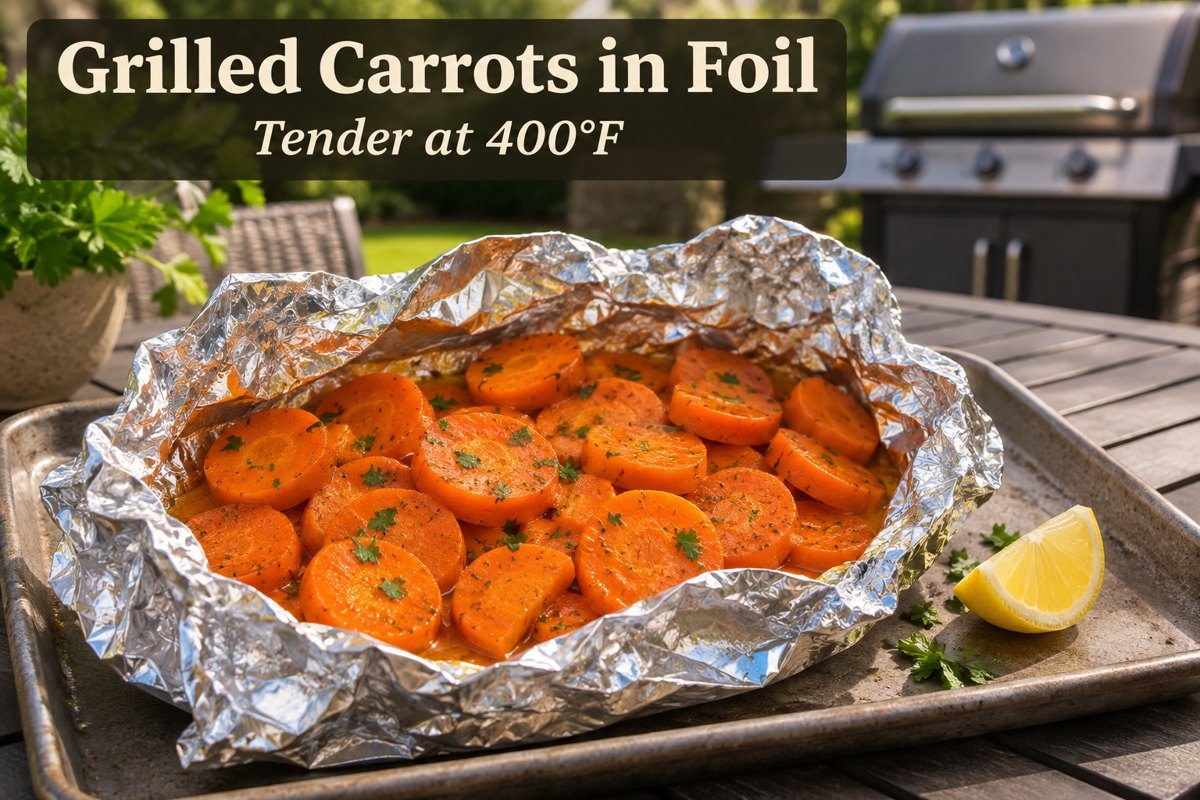
Grilled carrots in foil are a useful side dish when the grill is already running and the stove is busy. Slice the carrots evenly, divide them between two small packets, and let covered indirect heat soften them. You get tender carrots with very little washing up, using ordinary carrots and pantry seasonings.
Quick Answer
For grilled carrots in foil, cut 1 pound of carrots into ¼-inch coins and divide between two packets with oil, seasoning, and 1 tablespoon of water each. Grill over indirect heat at about 400°F for an estimated 25–35 minutes, checking at 20 minutes. They are ready when the thickest coins are fork-tender.
Jump to the ingredients and method
Key Points
- Yield: Four side-dish servings from 1 pound of carrots.
- Heat: About 400°F, with no lit burner or charcoal directly under the packets.
- Texture: Tender carrots cooked in a little steam; a sealed packet does not produce a deeply charred surface.
- Best check: Pierce a thick coin from the middle of each packet.
- Simple flavor: Oil, thyme, garlic powder, salt, and pepper; butter and lemon are optional finishes.
What Do You Need for Grilled Carrots in Foil?
You need 1 pound of whole carrots, a tablespoon of oil, a little water, simple seasoning, and two sheets of heavy-duty foil. No parboiling or overnight preparation is needed.
Servings: 4 as a side
Prep: 10 minutes
Estimated cooking: 25–35 minutes
Stand before opening: 2 minutes
Total: About 37–47 minutes, plus grill preheating
Ingredients
- 1 pound carrots, scrubbed or peeled, ends trimmed
- 1 tablespoon olive oil or a neutral cooking oil
- 2 tablespoons water, divided between the packets
- ½ teaspoon dried thyme
- ¼ teaspoon garlic powder
- ¼ teaspoon fine table salt, plus more to taste after cooking
- ¼ teaspoon ground black pepper
- Optional finish: 1 tablespoon unsalted butter, divided
- Optional finish: 1 teaspoon lemon juice and 1 tablespoon chopped parsley
Equipment
- A covered grill capable of indirect cooking at about 400°F
- Two sheets of heavy-duty aluminum foil, each about 18 inches long; use two layers per packet if your foil is thin
- Knife, cutting board, mixing bowl, and measuring spoons
- Long-handled tongs, heat-resistant gloves, a fork, and a rimmed sheet pan for moving the packets
Wash whole carrots under running water before cutting or peeling, following FDA produce-handling guidance. Trim damaged spots. Peeling is a texture preference for sound carrots that have been thoroughly scrubbed; it is not a reason to skip washing first.
How Do You Grill the Carrot Packets Step by Step?
Preheat to about 400°F, put evenly sliced carrots in two shallow sealed packets, and cook beside the heat until the center pieces are tender. Open one for the first check at 20 minutes.
- Set up indirect heat. Preheat your grill according to its instructions. On a gas grill, leave the burner beneath the packets off and adjust the others to hold about 400°F with the lid closed. On charcoal, bank the coals to one side and use the other side for the packets.
- Slice evenly. Cut the carrots crosswise into ¼-inch coins. For very thick carrots, split them lengthwise before making half-moons so the pieces are similar in size.
- Season. Toss the carrots with the oil, thyme, garlic powder, salt, and pepper. Keep the water separate for now.
- Build two packets. Lay out the foil and divide the carrots equally, about ½ pound per packet. Spread each portion in a shallow mound rather than a tall pile. Add 1 tablespoon water to each.
- Seal with room above the food. Bring the long edges together and fold them down twice. Double-fold both ends. Leave a little space inside so you are not pressing the foil tightly onto the carrots.
- Cook beside the fire. Set the packets seam-side up over the indirect zone and close the lid. Keep the seams on top; there is no need to flip them upside down.
- Check at 20 minutes. Move one packet to the sheet pan with tongs and gloves. Carefully open a corner away from your face. Pierce a thick carrot from the center. If still firm, gently stir, reseal, and continue cooking. Check again in about 5 minutes. Check both packets before taking them off.
- Finish and serve. When fork-tender, remove both packets. Let stand 2 minutes, then open away from your hands and face; steam can still burn. Transfer to a serving bowl and toss with the optional butter, lemon, and parsley. Taste before adding more salt.
Plan on roughly 25–35 minutes of cooking, but start checking sooner. Grate position, slice thickness, weather, and the actual temperature around the packets change the timing. The two-zone grilling guide shows how to create the unlit side this method needs.
Why Use Two Small Packets Instead of One Big Packet?
Two shallow packets give the carrot slices a more even depth and make them easier to move and check. A deep mound can leave the middle firm while the bottom cooks much faster.
Each packet in this recipe holds about ½ pound. For a double batch, make four packets of that same size rather than one large bundle. Keep enough open grate around them for the grill to work normally; do not cover the entire cooking surface with a sheet of foil.
The tablespoon of water is a little help for steam, not a sauce. More water does not solve an overloaded packet. It can leave the finished carrots swimming in liquid.
How Do You Tell When the Carrots Are Done?
A fork should enter one of the thickest coins near the middle with little resistance. Stop while the pieces still hold their shape if you prefer tender carrots with some bite; leave them a little longer for a softer side.
Check the food rather than looking for browned foil or counting minutes. Carrots do not have the raw-poultry doneness target used for chicken. If you are cooking them alongside meat, use separate utensils and keep raw meat juices away from the carrot packets and serving bowl.
A sealed packet limits drying and direct smoke contact. Expect a gently cooked vegetable side, even on a pellet grill. If visible grill marks are the main goal, a different method with larger pieces and direct grate contact will suit that goal better.
Why Are the Bottom Carrots Scorching While the Center Is Hard?
The usual causes are direct heat beneath the packet, unevenly thick slices, or too deep a pile. Move the packet away from the fire and check the center before deciding it needs more time.
| Problem | Likely cause | Useful correction |
|---|---|---|
| Dark bottom, firm middle | Too much heat below; packet too deep | Move to the unlit side, stir carefully, and keep the pile shallow. |
| Carrots are drying out | Loose seam or torn foil | Set on a fresh foil sheet, add 1 tablespoon water if the packet is dry, and reseal. |
| Some pieces soft, others hard | Uneven cuts | Let the thicker pieces finish; make the next batch a consistent ¼ inch. |
| Too much liquid | Extra water or wet added vegetables | Drain carefully when serving; keep to the measured water next time. |
| Little smoke flavor | Sealed foil blocks most smoke contact | Treat this as a tender side rather than adding more wood to compensate. |
If one end of the grill repeatedly burns packets, the guide to finding gas-grill hot spots can help you choose a better position.
What Substitutions and Shortcuts Work?
Use what you have, while keeping the carrot pieces and packet portions similar to the main recipe.
- Baby carrots: Cut crosswise into ¼-inch pieces. Leaving them whole changes the thickness and makes the timing less predictable.
- No thyme: Substitute ½ teaspoon dried Italian seasoning, or omit the herbs and keep the garlic and pepper.
- No dairy: Skip the optional butter. The oil in the packet is enough for the basic method.
- Prefer a sweet finish: Toss the cooked carrots with 1–2 teaspoons honey or maple syrup. Add it after cooking rather than increasing the chance of a sticky scorched bottom.
- No indirect grill space: Put the packets on a rimmed sheet pan in a 400°F oven. Begin checking at 20 minutes and use the same tenderness test.
A pellet grill can cook these with its normal heat diffuser and indirect setup. Keep the direct-flame feature closed if your cooker has one, and follow its operating instructions. A lower smoking temperature will lengthen the cook, so the 400°F estimate does not carry over unchanged.
How Do You Store and Reheat Leftover Carrots?
Transfer leftovers to shallow covered containers and refrigerate at 40°F or below within two hours, or within one hour when the outdoor temperature is above 90°F. Use within 3–4 days and reheat to 165°F.
These limits follow USDA leftover-storage guidance and its reheating guidance. Do not leave sealed packets on the picnic table until the evening cleanup.
For a small serving, use a microwave-safe covered dish with a splash of water, stir during reheating, and check the center temperature. Do not put foil in the microwave. The guide to using a food thermometer correctly helps with accurate readings when reheating leftovers.
FAQ
Do you need to boil carrots before grilling them in foil?
No. The ¼-inch slices, a little water, and sealed packets let them soften on the grill. Very thick pieces need more time; boiling them first adds a step this method does not need.
Should the shiny side of foil face the carrots?
For ordinary heavy-duty foil, either side works for this recipe. If you use a product labeled nonstick, follow its directions for which side should touch the food.
Can you put potatoes in the same packet?
You can make mixed vegetable packets, but different cuts may finish at different times. For this recipe, keep the carrots separate so you can take each vegetable packet off when its contents are ready.
Can you prepare the packets ahead?
Yes. Assemble them earlier the same day, keep refrigerated, and add the measured water just before sealing for cooking. A cold packet may need longer, so check tenderness rather than extending the time by a fixed number of minutes.
Final Verdict
Grilled carrots in foil make sense when you want a simple tender side with little attention at the grate. Even ¼-inch slices, two shallow packets, and indirect 400°F heat do the work. Check a thick center piece before serving, and add butter or lemon only if you want them.
About Frank W. Roberts
Frank W. Roberts is the author of Everything Grill Reviews and has grilled since 1970. This is an original, research-based recipe formulation; no physical test cook or measured nutrition analysis is claimed.