
Updated: October 30, 2026
Knowing how to dispose of charcoal ash is part of finishing a cook. The burgers may be gone, but a gray layer of ash can still hide live coals. Give the fire time to go out, use a proper ash container, and finish cleanup before the next cook.
Quick Answer: Let charcoal and ash become completely cold before removal; plan on at least 48 hours. Use a metal scoop and a metal ash container with a tight-fitting lid. Keep it outdoors on a noncombustible surface, at least 10 feet from buildings. Follow your trash collector’s disposal rules. Time alone does not prove the coals are cold.
Key Points
- Gray ash and an absence of smoke do not establish that a fire is out.
- Keep used charcoal outdoors throughout cooling.
- Use a dedicated metal ash container, without a paper or plastic liner.
- Handle final disposal according to the waste collector’s instructions.
How Long Should Charcoal Ash Cool Before Disposal?
Allow at least 48 hours as a planning minimum, and longer whenever any heat remains. The Seattle Fire Department’s grilling guidance recommends a 48-hour cooling period before disposal. A deep pile of fuel may need more time; that recommendation is not a guarantee that every grill will be cold on schedule.
Let the charcoal cool where it was burned, following the grill’s shutdown directions. Do not scoop through a warm pile simply because you want the patio cleaned up. Keep children and pets away while the cooker cools, and do not test coals with bare hands.
What Equipment Do You Need for Charcoal Ash Cleanup?
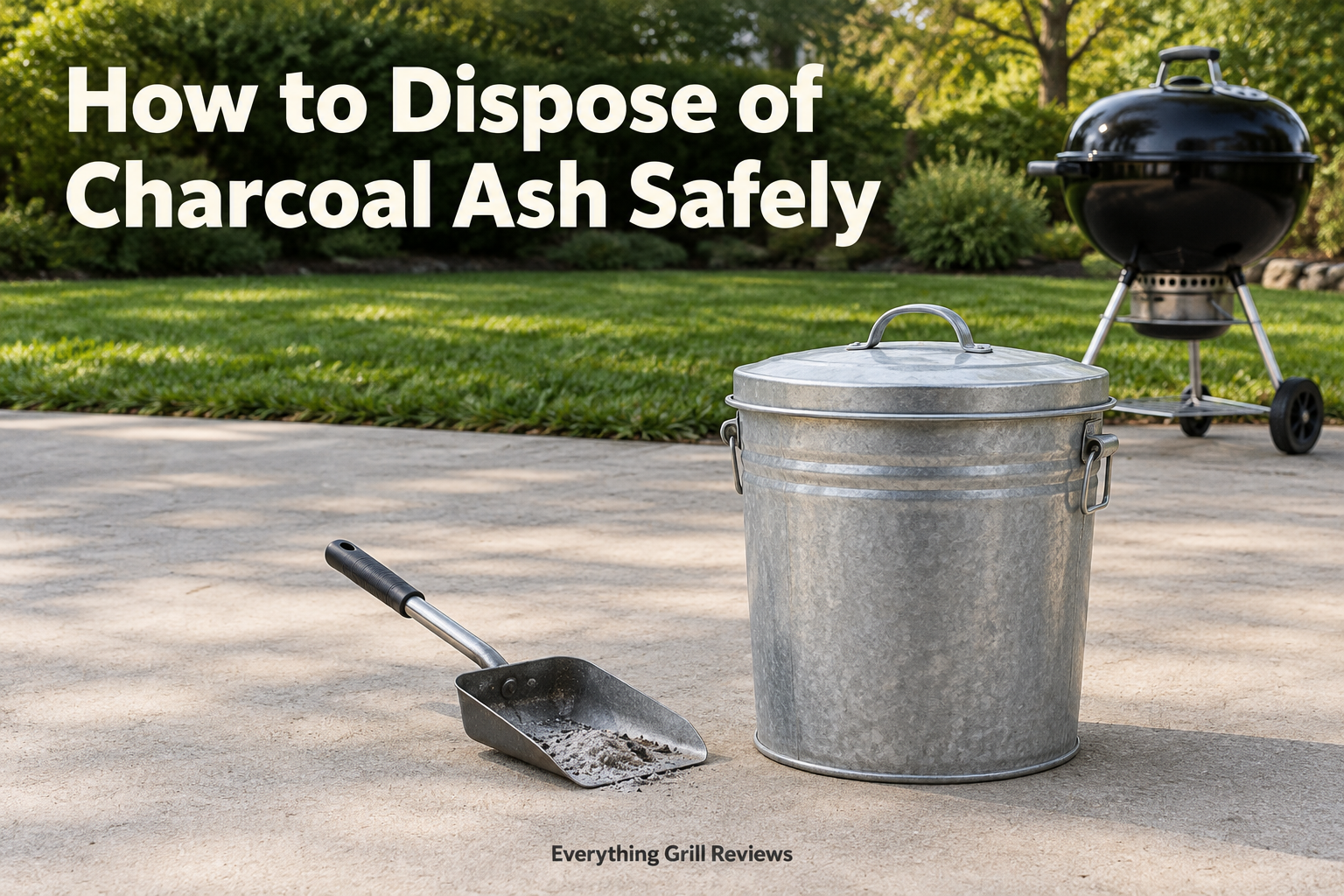
A metal scoop, a dedicated metal ash bucket with a tight lid, and suitable protective gloves cover the basic job. Choose equipment you can handle comfortably; a small scoop and several light loads are easier to control than a full, awkward ash pan.
- A sturdy, unlined metal ash container with a sound lid
- A metal scoop or the grill’s removable ash catcher
- Gloves appropriate for the tools and grill manufacturer’s instructions
- Closed shoes and eye protection to keep loose dust off your skin and out of your eyes
A plastic storage tote that works well for fresh charcoal is unsuitable for used ash. Mark the ash bucket clearly so nobody mistakes it for the clean-fuel container.
How Do You Dispose of Charcoal Ash Step by Step?
Shut down the grill, allow full cooling, collect the ash carefully, store it in the proper container, and follow the approved local disposal method. These six steps keep the job manageable.
Step 1: How Should You Shut Down the Grill?
Close the lid and air vents as your grill manual directs. For a Weber kettle, Weber recommends closing the lid damper and bowl dampers to cut the oxygen supply. Leave the cooker outside in its safe operating location while it cools.
The shutdown method varies by cooker. An open grill without a closeable lid or vents needs its own manufacturer’s procedure; do not improvise a cover or transfer burning fuel to another container.
Step 2: When Should You Remove the Ash Catcher?
Remove it only after the charcoal, ash, and grill have cooled completely. Follow the release procedure in the manual and keep the catcher level. If you discover warmth, smoke, or a glowing piece, stop cleanup and let the grill finish cooling safely.
Do not use the lid thermometer as proof that the bottom of the firebox is cold. It measures a different location. The Weber charcoal owner’s guide also says not to remove ash before the fuel is fully extinguished and the grill is cool.
Step 3: How Do You Transfer Cold Ash Without a Mess?
Move it slowly in small amounts, keeping the scoop or catcher close to the metal bucket opening. Set the bucket down before starting. Avoid shaking a pan from waist height or working with loose ash on a windy day.
Use the grill’s ash-cleaning mechanism only as directed. Leave the bucket unlined, keep other rubbish out, and fit the lid when the transfer is complete. Sweep up spilled cold ash without blowing it across the patio.
Step 4: Where Should You Keep the Ash Bucket?
Keep the covered bucket outdoors on a stable, noncombustible surface, at least 10 feet from buildings. The U.S. Fire Administration’s ash-disposal guidance calls for a tightly covered metal container away from the home and other buildings.
Bare concrete is a practical place when the required clearance is available. Keep the bucket clear of wooden fences, leaves, grass, furniture, and stored fuel. A metal bucket can conduct heat; placing one on a wooden deck defeats its purpose.
Step 5: Can Fully Cold Ash Go in Household Trash?
Only when your waste collector permits it and the material is fully extinguished and cold. Ask how the collector wants ash packaged. Do not tip ash straight from a recently used grill into a garbage cart, and do not assume a plastic bag makes questionable coals safe.
Local collection instructions are the final step. If you cannot establish that the material is cold, keep it safely contained outdoors and wait.
Step 6: What Should You Clean Before the Next Cook?
Clear the cold ash from the bowl, ash catcher, and air openings according to the manual. Refit the catcher securely and check that the vents move normally. An ash-filled intake makes the next fire harder to control.
For the next cook, use the site’s guides to lighting charcoal without lighter fluid and keeping a charcoal grill at 225°F. Both begin with a clear air path.
Should You Pour Water Into a Hot Charcoal Grill?
Do not pour water into a hot grill for routine shutdown unless its manufacturer explicitly instructs you to do so. Weber advises against water because it can damage the enamel finish. Waiting for natural cooling is the routine method used in this guide.
Fire-authority advice about wetting ash during disposal is different from permission to flood a hot cooker. Follow the grill manual and your local fire authority’s directions for the situation.
Can You Put Charcoal Ash in the Garden or Compost?
Do not assume barbecue ash is a suitable garden amendment. Oregon State University Extension’s wood-ash guidance specifically advises against using barbecue-charcoal ash in the garden.
Guidance about clean wood ash does not automatically apply to briquettes, lighting-agent products, or ash mixed with cooking residue. Use the approved disposal route unless your local extension service has assessed your particular fuel and soil.
Can You Carry a Used Grill or Ash Bucket Inside a Vehicle?
Keep freshly used charcoal out of enclosed vehicles and buildings. The Consumer Product Safety Commission warns that charcoal produces carbon monoxide until it is completely extinguished. A closed grill lid does not remove that hazard.
At a campsite or tailgate, plan disposal before lighting the fire. Use an approved ash receptacle if the venue supplies one, following staff instructions. Do not pack questionable coals into the car because the event has ended.
Frequently Asked Questions
Can Charcoal Ash Still Be Hot the Next Morning?
Yes. Overnight cooling may be insufficient, especially with a large fuel load. Allow the recommended cooling period and additional time if needed; cleanup waits until everything is fully cold.
Can You Use a Plastic Bucket After Waiting 48 Hours?
Use a dedicated metal ash bucket with a tight lid for collection. A clock does not prove that every buried coal is out, and plastic is an unnecessary risk during ash handling.
Do Lump Charcoal and Briquette Ash Need the Same Fire Precautions?
Yes. Both require full extinguishing, complete cooling, careful collection, and an approved disposal method. Their different ingredients do not change the need to prevent a hidden ember from reaching rubbish.
Should You Leave Ash in the Grill All Winter?
Clean it out after it is fully cold, following the manual. Then prepare the cooker for storage with the gas, pellet, and charcoal grill winterizing checklist.
Final Verdict
Safe charcoal ash disposal needs a little planning after the food comes off. Allow enough cooling time, collect the ash carefully, use the proper outdoor container, and finish with your collector’s approved method. Do not rush the job to meet a cleanup deadline.
About the Author
Frank W. Roberts has been grilling since 1970. Everything Grill Reviews focuses on practical backyard cooking, straightforward grill care, and useful advice for everyday cooks.