
Updated: October 11, 2026
Updated and fact-checked: October 10, 2026
Pellet grill temperature drops in cool weather remain a heat-loss and fuel problem in 2026, not a sudden design failure. Cold air and wind pull energy from the chamber faster than a normal pellet fire replaces it, and manufacturers still list damp pellets as the first item to check. Double-wall or heavier models hold better, but every pellet grill uses more fuel and needs a longer preheat when the metal is cold.
Quick Answer: Why Does My Pellet Grill Temperature Drop in Cool Weather?
Cold ambient air and wind cause faster heat loss through the steel, so the controller feeds more pellets to catch up while damp or dusty fuel makes the recovery slower. Traeger support pages updated in 2026 still point to wind, pellet condition, and a clean firepot as the main fixes. Shelter the grill, load dry pellets that snap cleanly, clean the firepot and probe, allow extra preheat below 40°F, and cook to internal food temperature. Use a manufacturer-approved insulation blanket only below the stated limit, commonly 32°F.
Key Points
- Heat loss and wind remain the dominant causes; Traeger’s 2026 weather guidance still lists them first.
- Damp or crumbly pellets are still the number-one fuel issue manufacturers flag for temperature problems.
- Double-wall models (certain Z Grills and Traeger Ironwood lines) retain heat better, but single-wall grills work with the same shelter and fuel steps.
- Z Grills guidance calls for 5–10 extra preheat minutes below 40°F and notes 20–30 percent higher pellet use in the cold.
- Insulation blankets stay restricted: Traeger limits them to below 32°F and grill settings of 350°F or lower.
- Cook to verified internal temperatures; clock times lengthen in cool weather.
What Causes a Pellet Grill Temperature Drop on a Cool Day in 2026?
The chamber still loses heat to cold air and wind faster than the firepot can replace it at the normal feed rate. Metal conducts heat, so a cold grill body pulls energy out of the cooking air until the controller increases the auger speed. Traeger’s weather-effects page, updated as of early October 2026, states that cold and windy weather naturally pull heat from the grill and that the unit may use more pellets and take longer to ignite. Direct wind across an exhaust or into a downdraft can disrupt the burn more than still air that is ten degrees colder. Damp pellets that have absorbed humidity swell, crumble, or burn inconsistently; Traeger still lists poor pellet quality as the leading cause of temperature issues.
A dirty firepot packed with ash, a greasy heat plate that blocks airflow, or a coated temperature probe can make the controller chase a false reading. Frozen or very cold food adds a temporary load. PID controllers on current models (recteq, many Z Grills, Traeger D2, Weber Searwood) adjust feed and fan more responsively than older fixed-cycle systems, but they cannot invent heat that is leaving the chamber. None of these means the electronics have failed. They mean the fire is losing the race against the outside conditions or the fuel quality.
How Do You Stop Pellet Grill Temperature Drops in Cool Weather?
Move the grill out of the direct wind, load only dry pellets, clean the firepot and probe, and give the chamber extra preheat time before you add food. Position the hopper or exhaust so wind does not blow straight into the openings. A wall, fence corner, or covered patio with proper clearance and open air above the lid is enough for most days. Never run the grill inside a garage or under a low overhang that traps exhaust.
Transfer opened pellets to a dry, sealed container and only load what you need. Pellets that look dull, dusty, or break without a snap have taken on moisture and should be replaced. Vacuum ash from the firepot and hopper area after the grill is cold and unplugged. Wipe the temperature probe so it reads the air, not a layer of grease. Z Grills guidance specifically calls for adding 5–10 minutes of preheat below 40°F so the metal itself is hot before food goes on. Traeger notes slower ignition and higher pellet use in the cold. Keep the lid closed as much as possible; recovery takes longer when the outside air is cold. Some manufacturers (Z Grills among them) suggest raising the set point by roughly 25°F in cold conditions after a full preheat if the chamber will not hold; do this only after the basics are correct and watch internal food temperature closely.
If the manufacturer offers a thermal blanket for your exact model and the outside temperature is below the stated limit (Traeger lists below 32°F and grill set points of 350°F or lower; Z Grills notes blankets help but still advises extra time below 32°F), use it. Do not leave a blanket on in milder weather or at high set points; the manufacturer warns it can overheat parts. Start with a full hopper because consumption rises 20–30 percent or more on cold, windy days according to manufacturer notes. Cook to verified internal temperatures: 145°F plus a three-minute rest for whole beef, pork, lamb, and veal; 160°F for ground meat; 165°F for poultry. A remote probe lets you watch the food without opening the lid every time the controller swings a few degrees.
What Should You Check First When the Temperature Will Not Hold?
Check pellet condition and firepot cleanliness before you suspect the controller or igniter. Traeger support pages updated in 2026 still list poor pellet quality as the number-one cause of temperature issues and tell owners to empty the hopper, vacuum residual sawdust, and load fresh pellets that have a shine and snap. Look for ash packed in the firepot, foil or grease that has shifted and blocked airflow, and a dirty or damaged temperature probe. Confirm the grill followed its normal startup so the fire is established before the set point is selected. If those items are clean and the pellets are dry, the remaining cause is almost always ambient heat loss or wind. Current PID controllers recover more smoothly once the fuel and airflow are right, but they still need dry pellets and a clear firepot.
| Symptom | Most likely first cause | First action |
|---|---|---|
| Temperature falls and stays low | Wind, cold metal, or damp pellets | Shelter the grill, replace pellets, clean firepot |
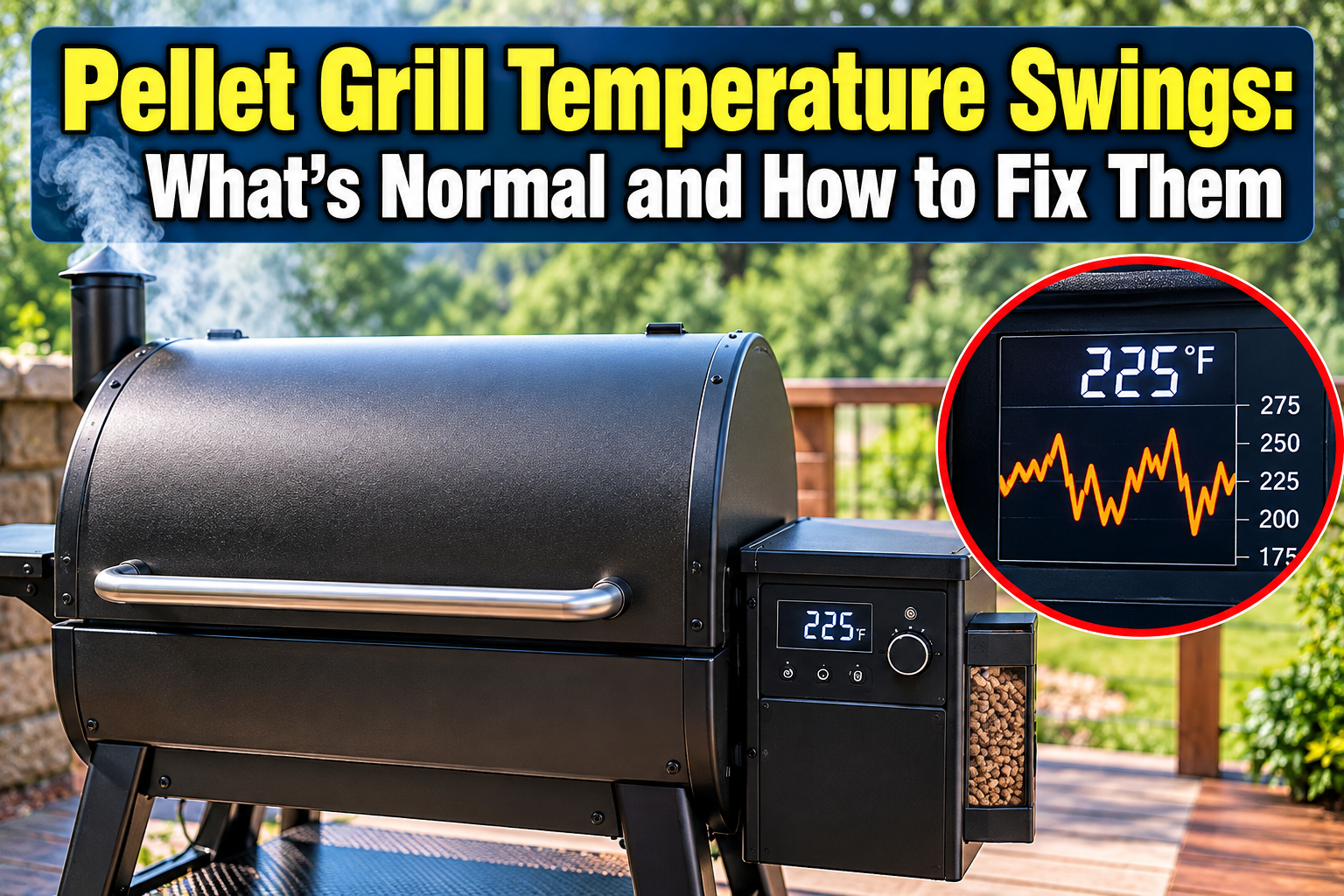
| Swings of 20–30°F that recover | Normal controller cycling in cool air | Leave the set point alone and cook to internal temperature |
| Will not climb past a low number | Ash-packed firepot or wet pellets | Cool, unplug, vacuum, load dry pellets |
| Low-temperature error code | Flame out from wind or fuel problem | Move out of wind, restart with dry pellets |
Last verified October 10, 2026 against Traeger support pages (weather effects and temperature drop articles) and Z Grills cold-weather guidance.
Does an Insulation Blanket Fix Cool-Weather Temperature Drops?
It reduces heat loss only when the outside temperature is below the manufacturer’s stated limit and the grill is set to a compatible temperature. Traeger states that its insulation blankets are for use below 32°F and with grill temperatures of 350°F or lower; using them outside those limits can damage the grill or blanket. Z Grills offers model-specific thermal blankets that help retention and notes that even with a blanket the grill takes longer below 32°F. Other brands publish similar restrictions. A blanket does not replace the need for dry pellets or a wind break. On a calm 45°F day most owners see better results from shelter and clean fuel than from adding insulation the manufacturer did not design for that weather. Double-wall construction on current models such as certain Z Grills dual-wall units and Traeger Ironwood lines reduces the need for a blanket in moderate cold, but the same wind and pellet rules still apply.
How Much Extra Pellet Use Should You Expect in 2026?
Expect higher consumption because the controller feeds more fuel to offset heat loss, often 20–30 percent more on a cold day and more when wind is strong. Z Grills explicitly notes that range; Traeger confirms the grill needs extra fuel to keep temperature steady when cold. Exact numbers vary by model, insulation, set point, and how well the grill is sheltered. Start with a full hopper and keep a spare sealed bag ready. Do not raise the set point far above the recipe just to force more heat; that changes the cooking environment and can push the meat past the target internal temperature before you notice. Monitor the food probe and adjust only if the chamber will not recover after a reasonable preheat. Heavier or dual-wall models reduce the increase but do not eliminate it.
Final Verdict: Can You Cook on a Pellet Grill When the Temperature Drops?
Yes, if you treat the cool day as a heat-loss problem instead of a broken-grill problem. Shelter, dry pellets, a clean firepot, and extra preheat time restore stable operation for the large majority of owners in 2026, just as they did before. Current PID controllers and double-wall designs make recovery smoother, but they still require dry fuel and protection from wind. Reserve a manufacturer-approved insulation blanket for the exact cold conditions listed in the manual. Cook to verified internal temperatures and keep a remote probe so you do not open the lid more than necessary. If the grill still will not hold after those steps, then check for a damaged probe, restricted auger, or other hardware issue and follow the manufacturer’s service path.
Frequently Asked Questions
Why does my pellet grill use more pellets when it is cool outside?
The controller increases the feed rate because heat is leaving the chamber faster. Cold steel and moving air both pull energy out of the cook chamber, so more fuel is required to hold the same set point. Traeger and Z Grills both list higher pellet use as normal cold-weather behavior in their 2026 guidance.
Should I raise the set point when the temperature drops?
Only a small amount after the grill has had a full extra preheat, and only if the chamber will not hold. Z Grills notes a possible 25°F increase as one compensation for heat loss. A large jump changes how the food cooks and can overshoot the internal target. Most owners get better results by blocking wind and using dry pellets first. Cook to the meat’s internal temperature rather than trying to force the chamber higher.
Can I use an insulation blanket on a mild fall day?
No. Follow the manufacturer’s temperature limits. Traeger recommends its blankets only below 32°F and with grill settings of 350°F or lower. Using one on a milder day or at higher set points can overheat components. On a 45–55°F day a wind break is the better first step.
What if the grill shows a low-temperature error?
Move it out of the wind, confirm the pellets are dry, and restart after a cool-down if the flame went out. Persistent low-temperature codes after those steps point to a fuel-delivery or probe issue. Consult the manual for the exact model before you continue the cook. Traeger lists wind-related flame-out as a known cause on certain exhaust designs.
Do double-wall or 2026 PID models still need these steps?
Yes. Better insulation and controllers reduce the size of the problem but do not remove it. Dual-wall Z Grills and Traeger Ironwood lines hold more steadily in moderate cold, yet manufacturers still tell owners to shelter from wind, use dry pellets, and expect higher fuel use. The same diagnostic order applies.
Related Reading
- How to Store Wood Pellets and Charcoal So They Stay Dry
- Complete Guide to Cleaning Your Pellet Grill for Best Performance
- How to Winterize a Grill: Gas, Pellet & Charcoal
- Top 10 Pellet Grills in 2026
About Frank W. Roberts
Frank W. Roberts is the author of Everything Grill Reviews. He has grilled since 1970 and brings more than 50 years of backyard cooking and cookoff experience to fire management, fuel behavior, smoke, and practical cooker use. This article is based on manufacturer guidance and support documentation current as of October 2026; Frank has not personally measured temperature recovery on every 2026 pellet model discussed. Last verified October 10, 2026.