
Updated: September 13, 2026
Updated and fact-checked: September 12, 2026
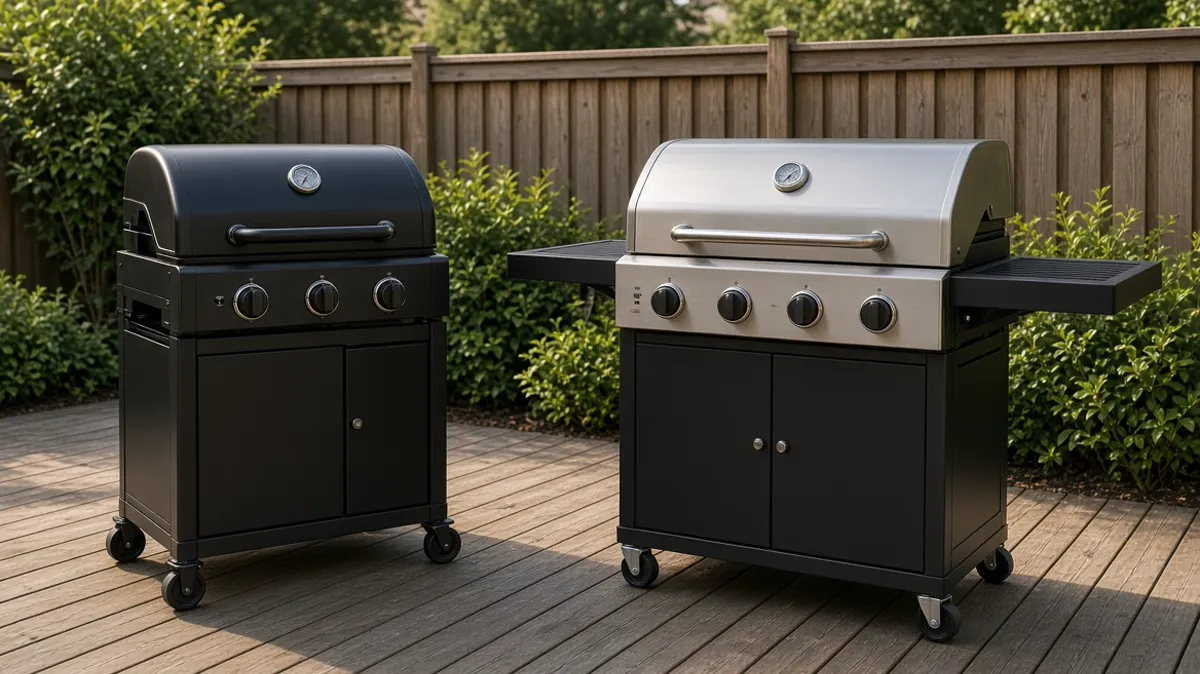
Weber vs Char-Broil is not one grill against another grill. It is a long-warranty, parts-backed cooker against a lower sticker price and more steel on the showroom floor. Weber usually wins if you keep a grill for a decade. Char-Broil usually wins if you need more burners and grate space this season and will accept a shorter firebox warranty.
Quick Answer: Is Weber Better Than Char-Broil?
Weber is the better long-term grill brand for most backyard cooks; Char-Broil is the better first-year value if budget and cooking area matter more than cookbox coverage. Compare warranties by series, not by logo. Current Char-Broil Performance pages list 5 years on burners and 2 years on the firebox. Current Weber Spirit terms list 10 years on the cookbox, lid, and stainless burner tubes.
Key Points
- This is a brand-and-lineup guide, not a hands-on test of one Weber against one Char-Broil.
- Char-Broil’s own site still positions the company as America’s #1 gas grill brand by unit sales. Unit sales are not the same thing as longevity.
- Weber’s current Spirit gas-grill warranty is longer on the cookbox than Char-Broil’s current Performance Series firebox term.
- Char-Broil often gives more primary grate and extra burners at a given price. Weber often gives a tighter cart, Flavorizer bars, and a deeper parts catalog.
- Char-Broil TRU-Infrared / Amplifire / FlavorMax systems reduce open-flame flare-ups. They also change how fat drips and how much “grill” character you get.
- On charcoal, the Weber kettle remains the reference design. Char-Broil’s strength is gas and combo cookers, not beating a 22-inch kettle.
How Should You Compare Weber and Char-Broil?
Compare the series you can actually buy, then read the warranty line for the cookbox, burners, and grates. “Weber” covers a $55 Smokey Joe and a Summit gas grill. “Char-Broil” covers a $150 two-burner cart and a Medallion outdoor-kitchen module. A cheap Weber kettle is not the same decision as a Genesis. A Performance Series Char-Broil is not the same decision as a Medallion Amplifire.
The useful questions are:
- How long is the firebox or cookbox covered for rust-through or burn-through?
- How long are the burners covered?
- What cooking system is under the grate: open flame and bars, or an infrared / radiant plate?
- Can you still buy the grate, burner, igniter, and regulator five years from now?
- Will you keep this grill, or replace it when the cart rusts?
Where Are Weber and Char-Broil Genuinely Similar?
Both sell propane gas carts for weeknight cooking, both sell portable models, and both expect you to grill outdoors with the lid open when lighting a gas unit. Neither brand replaces a stick-burning offset. Both will cook burgers, chicken, and steaks if the burners light and the grate is hot.
Both also sell more than gas. Weber’s identity is still the porcelain-enameled charcoal kettle plus a full gas ladder from Spirit to Genesis to Summit. Char-Broil’s identity on its current homepage is gas volume, grill-and-griddle combos, and accessible prices. Charcoal and pellet exist in both catalogs; they are not the main reason most shoppers type this comparison.
What Is the Real Difference in Build and Warranty?
Weber writes longer coverage on the parts that rust first. Char-Broil writes shorter firebox terms on the grills that sell hardest at big-box prices.
| Line (current published terms) | Cookbox / firebox / lid | Burners | Grates / other |
|---|---|---|---|
| Weber charcoal kettles | Bowl and lid 10 years, no rust-through / burn-through | N/A | One-Touch 5 years; plastics 5 years; remaining parts 2 years |
| Weber Spirit gas | Cookbox and lid 10 years, no rust-through / burn-through (paint 2 years) | Stainless burner tubes 10 years | Stainless or porcelain cast-iron grates 5 years; Flavorizer bars 5 years; remaining parts 2 years |
| Weber Genesis gas (2022 terms) | Cookbox and lid 12 years, no rust-through / burn-through (paint 2 years) | Stainless burner tubes 10 years | Grates and Flavorizer bars 10 years; remaining parts 5 years |
| Char-Broil Performance Series gas (current product pages) | Lid / firebox 2 years | Burners 5 years | Grates / emitter 1 year; other parts 1 year |
| Char-Broil Medallion Amplifire (current product page) | Firebox 3 years | Burners 10 years | Grates / emitter 3 years; other parts 1 year |
Last verified September 12, 2026, against Weber’s published warranty page and current Char-Broil Performance and Medallion product pages. Coverage is for the original owner, with proof of purchase, and excludes ordinary wear, paint fade, and surface rust on many sheets. Read the card that ships with the exact model.
That table is the comparison most box copy skips. A 2-year firebox line is not a smear. It is Char-Broil telling you what it will stand behind on a $300 cart. A 10- or 12-year cookbox line is Weber telling you the same thing at a higher price.
Owner patterns match the paper. People repeatedly report that budget Char-Broil carts rust at the lid, firebox edges, and cart faster than a porcelain Weber kettle or a mid-range Spirit. People also report that a covered, cleaned Weber still looks like a grill after the payment is forgotten. Those are patterns across retailers and owner forums, not a lab rust test I ran on every SKU.
How Do Weber and Char-Broil Cook Differently?
Weber gas grills cook over open burners with metal Flavorizer bars. Many Char-Broil gas grills cook over a radiant plate marketed as TRU-Infrared, Amplifire, or FlavorMax.
Weber’s bars catch drippings, smoke a little, and still let you build a real two-zone fire by leaving a burner off. The grate sees flame. Fat can flare. That is the classic backyard gas-grill taste: some smoke from drippings, a defined hot side, and a cool side for chicken.
Char-Broil’s infrared-style systems put a plate or emitter between the flame and the food. The company sells that as even heat, fewer flare-ups, and juicier food. The tradeoff is the same one every radiant plate makes. You get less open-flame drip-and-sizzle. Two-zone cooking is still possible by shutting burners off, but the plate spreads heat, so the cool side is less cool than an empty burner under Flavorizer bars.
Neither system makes poultry safe. USDA still wants 165°F in the thickest part of chicken, measured with a thermometer, before the food leaves the heat. A “juicier” marketing line is not a doneness test.
On charcoal, Weber’s kettle is the tool most people should compare Char-Broil against, not a Spirit. A 22-inch Original Kettle has 363 square inches, a 10-year bowl-and-lid rust-through line, and a fire you can bank. Char-Broil charcoal grills exist and will cook supper. They are not the design every accessory, snake method, and replacement grate in the charcoal world is built around.
Which Brand Gives You More Grill for the Money?
Char-Broil usually puts more burners and more advertised cooking area in the same budget band. Weber usually puts less sheet metal and more years on the box that holds the fire.
Char-Broil’s current homepage listed a 2-burner gas grill at $149.99, a 3-burner at $199.99, and several Performance Series four-burner carts at $299.00 on September 12, 2026. Pro Series grill-and-griddle combos ran from $499.00 to $779.00 on that page. Those are manufacturer prices that day, not a promise.
Weber’s current Spirit and Genesis gas prices sit above those entry carts. The 22-inch Original Kettle listed at $149.00 the same day. The 18-inch Jumbo Joe listed at $89.99. You can spend Char-Broil money at Weber. You get a smaller grate and a longer bowl warranty.
Count ownership cost, not only the tag. A cover, a new set of burners, and a replacement grate are part of both brands. Weber parts for kettles and current gas lines are widely stocked. Char-Broil parts exist through the company’s parts-and-support lookup by model number. The difference owners feel is how soon the cart and firebox need those parts.
Which Brand Is Easier to Live With?
Weber is usually easier if you want one cooker and a simple parts path. Char-Broil is usually easier if you want a side burner, a griddle insert, and a lower checkout price this afternoon.
Assembly on both brands is a cart, a firebox, and a lot of small hardware. Neither is a gift for sore knees. Senior usability favors a standing cart with locking casters over a short-leg portable, regardless of logo. Heavy porcelain cast-iron grates are harder to lift than plated steel. Infrared plates add another piece to clean.
Cleaning follows the same rules on both: cool grill, finish-safe grate tool, empty the grease system, keep the cover off a wet cooker. Gas lighting safety is also the same. Open the lid. Follow the manual. Do not collect unburned propane in a closed box. The CPSC warning applies to any brand.
Char-Broil’s grill-and-griddle Pro Series is the ownership feature Weber does not try to beat on price. If breakfast and smash burgers are half the menu, that combo is the Char-Broil case. If you want one grate that still looks like a grill in year eight, that is the Weber case.
Who Should Buy Weber, and Who Should Buy Char-Broil?
Buy Weber if you will keep the grill. Buy Char-Broil if the job is cheap weeknight capacity and you accept replacing the cooker sooner.
Buy Weber if:
- You want a 10-year-class cookbox or bowl warranty on a current Spirit or kettle.
- Charcoal flavor on a kettle matters as much as gas convenience.
- You care about two-zone gas cooking with a real cool side.
- You want replacement parts and accessories that will still be obvious in five years.
Buy Char-Broil if:
- You need four or five burners and a wide grate for under the price of a mid Spirit or Genesis.
- A grill-and-griddle combo is the reason you are shopping.
- You want fewer flare-ups from a radiant / infrared-style system and will accept less open-flame drip flavor.
- This may not be the last grill you own, and the lower price is the point.
Skip both as a “forever” buy if you actually need a kamado, a drum smoker, or a pellet cooker for low-and-slow. Brand loyalty will not turn a thin gas cart into a brisket pit.
Frank’s Take
I would rather own one decent Weber than two cheap carts that rust in the same decade. That comes from fifty years of watching cookers, not from a sponsored bake-off. A porcelain kettle still earns its keep. A Spirit-class gas grill is the Weber I would point a neighbor toward if they cook three nights a week and want the lid to last.
I would not shame someone who buys a Char-Broil Performance cart for $299 because that is the money they have and they need to feed six people on Saturday. I would tell them to cover it, keep the grease tray clean, and not expect the firebox warranty to look like a Genesis card. Read the 2-year firebox line before the four-burner photo sells the grill.
Final Verdict: Weber or Char-Broil?
Choose Weber for the cooker you intend to keep. Choose Char-Broil for the cooker you need to afford this month. The logos are not interchangeable. The warranties are the proof. Match the series to the job, then buy the grill whose cookbox coverage you can live with when the paint is no longer new.
Frequently Asked Questions
Is Weber better quality than Char-Broil?
On mid-range gas and on charcoal kettles, Weber’s published cookbox coverage and long-term parts path are stronger. Char-Broil can put more grate over the fire at a lower price. Quality here means how long the box lasts, not how shiny the endcap looks in April.
Does Char-Broil last as long as Weber?
Not on the warranty paper for the current Performance Series, and not in the usual owner rust reports on budget carts. A covered, well-cleaned Char-Broil can still cook for years. The firebox term is 2 years on those pages. Weber Spirit cookbox coverage is 10 years. That gap is the answer.
Is Char-Broil TRU-Infrared better than a regular Weber gas grill?
It is different, not automatically better. Infrared-style plates even out heat and cut flare-ups. Weber’s open burners and Flavorizer bars give more drip flavor and a sharper two-zone split. Pick the system that matches how you cook, not the brochure adjective.
Which is better for beginners?
A current Weber kettle or a simple three-burner Spirit-class grill is the cleaner beginner path if the budget can stretch. A Char-Broil Performance cart is the beginner path if the budget cannot. Both need a thermometer. Neither brand removes the USDA temperature chart.
Can I get parts for an old Char-Broil or Weber?
Both companies run model-number parts lookups. Weber kettle and current gas parts are generally easier to find after several seasons. Save the model number from the rating plate either way. A grill with no model number is a guess at the hardware store.
Should I buy Weber or Char-Broil on Amazon?
Buy the exact model number, not the brand name in the search bar. Confirm the series and the warranty card. Prices move. This article does not lock a street price or invent an Associate URL for a whole brand.
Related Reading
- Best Charcoal Kettle Grill Under $300
- Top Gas Grills Priced Below $500
- Kamado Joe Joe Jr Portable Ceramic Charcoal Grill Review
- Gas Grill Problems: Diagnose 10 Common Issues
- How to Set Up Two-Zone Grilling on Charcoal or Gas
Warranty sources: Weber published warranty page and current Char-Broil Performance / Medallion product pages on charbroil.com. Lineup prices from manufacturer homepages on September 12, 2026.
About Frank W. Roberts
Frank W. Roberts is the author of Everything Grill Reviews. He has grilled since 1970 and brings more than 50 years of backyard cooking and cookoff experience to fire management, fuel behavior, smoke, and practical cooker use. This brand comparison uses current manufacturer warranties, current lineup pages, and attributed owner patterns. It is not a side-by-side test of one Weber SKU against one Char-Broil SKU. Last verified September 12, 2026.