
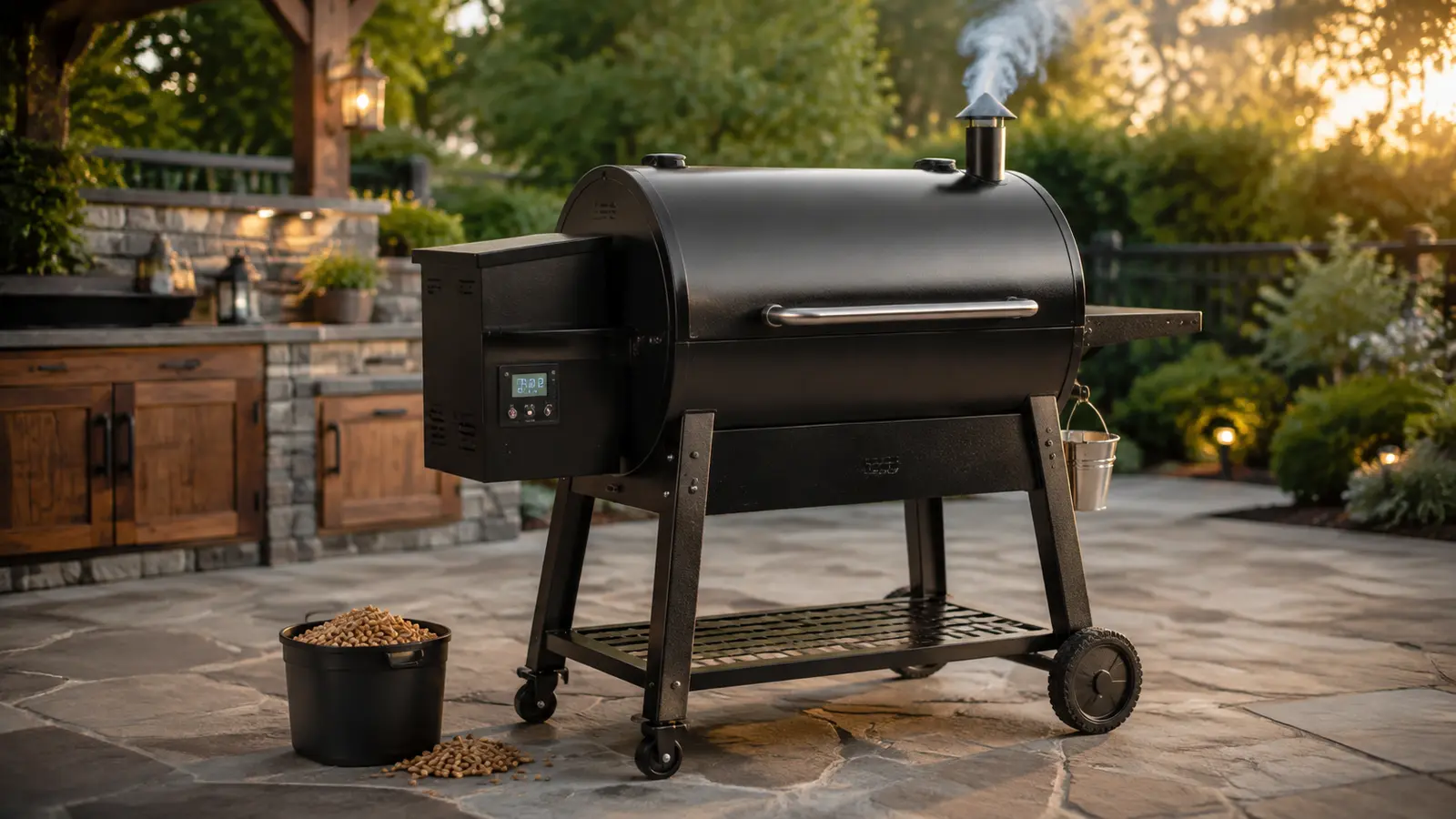
Quick Answer: Choose a Traeger pellet grill if you want easy low-and-slow cooking, WiFIRE remote control, broad recipe and support resources, and the simpler cleanup found on current Woodridge, Ironwood, and Timberline models. Choose another brand if stronger wood smoke, direct-flame searing, heavy-duty construction, or the lowest price matters more.
Go to Amazon for Traeger Price (paid link)
Table of Contents
- Is Traeger actually better?
- Traeger versus other brands at a glance
- 1. Easy controls and low-and-slow cooking
- 2. WiFIRE app and connected ecosystem
- 3. Super Smoke on selected models
- 4. Easier cleanup on current models
- 5. Model and accessory choices
- 6. Support, parts, and warranty coverage
- Where competing brands are better
- Which Traeger should you consider?
- Who should buy or skip Traeger?
- Final verdict
- Frequently asked questions
Is Traeger Actually Better Than Other Pellet Grill Brands?
Traeger is better for buyers who value convenience and a complete ownership ecosystem, but it is not the automatic winner for smoke intensity, searing, construction, or price. The right comparison must be between exact models because a base Woodridge, Woodridge Pro, Ironwood, and Timberline do not include the same features. Nearly every modern pellet grill uses an electric controller, auger, firepot, and fan to feed pellets and regulate heat. Traeger does not have a monopoly on set-it-and-forget-it cooking, Wi-Fi, meat probes, or smoke settings. Its advantage is how these pieces work together across the grill, phone app, recipes, accessories, owner information, and support system. That makes Traeger especially attractive to a first-time pellet grill owner who does not want to assemble a cooking system from several different brands. An experienced barbecue cook may prefer a competitor that concentrates more heavily on one goal, such as real wood-chunk smoke, direct-flame searing, or thicker metal. I have been grilling since 1970, and I judge a grill by how well it fits the owner—not by how recognizable the name is. This guide compares current published features and practical tradeoffs. It does not claim that I personally cooked side by side on every grill mentioned.
How Does Traeger Compare With Other Pellet Grill Brands?
Traeger’s clearest wins are ease of use, the connected app-and-recipe system, current cleanup design, and broad model support. Camp Chef has a stronger option for adding real wood smoke, while Weber and selected Pit Boss models offer more direct high-heat cooking.
| Buying factor | Where Traeger stands out | Where another brand may be better |
|---|---|---|
| Ease of use | Simple controller operation, app guidance, recipes, alerts, and model-specific support | A less expensive non-connected grill may be simpler if you do not want app features |
| Remote cooking tools | WiFIRE can monitor and adjust compatible grills through the Traeger app | Weber, Camp Chef, Pit Boss, GMG, and recteq also have connected models |
| Smoke flavor | Super Smoke adds a useful low-temperature smoke option on selected models | Camp Chef Woodwind Pro accepts wood chips or chunks in a separate Smoke Box |
| Searing | Woodridge Elite adds a dedicated side sear station | Weber Searwood offers 600°F DirectFlame cooking; selected Pit Boss grills use a Flame Broiler lever |
| Cleanup | Current Woodridge, Ironwood, and Timberline designs direct much of the grease and ash toward an accessible keg | No pellet grill eliminates brushing, grease checks, or periodic ash removal |
| Value | Strong value when you will use the app, support, cleanup, and accessory features | A value-focused competitor can offer more grate space or direct-flame hardware for the money |
For a wider model-by-model comparison, see my best pellet grills in 2026. That guide explains why there is no single brand winner for every type of cook.
1. What Makes a Traeger Pellet Grill Easy to Use?
A Traeger automates pellet feeding and airflow so the owner can select a cooking temperature and spend less time adjusting fuel or vents. This is particularly useful during brisket, pork shoulder, rib, and other long cooks. That convenience is not exclusive to Traeger, but the company presents the grill, controller, app, cooking instructions, maintenance guidance, and recipes as one connected system. A new owner can learn one set of controls instead of matching a third-party thermometer, separate recipe app, and unfamiliar controller. Pellet grills still need attention. The owner must keep pellets dry, start the grill correctly, watch food temperatures, prevent grease buildup, and follow the shutdown cycle. Wi-Fi does not make an outdoor cooker safe to leave completely unattended. What Traeger reduces is routine temperature babysitting—not the owner’s responsibility.
Does Traeger Hold an Exact Temperature All the Time?
No pellet grill holds one exact number every second. The controller cycles fuel and airflow, so normal movement around the set temperature should be expected. Weather, wind, opening the lid, pellet quality, ash buildup, and the amount of cold food in the cooking chamber can all affect recovery. Traeger’s connected controls make it easier to follow the cook and notice a meaningful problem. They do not prove that every Traeger is more accurate than every rival under every condition. Buyers who cook through cold winters should compare insulation and chamber design as carefully as they compare the controller screen.
2. Is Traeger WiFIRE a Real Advantage?
Yes, WiFIRE is a real advantage for someone who wants the grill, food monitoring, recipes, alerts, maintenance information, and support inside one established app. On compatible models, Traeger says the app can set timers, provide cook alerts, check pellet levels on selected grills, activate Super Smoke where equipped, and start the shutdown process. The official Traeger app page also provides recipes, assembly information, maintenance help, and access to customer support. This broader collection is more useful than Wi-Fi by itself. Remote temperature adjustment is common now; the surrounding ownership tools are what give Traeger its stronger identity. WiFIRE is not a reason to overpay if you dislike cooking from a phone. A person who walks past the grill regularly may be perfectly happy with an onboard controller and a reliable wireless meat thermometer. App features can also vary by model, phone, and software version, so confirm the exact functions before buying.
3. Does Traeger Produce Better Smoke Flavor?
Selected Traeger models produce a controlled, mild wood-smoke profile, but Traeger does not automatically produce more smoke than every competing pellet grill. Super Smoke is useful, yet buyers wanting the strongest possible smoke should compare it with systems that burn wood chips or chunks. According to Traeger, Super Smoke operates from 165°F to 225°F. It is available on newer Ironwood and Timberline grills and selected Woodridge models, including the Woodridge Pro and Woodridge Elite. The base Woodridge should not be assumed to include it. Super Smoke makes the most sense early in a low-and-slow cook, when the food can take on smoke before the cooking temperature is raised. It does not turn a pellet grill into an offset smoker burning splits of wood. Pellet smoke is generally cleaner and lighter, which some families prefer and experienced stick-burner cooks may find too mild. Camp Chef takes a different approach on the Woodwind Pro. Its Smoke Box can supplement pellet fuel with wood chips or chunks. That makes Camp Chef the more interesting choice when maximum smoke customization is the main goal.
4. Is a Current Traeger Easier to Clean?
Current Woodridge, Ironwood, and Timberline models simplify routine cleanup by directing much of the grease and ash toward the EZ-Clean Grease & Ash Keg. It is a meaningful convenience advantage, although it does not remove every cleaning job. The keg is easier to reach than dismantling several greasy internal pieces every time the grill needs attention. This matters to anyone with limited hand strength, back discomfort, or little interest in crawling around the grill. The system can make regular maintenance less frustrating, which may help an owner perform it more consistently. Traeger’s own support guidance says ash can still accumulate beneath the heat shield. The inside still needs periodic inspection and ash removal, and grease must never be allowed to build into a fire risk. Grates still need brushing, the grease path needs checking, and the weather cover is still worth using. Weber’s Searwood also has a front-access pull-and-clean grease-and-ash system, so Traeger no longer stands alone in this area. The fair conclusion is that new Traeger cleanup is substantially improved over many older barrel-style pellet grills—not that rivals have stopped improving.
5. Does Traeger Offer Better Model and Accessory Choices?
Traeger offers a useful ladder from straightforward connected grills to insulated premium cookers, plus accessories designed around its current grill families. That lets buyers remain in one ecosystem as their desired capacity and features increase. The base Woodridge focuses on connected control, cooking space, the newer grease-and-ash system, and accessory compatibility. Stepping up within the Woodridge family can add Super Smoke, more workspace, storage, or a dedicated sear station, depending on the exact version. Ironwood adds a touchscreen-style premium experience and dual-wall insulation. Timberline sits at the top for buyers building a more elaborate outdoor cooking setup. This range is helpful only if the upgrade solves a real problem. Do not pay for a large chamber if most meals are for two people. Do not buy Super Smoke merely because its name sounds impressive if you usually cook burgers at high temperature. Do not buy a connected model if your outdoor Wi-Fi is poor and you have no intention of using the app. Accessories can also become an unnecessary expense. Compare the complete package: grill, front shelf, cover, extra rack, thermometer, searing equipment, and pellet storage. A competitor that includes the shelf or storage you need can be the better value even when its base grill appears similarly priced.
6. Are Traeger Support, Parts, and Warranty Coverage Better?
Traeger’s broad support library, model-specific replacement-parts information, and current limited warranties make long-term ownership easier to understand. The important warning is that warranty length and component coverage change by grill generation and model. Traeger publishes setup help, troubleshooting, Wi-Fi assistance, manuals, maintenance instructions, and replacement-part guidance through its support system. That does not guarantee every claim will be approved or every part will arrive immediately, but it gives owners a clear place to begin when a controller, probe, fan, igniter, or auger needs attention. The current Traeger service and warranty page lists several different policies. Its 10-year limited warranty applies to touchscreen Ironwood and Timberline models and Woodridge models, with coverage varying by component and period. Older Pro, Ironwood, Timberline, and non-connected grills can fall under different terms. Never compare grills by the largest warranty number alone. Read what is covered, for how long, what normal wear excludes, whether proof of purchase is required, and whether you may need to install a shipped replacement part yourself.
Where Are Other Pellet Grill Brands Better Than Traeger?
Other brands can be better when your first priority is heavy smoke, direct-flame searing, maximum cooking area for the money, very heavy construction, or local dealer service. Traeger’s balanced ecosystem does not erase these specialized advantages.
Is Camp Chef Better for Strong Smoke Flavor?
Camp Chef Woodwind Pro is the stronger choice for buyers who specifically want to burn wood chips or chunks alongside pellets. Its Smoke Box creates a flavor-control option that Super Smoke does not copy exactly. Traeger remains easier for the cook who prefers to fill the hopper, choose a temperature, and let the controller manage the fire. Camp Chef rewards the person who wants to experiment with wood species and manage an additional smoke source.
Is Weber Searwood Better for Steaks?
Weber Searwood has the stronger built-in case for whole-grate high-heat searing. Weber publishes a 180°F-to-600°F range, DirectFlame cooking, and a full-grate sear zone on the Searwood 600. Most current standard Traeger pellet-cooking chambers top out at a published 500°F. The Woodridge Elite addresses searing with a separate side station, but that is a different approach and a higher trim. If burgers and steaks make up most of your meals, compare those systems before assuming Traeger is the best all-purpose grill.
Is Pit Boss Better for Space and Direct Flame?
Selected Pit Boss grills may give value-focused buyers more cooking space and direct-flame hardware for the money. For example, current models such as the Platinum 1250 combine a large cooking area with a Flame Broiler lever, Wi-Fi, and Bluetooth. The tradeoff is that model lines, controllers, retail exclusives, and included features vary considerably. Compare the exact SKU and retailer warranty instead of assuming every Pit Boss or every Traeger has the same strengths.
Are Premium Heavy-Duty Brands Built Better?
Some premium competitors emphasize thicker steel, stainless-steel components, or welded construction more heavily than mainstream Traeger models. Those grills may hold up better for a buyer who values mass and repairable construction above portability, app polish, or retail availability. Heavier does not automatically mean better for every patio. It can make assembly, moving, and seasonal storage harder. Compare material specifications, wheel design, corrosion protection, local service, and replacement parts—not shipping weight alone.
Which Traeger Pellet Grill Should You Consider?
Start with the base Woodridge, then move upward only when you can name the exact feature you need. Buyers should confirm current specifications because Traeger can sell older and newer generations at the same time.
| Traeger family | Best fit | Check before buying |
|---|---|---|
| Pro Series | Buyers considering a familiar older connected Traeger design | Older cleanup layout and model-specific warranty; Pro 575 and Pro 780 do not include Super Smoke |
| Woodridge | First-time buyers wanting current cleanup and WiFIRE without every premium feature | The base model does not list every feature included with Pro or Elite versions |
| Woodridge Pro or Elite | Buyers who will use Super Smoke, more workspace, or the Elite sear station | Whether the extra feature is worth the complete package price |
| Ironwood | Frequent low-and-slow cooks wanting insulation, touchscreen controls, and premium convenience | Capacity and feature differences between Ironwood sizes and generations |
| Timberline | Premium outdoor-kitchen buyers who know they will use the added integration | High total cost and whether a separate smoker-and-searing setup would serve you better |
You can also compare a current Traeger with another connected brand in my Traeger versus Green Mountain Grills guide, or see the older connected design in my Traeger Pro 575 review.
Who Should Buy a Traeger—and Who Should Skip It?
Buy a Traeger when easy long cooks and a well-supported connected system matter more than maximum smoke or direct-flame heat. Skip it when you would be paying for features you will not use or when another grill’s specialized strength fits most of your cooking.
Buy a Traeger If:
- You want simple low-and-slow temperature control.
- You expect to monitor long cooks from your phone.
- You will use Traeger recipes, alerts, maintenance help, and support.
- You prefer the current Woodridge-style grease-and-ash cleanup approach.
- You want several model tiers within one accessory system.
- You prefer a mild, clean pellet-smoke profile.
Skip Traeger If:
- You want wood-chunk or stick-burner smoke intensity.
- You mainly cook steaks and burgers over direct flame.
- You do not want electronics, an app, or dependence on electricity.
- A lower-priced model gives you every feature you will actually use.
- You prioritize very heavy construction over mobility and convenience.
- You have unreliable outdoor power and want a simpler cooker.
Final Verdict: Why Choose a Traeger Pellet Grill?
Choose Traeger for one of the most complete and approachable pellet-grill ownership experiences—not because the logo guarantees the best cooking performance in every category. Traeger’s genuine strengths are its easy controller approach, WiFIRE app, recipe and support system, Super Smoke on selected models, improved cleanup on current families, accessory choices, replacement-parts guidance, and model-specific limited warranties. These features can make a Traeger easier to learn and less frustrating to own. Camp Chef is the stronger specialist when you want to add real wood chunks. Weber Searwood has the clearer whole-grate searing advantage. Selected Pit Boss models can offer considerable cooking space and direct-flame hardware. Premium heavy-duty brands may appeal more to buyers focused on metal and long-term rebuildability. My recommendation is simple: list the three things you do most often. If they are smoking brisket or pork, monitoring long cooks from indoors, and keeping cleanup manageable, start with the current Traeger Woodridge family. If your list begins with hard-seared steaks, heavy wood smoke, or the lowest possible purchase price, compare the specialist before buying the better-known name.
Go to Amazon for Traeger Price (paid link)
Frequently Asked Questions About Traeger Pellet Grills
Are Traeger Pellet Grills Worth the Extra Money?
A Traeger is worth the extra money when you will use its connected controls, owner support, current cleanup design, recipes, and accessories. It is poor value when you only need basic temperature control and a less expensive grill provides the cooking area and hardware you need.
Do Traeger Grills Produce More Smoke Than Other Pellet Grills?
No, Traeger does not automatically produce more smoke than every competing pellet grill. Selected models offer Super Smoke between 165°F and 225°F, but Camp Chef Woodwind Pro can supplement pellets with wood chips or chunks for a stronger smoke option.
Can a Traeger Sear a Steak?
A Traeger can brown and finish a steak, but most standard Traeger cooking chambers do not provide the same direct radiant heat as charcoal or an open-flame system. The Woodridge Elite adds a separate sear station. Buyers focused on steak should also compare the Weber Searwood and direct-flame Pit Boss models.
Can You Use a Traeger Without Wi-Fi?
Yes, compatible Traeger grills can perform basic cooking from the onboard controller without Wi-Fi. WiFIRE adds remote monitoring, temperature changes, alerts, recipes, and selected model functions; it is not the source of the grill’s heat.
Can You Use Other Brands of Pellets in a Traeger?
Use only dry, food-grade hardwood grilling pellets that meet the requirements in the manual for your exact Traeger. Never use home-heating pellets. Check the current warranty terms because damage caused by unsuitable fuel, moisture, or improper maintenance may not be covered.
Which Traeger Is Best for a First-Time Pellet Grill Owner?
The current base Woodridge is the sensible starting point for many first-time owners because it combines WiFIRE with the newer cleanup system. Move to Woodridge Pro for Super Smoke and additional features only if you know you will use them. Always confirm capacity and included equipment before ordering.
Is Traeger Better Than Pit Boss?
Traeger is generally the better fit for buyers prioritizing its app ecosystem, support resources, and current Woodridge cleanup design. Pit Boss can be the better fit for buyers seeking large cooking capacity, direct-flame hardware, or aggressive value in a specific retailer-exclusive model.
Is Traeger Better Than Weber Searwood?
Traeger is the stronger ecosystem choice, while Weber Searwood is the stronger built-in searing choice. Weber publishes a 600°F maximum and DirectFlame full-grate searing. Choose according to whether long connected smoking or frequent high-heat cooking matters more.
Why Trust Everything Grill Reviews?
Frank W. Roberts has been grilling since 1970. Everything Grill Reviews separates verified manufacturer specifications from buying judgment and does not claim hands-on testing that did not occur. This guide was checked against current Traeger, Weber, Camp Chef, and Pit Boss product or support information.
Explore more buyer-focused coverage in the Pellet Grill Reviews hub.
Related Pellet Grill Guides
Manufacturer references: Traeger Woodridge series, Traeger Ironwood series, Traeger app, Traeger service and warranty, Weber Searwood 600, Camp Chef wood chunks and Smoke Box guidance, and Pit Boss Platinum 1250. Focus keyword: why choose a Traeger pellet grill SEO title: Why Choose a Traeger Pellet Grill? 6 Real Advantages Slug: why-choose-a-traeger-pellet-grill Meta description: Learn where Traeger pellet grills truly stand out, where competing brands are better, and whether Traeger’s features justify the price for you. Article schema: ON FAQ schema: ON