
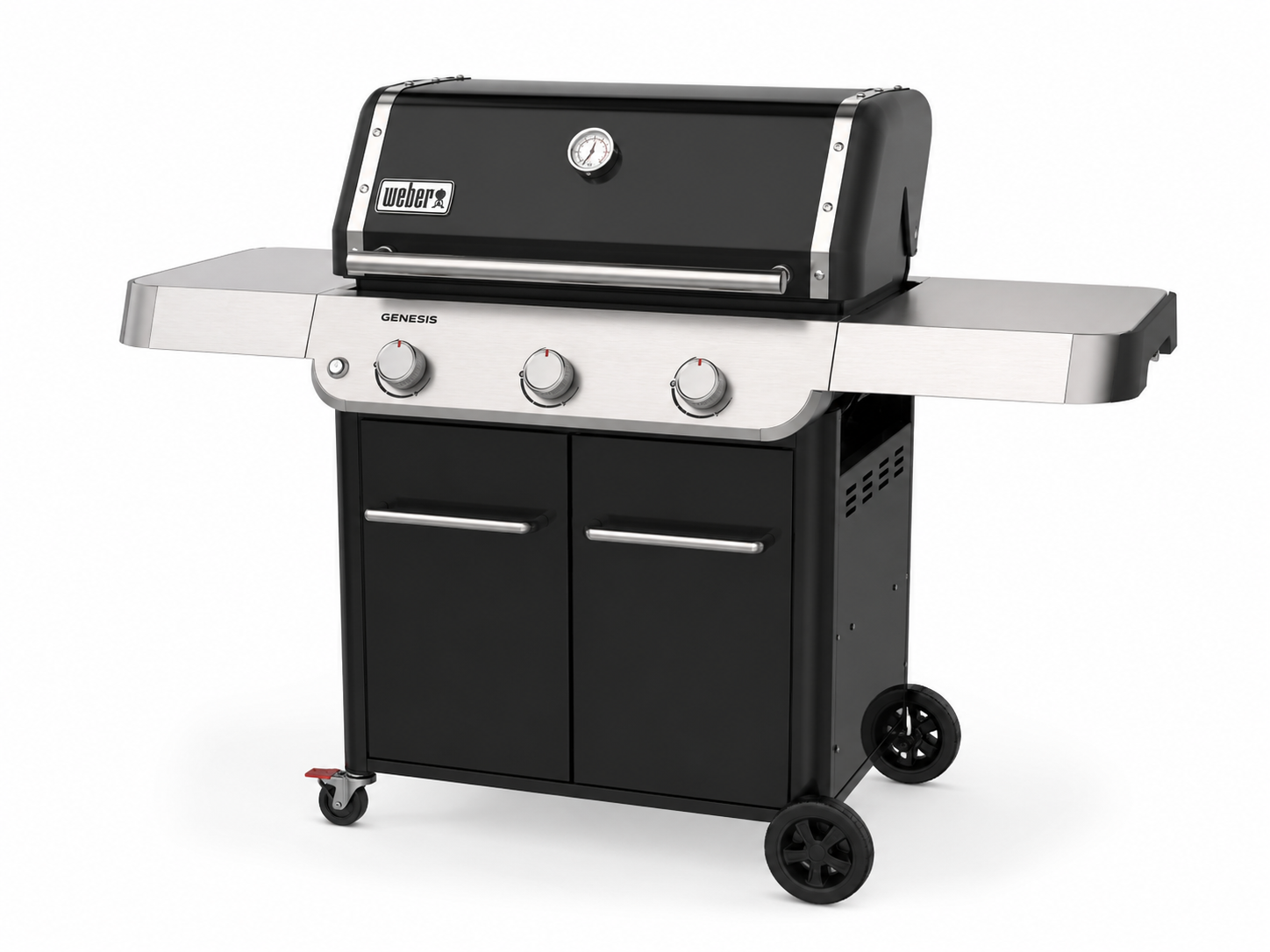

Weber Genesis S-315 Liquid Propane Gas Grill Review
Best for: Backyard grill buyers
A solid option worth comparing before you buy.
Check Price on AmazonAs an Amazon Associate I earn from qualifying purchases.
Updated: August 28, 2026
Updated and fact-checked: August 27, 2026
Weber Genesis S-315 Liquid Propane Gas Grill Reviews keep circling the same buyer problem: you want a mid-range Weber that will still light in year ten, but this trim deletes the sear zone, side burner, and tank gauge. The S-315 is the stainless three-burner Genesis built for weeknight cooking and long parts support, not for maximum hardware per dollar.
Quick Answer: Is the Weber Genesis S-315 Worth Buying?
Yes, if you want a durable three-burner propane grill for family weeknights and will keep it covered. Skip it if steakhouse sear is the main event. Weber’s own Genesis E-325 adds a sear zone on the same cookbox. The S-315 is a stripped stainless trim with even heat, 7mm stainless grates, and a long cookbox warranty. It is not the most grill for the money on day one.
Key Points
- Manufacturer specs for the LP S-315 (model 1500568): 3 PureBlu burners, 39,000 BTU, 513 sq in primary grate, 128 sq in warming rack, 641 sq in total.
- The useful metal is the cookbox, stainless lid, stainless Flavorizer bars, and 7mm Weber Crafted stainless grates.
- There is no sear burner, side burner, tank gauge, or Weber Connect display on this trim.
- Warranty, per Weber’s 2022 Genesis terms: 12 years cookbox and lid (rust-through/burn-through), 10 years burners, stainless grates, and Flavorizer bars, 5 years remaining parts.
- Owner patterns across major retailers repeatedly praise even heat and first-click lighting. Repeated complaints are the missing tank scale, wind sensitivity, cart rust if left uncovered, and light-duty casters.
- Everyday gas grilling is the job. Low-and-slow brisket is possible with adjustments. It is not the reason to buy this grill.
Who Should Buy the Weber Genesis S-315?
Buy the S-315 if you grill a few nights a week for a household of about four to eight and care more about parts, warranty, and even heat than extra burners. The owner record on this grill is full of people replacing an older Weber that lasted a decade or more. That is the product on offer: not the most features, the longest ordinary gas grill.
Skip the S-315 if:
- Hard sear is the point. Weber sells that hardware on the Genesis E-325, which adds an extra-large sear zone and a 13,000 BTU sear burner on the same 513-square-inch primary cookbox.
- You regularly cook for a crowd. 513 square inches of primary grate is a family grill, not a team-party grill.
- You want a tank gauge, side burner, grill light, or Weber Connect. Those live on higher Genesis trims.
- Low-and-slow barbecue will be a regular event. Propane still needs added wood smoke, and a kettle or pellet cooker does that job better.
What Are the Weber Genesis S-315 Specs?
The current LP model is Weber part 1500568: three stainless PureBlu burners, 39,000 BTU-per-hour input, 513 square inches of primary cooking area, and 7mm Weber Crafted stainless grates. Use the manufacturer numbers below. Some older listings still advertise a larger total area. Weber’s own spec sheet lists 128 square inches of warming rack and 641 square inches total, not the inflated “total area” figures that count extra rack space as if it were grate space.
| Spec | Weber Genesis S-315 LP (1500568) |
|---|---|
| Fuel | Liquid propane, 20 lb tank sold separately. Natural-gas version is a separate model (1500569) and is not field-convertible. |
| Main burners | 3 stainless PureBlu tubes, 39,000 BTU-per-hour input total |
| Sear / side burner | None |
| Primary cooking area | 513 sq in |
| Warming rack | 128 sq in |
| Total cooking area | 641 sq in |
| Capacity (manufacturer) | Up to 20 burgers or 17 steaks |
| Grates | Weber Crafted 7mm stainless steel |
| Weight | 162 lb |
| Lid closed | 48.10 in H x 57.70 in W x 27.00 in D |
| Warranty (2022 Genesis terms) | 12 yr cookbox and lid; 10 yr burners, stainless grates, Flavorizer bars; 5 yr remaining parts; 3 yr Weber Connect components if equipped |
| Status | Current product as of August 27, 2026. Street price moves; Weber has listed the LP grill at $899 off a $999 list price. Confirm the day’s price before buying. |
Source: Weber’s Genesis S-315 LP product page and Weber’s published 2022 Genesis warranty schedule. Last verified August 27, 2026.
How Is the S-315 Built, and What Does That Mean on the Patio?
The cookbox and stainless food-contact parts are the reason to pay Genesis money. The open cart and missing extras are the reason some buyers should walk.
Cookbox and lid. Weber uses a cast-aluminum cookbox under a heavy stainless lid on the S trim. Owners repeatedly credit that lid with holding heat and making the burner knobs more usable. A box that holds heat recovers faster after you open the lid. The 12-year rust-through/burn-through warranty on the cookbox and lid is Weber pointing at the metal it expects to last.
Burners. Three PureBlu stainless tubes, 39,000 BTU total. Weber’s design pitch is tapered tubes for even pressure and raised flame ports so debris falls below the openings instead of into them. The owner pattern matches the pitch more often than not: first-click ignition and even side-to-side heat are the compliments that keep showing up across retailers. Burners carry a 10-year rust-through/burn-through warranty, and Genesis parts are widely stocked. That parts network is a real ownership advantage in year eight or nine.
Grates. 7mm solid stainless rods, Weber Crafted compatible. This is the practical difference versus porcelain-coated cast iron on cheaper E-series trims. Cast iron can sear a little harder. Stainless lasts longer, cleans easier, and does not chip porcelain into food. Grates are warrantied 10 years against rust-through/burn-through.
Flavorizer bars and grease tray. Stainless bars sit over the burners, vaporize drippings, and shed grease into a pull-out tray. That is most of the “gas grill flavor” you will get, because propane itself burns clean. Flare-up complaints are not the dominant owner theme on this grill. Empty the tray every few cooks. Grease fires come from neglected trays more often than from this design.
The cart. Current Genesis 300-series carts are open. The tank and the underside sit in weather. Humid-climate and coastal owners report rust on cart steel, shelf undersides, and fasteners long before the cookbox is in trouble. Cover the grill. Professional testers and owners have also criticized the casters on this heavy 162-pound unit: light-duty wheels and locks that stick. You will probably park it and leave it, but the wheels do not match the cookbox quality.
What Weber left off. No propane tank scale. That is the most specific repeated owner complaint, and it stings because earlier Genesis grills had one and smart trims can monitor tank level through Weber Connect. There is also no side burner, no sear zone, and no grill light. Those are sold upstairs in the Genesis family, not omitted by accident.
How Does the Genesis S-315 Cook Day to Day?
Weeknight grilling is the S-315’s real job: burgers, chicken, sausage, chops, and vegetables over even heat. Owners repeatedly describe 10-to-15-minute preheats and the last burger cooking like the first. Recovery after the lid opens is helped by the heavy hood.
Searing is the limit. Fully preheated, lid down, dry meat, hot stainless rods — the S-315 can put a respectable crust on a steak. Respectable is the honest word. There is no sear zone on this trim. Professional comparisons consistently give harder crust to Weber’s own E-325 sear zone and to Napoleon’s infrared Sizzle Zone on higher Rogue trims. If Tuesday ribeye is the reason you are shopping, that gap is real. If steaks are occasional, you may never miss it. Aftermarket grate inserts are a common owner workaround; they are not factory equipment.
Weber Crafted compatibility means the cookbox accepts Weber’s drop-in griddle, pizza stone, and rotisserie hardware sold separately. Professional testers have described those swaps as straightforward. Budget for the accessory if you want that cooking style. It is not in the box.
Can the Weber Genesis S-315 Smoke a $100 Brisket?
Yes, with these adjustments. I would not trust it as a dedicated brisket cooker.
Propane adds almost no smoke of its own. On a long low cook, drip vapor on the Flavorizer bars is limited. A brisket can come off tender and juicy if you run indirect heat correctly. It will not taste like an offset or a charcoal cooker unless you add wood.
Long-term gas-Genesis owners on barbecue forums have published workable setups that line up with how a three-burner box behaves: one burner on low, meat over the unlit side, grate-level thermometer next to the meat because the lid dial reads the dome. Weber customer service has described the all-burners Low range on Genesis as roughly 250–350°F; one burner is how owners get under that. Wind changes the result. An open cart and a 39,000 BTU ceiling leave less margin on a breezy day.
If you run the cook on this grill:
- Indirect setup: left burner on its lowest setting, middle and right off. Meat over the dead burners.
- Add smoke with a pellet tube or foil pouches of dry chips over the lit burner for the first hours. Do not soak wood and expect cleaner smoke.
- A water pan on the hot side helps stability and keeps the flat from drying.
- Wrap at the stall if the cook stalls in the 150s–160s internal.
- Pull on probe feel a little north of 200°F internal, then rest wrapped.
- Start a full tank or stage a spare. There is no tank gauge.
If brisket will be a regular event, buy a charcoal kettle or a pellet cooker for that job and keep the Genesis for the other 300 nights. That is the honest fuel split, not a knock on this cookbox.
$100 Brisket Test: Yes, with these adjustments.
How Does the S-315 Compare With Nearby Gas Grills?
At this budget the clean fight is Weber’s own E-325, then Napoleon Rogue 425 trims and Broil King Baron 420-class grills. Prices move. Compare current street price and primary grate size, not brochure total area.
| Decision point | Genesis S-315 | Genesis E-325 | Napoleon Rogue 425 class | Broil King Baron 420 class |
|---|---|---|---|---|
| Why it exists | Stainless Genesis, no sear zone | Same box plus extra-large sear zone | Heat and sear hardware | More metal per dollar |
| Primary grate | 513 sq in | 513 sq in | 425 sq in on the 425 | Four-burner class; confirm the exact trim |
| Sear hardware | None | 13,000 BTU sear zone | Sizzle Zone on SIB/SE trims | No dedicated infrared sear on base trims |
| Grates | 7mm stainless | Porcelain-coated cast iron | Cast iron; stainless on some SE trims | Usually heavy cast iron |
| Tradeoff | Longer-lived food-contact stainless, fewer features | Better steak nights, coated lid and iron grates | Stronger sear, smaller primary grate, harder assembly reports | More hardware day one, shorter “everything else” warranty on many trims |
Weber’s E-325 is the in-house argument against the S-315. Same primary area and PureBlu main burners, plus the sear zone, with porcelain-coated exterior and cast-iron grates. If you will use a sear zone weekly, the E-325 is the better Genesis. If you want stainless rods and a stainless lid in weather, the S-315 earns its trim.
Napoleon Rogue 425-class grills often win heat-and-sear conversations. They also come with a smaller 425-square-inch primary grate and a long record of painful assembly. Broil King Baron 420-class grills throw more iron at the money and sometimes include a rotisserie kit on Pro trims. The owner loyalty is real. The warranty fine print on small parts is often thinner than Weber’s five years on remaining parts. Confirm the exact current Baron trim; model names move.
The S-335 adds a side burner and sear burner to the stainless Genesis idea at a higher price. Only step up if you will use both extras. Otherwise you are buying hardware you will cover with a cutting board.
What Does Ownership Actually Cost?
The grill’s best argument is year-nine parts, not the showroom spec sheet. Do not treat a changing street price as a promise. As of August 27, 2026, Weber’s own LP listing showed $899 off a $999 list price, and other dealers were in the same band or a little higher. Check the price on the day you buy.
Plan on a cover. That is not optional if the cart will see rain or salt air. Flavorizer bars are consumables. Igniter batteries are cheap. An igniter module and a grease tray may show up later in the life of the grill. Treat any ten-year parts budget as an estimate based on typical replacement-part pricing, not a lab result. A common planning range from those part prices is a couple of hundred dollars over a decade plus the cover, on top of propane. A cheap grill that gets replaced whole costs more than that.
Maintenance that matches the owner record:
- Cover it after every cook.
- Empty the grease tray every two or three cooks.
- Brush the grates hot. Wipe stainless rods with a lightly oiled rag now and then.
- Once a season, pull the grates and Flavorizer bars, scrape the box, and soft-brush burner ports.
- Check burner-tube spider screens. A nest in a tube is a common reason a gas grill suddenly will not heat.
- Leak-test connections with soapy water at every tank swap and before first light. Do not skip that on a new grill.
If a regulator is damaged, a hose is cracked, or you smell gas that a soapy-water test cannot locate, shut the tank off and get qualified service. Do not bypass a safety device.
What Are the Honest Strengths and Weaknesses?
Strengths: even heat, a heat-holding lid, stainless food-contact parts, a pull-out grease tray, Weber Crafted accessory support, a long cookbox warranty, and parts you can actually find.
Weaknesses: no sear zone, no tank gauge, no side burner, light-duty casters, an open cart that rusts if you skip the cover, and a brand premium for a basic feature set.
Situational dealbreakers: an exposed windy patio with no windbreak, and coastal air if you will not cover the grill. Nothing in the current owner record rises to “nobody should buy this.” The simple analog layout is also why there is no smart screen to brick the grill.
Final Verdict: Should You Buy the Weber Genesis S-315?
Buy the S-315 for covered, everyday family gas grilling. Buy the E-325 instead if sear nights matter. Skip both if you want maximum metal per dollar or a real smoker. Everything Grill Reviews rates the Weber Genesis S-315 4.2 out of 5. The heat is even, the cookbox metal is honest, and the parts story is the feature Weber is actually selling. You are also paying Genesis money for a trim that deleted the extras a lot of steak cooks will miss.
Buy this if you want one reliable propane grill for weeknights, you will keep a cover on it, and you would rather pay for the decade than for a sear burner.
Choose the E-325 if steaks and chops are a regular event and you can live with cast-iron grates and a coated lid.
Skip both if you want the most burners and accessories for the money, or if barbecue smoke is the real plan.
Frequently Asked Questions
Is the Weber Genesis S-315 still a current grill?
Yes. Weber still lists the LP S-315 as model 1500568 and the natural-gas version as 1500569. Confirm stock at the retailer. Do not assume Amazon has it on a given day.
How much cooking space does the S-315 really have?
513 square inches of primary grate, plus a 128-square-inch warming rack, for 641 square inches total on Weber’s current spec sheet. Use the primary number when you compare grills. Warming racks are for buns and cooked food, not for counting as steak space.
Does the Genesis S-315 have a sear burner or tank gauge?
No on both. This is the basic analog stainless trim. Sear hardware and tank monitoring live on other Genesis models, including the E-325 sear zone and the smart “s” trims with Weber Connect.
What is the difference between the S-315 and the E-315?
The S-315 uses a stainless lid and panels and 7mm stainless rod grates. The E-315 is the porcelain-coated black sibling with porcelain-coated cast-iron grates. Cookbox, burner count, and the core Genesis warranty structure are the same idea. Stainless ages better in wet climates. Cast iron can sear a bit harder if you maintain it.
S-315 or E-325 — which should I buy?
Take the E-325 if you want Weber’s sear zone. Take the S-315 if you want stainless grates and lid more than extra heat hardware. Same primary cooking area. Different job.
Can I convert the propane S-315 to natural gas?
No. Buy the fuel version you need. Weber sells a separate NG model. Unauthorized conversion can void the warranty and create a leak hazard.
Will a rotisserie or griddle fit?
The cookbox is Weber Crafted compatible, so Weber’s rotisserie, griddle, and pizza stone hardware are sold to fit. They are not included. Budget for the kit.
Can it smoke a brisket?
Yes, with one-burner indirect heat, added wood smoke, a water pan, a calm day, and a full tank. If that becomes a habit, buy a dedicated smoker and keep the Genesis for weeknights.
About Frank W. Roberts
Frank W. Roberts is the author of Everything Grill Reviews. He has grilled since 1970 and brings more than 50 years of backyard cooking and cookoff experience to fire management, fuel behavior, smoke, temperature control, and practical cooker use. This review is not a claim that Frank personally assembled or cooked on this exact S-315. Specifications and warranty terms come from Weber. Cooking notes combine gas-grill technique with attributed owner patterns and professional testing already in the public record. Last verified August 27, 2026.
Weber Genesis S-315 Liquid Propane Gas Grill Review
Best for: Backyard grill buyers
A solid option worth comparing before you buy.
Check Price on Amazon