
Updated: October 2, 2026
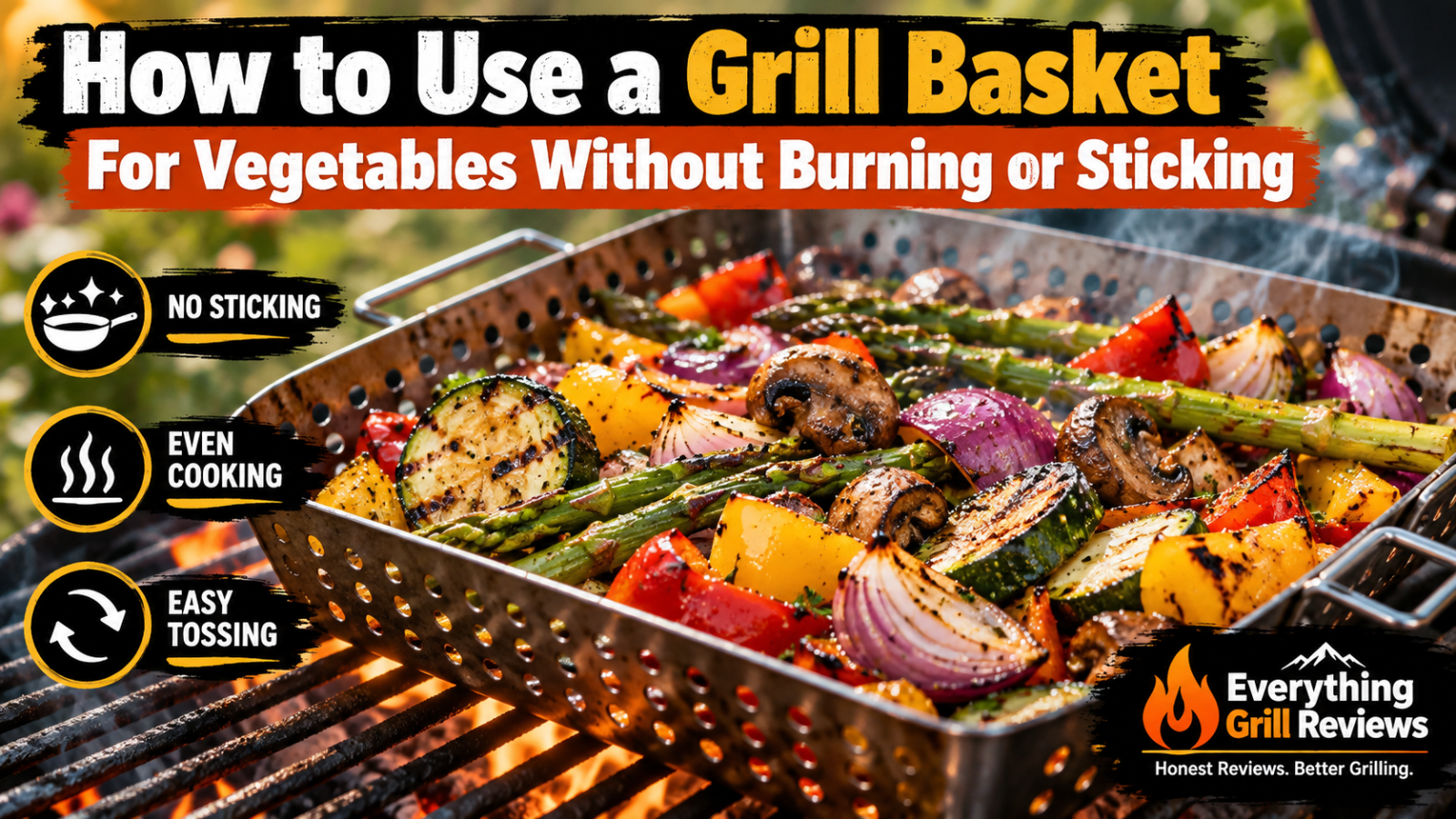
Learning how to use a grill basket for vegetables solves three common problems at once: small pieces stop falling through the grate, mixed vegetables become easier to turn, and you can move the whole batch away from harsh heat before the edges burn. The basket does not make every vegetable cook at the same speed, though. Good results still depend on even cutting, a full preheat, restrained oil, enough open space, and a plan for faster- and slower-cooking vegetables.
Quick Answer: Preheat a clean grill basket with the grill for about 10 to 15 minutes, wash and thoroughly dry the vegetables, cut them into similar-size pieces, and toss them with a thin coating of oil and seasoning. Spread them in one loose layer, grill over medium-high direct heat, and stir every few minutes. Move the basket to indirect heat if the vegetables are browning before they become tender. Add quick-cooking vegetables later instead of forcing everything to finish at the same time.
Table of Contents
- Why use a grill basket?
- Which type of basket works best?
- How to prepare vegetables
- Step-by-step grilling method
- Vegetable timing chart
- Gas, charcoal, and pellet grill setup
- Mistakes and troubleshooting
- Cleaning and storage
- Frequently asked questions
Why Should You Use a Grill Basket for Vegetables?
A grill basket keeps small food above the fire while still letting hot air and some direct heat reach it. It is especially useful for diced peppers, onion wedges, mushrooms, green beans, asparagus pieces, cherry tomatoes, sliced squash, and other food that is awkward to turn one piece at a time.
The basket is a control tool, not a shortcut around basic grilling. Its openings allow browning and smoke exposure, but its bottom also reduces direct contact with the main cooking grate. That means vegetables may not develop the same dark parallel marks as thick slices placed directly on the bars. In exchange, you gain easier stirring, fewer lost pieces, and the ability to move the entire batch in one motion.
A basket is most useful when:
- The pieces are small enough to fall between the grill grates.
- You are cooking several vegetables that need frequent stirring.
- You want browned edges without threading everything onto skewers.
- You need to shift the food quickly between direct and indirect heat.
- You want to keep vegetables separate from raw meat and its juices.
For larger slabs such as halved peppers, thick eggplant planks, corn on the cob, or zucchini halves, the main grate may provide stronger marks and more surface contact. The basket is an option, not a requirement for every vegetable.
Which Type of Grill Basket Works Best?
A rigid, open-top stainless-steel basket with holes or slots is the most versatile choice for mixed vegetables. It stays stable while you stir, tolerates ordinary grill heat, and lets moisture escape. Pick a size that fits your grill with room around it for airflow and, on a gas or charcoal grill, leaves space for a cooler zone.
| Basket style | Best use | Main limitation |
|---|---|---|
| Rigid perforated stainless basket | Mixed vegetables, mushrooms, shrimp, small meat pieces | Food can stick if the basket is cold or overloaded |
| Fine-mesh basket | Very small pieces and thin green beans | Less direct heat and more difficult cleanup |
| Nonstick-coated basket | Delicate food at moderate heat | Coating has a manufacturer-set heat limit and can be damaged by metal tools |
| Hinged clamshell basket | Whole fish, sliced vegetables, food flipped as one unit | Not ideal for stirring a loose mixed batch |
| Rotisserie basket | Food designed to tumble during cooking | Requires a compatible rotisserie and is a different cooking method |
Read the basket instructions before the first cook. A bare stainless basket and a coated basket do not necessarily share the same temperature limits, cleaning tools, or preheating directions. A purpose-built insert may also require a matching frame. Weber, for example, says its WEBER CRAFTED basket replaces one cooking grate and requires the compatible frame and grate system. A universal freestanding basket simply rests on top of the existing grate.
How Large Should the Holes Be?
The openings should be smaller than the food after it softens. A raw onion wedge that looks secure can separate into narrow layers as it cooks. Thin asparagus tips and cut green beans also find wider slots. If the openings are too large, cut larger pieces or choose a finer basket. Do not cover an open basket with loose foil just to rescue tiny food; foil blocks airflow and can collect oil.
How Do You Prepare Vegetables for a Grill Basket?
Wash the produce under running water, dry it well, cut it by cooking speed, and apply only enough oil to make the surfaces lightly glossy. Water left on the food creates steam and delays browning. Excess oil drips into the grill and encourages flare-ups.
FoodSafety.gov advises washing fruits and vegetables before preparation, drying them with a clean cloth or paper towel, and keeping them separate from raw meat, poultry, and seafood. Do not wash produce with dish soap or household cleaner.
Cut by Cooking Speed, Not Just Appearance
Hard vegetables need smaller pieces or a head start. Soft vegetables need larger pieces or a later start. If every item is cut into the same half-inch cube, the zucchini can collapse before a carrot becomes tender.
- Dense vegetables: Cut carrots, sweet potatoes, winter squash, and thick broccoli stems smaller than soft vegetables. Brief par-cooking is reasonable when you want them to finish with a quick-cooking mix.
- Medium-speed vegetables: Use bite-size bell pepper pieces, onion wedges, broccoli florets, cauliflower florets, and whole or halved mushrooms.
- Quick vegetables: Keep zucchini and summer squash fairly thick. Add cherry tomatoes, delicate asparagus, and already-cooked vegetables near the end.
How Much Oil Should You Use?
Use about 1 to 2 tablespoons of high-heat cooking oil for roughly 1 1/2 to 2 pounds of prepared vegetables, then toss thoroughly. The exact amount depends on surface area. Broccoli absorbs more than whole mushrooms; smooth pepper pieces need less. Stop when the food is lightly coated rather than wet or dripping.
Oil the food, not a blazing-hot basket with an aerosol can. Spraying oil toward a lit grill can create a flash of flame, and a heavy pool of oil in the basket can run into the fire. If your basket instructions call for oiling the cooking surface, do it before the basket becomes dangerously hot and use a paper towel held with long tongs.
When Should You Add Salt and Sauce?
Salt just before grilling so the vegetables do not sit long enough to shed a large puddle of water. Dry seasonings can go on with the oil. Add sugary barbecue sauce, honey, maple syrup, balsamic glaze, or sweet teriyaki only near the end because sugar darkens faster than the vegetables soften.
How Do You Use a Grill Basket for Vegetables Step by Step?
Preheat the basket, add a loose single layer, close the lid, and stir at intervals until the vegetables are browned and tender. Use direct heat for color and indirect heat to finish without scorching.
- Clean and inspect the basket. Start with a basket free of loose carbon, rust flakes, damaged coating, or leftover grease. Confirm that handles and fasteners are secure.
- Build a controllable fire. On gas or charcoal, create a hot side and a cooler side. The site’s guide to two-zone grilling explains the setup.
- Put the empty basket in place. Follow its instructions. Weber’s published directions for its stainless WEBER CRAFTED basket call for preheating it with the grill for approximately 10 to 15 minutes.
- Prepare the food during preheat. Wash, dry, cut, oil, and season the vegetables. Keep raw meat and its utensils away from the ready-to-eat produce.
- Add the slow vegetables first. Dense vegetables may need a 5- to 10-minute head start, depending on size and grill heat. Add tender vegetables only when the first group has begun to soften.
- Spread, do not pile. Use one loose layer when possible. If the food is stacked deeply, the bottom browns while the top steams.
- Close the lid. The lid traps heat around the food so the center softens while the exposed surfaces brown.
- Stir every 3 to 5 minutes. Use a long-handled spatula or tongs appropriate for the basket finish. Turn the pale pieces down and move dark pieces toward the edge.
- Control browning with zones. If the exterior is dark but the center is still firm, move the basket to the cooler side and close the lid. Do not keep adding oil.
- Finish by texture. Remove the batch when the pieces are tender enough for the dish and have browned edges. Vegetables do not all need to become soft; peppers and green beans are often better with some bite.
- Transfer safely. The basket and handles may remain dangerously hot. Use heat-resistant gloves and set it on a heat-safe surface, not plastic, wood, or a glass table.
Do not overcrowd the main grill with a basket plus a full load of meat. Leave space to work and prevent raw meat juices from dripping into cooked vegetables. If dinner includes sausage, the separate pellet grill sausage and vegetables guide gives safe finishing temperatures and a coordinated 375°F method.
How Long Do Vegetables Take in a Grill Basket?
Most bite-size vegetables need roughly 8 to 25 minutes over medium-high grill heat after the basket is fully preheated. Treat these as starting ranges, not promises. Piece size, starting temperature, moisture, basket thickness, grill design, wind, and lid position all change the clock.
| Vegetable | Suggested cut | Starting time range | Doneness cue |
|---|---|---|---|
| Bell peppers | 1-inch pieces | 10–15 minutes | Flexible with browned edges |
| Onion | 1-inch wedges with root end partly intact | 12–18 minutes | Translucent edges and light char |
| Zucchini or summer squash | Thick half-moons or 1-inch chunks | 8–12 minutes | Browned but not collapsing |
| Mushrooms | Whole small mushrooms or halved large ones | 10–15 minutes | Browned and juicy, not shriveled dry |
| Asparagus | Whole thick spears or large pieces | 6–10 minutes | Bright, lightly blistered, crisp-tender |
| Green beans | Whole, ends trimmed | 8–14 minutes | Blistered in spots and crisp-tender |
| Broccoli or cauliflower | Small, even florets | 12–18 minutes | Stem yields to a fork; tips browned |
| Carrots | Thin diagonal slices or small batons | 15–25 minutes | Tender center and browned edges |
| Cherry tomatoes | Whole | 5–8 minutes | Wrinkled and beginning to split |
| Par-cooked baby potatoes | Halved | 10–15 minutes | Crisp cut face; creamy center |
Raw potatoes and sweet potatoes often outlast a mixed basket. Par-cook them until the centers have started to soften, dry them, then grill for browning. If you prefer to grill them from raw, cut them smaller and start them well before zucchini, tomatoes, or mushrooms.
What Is the Best Temperature for Grill-Basket Vegetables?
A grill temperature around 375–450°F is a practical working range for most mixed vegetables. The lower end gives dense pieces more time to soften; the upper end browns faster and demands more frequent stirring. The temperature at the food can differ from the lid gauge, so judge the batch by both color and texture.
If the vegetables stay pale and release water, the basket may be too crowded or the grill may not be fully preheated. If thin edges turn black before the centers soften, reduce the heat, move to the indirect zone, or cut the dense vegetables smaller on the next batch.
A pellet grill at 375–400°F can roast basket vegetables steadily, but it may not brown as aggressively as a hot charcoal or gas fire. Let moisture escape, avoid piling, and do not keep opening the lid to chase color.
How Does the Method Change on Gas, Charcoal, or Pellet Grills?
Gas Grill
Preheat the grill and basket with the lid closed, then use medium-high heat under the basket. Leave one burner off or lower so you have a rescue zone. If oil drips and flames rise, move the basket away from the flame and close the lid. The site’s flare-up guide explains why water should never be thrown on a grease fire.
Charcoal Grill
Bank the lit coals on one side and put the basket over the direct side for browning. Rotate the basket because the coal-side edge will often run hotter. Move it over the empty side when the color is ahead of the texture. Keep the top vent open enough for clean combustion and control heat primarily with fuel arrangement and the bottom vent.
Pellet Grill
Set the cooker around 375–400°F, preheat fully, and place the basket where the manual recommends. Pellet grills generally provide indirect convection heat, so there may be no true burner-off zone. Stir for even exposure and rotate the basket if your cooker has a known hot side. If the model has an open-flame or sear feature, use it only as the manual allows; thin vegetables and oil can burn quickly over exposed flame.
What Are the Most Common Grill-Basket Mistakes?
Starting With a Cold Basket
A cold basket encourages sticking and delays browning. Put it in during preheat if the manufacturer permits it. Weber specifically instructs users to preheat its WEBER CRAFTED basket in place for about 10 to 15 minutes.
Overcrowding the Basket
A deep pile traps steam. The vegetables soften, release more water, and struggle to brown. Cook two batches or use a second basket instead of filling one to the rim.
Mixing Vegetables That Cook at Different Speeds
Raw carrot chunks and cherry tomatoes do not belong on the same start line. Cut dense food smaller, par-cook it, or give it a head start. Add delicate vegetables later.
How Do You Use Too Much Oil?
Oil should coat the vegetables, not collect in the corners. Pooled oil promotes flames on gas and charcoal grills and makes the food greasy. If food sticks, solve the heat, dryness, or timing problem before pouring on more oil.
Stirring Constantly
Food needs uninterrupted contact time to brown. Stir every few minutes, not every few seconds. When pieces release more easily and show color, turn them.
Adding Sweet Sauce Too Early
Sweet glazes can blacken while a dense center remains hard. Cook the vegetables nearly tender, then toss or brush with sauce for the final few minutes.
How Do You Use the Wrong Tool on a Coated Basket?
Metal tongs or a sharp spatula can scratch some nonstick finishes. Follow the basket maker’s tool and heat-limit instructions. Discard or replace cookware with a coating that is peeling into food.
Why Are My Vegetables Burning Before They Get Tender?
The heat is too intense for the piece size, the vegetables are too dense, or the basket is sitting over direct fire for the entire cook. Move it to indirect heat, lower the burners, or partially close the charcoal intake vent. On the next cook, cut hard vegetables smaller or par-cook them before grilling.
Black specks from dried herbs are not always burned vegetable tissue. Large herb flakes and pepper can scorch at high heat. Use sturdy spices early and add delicate fresh herbs after grilling.
Why Are My Grill-Basket Vegetables Soggy?
Soggy vegetables usually come from crowding, wet produce, insufficient preheat, too much salt too early, or a lid opened so often that the grill never recovers. Dry the food, use a loose layer, preheat completely, and give the vegetables time to brown between stirs.
Some vegetables naturally soften and release water. Zucchini, mushrooms, and tomatoes will never behave like dry potato wedges. Pair vegetables with similar cooking behavior, or add the watery ones after firmer pieces have started browning.
How Do You Clean a Grill Basket?
Let the basket cool, remove loose food, then wash it according to its finish. Weber says its stainless WEBER CRAFTED basket is dishwasher-safe but recommends handwashing with mild detergent and a non-abrasive nylon brush or sponge to extend its life. It also says to dry the basket thoroughly before storage.
- Move the empty hot basket to a heat-safe surface with grill gloves.
- Let it cool until it is safe to handle. Do not plunge a blazing-hot basket into cold water.
- Soak stubborn residue in warm, soapy water if the instructions allow.
- Use a non-abrasive nylon brush or sponge on stainless and coated surfaces.
- Rinse away soap and dry completely before storage.
For baked-on residue on the Weber stainless model, the company recommends a paste of three parts baking soda to one part water, followed by a non-abrasive scrub, rinse, and thorough drying. That is manufacturer guidance for that basket, not permission to use the same treatment on every coating. For broader grate care, see the site’s guide to deep cleaning grill grates without damaging the finish.
What Safety Rules Matter With a Grill Basket?
- Use the grill outdoors and follow the grill maker’s clearance requirements.
- Treat the basket, handles, frame, and food-contact tools as hot until proven otherwise.
- Use long tools and dry heat-resistant gloves; wet fabric transfers heat quickly.
- Do not spray aerosol oil toward flame or glowing charcoal.
- Keep raw meat and its juices away from washed vegetables and clean serving utensils.
- Do not carry cooked vegetables in the same unwashed dish that held raw meat.
- Do not throw water on a grease flare-up.
- Stop using a basket with broken welds, sharp exposed wires, severe rust, or peeling coating.
Final Verdict: What Is the Easiest Way to Grill Vegetables in a Basket?
Preheat the basket, dry the vegetables, coat them lightly with oil, and cook one loose layer at a time. Start dense vegetables first and add tender ones later. Stir often enough to expose new surfaces, but not so often that nothing browns. Most important, give yourself a cooler finishing zone. A grill basket keeps the pieces together; two-zone heat keeps their color and tenderness under control.
The best batch is not the one with the darkest char. It is the one in which the hard vegetables are tender, the delicate vegetables still have shape, and the seasoning tastes roasted rather than burned. Once you sort the vegetables by cooking speed, the basket becomes a repeatable tool instead of a metal bowl sitting over fire.
Frequently Asked Questions
Do you preheat a grill basket?
Yes, if the manufacturer permits it. Preheating improves browning and helps reduce sticking. Weber instructs users to preheat its WEBER CRAFTED grilling basket in place for approximately 10 to 15 minutes.
Should you oil the grill basket or the vegetables?
Lightly oil the vegetables first. That provides a more even coating and reduces the chance of excess oil dripping into the fire. If the basket maker also recommends oiling the surface, apply a thin film safely before it becomes extremely hot.
Can you put a grill basket directly over charcoal?
Yes, when the basket is made for direct grill heat. Place it over a controlled coal bed for browning, then move it to the empty side if the vegetables darken too quickly. Follow any heat restrictions for coated baskets.
Can you use a grill basket on a pellet grill?
Yes. A perforated basket works well on a pellet grill around 375–400°F. Preheat it, avoid crowding, and stir or rotate it if one side of the cooker runs hotter.
Can you use aluminum foil instead of a grill basket?
You can make a foil packet or use a sturdy perforated foil pan, but it will not cook exactly like an open basket. Solid foil traps steam and reduces direct browning. Never let loose foil block vents, touch a flame where the grill manual forbids it, or interfere with grease drainage.
How do you keep vegetables from falling through a grill basket?
Choose openings smaller than the softened food, cut larger pieces, and remember that onion wedges can separate into thin layers. Use a fine-mesh basket for green beans, small asparagus pieces, or finely cut vegetables.
How often should you stir vegetables in a grill basket?
Stir about every 3 to 5 minutes as a starting point. Very high heat or delicate food may need closer attention. Let the pieces sit long enough to brown before each stir.
Can you cook meat and vegetables in the same grill basket?
You can only if the basket is large enough, the ingredients follow a compatible cooking schedule, and all meat reaches its safe internal temperature. It is usually easier and safer to use separate baskets or separate zones so raw meat juices do not contaminate vegetables that may finish first.
Why do vegetables stick to a grill basket?
The basket may be cold, dirty, overloaded, or insufficiently oiled. Preheat it as directed, dry the vegetables, use a thin oil coating, and wait for browned surfaces to release before forcing them with a spatula.
About Frank W. Roberts
Frank W. Roberts is the author of Everything Grill Reviews. He has grilled since 1970 and brings more than 50 years of backyard cooking and cookoff experience to fire control, grill setup, and practical outdoor cooking. This guide is based on current manufacturer basket instructions and federal food-handling guidance, with timing ranges presented as practical starting points rather than guarantees. Last verified September 30, 2026.