
Updated: October 22, 2026
Updated and fact-checked: October 21, 2026
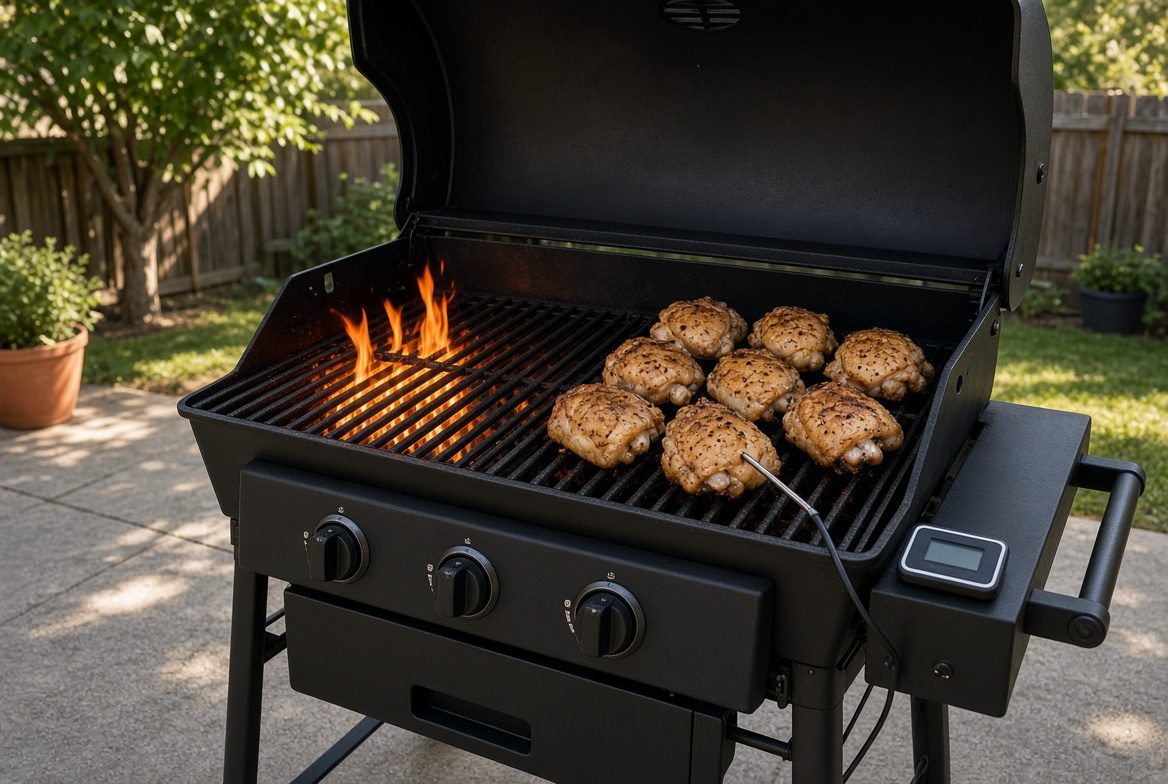
Gas grill chicken thighs cook best on a two-zone setup at about 375°F so the skin can brown while the meat finishes without burning. Bone-in, skin-on pieces reach the USDA safe minimum of 165°F in the thickest meat beside the bone. Time after preheat is an estimate only.
Quick Answer: How Do You Grill Chicken Thighs on a Gas Grill?
Set a two-zone fire, preheat to roughly 375°F on the hot side, and finish the thighs over the unlit burners with the lid closed until they hit 165°F. Most bone-in pieces take 35 to 50 minutes after preheat, but size, starting temperature, weather, and how often the lid opens change the clock. Probe the thickest meat beside the bone. Color is not a safety test.
Key Points
- Use a two-zone setup: hot side for color, cool side to finish.
- Pat the skin dry and season lightly. Wet skin steams instead of crisping.
- Place thighs skin-side up on the indirect side with space between pieces.
- USDA minimum for all poultry is 165°F in the thickest part. Many cooks take dark meat to 175–180°F for texture.
- Rest 5–10 minutes. Move briefly to the hot side only if the skin still needs color.
- Time is an estimate. Use a thermometer.
What Ingredients and Tools Do You Need?
Bone-in, skin-on chicken thighs, salt, pepper, a simple rub, oil, and an instant-read thermometer. You do not need a special marinade or sauce for the basic cook. Oil the skin lightly so the seasoning sticks. A leave-in probe helps if you have one, but an instant-read works.
- 3 to 4 pounds bone-in, skin-on chicken thighs
- Kosher salt and black pepper
- Optional light rub: paprika, garlic powder, onion powder
- Neutral oil or a light brush of oil on the skin
- Instant-read thermometer
- Tongs and a clean plate for finished pieces
How Do You Set Up the Gas Grill?
Light the burners on one side and leave the other side off to create a clear hot zone and a cooler finishing zone. Preheat with the lid closed for 10 to 15 minutes. On a two-burner grill, light one. On a three- or four-burner, light one or two and leave at least one off. The temperature gap has to be obvious. The site’s guide to two-zone grilling on charcoal or gas covers the burner layout in more detail.
Aim for about 375°F on the hot side once the grill is up to temperature. The cool side will run lower, which is the point. Keep the lid closed during the indirect stretch so the box works like a small oven.
How Do You Prepare the Chicken Thighs?
Pat the skin completely dry, season both sides, and oil the skin lightly. Dry skin browns and crisps better than wet skin. Salt early if you have time. Keep the pieces cold until the grill is ready. Leave at least an inch of space between pieces on the grate so air can move.
What Are the Cooking Steps?
Start the thighs on the cool side, skin-side up, and finish to 165°F. Do not park them over full direct heat the entire time.
- Place the thighs skin-side up over the unlit burners. Leave space between pieces.
- Close the lid. Leave them alone for the first 20 to 25 minutes.
- Check the thickest meat beside the bone with an instant-read thermometer. Keep the probe off the bone and the joint.
- Continue cooking until every piece reaches at least 165°F. If the skin is still pale, move the pieces briefly to the hot side for color, watching closely so they do not scorch.
- Pull the thighs, rest them 5 to 10 minutes on a clean plate, and serve.
Estimated time after preheat is 35 to 50 minutes. Thicker pieces or colder weather can push it longer. Opening the lid often slows the cook.
What Temperature Is Safe for Chicken Thighs?
The USDA safe minimum for all poultry, including thighs, is 165°F. Measure in the thickest meat near—but not touching—the bone. The agency’s Safe Minimum Internal Temperature Chart lists 165°F for breasts, whole birds, legs, thighs, wings, and ground poultry. Dark meat can feel softer if you take it to 175–180°F. That higher number is a texture preference, not a different safety rule. Juice color is not a reliable test.
Leftovers should be refrigerated within two hours and reheated to 165°F.
What Common Mistakes Happen with Gas Grill Chicken Thighs?
The usual error is leaving the thighs over full direct heat until the skin burns while the bone side is still underdone. Two-zone cooking prevents that. Other problems include wet skin that steams, overcrowding the grate, trusting color instead of a thermometer, and opening the lid every few minutes. If the cool side will not hold enough heat to finish thick pieces, crack the nearest burner to low instead of turning the whole grill into direct heat.
Final Verdict: Should You Grill Chicken Thighs on a Gas Grill at 375°F?
Yes, when you use a two-zone setup and stop at a verified 165°F. Gas gives steady heat and easy zone control for weeknight chicken. The skin will not always match a hot charcoal sear, but the method is reliable if you keep the lid closed on the indirect side and probe the thickest meat. It is a practical cook, not a competition entry.
Frequently Asked Questions
How long do chicken thighs take on a gas grill?
Most bone-in thighs take 35 to 50 minutes after the grill is preheated, but time is only an estimate. Thickness, starting temperature, outdoor weather, and lid openings all change the clock. Probe for 165°F rather than relying on minutes.
Should chicken thighs go skin-side up or down?
Start skin-side up on the indirect side so circulating air can dry the surface while fat renders away from the meat. Brief skin-side contact with the hot zone at the end is optional if you want more color. Full-time direct heat scorches the skin.
Can you add smoke flavor on a gas grill?
Yes, with a small smoker box or foil packet of dry hardwood over one lit burner and the food on the cool side. A short clean smoke is enough for chicken thighs. The site’s guide on adding smoke flavor to a gas grill covers the details without turning the cook into a long smoke.
Do chicken thighs need a rest?
A short 5- to 10-minute rest lets the juices settle. Cover them loosely if the kitchen is cool. Do not skip the thermometer check before the rest.
Related Reading
- How to Set Up Two-Zone Grilling on Charcoal or Gas
- How to Use a Meat Thermometer Correctly on a Grill or Smoker
- How to Add Smoke Flavor to a Gas Grill
- How to Get Crispy Chicken Skin on a Pellet Grill
About Frank W. Roberts
Frank W. Roberts is the author of Everything Grill Reviews. He has grilled since 1970 and brings more than 50 years of backyard cooking and cookoff experience to fire management, fuel behavior, smoke, and practical cooker use. This article covers a standard two-zone gas-grill method for chicken thighs based on established technique and USDA guidance. It is not based on a single product test. Last verified October 21, 2026.