
Updated: October 25, 2026
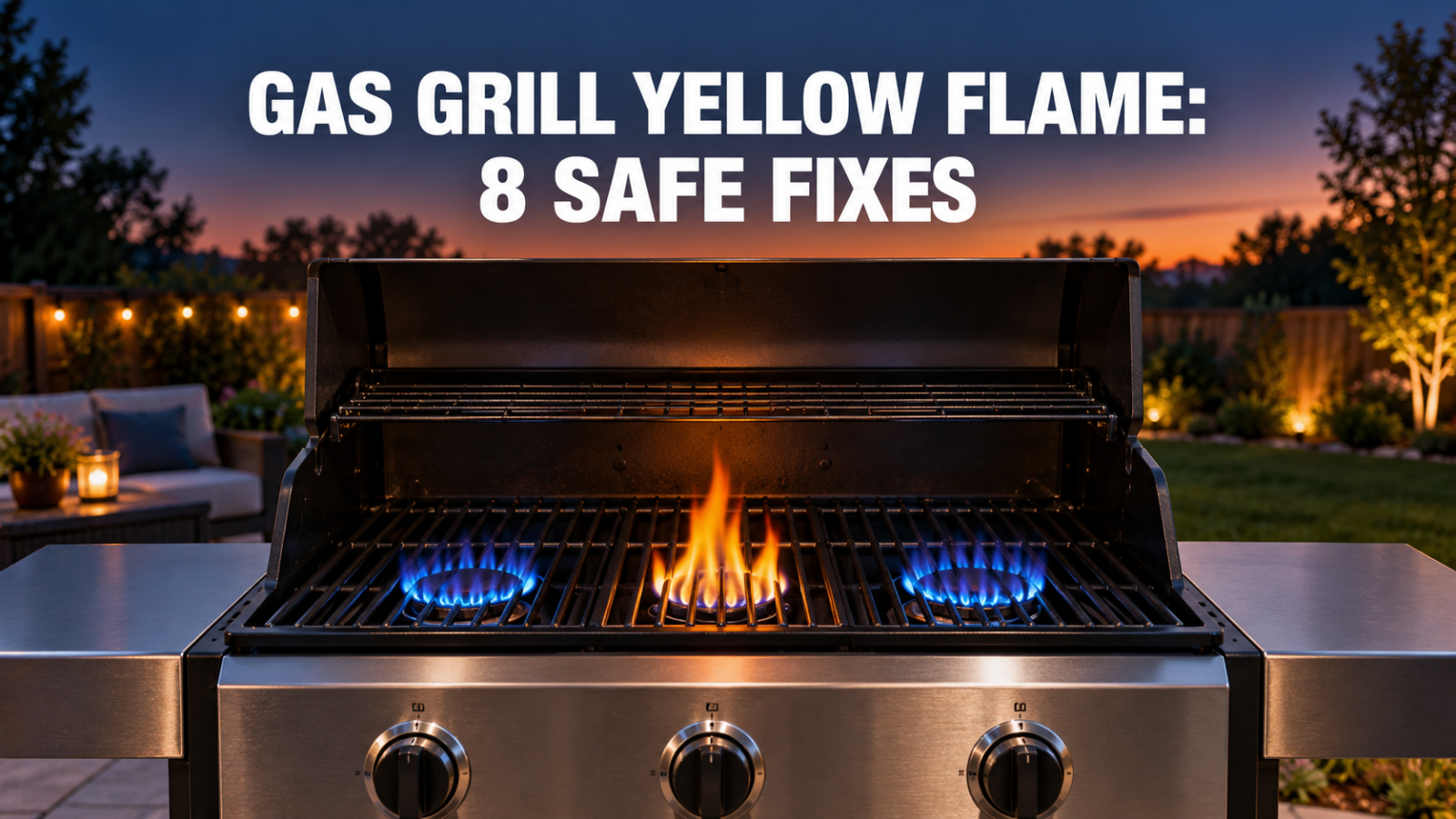
A persistent gas grill yellow flame needs attention, especially if it is tall and lazy, leaves black soot, or comes with a gas odor. Most conventional gas-grill burners should produce an even, mostly blue flame, although occasional small yellow tips can be normal. The eight checks below explain what you can safely inspect, what to clean, and when to stop and call for service.
Updated and fact-checked: October 24, 2026
Key Points
- Know the difference: A persistent gas grill yellow flame needs investigation; occasional small yellow tips can be normal.
- Start with a safe shutdown: Let the grill cool and close the fuel supply before removing parts.
- Check airflow and burner condition: Dirty ports, blocked inlet screens, insect nests, damaged burners, and poor seating can affect combustion.
- Use the exact manual: Cleaning methods, lighting sequences, and approved replacement parts vary by model.
- Get help for warning signs: Gas odor, soot, flame near the controls, or persistent abnormal flames require attention before cooking again.
What Should a Normal Gas Grill Flame Look Like?
A normal flame on many conventional gas grills is steady and mostly blue, with occasional small yellow tips. Compare it with the flame illustration in your owner’s manual because the correct pattern depends on the burner design.
The lower part may be dark blue and the upper part light blue. Check for an even pattern along the burner ports rather than judging one brief flicker.
According to Weber’s burner-flame guidance, a normal pattern is blue with occasional yellow tips. Napoleon’s grill support guidance explains that insufficient airflow can cause yellow flames and soot, while excessive airflow can make flames lift. A sustained change in flame shape, strength, or location deserves attention.
Look at all burners with the lid open after lighting them according to the manual. A normal pattern should be reasonably consistent from one end of each burner to the other. If one burner has a different pattern than the rest, focus on that burner. If every burner changed at the same time, consider the fuel supply, startup sequence, regulator, or a service issue affecting the whole grill.
What Does a Yellow or Orange Flame Mean?
A persistent, lazy yellow or orange burner flame can indicate that the gas-and-air mixture is wrong. Too little primary air can create yellow flames and black soot; restricted burner ports can make the pattern patchy.
A spider web or insect nest near the burner inlet can disturb airflow enough to cause yellow flames or a flashback near the control panel.
Color is only one clue. Pay attention to the full set of symptoms:
| What you see | What it may mean | First safe response |
|---|---|---|
| Mostly blue flame with occasional small yellow tips | Often normal for that burner | Compare it with the flame pattern in the manual |
| Tall, soft yellow flame on one burner | Blocked ports, dirty air inlet, insect debris, or burner damage | Shut down, cool, and inspect that burner |
| Yellow flame plus black soot on food or lid | Poor air-and-gas mixture or restricted airflow | Stop cooking and correct the cause before reuse |
| Flame lifts away from the burner or makes a roaring sound | Excess airflow, wrong setup, or fuel-system issue | Shut down and use model-specific service guidance |
| Flame appears beneath the control panel | Possible flashback at the burner inlet | Turn off the grill and fuel if safe; do not relight |
| Yellow flame with a gas odor | Possible improper combustion or leak | Do not create a spark or flame; get qualified help |
How Do You Shut Down a Gas Grill Before Inspecting It?
Turn all burner controls off, close the fuel supply as your manual directs, and let the grill cool completely before inspection. Never clean or remove a burner while it is hot or the fuel supply is open.
Use the grill outdoors only, in a well-ventilated location. If gas is escaping or fire prevents you from safely reaching the controls or fuel valve, move away and get emergency help.
For a propane grill, inspect the cylinder connection, regulator, and hose before proceeding. The U.S. Consumer Product Safety Commission’s gas-grill safety guidance recommends checking gas connections with a soapy solution and watching for bubbles. Never search for a leak with a match, lighter, or any other flame. If growing bubbles appear, close the fuel supply if safe and do not light the grill. Follow the manual’s leak-correction instructions; persistent leaks require qualified repair.
Keep the lid open during lighting and failed-lighting recovery. If a burner does not light, turn the controls off and wait the full time specified in the manual—often at least five minutes—before trying again. Unburned gas can collect inside a closed cookbox.
How Do You Fix a Gas Grill Yellow Flame Safely?
Start with a safe shutdown, then follow the eight checks below: verify startup, clean burner ports, clear air-inlet screens, inspect the burner interior if permitted, check burner seating, replace damaged burners, confirm fuel compatibility, and seek help for air settings or fuel-system faults. Do not relight a grill with an unresolved leak, damaged fuel parts, or signs of flashback.
How Do You Restart the Grill With the Correct Lighting Sequence?
Fix 1: Follow the exact lighting sequence in your manual, with all burner controls initially off and the lid open. On propane models, open the cylinder valve slowly when directed. Attempt a restart only after shutdown and inspection have ruled out a suspected leak, damage, or flashback. Use a regulator-reset procedure only when your manufacturer instructs it.
Incorrect propane startup can restrict flow and cause weak flames or low heat. That is a separate clue from a tall, lazy yellow flame, so a restart is only one check.
Do not treat a regulator reset as a universal cure. Different brands specify different steps, and natural-gas grills do not use the same cylinder-regulator procedure. If the flame remains yellow, move on to the burner and airflow checks instead of repeatedly cycling the gas.
How Do You Clean Grease and Debris From Burner Ports?
Fix 2: With the grill cool and the fuel isolated, remove the grates and heat shields as the manual directs, then clean the burner surface using the approved brush and method. Look for grease, marinades, carbon, rust flakes, or food debris on the burner surface. Buildup can block some ports and redirect flame through the remaining openings.
Use the brush type and direction specified for your burner. Weber’s Genesis II burner-cleaning instructions specify a clean stainless-steel bristle brush used across the ports. Keep the brush away from igniter electrodes. Do not use the same greasy brush that cleans the cooking grates.
Never enlarge a port with a drill bit, nail, or sharp pick. The port size is part of the burner’s engineering. Making one hole larger can disturb the gas distribution and create a new hot spot instead of fixing the original problem.
How Do You Clean the Air-Inlet Screens and Spider Guards?
Fix 3: Clean the outside of the inlet screen with the soft brush and access method specified in your manual, while the grill is cool and the fuel is isolated. Clear surface debris without damaging or removing the screen.
Gas enters the burner near the valve, and air enters through an opening or screened area at the inlet. The manual may refer to the inlet assembly, air shutter, venturi tube, or spider/insect screen. A web, nest, dust, or grease there can reduce airflow.
Follow the manual to reach the inlet. Some grills require removal of the control panel, while others expose the screen from underneath. According to Weber’s air-shutter cleaning guidance, the screen exterior can be cleaned with a soft-bristle brush; its factory-set shutters do not need adjustment. Do not dislodge the screen, enlarge its openings, or force a hard tool into the valve orifice.
Check for insect debris when bringing a grill back into use after storage. A small obstruction near the burner inlet can interfere with the air entering the tube.
When Is It Safe to Inspect Inside a Burner Tube?
Fix 4: Inspect inside the burner only when your exact owner’s manual permits removal and explains the cleaning method. If the manual limits owner maintenance to the exterior, contact support about a suspected internal blockage.
Burner-removal procedures differ by model. Follow your exact instructions rather than assuming every burner comes out the same way.
If removal is allowed, look for loose rust, insect material, and debris inside the cool burner tube. Use only the cleaning method named by the manufacturer. Do not poke into the gas valve orifice, change an orifice opening, or substitute a homemade gas-fitting procedure.
When the job requires disconnecting a gas fitting, the manual may require a leak test after reassembly. If you are unsure which fitting the instruction refers to, stop and use the manufacturer’s support line or a qualified gas-appliance technician.
Why Does Correct Burner Seating Matter?
Fix 5: Correct seating aligns the burner inlet with the valve orifice as shown by the manufacturer. Misalignment can disrupt operation even when the burner is clean. Check its supports and position against the manual before relighting.
Incorrect seating can occur after cleaning, moving the grill, replacing a burner, or disturbing the cookbox during repair.
Do not bend the valve, force the burner into place, or guess at the alignment. Secure every fastener the manual identifies. A burner that will not sit correctly may be warped, incorrectly installed, or the wrong replacement part.
When Should You Replace a Damaged Burner?
Fix 6: Replace a burner with split seams, rust-through holes, severe deformation, broken supports, or damage that prevents correct seating. Surface discoloration alone does not mean the burner has failed. Gas escaping through an unintended hole will not follow the designed flame pattern.
Order the exact approved burner for the grill’s model and serial number. Similar-looking burners can use different lengths, mounting points, port patterns, and fuel specifications. If the firebox, manifold, valves, or mounting structure is heavily corroded, ask whether repairing the entire grill is still reasonable.
How Do You Check for the Correct Fuel Parts?
Fix 7: Read the grill’s rating label and check replacement-part numbers against the exact model and fuel type. Propane and natural-gas grills use different fuel components; valves, orifices, regulators, and burner settings must match the approved setup. An undocumented conversion or substitute regulator needs manufacturer review before use.
Check the rating label and model information. Use only the fuel listed for the grill unless the manufacturer provides an approved conversion for that exact model and requires it to be performed by a qualified person. Never drill an orifice, install a random regulator, or copy a conversion video from a different grill.
Should You Adjust the Air Shutter Yourself?
Fix 8: Adjust an air shutter only if the exact manual permits owner adjustment and you have any assistance the manufacturer requires. Many shutters are factory-set. Otherwise, contact the manufacturer or a qualified technician. Excessive opening can make flames lift; insufficient air can produce lazy yellow flames and soot.
Clean the screen first. If the manual gives a specific adjustment procedure, follow it exactly. Otherwise, contact the manufacturer or a qualified technician. Persistent yellow flame after cleaning and correct reassembly may involve the valve, manifold pressure, regulator, air setting, or another component that should not be guessed at.
How Do You Retest a Gas Grill Flame Safely?
Retest only after the approved maintenance is complete, all parts are correctly reinstalled, and there is no suspected leak or damaged fuel component. Light with the lid open as instructed, observe from a safe position, and shut down if the abnormal flame returns.
- Reinstall every burner, fastener, heat shield, and grate in its proper position.
- Complete any leak check required after reconnecting gas parts.
- Move tools and loose cleaning material away from the grill.
- Open the lid and confirm every burner control is off.
- Open the fuel supply and light the grill using the manual’s sequence.
- Observe the burner pattern from a safe position without reaching over the flame.
- Turn the grill off if the flame remains mostly yellow, produces soot, lifts, pops, or appears near the controls.
A successful retest should show a stable pattern along the burner rather than one large flame at a single opening. Let the grill run only long enough to confirm the pattern. Do not put food on the grate until the cause is corrected and the grill operates normally.
Can You Cook on a Gas Grill That Produces Black Soot?
No. Stop cooking when the burner produces black soot. Black soot on food is evidence that the grill is not burning cleanly. Do not wipe the food off and continue cooking over the same abnormal flame. Shut the grill down, discard heavily sooted food, and correct the combustion problem.
A yellow flame also makes temperature control unreliable. The grill may heat unevenly, take longer to preheat, or scorch one area while leaving another undercooked. After the burner problem is fixed, use a food thermometer to verify doneness rather than relying on time or surface color.
For broader heating problems, see how to fix uneven heat on a gas grill. If the igniter sparks but the burner never catches, use the separate gas-grill ignition troubleshooting guide. Those symptoms can overlap, but they do not always have the same cause.
Which Troubleshooting Mistakes Should You Avoid?
Avoid cooking through soot, cleaning hot burners, working with the fuel supply open, enlarging burner ports, guessing at air settings, and buying incompatible parts. Each can leave the original fault unresolved or introduce another problem.
Should You Keep Cooking When the Grill Produces Soot?
No. Stop cooking, shut down safely, and correct the combustion problem before using the grill again. Turning the heat higher does not correct an improper gas-and-air mixture.
Can You Clean a Hot Grill With the Fuel Supply Open?
No. Shut the grill down, close the fuel supply as directed, and wait until every part has cooled. Burners, heat shields, and cookbox parts stay hot long after the knobs are turned off. Let everything cool and isolate the fuel before removing parts.
Should You Enlarge Burner Holes With a Needle?
No. Do not enlarge burner ports. A sharp object can damage a burner port and change its calibrated opening. Brush the exterior as directed and use only the model-specific method for internal cleaning.
Should You Adjust Every Air Shutter at Once?
No. Clean the screens first and leave factory settings alone unless your exact manual authorizes adjustment. Moving several settings also removes the useful comparison between a normal burner and the problem burner. Clean first. Adjust only if the manual explicitly instructs you to do so.
Does Every Yellow Flame Mean a Bad Regulator?
No. Yellow flames can have several causes, including local burner or airflow problems. A regulator issue often affects all burners and may show up as weak heat. One yellow burner more strongly suggests a local obstruction, dirty inlet, poor seating, or damage.
Can You Choose Replacement Parts by Appearance?
No. Choose approved parts using the model number, serial number, and fuel type. A similar-looking burner or regulator can have incompatible mounting points, port patterns, or fuel specifications.
When Should You Stop and Call for Service?
Stop using the grill for gas odor, hissing, leak-test bubbles, flames near the controls, damaged fuel parts, or persistent soot and abnormal flames after approved maintenance. Contact the manufacturer, propane supplier, or a qualified gas-appliance technician before reuse. These are the main reasons to call:
- You smell gas or hear hissing.
- A soapy-water leak check forms bubbles.
- Flames appear beneath or behind the control panel.
- The burner pops, repeatedly goes out, or flames lift away from it.
- Yellow flames and soot remain after approved cleaning.
- The burner, manifold, valve, regulator, hose, or firebox is damaged.
- The grill may have been converted to a different fuel.
- You cannot confirm that the burner is correctly installed.
The CPSC advises consumers not to light a grill when a leak is present and not to repair a propane tank valve themselves. If a fire threatens the cylinder, house, or nearby people, move away and call 911. For ordinary food flare-ups rather than abnormal burner flames, use the site’s guide to preventing grill flare-ups safely.
Frequently Asked Questions
Is a little yellow at the tip of a gas grill flame normal?
Yes, small yellow tips that flicker occasionally can be normal on many burners. Persistent tall yellow flames, soot, popping, gas odor, or flames near the controls are not normal and require shutdown and inspection.
Why is only one gas grill burner yellow?
A one-burner problem usually points to a local obstruction, dirty air inlet, insect web, incorrect seating, or burner damage. Compare it with the other burners after the grill is cool and follow the cleaning steps in the manual.
Why are all my gas grill burners yellow?
If every burner changed at once, check the correct fuel, startup sequence, regulator or supply, and whether any recent repair introduced incompatible parts. Shut down and contact the manufacturer if cleaning does not restore the specified flame pattern.
Can spider webs cause a yellow grill flame?
Yes. A web or nest near the burner inlet can restrict the air entering the burner, creating lazy yellow flames, soot, or flashback. Clean the spider screen and burner only by the method approved for your model.
Can I cook on a gas grill with yellow flames?
Do not cook over a persistent mostly yellow flame, especially when it produces soot or odor. Shut the grill down and correct the combustion problem first.
Does a yellow flame mean the propane tank is almost empty?
Not usually by itself. A low cylinder can reduce heat, but yellow flame more often points to restricted airflow, blockage, poor burner seating, damage, or incorrect fuel components. Diagnose the entire pattern rather than assuming the tank is the cause.
Should I adjust the air shutter myself?
Only if the exact owner’s manual provides an adjustment procedure. Many air shutters are factory-set. Clean the screen first, and use manufacturer support or qualified service if the setting appears wrong.
Can I clean burner ports with a paper clip?
Do not use a sharp object unless your exact manual specifically calls for it. Many manufacturers warn against pins or nails because they can enlarge the ports. A model-approved brush and cleaning direction are safer.
Why is my food turning black on a gas grill?
Heavy black soot can come from poor combustion caused by insufficient airflow, a blocked burner inlet, or incorrect fuel parts. Stop cooking, clean the burner system as directed, and get service if the soot returns.
When should a gas grill burner be replaced?
Replace it when it has a split seam, rust-through hole, severe deformation, broken mounting point, or cannot sit correctly over the valve orifice. Use the exact approved replacement for the grill’s model and fuel type.
Verdict
A persistent gas grill yellow flame needs a cause identified before the next cook. A mostly blue, even flame is the useful baseline. A brief yellow tip may be harmless; a tall yellow flame with soot, odor, popping, or fire near the controls is not. Shut the grill down, let it cool, and work from the outside inward: correct startup, clean burner ports, clear the air inlet, inspect the burner, confirm its seating, and verify the fuel parts.
If ordinary maintenance does not restore the flame pattern, stop there. Gas pressure, valves, orifices, regulators, conversions, and uncertain air adjustments belong with the manufacturer or a qualified technician. That line is worth respecting. Dinner can wait; a fuel-system accident cannot be taken back.
About the Author
Frank W. Roberts has been grilling since 1970 and brings more than five decades of backyard cooking and competitive cookoff experience to Everything Grill Reviews. This guide is based on current manufacturer maintenance instructions, U.S. Consumer Product Safety Commission safety guidance, and established gas-grill troubleshooting practices. It does not claim hands-on testing of every burner design. Safety information and source details were checked October 24, 2026.