
Updated: September 2, 2026
Updated and fact-checked: September 2, 2026 You do not need lighter fluid to start a charcoal grill. A chimney starter, an approved solid fire starter, or an electric charcoal starter can ignite briquettes or lump charcoal without pouring liquid fuel over the coals. The chimney method is the best starting point for most backyard cooks because it is simple, inexpensive, and produces a concentrated batch of evenly lit charcoal. Disclosure: This article may contain affiliate links. If you buy through these links, Everything Grill Reviews may earn a commission at no extra cost to you.
Quick Answer: How Do You Light a Charcoal Grill Without Lighter Fluid?
Fill a chimney starter with charcoal, place a manufacturer-approved solid fire starter or loosely crumpled newspaper underneath, and light it from below. When the top coals begin turning gray and the lower coals glow, carefully pour them into the grill and arrange them for direct or two-zone cooking.
Key Takeaways
- A chimney starter is the best all-around method. It channels heat upward, lights a useful batch of charcoal evenly, and needs no liquid starter.
- Open the vents before lighting. Charcoal needs oxygen, and ash blocking the lower vent can make a new fire struggle.
- Use only approved starters. A wax-based fire cube, plain newspaper, or a purpose-built electric charcoal starter is appropriate when used as directed.
- Never improvise with flammable liquids. Gasoline, alcohol, kerosene, diesel fuel, and similar products can flash, spill, or produce dangerous fumes.
- Do not add liquid to a fire that failed to catch. The U.S. Consumer Product Safety Commission says starter fluids should be used only before lighting and never added after an attempt to ignite the grill.
- Light charcoal outdoors only. Never burn it in a house, garage, shed, tent, vehicle, or other enclosed or partly enclosed space.
- Let the starter burn away before cooking. Put food on only after the charcoal is established and any paper or solid starter has finished burning.
In This Guide
- The best lighter-fluid-free method
- Three safe methods compared
- What to do before lighting
- How to use a chimney starter
- How to light charcoal without a chimney
- How to use an electric starter
- How to tell when charcoal is ready
- How to arrange the lit coals
- Why charcoal will not stay lit
- Frequently asked questions
What Is the Best Way to Light Charcoal Without Lighter Fluid?
The best method for most people is a metal chimney starter lit from underneath with a purpose-made solid fire starter or a small amount of loosely crumpled newspaper. The chimney draws air through openings near its base and concentrates the rising heat through the charcoal above it. A chimney also makes it easy to see when the fuel is ready. Weber advises waiting until the coals at the top begin turning gray with ash, which commonly takes about 10 to 15 minutes depending on weather and the amount and type of charcoal. You can then pour the coals exactly where they are needed. That does not mean a chimney is the only workable option. Solid fire starters can light a compact charcoal pile directly in the grill, and electric starters can ignite charcoal without paper or flame. The right choice depends on the equipment you already own, access to electricity, wind, and how much charcoal the cook requires.
Critical Charcoal Safety Warning
Use a charcoal grill outdoors in a well-ventilated area, away from combustible surfaces and overhead structures. Charcoal produces carbon monoxide until it is completely extinguished. Never light, move, cool, or store a grill with live coals in a garage, home, shed, tent, vehicle, porch, breezeway, carport, or other enclosed or partly enclosed area.
Which Lighter-Fluid-Free Method Should You Use?
Use a chimney starter when you want the most dependable general-purpose method, a solid starter directly in the grill when you do not own a chimney, or a purpose-built electric starter when an appropriate outdoor electrical connection is available.
| Method | Best for | Main advantage | Main limitation |
|---|---|---|---|
| Chimney starter | Most grilling, from a small two-zone fire to a full hot bed | Fast, even ignition with clear visual cues | Requires handling and pouring a hot metal chimney |
| Solid fire starter in grill | A small or medium fire when no chimney is available | Minimal equipment and no electrical cord | Usually lights less evenly and needs careful stacking |
| Electric charcoal starter | Home use near a suitable outdoor outlet | No paper, cube, or liquid fuel | Needs power and a safe place for the hot tool |
Useful Gear: A Charcoal Chimney Starter
If you buy one charcoal accessory, a sturdy chimney starter with a secure handle and heat shield is the most useful choice for this job. Choose a size that fits your usual cooks, follow its capacity and lighting instructions, and use insulated grilling gloves when pouring. Add your preferred chimney-starter offer with the Wild Bill Offers box here.
What Do You Need to Start a Charcoal Grill Without Lighter Fluid?
You need dry charcoal, a clean and stable grill, a safe ignition method, long matches or a utility lighter when using a solid starter, and insulated grilling gloves. Long-handled tongs and a metal charcoal rake are helpful after the coals are lit.
- Dry briquettes or lump charcoal: Damp fuel is slow to catch and may crumble or smoke heavily.
- One approved ignition method: A chimney plus solid fire starter or plain newspaper, a solid starter used directly in the grill, or an electric charcoal starter.
- Long lighter or matches: Keep your hand away from the ignition point.
- Insulated grill gloves: A chimney, charcoal grate, starter tool, and even the grill handle can become dangerously hot.
- Long-handled tongs or charcoal rake: Arrange lit coals without placing a hand over them.
- A safe shutdown plan: Know how the grill vents close and where hot tools will rest before you light anything.
Briquettes are uniform and easy to stack, while lump charcoal varies in size and can light less uniformly. Either one works. If you are choosing fuel for a kettle, see our guide to the best charcoal briquettes for kettle grills.
What Should You Do Before Lighting the Charcoal?
Before lighting, move the grill to a safe outdoor location, stabilize it, remove cold ash that blocks airflow, open the lid, and open the intake and exhaust vents. Check that the charcoal, starter, and tools are dry and ready.
- Choose an open outdoor location. Follow the grill manual for clearance from siding, fences, rails, branches, furniture, dry vegetation, and other combustibles. Do not grill beneath a combustible roof or low overhang.
- Set the grill on a stable surface. Lock casters if equipped. Keep children, pets, loose clothing, and foot traffic away from the lighting area.
- Remove old ash when everything is cold. Ash can block the lower vent and restrict the oxygen a new fire needs. Never put warm ash in a household trash container.
- Open the lid and vents. Open airflow gives the new fire oxygen and prevents a pocket of smoke from building under the lid.
- Inspect the chimney or starter. Do not use a chimney with a loose handle, missing heat shield, severe rust-through, or blocked air holes. Do not use an electric starter with a damaged cord or exposed wiring.
- Plan the coal layout. Decide whether the meal needs a full direct fire, two-zone setup, or just a few lit coals to begin a low-temperature burn.
A clean grill is easier to light and control. If grease, carbon, or old ash has accumulated, clean it while cold before starting. Our grill-grate deep-cleaning guide explains how to match the cleaning method to the grate finish.
How Do You Light a Charcoal Grill With a Chimney Starter?
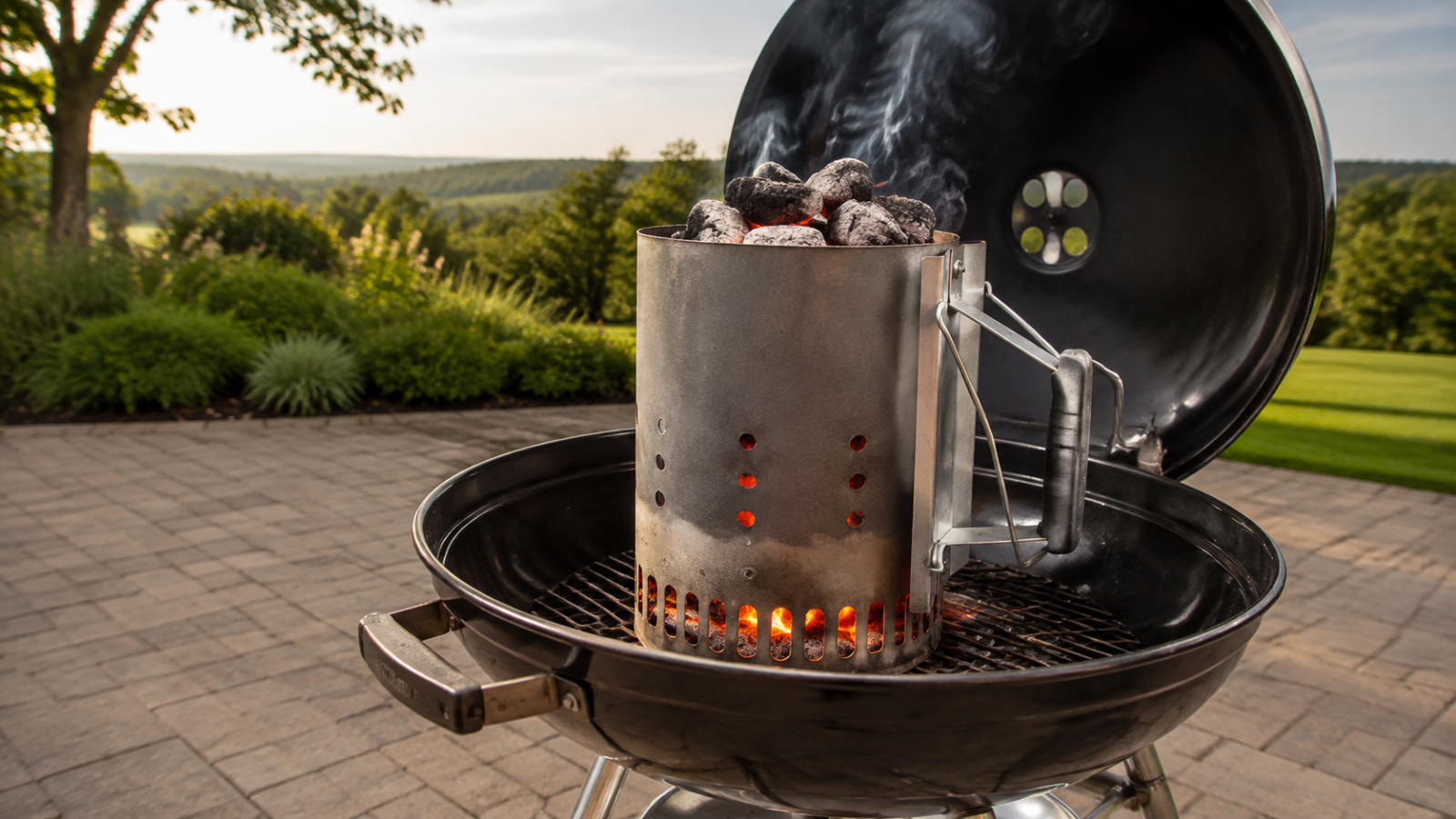
Place a solid starter or loose newspaper under the chimney, fill the chimney with the amount of charcoal needed, ignite from below, and wait until the upper coals begin to ash over. Pour the lit charcoal into the grill carefully, then arrange it with a long-handled tool.
Step 1: Put the Starter on the Charcoal Grate
Remove the cooking grate if necessary and place one or more approved solid fire starters on the charcoal grate, following the starter manufacturer’s directions. If the chimney manufacturer allows newspaper, loosely crumple one or two sheets and place them in the space beneath the chimney. Do not pack paper tightly. The flame needs an open path and the chimney needs air through its lower holes. Avoid glossy inserts, coated paper, plastic, treated wood, or trash. A purpose-made solid cube is generally more reliable than newspaper in damp or windy weather.
Step 2: Fill the Chimney With Dry Charcoal
Set the chimney upright over the starter and add dry charcoal. You do not always need to fill it to the rim. Use more charcoal for a large, high-heat direct cook and less for a small meal, a two-zone fire, or the first lit coals in a low-and-slow setup. Stay within the chimney manufacturer’s capacity. Shake the chimney only when it is cold and before lighting if you need to settle large lump pieces. Once lit, do not pick it up to stir, shake, or inspect the underside.
Step 3: Light the Starter From Below
Use a long match or utility lighter to ignite the paper or solid starter through a lower opening. Confirm that the flame has caught, then step back. Leave the chimney upright on the charcoal grate with the grill lid open. Do not place a lit chimney on dry grass, plastic, a wood deck, or another surface that can burn, melt, stain, or be damaged by concentrated heat. The grill’s charcoal grate is normally the safest working surface when the grill and chimney manuals permit it.
Step 4: Let the Chimney Draft Work
Wait while the flame travels upward. Early smoke from paper or a starter cube should diminish as the charcoal catches. Do not lean over the chimney or look straight down into it. Wind can send sparks and hot ash upward without warning. Weber says a chimney commonly takes about 10 to 15 minutes, with weather affecting the timing. Treat that as a visual checkpoint, not an exact timer. Cold air, wind, damp charcoal, chimney size, and the type of fuel all change the result.
Step 5: Pour When the Top Coals Begin Turning Gray
Put on insulated grill gloves. When the upper pieces are beginning to show gray ash and the charcoal below has a strong orange glow, grip the chimney by its designed handle and pour the coals onto the charcoal grate. Keep your face, bare arms, children, and pets away from the path of sparks. Set the empty chimney in a stable, noncombustible place where nobody can touch it. It will remain dangerously hot after it looks empty. Never set it on a side shelf made from plastic or wood.
Step 6: Arrange the Coals and Preheat the Grate
Use long-handled tongs or a charcoal rake to create the planned heat zone. Replace the cooking grate, set the lid and vents for the recipe, and let the grate preheat. Clean the grate only with a tool appropriate for its finish.
How Do You Light Charcoal Without a Chimney Starter?
Without a chimney, place an approved solid fire starter on the charcoal grate, build a small loose mound of charcoal around and above it, and light the starter through an opening. Leave enough gaps for air, then add or spread charcoal once a stable core is glowing.
- Open the lid and both vents, and make sure cold ash is not blocking the intake.
- Place the number of solid fire starters specified on their package on the charcoal grate.
- Arrange a small pyramid or loose mound of dry charcoal around the starter. Leave the starter accessible and preserve air gaps between pieces.
- Light the starter with a long match or utility lighter.
- Let the center coals catch before adding more charcoal around the established fire.
- When the added charcoal is burning reliably, spread it into the layout needed for the cook.
This method is slower and less uniform than a chimney because the heat is not confined. Resist the urge to bury the starter under a tightly packed pile; a larger pile without airflow is often harder to light than a smaller, looser one.
Can You Use Newspaper Without a Chimney?
Plain newspaper can start a small, carefully stacked charcoal pile, but it is less dependable without a chimney to focus the heat. Paper can blow away, create flying ash, or burn out before damp charcoal catches. If you use it, follow the grill manufacturer’s instructions, use only a small amount of uncoated paper, and secure it beneath a loose mound without choking off airflow. A manufacturer-approved solid starter is usually the cleaner, more consistent choice for direct-in-grill lighting. Never substitute glossy paper, packaging, plastic, cardboard coated with wax or ink-heavy finishes, or household trash.
How Do You Use an Electric Charcoal Starter?
Place a purpose-built electric starter in contact with dry charcoal as its manufacturer directs, energize it only after it is positioned, and remove it to a noncombustible holder once a group of coals is glowing. Then unplug it and finish lighting the surrounding charcoal. Electric starters come in two broad types. A loop or coil starter sits within the pile and heats charcoal by direct contact. A hot-air starter directs concentrated heated air at the fuel. These tools differ, so their operating instructions, placement, duration, weather limits, and cooling procedures take priority over general advice.
- Inspect the cord, plug, heating element, handle, and housing before every use.
- Use only an outdoor electrical setup permitted by the tool manufacturer and local electrical rules. A GFCI-protected receptacle may be required.
- Keep the cord away from hot metal, sharp edges, standing water, and walking paths.
- Do not leave an energized starter unattended or use it in rain unless the manufacturer explicitly allows those conditions.
- Remove the starter by its insulated handle without touching the element to the grill body or power cord.
- Place the hot starter on its supplied stand or another approved noncombustible surface where children and pets cannot reach it.
Do not use a household hair dryer, heat gun, space heater, or improvised electrical element. A charcoal starter is built for concentrated outdoor heat; ordinary appliances are not substitutes.
Are Solid Fire Starters Better Than Newspaper?
Solid fire starters are generally more consistent, especially in wind or humidity, while plain newspaper is inexpensive and works well in many chimney starters. Either can be effective when the product and chimney manufacturers permit it.
| Starter | Why use it | What to watch |
|---|---|---|
| Approved solid cube or tumbleweed | Steady flame, compact storage, and reliable lighting | Use only the stated quantity and let it burn away before cooking |
| Plain newspaper | Readily available and effective under a chimney | Do not overpack; control loose ash and avoid glossy or coated sheets |
Do not assume every product labeled natural, eco-friendly, or odorless is appropriate for a food grill. Look for a starter specifically intended for charcoal cooking and follow its directions. Store it in its original package away from heat, moisture, sparks, children, and pets.
How Do You Know When Charcoal Is Ready to Cook On?
Charcoal is ready to arrange when it has a stable orange glow and the upper pieces are beginning to develop a gray ash coating. After arranging the coals and replacing the cooking grate, preheat the grill and wait until the starter material is gone and the fire is burning cleanly before adding food. You do not have to wait until every piece is completely white. Doing so can waste useful cooking time and heat. Briquettes tend to show a more obvious ash layer; lump charcoal has irregular pieces and may glow at the edges without becoming evenly gray. Look at the whole fire rather than one coal:
- The starter paper or cube has finished burning.
- There is a deep orange glow in the lower or central coals.
- Upper charcoal has started to ash over and is catching at several points.
- Thick startup smoke has eased.
- The fire continues to strengthen without repeated relighting.
Temperature still depends on the amount of fuel, its arrangement, vent settings, grill design, and weather. For planning fuel quantity and cook duration, see how long charcoal lasts in a grill.
How Should You Arrange the Lit Charcoal?
Spread the coals in an even layer for fast direct grilling, bank them to one side for two-zone cooking, or use a small number of lit coals to start a controlled low-and-slow fuel arrangement. The food and target temperature determine the layout.
Direct Heat
Spread the lit coals in a reasonably even layer beneath the food for burgers, thin chops, kebabs, and other quick-cooking foods. Leave at least a small cooler edge when possible so food can be moved away from flare-ups.
Two-Zone Heat
Bank the coals on one side of the grill or place them in charcoal baskets, leaving the other side without coals. Sear over the hot zone and move food to the cooler side when it needs gentler finishing or when dripping fat causes flames. Two-zone cooking gives you more control than covering the entire charcoal grate.
Low and Slow
Light only the amount needed to begin the grill manufacturer’s recommended snake, fuse, basket, or other controlled fuel layout. Dumping a full chimney into a low-temperature setup can create more heat than the vents can manage. For a detailed airflow and vent plan, read how to keep a charcoal grill at 225°F.
Why Will the Charcoal Not Light or Stay Lit?
Charcoal usually fails to light because it is damp, airflow is blocked, the starter flame is too small or too tightly buried, the pile is spread too thin, or wind is disrupting the draft. Fix the cause while keeping the grill open and outdoors; never pour fuel onto warm charcoal.
| Problem | Likely cause | Safe next step |
|---|---|---|
| Paper burns, but charcoal does not catch | Packed paper, blocked chimney holes, damp fuel, or too little starter flame | Let everything cool before resetting. Clear the air path and use dry fuel with an approved starter. |
| Chimney starts, then slows down | Ash blocking the grill vent, wet charcoal, or poor airflow beneath the chimney | Keep the lid open and vents open. If it goes out, cool it fully before removing ash or rebuilding. |
| Coals go out after pouring | Coals were poured too early, spread too thin, or starved by closed vents | Open the vents and gently bring glowing coals closer together with a long tool. Add dry unlit charcoal only as the grill manual allows. |
| Lighting takes much longer than expected | Cold, wind, humidity, oversized lump pieces, damp fuel, or an overfilled chimney | Use visual readiness cues, shelter the unlit grill from wind without enclosing it, and replace questionable fuel. |
| Heavy startup smoke continues | Too much paper, unsuitable starter material, damp charcoal, grease, or restricted airflow | Do not add food. Keep people clear, verify open airflow, and extinguish the grill if smoke suggests burning plastic, chemicals, or an unsafe material. |
If a first attempt fails completely, close the vents and extinguish the grill according to its manual. Wait until every coal and metal part is cold before rebuilding the fire. Never lean over questionable coals with a match, and never add lighter fluid or another liquid to charcoal that may still be warm or smoldering.
What Should You Never Use to Light Charcoal?
Never light cooking charcoal with gasoline, diesel fuel, kerosene, alcohol, paint thinner, solvents, hand sanitizer, aerosol cooking spray, or any other liquid or spray not specifically approved by the grill and starter manufacturers. Do not add any liquid to hot, warm, glowing, or previously lit charcoal. These substitutions can flash unexpectedly, spread fire beyond the grill, contaminate food-contact areas, and expose people to harmful fumes. Pouring more liquid on a weak-looking fire is especially dangerous because a flame can travel back toward the container or invisible embers can ignite vapor suddenly. Do not burn plastic, treated or painted wood, pressure-treated lumber, household trash, or glossy packaging in a cooking grill. If you use wood as part of an approved charcoal-lighting method, it should be clean, dry, untreated material intended for cooking fires and used according to the grill instructions.
Does Charcoal Taste Better Without Lighter Fluid?
Skipping liquid starter prevents the smell and handling concerns associated with that product and removes the temptation to add more after ignition. It does not automatically make every meal taste better; clean combustion, dry fuel, grease control, airflow, and putting food on after the starter has burned away matter more. When a starter is used correctly, the charcoal should be established before the food goes on. If food tastes acrid or chemical, stop using unknown fire-starting materials, clean the grill, confirm the fuel is dry and intended for cooking, and wait for thick startup smoke to clear before cooking.
How Do You Shut Down a Charcoal Grill Safely?
After cooking, close the lid and vents as the grill manufacturer directs, then leave the grill outdoors and undisturbed until the coals and ash are completely cold. Do not pour water into a hot grill unless its manufacturer specifically instructs you to do so. Water can create steam, scatter hot ash, warp metal, crack some materials, and leave a corrosive sludge. Even when the surface looks gray, coals buried in ash may remain hot for hours. Keep the grill away from children and pets, and do not move it into an enclosed space while charcoal remains inside. Dispose of cold ash and spent coals according to local rules. A metal container with a tight-fitting lid, kept on a noncombustible surface away from buildings and combustibles, provides an extra margin when there is any doubt. The grill manual and local fire authority should settle questions about disposal in your area.
Bottom Line: The Easiest Way to Start Charcoal Without Fluid
A chimney starter plus an approved solid fire starter is the easiest, most repeatable way to light a charcoal grill without lighter fluid. Start with a clean outdoor grill and open vents, use dry charcoal, allow the chimney to establish a strong orange glow, and pour when the top coals begin turning gray. If you do not own a chimney, a loose charcoal mound over a solid starter works with a little more patience. An electric starter is also effective when it is designed for charcoal and used with a safe outdoor power connection. Whichever method you choose, give the fire air, stay with the grill, and never try to rescue a weak fire with flammable liquid.
Frequently Asked Questions
Can You Light Charcoal With Just Paper?
Yes, plain newspaper can light dry charcoal, especially inside a chimney starter that concentrates the heat. Use only a small, loose amount so air can flow. Avoid glossy or coated paper, and control loose ash and sparks. A purpose-made solid starter is more reliable in damp or windy weather.
Can You Light Charcoal With Matches?
Matches can ignite the paper or approved fire starter beneath the charcoal; they generally do not burn long enough to light a large charcoal pile directly. Long fireplace matches keep your hand farther from the flame than short matches.
Can You Use Cooking Oil to Light Charcoal?
Do not pour or spray cooking oil onto charcoal or a fire. Some people apply a small amount of oil to paper, but it can drip, flare, smoke, and encourage unsafe improvisation. A solid starter or chimney used according to its directions is the more predictable choice.
How Long Does a Charcoal Chimney Take?
A charcoal chimney commonly takes about 10 to 15 minutes, according to Weber, but the real time varies with weather, chimney size, fuel type, fuel dryness, and how much charcoal you load. Use the gray ash and strong orange glow as the deciding cues instead of relying only on a timer.
Do All the Coals Have to Be White Before Cooking?
No. In a chimney, pour when the top coals are beginning to turn gray and the fire below is well established. After arranging the fuel, preheat the grill and wait for the starter to finish burning. Lump charcoal may never develop the uniform white coating seen on briquettes.
Can You Relight Charcoal That Went Out?
Yes, completely cold, dry, reusable charcoal can be mixed with fresh charcoal and lit again. If coals may still be hot, leave them in place and follow the grill’s shutdown procedure. Never add lighter fluid or another liquid after an ignition attempt.
Can You Use an Electric Starter in the Rain?
Use an electric starter only under the weather and electrical conditions allowed by its manufacturer. Do not assume an outdoor label makes energized equipment safe in rain or standing water. Inspect the cord and use the required outdoor, GFCI-protected connection.
Can You Light a Charcoal Grill in a Garage With the Door Open?
No. Do not light or burn charcoal in a garage, even with the door open. Charcoal produces carbon monoxide until it is completely extinguished. Use the grill outdoors in a well-ventilated location away from combustible structures.
Sources and Further Safety Guidance
- Weber: How to Use a Charcoal Chimney Starter
- U.S. Consumer Product Safety Commission: Outdoor Cooking and Grilling Safety
- U.S. Consumer Product Safety Commission: Never Use Charcoal Grills Indoors
Related Charcoal Grill Guides
Best Charcoal Briquettes for Kettle Grills
Choose a briquette for predictable lighting, heat, and burn behavior.
How to Keep a Charcoal Grill at 225°F
Control a low fire with the right fuel layout, vents, and thermometer.
Estimate fuel needs and understand what changes burn time.
Compare kettle, kamado, barrel, and portable charcoal grills.
About Frank W. Roberts
Frank W. Roberts has been grilling since 1970 and has more than 50 years of backyard cooking and cookoff experience. At Everything Grill Reviews, he focuses on practical guidance that helps people choose, maintain, and use outdoor cooking equipment confidently. This article follows current manufacturer instructions and U.S. consumer-safety guidance; it does not replace the manual for your exact grill, chimney, starter, or electrical equipment.