
Updated: September 7, 2026
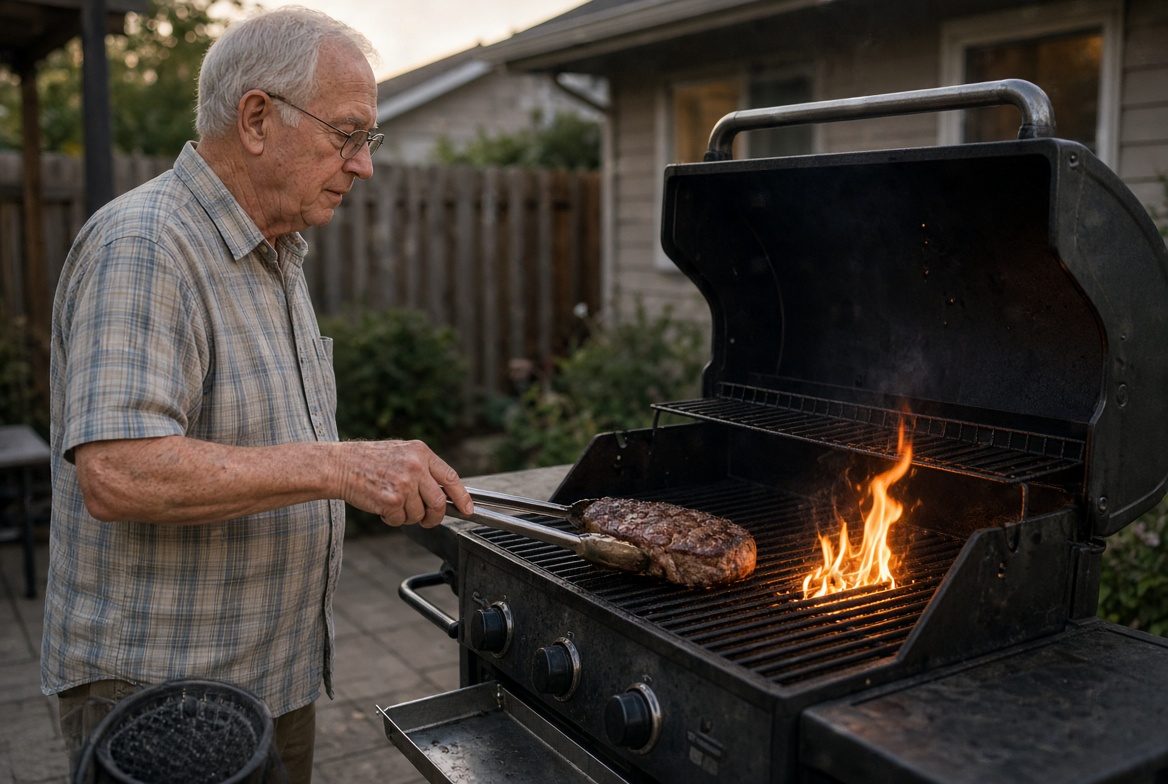
Updated and fact-checked: September 6, 2026 How to prevent grill flare-ups starts with controlling fat, oxygen, and a clean grease path, not with a spray bottle of water. A flare-up is dripping fat hitting a hot fire. A short burst can brown food. A standing grease fire can burn the dinner, the cookbox, and anything near the grill. The first safe move is almost always the same: move the food to a cool zone and close the lid.
Quick Answer: How Do You Prevent Grill Flare-Ups?
Set up two-zone heat, trim hanging fat, keep the grease tray empty, and cook with the lid closed. If flames jump, slide the food to the cool side and shut the lid to cut off air. Never throw water on a grease fire. If fire leaves the cookbox or you cannot shut the gas off, get away and call the fire department.
Key Points
- A flare-up is burning fat and oxygen, not a broken burner by itself.
- A two-zone fire gives you a hot side for searing and a safe parking spot when flames rise.
- NFPA research has found that about one-fifth of grill fires involved a grill that had not been cleaned.
- Weber’s gas-grill instructions say to turn burners off, move the food, and never use water to put out flames on a gas grill.
- Closing the lid starves most flare-ups of oxygen. Opening the lid to watch them usually feeds them.
- A grease fire that reaches the tank, deck, siding, or overhead structure is no longer a backyard technique problem. Leave and call for help.
What Is a Grill Flare-Up?
A grill flare-up is a sudden flame caused when melted fat, oil, or marinade hits a hot burner, Flavorizer bar, coal bed, or grease deposit and ignites. A brief lick of flame can help brown the surface. A repeating column of fire is grease burning in the open air, and that is the problem this article treats. The same chemistry shows up on gas, charcoal, kamado, and pellet cookers. The fuel that started the grill is not always the fuel that is flaring. Dripping fat is. That is why a “clean” grill with a fatty steak over a wide-open fire can still spit flame, and why a neglected grease tray can flare even when the food looks lean.
Is a Flare-Up Dangerous or Just Annoying?
A short flare-up is usually an annoyance. A grease fire that keeps feeding itself is a safety problem. NFPA grilling-safety pages report that gas grills account for most home grilling fires, that leaks and breaks are a gas-grill issue, and that a dirty grill is a common contributing factor. CPSC figures cited by NFPA also show tens of thousands of grill-related emergency-room visits in a typical recent multi-year average. Treat the event by what you see, not by how embarrassed you feel standing over the grate:
- Brief flame under one steak, then it dies when you close the lid: ordinary flare-up. Move the food and keep cooking.
- Repeating flames every time fat drips: too much fat over too much direct heat, or a dirty grease path. Change the setup.
- Fire in the grease tray, cart, or under the cookbox: grease fire. Shut the grill down if you can do it safely and do not stand over it.
- Fire on the tank, hose, siding, deck, or eaves: leave the area and call the fire department. This is past backyard repair.
What Safety Rules Come First?
Stand the grill outdoors, away from the house, keep kids and pets back, and never throw water on burning grease. NFPA’s grilling pages tell cooks to place the grill well away from the home, deck railings, eaves, and overhanging branches, and to keep children and pets at least three feet from the grilling area. Open a gas-grill lid before lighting it. Do not add starter fluid, gasoline, or any other flammable liquid to a fire that is already burning. Keep these shutdown rules next to the grill, not in a drawer:
- Do not spray or pour water on a grease fire. Water can flash to steam and throw burning fat.
- Do not dump flour, sugar, or a kitchen towel on the fire.
- Do not pick up a flaming grease tray and walk it through the house.
- Do not keep cooking over a fire you cannot see or control.
- If you smell raw propane you cannot shut off, or the fire has left the cookbox, get people away and call the fire department.
Official grilling-safety guidance lives on the NFPA grilling safety page.
What Causes Grill Flare-Ups?
Most flare-ups come from fat plus air plus a dirty or crowded hot zone, not from a mysterious defect. Check the easy causes first.
| What you see | Likely cause | First fix |
|---|---|---|
| Flames jump when a fatty steak or burger hits the grate | Surface fat or oil dripping onto a full direct fire | Move food to the cool zone; close the lid; trim the next piece |
| Flames keep returning after you close the lid | Grease tray, cookbox, or Flavorizer bars loaded with old fat | Finish or abandon the cook safely, then clean the grease path when the grill is cold |
| Sudden fire under a marinade-soaked chicken or kebab | Sugary or oily marinade dripping onto flame | Blot excess marinade; start over indirect heat |
| Charcoal kettle erupts when you open the lid | Fat hitting a wide coal bed plus a rush of oxygen | Bank coals to one side and put the lid back on |
| Fire in the slide-out tray or under the cart | Overflowing grease cup or foil blocking the drain | Shut burners off if safe; do not lift a flaming pan; call for help if it spreads |
| Whoosh of flame when you light a gas grill with the lid down | Gas collecting under a closed lid | That is a lighting error, not a cooking flare-up. Open the lid before ignition every time |
How Do You Set Up a Grill So Flare-Ups Stay Small?
Build a hot side and a cool side before the food goes on, then leave yourself room to move it. Two-zone grilling is the practical answer on charcoal and gas. Direct heat browns. Indirect heat finishes the food and gives dripping fat somewhere safer to land. On a gas grill, light one or two burners and leave at least one burner off. Preheat with the lid closed. Put fatty food over the unlit side first if you already know it will drip. Sear later, briefly, over the lit burners. On a charcoal kettle, bank the lit coals on one side and leave the other side empty. Keep the lid on and the top vent open enough for the fire to burn cleanly. A full bed of coals under a fatty roast is how a kettle turns into a fire pit. The site’s two-zone setup is spelled out in How to Set Up Two-Zone Grilling on Charcoal or Gas.
How Do You Prevent Grill Flare-Ups Step by Step?
Clean the grease path, trim the food, preheat, cook two-zone, and keep the lid closed. Do the work in this order.
- Start with a cold, empty grease path. Empty the cup or tray. Scrape the cookbox drain so fat can leave the fire. Weber’s own care pages warn against lining a slide-out grease tray with foil because foil can block flow and cause flare-ups.
- Clean yesterday’s grease off the hot parts. Burned-on fat on bars, heat tents, and the bottom of the lid becomes today’s fuel. Preheat and brush the grates. Save a real deep clean for a cold grill. See How to Deep Clean Grill Grates Without Scraping Off the Finish and the site’s gas-grill deep-clean guide.
- Trim hanging fat and blot wet marinades. A thin cap of fat can baste the meat. A thick flap that hangs through the grate will drip and ignite. Shake or blot extra oil and sugar off food before it hits the fire.
- Oil the food lightly, not the whole grate. A slick of oil on a screaming-hot grate runs down and burns. A thin coat on the meat is enough to limit sticking.
- Leave open grate space. Packing the grill wall to wall gives fat nowhere to go and gives you no parking spot when flames rise. Keep a cool zone clear.
- Preheat with the lid closed, then cook with the lid closed. A hot grate sears faster, so less fat renders in a puddle. A closed lid limits oxygen, which is why Weber handbooks treat the lid as flare-up control, not just a rain cover.
- Use tongs, not a fork. Piercing a fatty steak or sausage squeezes more grease onto the fire.
- Watch the first five minutes. That is when surface fat and marinade usually let go. Stay at the grill. NFPA’s rule is simple: an adult stays with a burning grill.
What Should You Do When a Flare-Up Starts?
Move the food off the flame and close the lid. Do not fight the fire with water. The goal is to take the dripping fat away from the heat and take the oxygen away from the grease.
- Slide the food to the unlit or empty side with long-handled tongs.
- Close the lid. On charcoal, you can also pinch the bottom vent partway after the lid is on. Do not slam vents fully shut on a gas grill as a substitute for turning knobs off.
- On a gas grill, if the flames keep climbing, turn the burners off. Weber’s older gas-grill cooking instructions say to turn all burners off, move the food, wait for the flames to die, then relight. They also say never to use water on a gas grill.
- Wait until the flame dies and the cookbox is only cooking, not roaring.
- Relight or reopen vents only after the flare is gone. Finish the food over indirect heat.
- Confirm doneness with a thermometer in the thickest part of the meat, away from bone and hard fat. USDA’s chart still lists 145°F plus a 3-minute rest for whole beef, pork, lamb, and veal steaks and chops; 160°F for ground meat; and 165°F for poultry. The chart is here: USDA safe minimum internal temperature chart.
Probe placement matters as much as the number. Use the site’s meat-thermometer guide if you are guessing from color.
How Do You Handle a Grease Fire in the Tray or Cart?
If fire is in the grease system instead of under the food, treat it as a fire, not as a cooking problem. Closing the lid can still help if the fire is inside the cookbox. A fire that has dropped into an open cup, the cart, or the ground is a different job.
- Turn the gas off at the burner knobs if you can reach them without leaning over flame. If you can reach the tank valve from the side, shut that too.
- Do not yank a flaming cup out of the grill.
- Do not spray water, a garden hose, or a kitchen sink sprayer at burning grease.
- A portable extinguisher rated for grease and flammable-liquid fires belongs near the patio for this moment, not after the fire is already on the siding. Use one only if you can keep an exit behind you and the fire is still small.
- If the fire grows, reaches the tank or structure, or you are not sure you can stop it, leave and call the fire department.
Do Gas, Charcoal, and Pellet Grills Flare Up the Same Way?
The fat is the same. The place it lands is not. That changes both prevention and the first fix.
Gas grills
On gas, flare-ups usually start when fat hits hot bars, burners, or a loaded grease tray. Heat tents and Flavorizer-style bars exist to vaporize drippings before they reach the flame. When those parts are caked, the fat ignites instead of seasoning the smoke. Lighting a gas grill with the lid closed is a separate, more dangerous mistake because unburned gas can collect under the lid. If the grill will not light, smells like gas, or keeps dying, stop treating it like a flare-up article and use Gas Grill Problems: The Real Reasons Your Grill Won’t Cooperate.
Charcoal kettles, drums, and kamados
On charcoal, flare-ups get worse when the food sits over a wide coal bed and the lid stays off. Bank the fire. Keep the lid on. Do not spray the coals with a hose to “cool them down” while dinner is still on the grate. Water on a live charcoal fire makes steam, ash slurry, and sometimes a bigger mess than the flare you were trying to kill. Light the chimney with a clean starter, not a squirt of leftover fluid onto already-burning coals. That method is in How to Light a Charcoal Grill Without Lighter Fluid.
Pellet grills
A pellet grill can still flare if grease pools over the firepot or a dirty drip tray catches. The usual prevention is the same grease discipline: empty the bucket, keep the drain clear, and do not run a neglected cooker on a long fatty cook. Do not reach into a live firepot. If grease is burning around the firepot and the controller is not behaving, shut the grill down per the manual and let it cool before you clean.
Which Foods Cause the Worst Flare-Ups?
Foods with a thick fat cap, loose edge fat, or a wet sugary coating flare more than lean, dry-surface food. That is not a reason to stop cooking them. It is a reason to start them indirect.
- Chicken skin and wings: start opposite the fire and crisp later over brief direct heat.
- Burgers and sausage: leave a cool lane. Pressing a burger with a spatula squeezes fat onto the fire.
- Steak with a hard fat cap: score or trim the hanging edge so it cannot drip through the grate like a wick.
- Lamb and pork chops with a thick rim: render that rim over indirect heat first.
- Cheap tough cuts with loose fat flaps: trim the flaps that will burn, then cook them the way the cut actually needs. That decision is covered in How to Cook Tough, Cheap Cuts of Meat Until Tender.
When Should You Stop and Call for Help?
Stop backyard problem-solving when the fire is no longer contained in the cookbox or you cannot shut the fuel off. Call the fire department, not a neighbor with a garden hose, if any of these is true:
- Flames have reached the propane tank, hose, regulator, siding, deck, railing, or eaves.
- You smell a strong gas odor and cannot stop the flow at the tank.
- The grease tray or cart is fully involved and growing.
- Anyone is burned, dizzy, or having trouble breathing.
- The grill was knocked over or a tank valve is damaged.
A damaged regulator, cracked hose, or leaking tank is not a “keep grilling” situation. Replace the part or have a qualified technician handle it. Do not bypass a safety device to finish dinner.
How Do You Prevent the Next Flare-Up?
Clean the grease system on a schedule, and treat two-zone heat as the default for fatty food. Prevention is dull work. It is also the method NFPA keeps pointing to when it notes that uncleaned grills show up in a large share of grill fires.
- Empty the grease cup before it is full, not after it overflows.
- Check the cookbox drain after any fatty cook.
- Brush the grates while they are hot at the end of the cook, then do a deeper clean when the grill is cold.
- Keep a metal can with a lid for spent charcoal. NFPA’s charcoal advice is to let coals cool completely and empty them into a metal container, never straight into a household trash can.
- Keep children, pets, towels, and food wrappers at least three feet from the grill.
- Store starter fluid away from the cooker. Never add it to a lit fire.
Frank’s Take
I have been putting meat over fire since 1970, and flare-ups have not gotten more mysterious in those years. Fat hits heat. Air feeds it. A lid and a cool zone still beat heroics. The cooks who get burned by this problem are usually the ones who crowd a dirty grill, leave the lid off so they can watch the show, and then panic with a squirt bottle. Move the food. Cover the fire. Clean the tray tomorrow. That is the whole method.
Final Verdict: How Do You Stop Grill Flare-Ups?
Prevent flare-ups with two-zone heat, trimmed fat, a clear grease path, and a closed lid. When flames jump, park the food on the cool side and starve the fire of air. Water belongs in the sink, not on burning grease. If the fire leaves the cookbox or the gas will not shut off, get away and call for help. A grill is a cooking tool. It is also an open flame sitting a few feet from your house, and it deserves that much respect.
Frequently Asked Questions
Should you spray water on grill flare-ups?
No. Water on burning grease can vaporize and throw the fire. Close the lid and move the food. Manufacturer gas-grill instructions have said for years not to use water to extinguish flames on a gas grill.
Does closing the lid put out a flare-up?
Usually, yes, if the fire is still inside the cookbox. The lid cuts the oxygen that is feeding the grease. It will not fix an overflowing tray fire that has already dropped into the cart or onto the ground.
Can a dirty grease tray cause a fire even after you turn the burners off?
Yes. Grease that is already hot can keep burning in a loaded tray. That is why emptying the cup is part of ordinary grill care, not an optional deep-clean chore.
Is some flame under a steak a good thing?
A brief lick of flame can brown the surface. A standing fire cannot. If the steak is sitting in repeated flames, it is charring on the outside while the center is still catching up. Move it.
Do I need a fire extinguisher next to the grill?
A rated extinguisher near the patio is sensible. It is not a license to stand over a spreading fire. If the tank, hose, or house is involved, leave and call the fire department.
Why does my grill flare up more on windy days?
Wind adds oxygen and can push flame sideways toward fat and toward anything that can burn. Keep the lid down, keep the grill away from the house, and do not chase the fire with the grate uncovered.
Related Reading
- How to Set Up Two-Zone Grilling on Charcoal or Gas
- How to Deep Clean Grill Grates Without Scraping Off the Finish
- How to Deep Clean a Gas Grill
- How to Use a Meat Thermometer Correctly
- How to Light a Charcoal Grill Without Lighter Fluid
- Gas Grill Problems
About Frank W. Roberts
Frank W. Roberts is the author of Everything Grill Reviews. He has grilled since 1970 and brings more than 50 years of backyard cooking and cookoff experience to fire management, fuel behavior, smoke, and practical cooker use. This article is a how-to based on long-standing fire-management practice, current NFPA grilling-safety guidance, USDA doneness minimums, and manufacturer flare-up instructions. It is not a hands-on test of every grill model or extinguisher. Last verified September 6, 2026.