
Updated: July 28, 2026
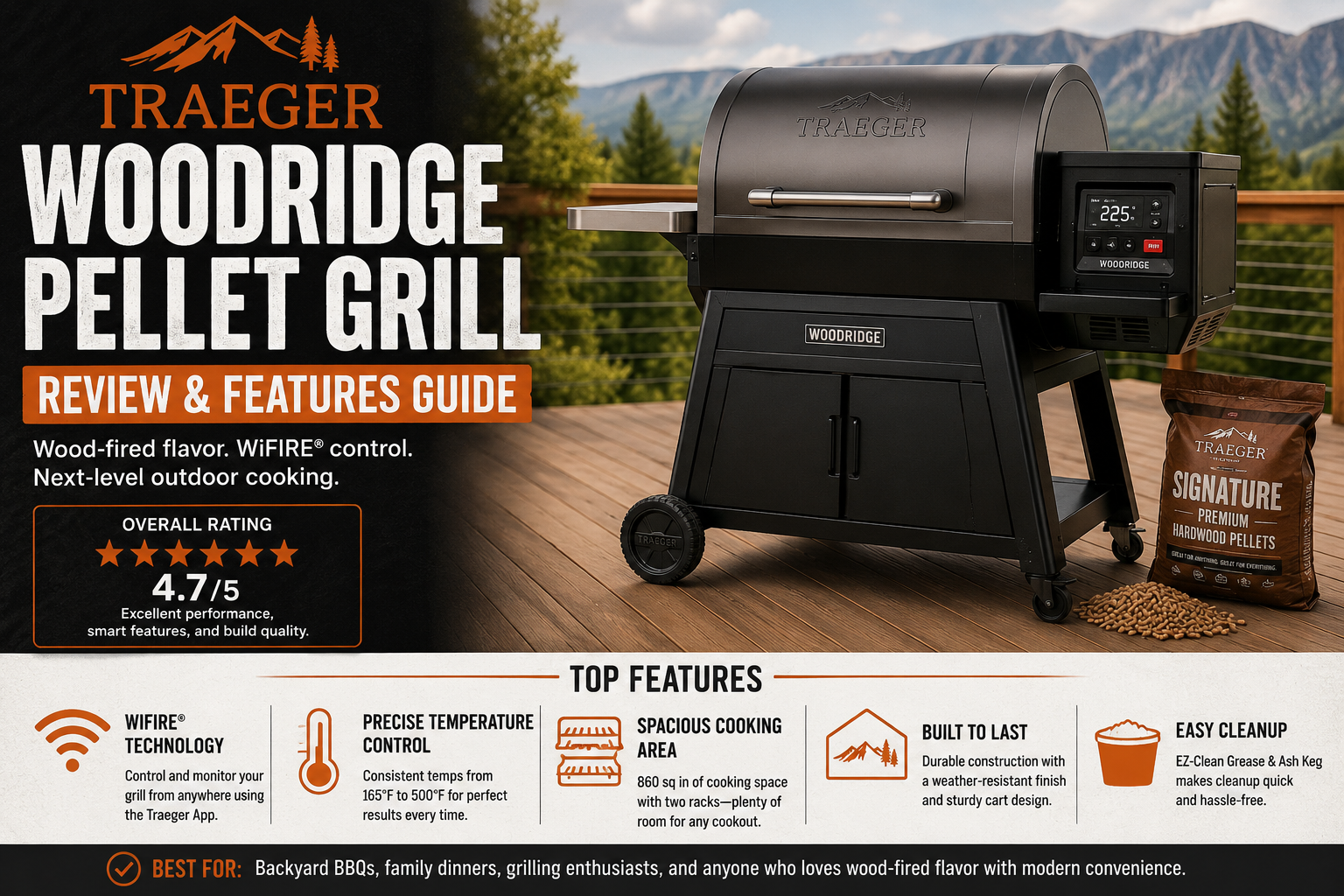
Traeger spent years letting other brands fight over the affordable pellet grill market while it focused heavily on premium models like the Ironwood and Timberline. The Traeger Woodridge series changes that.
Launched in 2025 for Traeger’s 40th anniversary, the Woodridge lineup feels like Traeger trying to win back everyday backyard cooks — people who want wood-fired flavor, app control, easy cleanup, and reliable low-and-slow cooking without spending flagship money.
After digging through Traeger’s specs, manufacturer information, retailer feedback, and hundreds of owner comments, the Woodridge looks like one of Traeger’s strongest value plays in years.
It is not perfect. It does not sear like a gas grill. Smoke flavor may be lighter than some old-school barbecue fans want. And despite the EZ-Clean system, you still need to vacuum ash out of the firepot area.
But for a beginner or intermediate backyard cook who wants a dependable pellet grill that does not require babysitting, the Woodridge is easy to recommend.
Quick Answer: Is the Traeger Woodridge Worth It?
Yes, the Traeger Woodridge pellet grill is worth considering if you want a simple, reliable pellet grill for smoking ribs, brisket, pork butt, chicken, burgers, and everyday backyard meals.
The biggest strengths are easy temperature control, WiFIRE app monitoring, solid cooking space, good wood-fired flavor, and better cleanup than many pellet grills in this price range.
The main weaknesses are average searing performance, lighter smoke compared with heavier stick-burner flavor, and some ash cleanup that still needs to be done by hand.
For most backyard cooks, the base Woodridge and Woodridge Pro are the best values in the lineup.
Who the Traeger Woodridge Is For
The Woodridge is built for the cook who wants pellet grill convenience without turning barbecue into a second job.
This is a strong fit if you want to:
- Smoke ribs, brisket, pork shoulder, chicken, and turkey with less effort.
- Set the temperature and let the grill manage the fire.
- Monitor long cooks from your phone.
- Move from propane to wood-fired cooking without a steep learning curve.
- Get Traeger features without paying Timberline or Ironwood prices.
This is especially good for weekend cooks. If you want to put meat on the grill, check the app from inside the house, and not fight charcoal vents all afternoon, the Woodridge makes sense.
It is not the best choice if your main goal is steakhouse-style searing. The base Woodridge and Woodridge Pro top out at 500°F, which is fine for burgers, chicken, pork chops, and general grilling, but it will not match a ripping-hot charcoal grill, gas sear burner, or cast iron over flame.
Traeger Woodridge Lineup Explained
One confusing thing is that Woodridge is not just one grill. It is a series.
| Model | Cooking Area | Best For |
|---|---|---|
| Traeger Woodridge | 860 sq. in. | Best value for most backyard cooks |
| Traeger Woodridge Pro | 970 sq. in. | Better choice for frequent smoking |
| Traeger Woodridge Pro Plus | 970 sq. in. | Pro features plus enclosed storage |
| Traeger Woodridge Elite | 970 sq. in. | Best searing and cold-weather performance |
The base Woodridge gives you the core Traeger pellet grill experience: WiFIRE, digital control, a 20-pound hopper, and the EZ-Clean Grease & Ash Keg.
The Woodridge Pro adds more cooking space, Super Smoke Mode, a pellet sensor, and a side shelf. For people who smoke often, the Pro is probably the sweet spot.
The Woodridge Elite is the premium version. It adds insulation and an infrared side burner, which helps fix the biggest weakness of most pellet grills: searing.
Key Features That Matter
WiFIRE App Control
WiFIRE is one of the biggest reasons people like Traeger grills. You can control and monitor the grill from your phone, check temperature, watch the meat probe, and get alerts during a cook.
This matters most during long smokes. Being able to check a brisket or pork butt from inside the house is a real convenience, especially in cold, rainy, or windy weather.
You can still use the grill without WiFi. The app is helpful, but it is not required for cooking.
EZ-Clean Grease & Ash Keg
The Woodridge uses Traeger’s EZ-Clean system, which funnels grease and ash into one removable container.
That sounds simple, but owners really like it because pellet grill cleanup can become annoying fast. Grease trays, foil liners, ash buildup, and dirty grates are all part of pellet grill ownership.
The EZ-Clean system makes cleanup easier, but it does not eliminate maintenance. Ash still builds up around the firepot, so you should plan to vacuum the inside every few cooks.
That is not a dealbreaker. It is just something buyers should know before believing the grill fully cleans itself.
20-Pound Pellet Hopper
The 20-pound hopper is a nice size for long cooks. It gives you enough capacity for overnight smoking without constantly refilling pellets.
The hopper clean-out is also useful. If you want to switch from hickory to apple, or from mesquite to cherry, you can empty the hopper instead of burning through a full load.
One important tip: keep pellets dry. Damp pellets can swell, crumble, jam the auger, and ruin smoke quality. Store pellets in a sealed container, not an open bag on the patio.
Super Smoke Mode
Super Smoke Mode is available on the Pro models and higher.
This feature increases smoke output during low-temperature cooking. If you care about stronger bark, more smoke flavor, and better low-and-slow results, the Woodridge Pro is worth considering over the base model.
The base Woodridge still produces wood-fired flavor, but smoke lovers may want the Pro.
P.A.L. Pop-And-Lock Accessory RaiTraeger Woodridge Pellet Grill Review: Is It Worth Buying?l
Traeger’s P.A.L. rail system lets you add shelves, hooks, tool racks, roll racks, storage bins, and other accessories.
This is not just a gimmick. Backyard cooks tend to collect tools, gloves, brushes, tongs, trays, thermometers, and sauces. Having a way to organize those things around the grill is useful.
The downside is that accessories cost extra, and Traeger accessories are not always cheap.
Cooking Performance
Low-and-Slow Smoking
This is where the Woodridge shines.
For ribs, pork shoulder, brisket, chicken, turkey breast, and pork tenderloin, the Woodridge does exactly what most people buy a pellet grill to do. It holds steady temperatures, burns clean, and makes long cooks easier.
Owner feedback is strongest here. Many people mention that it is easy to use, holds temperature well, and produces consistent results without constant checking.
That is the main reason to buy this grill.
Burgers, Chicken, and Everyday Grilling
For everyday grilling, the Woodridge is solid.
It can handle burgers, brats, pork chops, chicken thighs, wings, vegetables, and even pizza. Since pellet grills work like outdoor convection ovens, they are also good for roasting and baking.
Chicken is one of the better uses for a grill like this. You can smoke it low, then raise the temperature to help crisp the skin.
For burgers, it works fine, but you will not get the same hard flame-kissed char you would from charcoal or a hot gas grill.
Searing Performance
This is the weak spot.
The base Woodridge and Woodridge Pro top out at 500°F. That is hot enough for a lot of backyard cooking, but it is not ideal for a deep steak crust.
If steakhouse searing matters to you, you have three options:
- Use a cast iron pan or griddle.
- Finish steaks on a separate charcoal or gas grill.
- Step up to the Woodridge Elite with the infrared side burner.
For ribs, pork butt, brisket, chicken, burgers, and roasts, this weakness does not matter much. For ribeyes and thick steaks, it matters a lot more.
Smoke Flavor
The Woodridge gives you good pellet grill smoke flavor, but it is not the same as a stick burner or charcoal offset smoker.
That is true of most pellet grills. They burn pellets efficiently, which means the smoke is often cleaner and lighter.
If you want more smoke flavor, try:
- Cooking at lower temperatures for the first hour or two.
- Using stronger pellets like hickory or mesquite.
- Using Super Smoke Mode if you buy the Pro or higher.
- Adding a smoke tube for heavier smoke.
For most families, the smoke flavor will be plenty. For hardcore barbecue people chasing heavy bark and deep smoke, it may feel mild.
What Owners Like Most
Easy Learning Curve
Many owners say the Woodridge is simple to learn, especially if they are coming from propane.
You do not have to manage charcoal, adjust vents, split wood, or fight temperature swings. You set the temperature and let the controller handle the fire.
That is the beauty of a pellet grill.
Strong Value for Traeger
Traeger has not always been the cheapest brand, and some buyers felt other companies offered more features for less money.
The Woodridge helps fix that. It brings Traeger’s app, controller, build quality, and cleanup system into a price range that more people can actually consider.
That is why this grill matters.
Cleanup Is Easier
The EZ-Clean system is one of the most praised features.
Pellet grills are convenient while cooking, but cleanup can be a pain. The Woodridge makes that part easier, especially with grease and ash collection.
Again, you still need to vacuum the firepot area, but the overall cleanup process is better than many older pellet grills.
Good Cold-Weather Performance
Some owners report solid temperature control even in cold weather. That matters if you grill year-round.
The Elite model is the best choice for cold climates because of its insulated construction, but the base and Pro still appear to perform well for normal backyard winter cooking.
What Owners Complain About
Assembly Takes Time
Assembly is one of the most common complaints.
The Woodridge is not impossible to put together, but it is easier with two people. Some owners also mention that certain parts need careful attention so racks and hardware do not end up installed wrong.
Plan on taking your time.
It Still Needs Ash Vacuuming
The EZ-Clean system helps, but ash still collects around the firepot.
This is important. If too much ash builds up, pellet grills can struggle with ignition, temperature stability, or airflow.
Best habit: vacuum the firepot and bottom of the cook chamber every few cooks.
Searing Is Limited
This is not a steakhouse searing machine unless you buy the Elite model.
That does not make the Woodridge bad. It just means you need to buy it for the right reasons.
If you mostly smoke ribs and brisket, you will probably be happy. If you mostly cook steaks, you may want a different setup.
Smoke May Be Too Light for Some
Some buyers expect heavy smoke and deep offset-smoker flavor from a pellet grill. That is not really what pellet grills do best.
The Woodridge gives clean wood-fired flavor. It does not produce the same heavy smoke profile as a charcoal offset.
Setup and Maintenance Tips
Before your first cook, follow Traeger’s burn-in instructions. This clears out manufacturing oils and prepares the grill for food.
Assemble it with a helper if possible. Take your time around the racks, shelves, and hardware.
Keep pellets dry. This one matters more than people think. Bad pellets can cause poor smoke, auger jams, and temperature problems.
Vacuum the firepot area every few cooks. Do not wait until there is a problem.
Buy a cover if the grill will live outside. Pellet grills have electronics, paint, steel parts, and moving components. A cover is cheap protection.
Use the hopper clean-out when switching pellet flavors. It saves pellets and keeps flavors from mixing more than you want.
Woodridge vs Woodridge Pro: Which Should You Buy?
For most people, the decision comes down to the base Woodridge or the Woodridge Pro.
Buy the base Woodridge if you want the best price and mainly need a reliable pellet grill for family meals, weekend smoking, and easy outdoor cooking.
Buy the Woodridge Pro if you smoke more often, want stronger smoke flavor, need more cooking space, and like the idea of Super Smoke Mode.
The Pro is probably the best long-term choice for serious backyard cooks. The base model is the better value for casual users.
Who Should Buy the Traeger Woodridge?
Buy the Woodridge if:
- You want your first pellet grill.
- You want Traeger quality without flagship pricing.
- You cook ribs, chicken, brisket, pork shoulder, burgers, and family meals.
- You like app control.
- You want easier cleanup.
- You prefer convenience over fire management.
- You want a grill that is simple to use.
This is a very good grill for beginner and intermediate cooks.
Who Should Skip It?
Skip the Woodridge if:
- You mainly cook steaks and want extreme searing.
- You want heavy stick-burner smoke flavor.
- You do not want to clean ash from the firepot.
- You want the cheapest pellet grill possible.
- You do not care about WiFIRE or Traeger’s ecosystem.
If searing is your top concern, look at the Woodridge Elite or pair the Woodridge with a charcoal or gas grill.
Final Verdict
The Traeger Woodridge is one of Traeger’s best value grills in years.
It brings the brand back into a price range where normal backyard cooks are shopping, while still offering the things people expect from Traeger: simple pellet cooking, WiFIRE app control, steady temperatures, wood-fired flavor, and a strong accessory system.
It is not perfect. The searing is limited, the smoke flavor may be too mild for hardcore barbecue fans, and you still need to vacuum ash from the firepot area.
But those are manageable compromises.
For a first pellet grill, a family smoker, or a no-drama weekend cooking machine, the Woodridge makes a lot of sense. The base model is the budget-friendly pick. The Woodridge Pro is the one I would choose if smoking is the main reason you are buying.
Frequently Asked Questions
Can I use the Traeger Woodridge without WiFi?
Yes. The Woodridge can be used from the onboard controller. WiFIRE app control is helpful, but it is not required.
Is the Traeger Woodridge good for beginners?
Yes. It is one of the easier pellet grills for beginners because it uses simple temperature control and does not require managing charcoal or wood splits.
Does the Traeger Woodridge sear steaks well?
It can grill steaks, but searing is not its strongest feature. The base and Pro models top out at 500°F. For stronger searing, consider the Woodridge Elite or use a separate searing setup.
What is the difference between the Woodridge and Woodridge Pro?
The Woodridge Pro adds more cooking space, Super Smoke Mode, a pellet sensor, and a side shelf. It is the better choice for people who smoke often.
How big is the Traeger Woodridge hopper?
The Woodridge has a 20-pound pellet hopper, which is large enough for long cooks and overnight smoking.
Does the Woodridge need much maintenance?
It is easier to clean than many pellet grills, but it still needs regular maintenance. Vacuum the firepot area every few cooks and keep pellets dry.
Is the Traeger Woodridge good in cold weather?
Owner feedback suggests it holds temperature well in cold weather, but the Woodridge Elite is the better option for very cold climates because it has an insulated body and lid.
Affiliate Disclosure
Everything Grill Reviews may earn a small commission through affiliate links at no extra cost to you. Brands do not pay for reviews and do not get approval before publication.